Mini Split Line Set Cover Installation in Los Angeles
A real Los Angeles MRCOOL 24K mini split install: see what a finished exterior line-set cover does, what it does not prove, and why electrical work and final startup still come next.

Owner & Lead HVAC Technician, Alex Air & Heating · EPA 608 Universal Certified · Ontario, CA
AI-generated photorealistic representative scene; not a frame from the documented video.
TL;DR
A finished mini split line-set cover in Los Angeles protects and organizes the visible refrigerant-line bundle, but it is not the same as a completed system. In this real MRCOOL 24K installation, the cover is finished while electrical wiring and final startup remain separate steps before commissioning.
- This video shows a real second-floor MRCOOL 24K mini split installation in Los Angeles with the exterior line-set cover completed.
- A fitted cover improves protection and appearance for the exterior line-set bundle; it does not by itself confirm charge, drainage, electrical wiring, or startup quality.
- The post accurately marks the install as still awaiting electrical wiring before final startup, which is the right distinction for homeowners comparing installation quotes.
- For a local project, ask for the equipment scope, line-set route, electrical scope, required approvals, and startup plan in writing.
On this page
What this Los Angeles mini split installation video shows
This is a real Los Angeles job from Alex Air & Heating: a second-floor MRCOOL 24K mini split with its exterior line-set cover completed. The visible run now has a clean, professional exterior finish. The post also makes an important quality-control point: electrical wiring was still pending before final startup.
That distinction matters when comparing a mini split installation quote. A neat cover is one visible sign that the exterior routing was planned, but it is not a shortcut around electrical work, system checks, or startup. For cost context, see our mini split installation cost guide.
What goes inside a mini split line-set cover?
Depending on the equipment and route, the exterior bundle can include insulated refrigerant tubing, communication wiring, and drain routing. MRCOOL describes its LineGuard cover as a protective exterior cover for ductless line sets, with sections and fittings selected to follow the actual run. The goal is to protect the exposed bundle and keep it serviceable—not to conceal unresolved installation steps.
| Finish approach | What it helps with | What it does not confirm |
|---|---|---|
| Exposed exterior bundle | Basic routing remains visible for inspection | UV protection, physical protection, or a finished appearance |
| Fitted line-set cover | Organizes and protects the visible line-set path | Correct electrical work, drainage slope, refrigerant integrity, or startup |
| Completed, commissioned system | A finished installation after all required checks | That every home needs the same equipment size or route |
From exterior cover to final startup: the right sequence
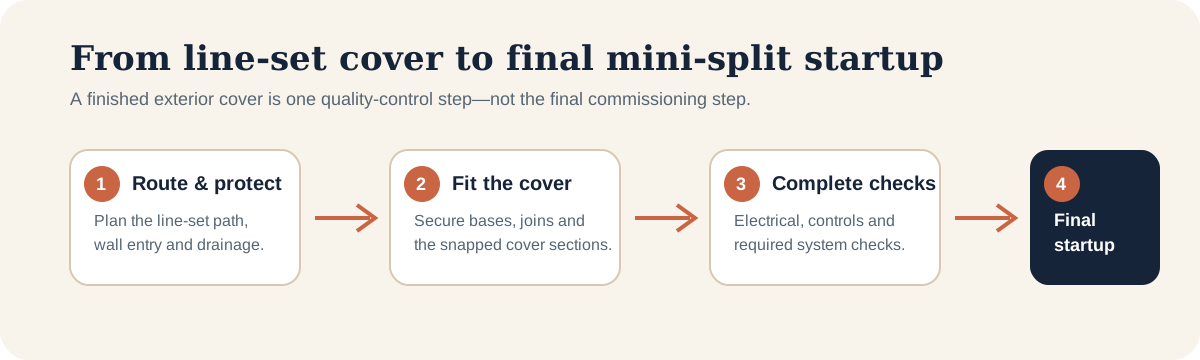
Manufacturer instructions for exterior line-set covers emphasize planning the route, securing the base sections, allowing for the fitted pieces, and snapping the top cover into place. Before a system is started, the project still needs the applicable electrical and system checks for its actual equipment and site conditions. That is why a good scope of work separates exterior finishing from commissioning.
Questions to ask before approving a mini split installation
- Where will the indoor head, outdoor unit, line set, drain, and electrical run be located?
- Is the exterior line-set cover included, and how will its route be finished at the wall entry and fittings?
- What electrical work, permits, or inspections apply to this address and equipment?
- What checks are completed before final startup, and who documents them?
- Is the proposed capacity based on the actual room or home load rather than the equipment label alone?
For homeowners in Los Angeles, the Inland Empire, Orange County, Riverside, and San Bernardino, a visible exterior finish should be paired with a clear written scope. If you are comparing ductless and central options, our ductless mini split pros and cons guide explains where a room-by-room system fits best.
Alex Air & Heating can review the indoor and outdoor locations, line-set route, electrical scope, and startup plan for your Los Angeles, Inland Empire, or East LA County project before work begins. See mini split installation
Frequently asked questions
A line-set cover is an exterior channel that encloses the visible refrigerant tubing, insulation, communication cable, and sometimes the drain-routing bundle between a mini split and the wall entry. It protects the exposed run and creates a cleaner finish; it is not a substitute for the system's mechanical or electrical commissioning.
No. The cover can be complete while electrical connections, controls, leak checks, drainage verification, and manufacturer-required startup steps are still pending. This Los Angeles job is a clear example: the line-set cover was completed, while electrical wiring was still needed before final startup.
24K generally refers to a nominal 24,000 BTU-per-hour equipment class. It does not prove that 24K is the correct size for every room or home; correct sizing depends on the actual space, insulation, solar exposure, layout, and load calculation.
Do not open covers or alter wiring or refrigerant lines yourself. If a cover needs adjustment, ask the installer to inspect the routing, wall penetration, drainage, and electrical clearances so the exterior finish does not hide a service or safety problem.
Requirements depend on the address, equipment, and work scope. Ask the contractor to identify the electrical scope and any required permits or inspections for your project before work begins, rather than assuming a finished exterior cover represents the whole installation.