Why Is My AC Freezing Up? Ice on the Coil, Explained (and How to Fix It)
Ice on your AC almost always means restricted airflow or low refrigerant. Here's why the coil freezes, how to thaw it safely, and how to stop it happening again in the Inland Empire heat.

Owner & Lead HVAC Technician, Alex Air & Heating · EPA 608 Universal Certified · Ontario, CA
TL;DR
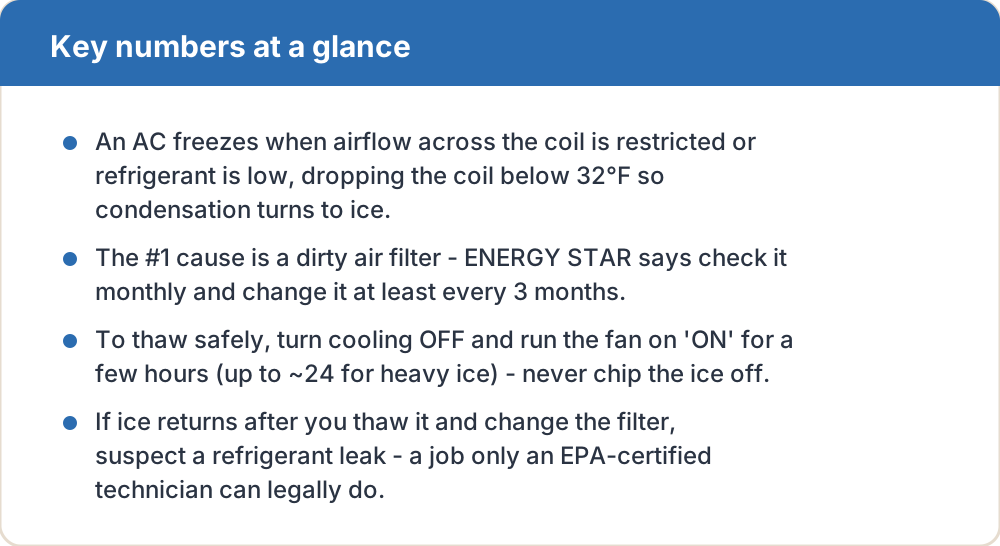
Your AC freezes up when airflow across the coil is restricted or refrigerant is low, dropping the coil below 32 degrees F so condensation turns to ice. The number-one cause is a dirty air filter. To thaw it safely, turn cooling OFF and run the fan on ON for a few hours-never chip the ice off. If ice returns after thawing and a new filter, suspect a refrigerant leak, which only an EPA-certified technician can legally fix.
- An AC freezes when airflow across the coil is restricted or refrigerant is low, dropping the coil below 32°F so condensation turns to ice.
- The #1 cause is a dirty air filter - ENERGY STAR says check it monthly and change it at least every 3 months.
- To thaw safely, turn cooling OFF and run the fan on 'ON' for a few hours (up to ~24 for heavy ice) - never chip the ice off.
- If ice returns after you thaw it and change the filter, suspect a refrigerant leak - a job only an EPA-certified technician can legally do.
On this page
- Why does an air conditioner freeze up?
- 1. A dirty air filter (the top cause)
- 2. Dirty evaporator coil
- 3. Low refrigerant or a leak
- 4. Blocked vents, a weak blower, or an oversized system
- 5. Running the AC on a cool night
- How do I thaw a frozen AC safely?
- How do I stop it from freezing again?
- The refrigerant rule (why this isn't fully DIY)
Why does an air conditioner freeze up?
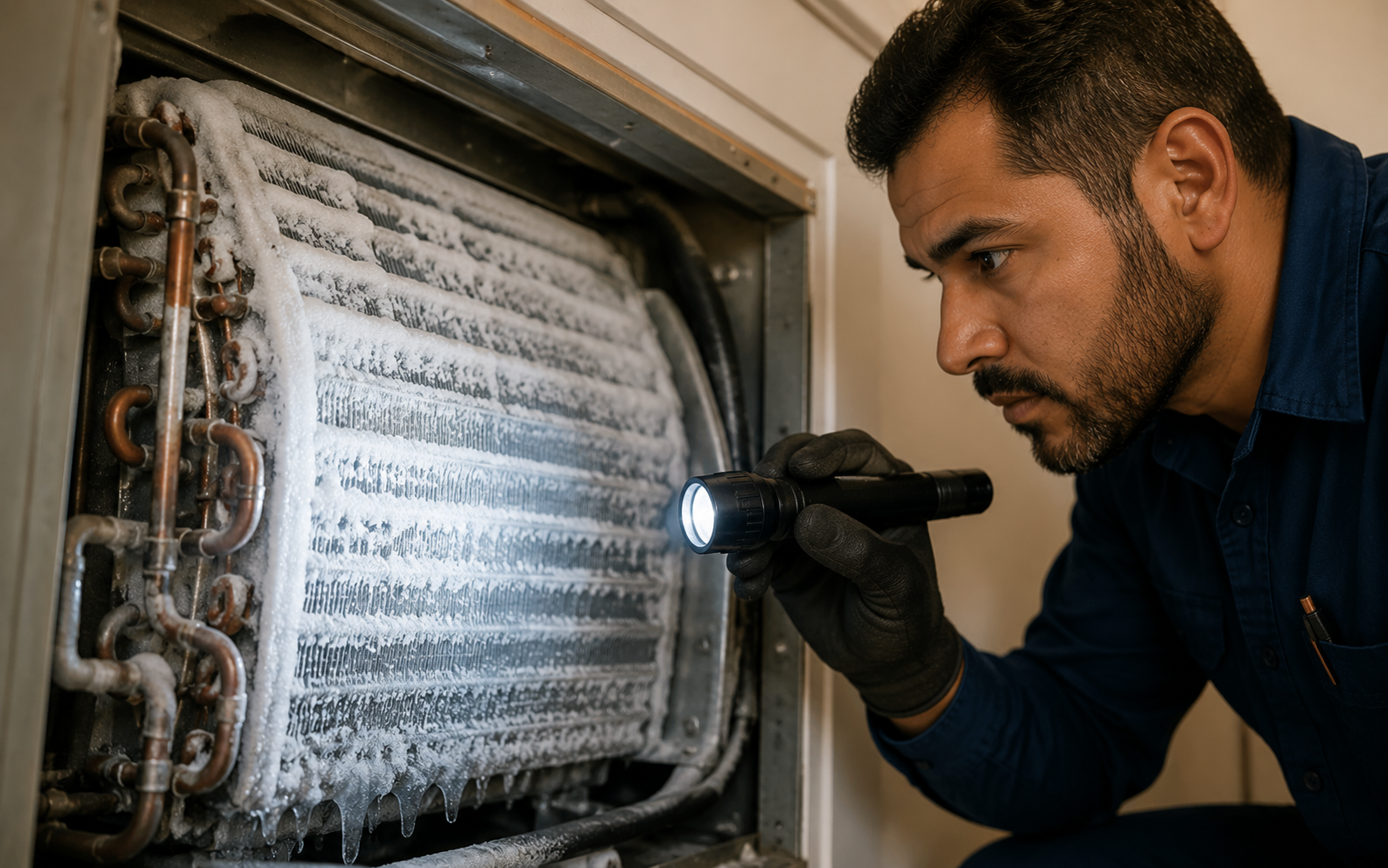
The evaporator coil is supposed to be cold - warm indoor air blows across it so it can absorb heat and keep its surface above freezing. When that airflow is restricted, the coil can't absorb enough heat, its surface drops below 32°F, and the moisture that normally drips off freezes into ice instead. The ice then blocks airflow even more, so the freeze snowballs. This Old House notes that with a blocked return-air filter, 'there's a good chance the coil will start to freeze - and you could lose half your cooling power.'
1. A dirty air filter (the top cause)
A clogged filter starves the coil of airflow - the single most common reason ACs freeze. ENERGY STAR recommends checking your filter every month and changing it at least every three months during heavy-use seasons. In the dusty Inland Empire summer, monthly changes are smart.
| Cause | Clue | Fix |
|---|---|---|
| Dirty filter | Gray/clogged filter | DIY - replace |
| Dirty coil | Runs long, weak cooling | Pro tune-up |
| Low refrigerant | Ice returns after thaw | Pro (EPA-certified) |
| Blocked airflow | Closed/covered vents | DIY - open vents |
| Oversized/short-cycling | Turns on/off fast, freezes | Pro assessment |
| Cool-night operation | Ice on cool evenings | Check manual minimum |
2. Dirty evaporator coil
A coil caked in dust can't absorb heat efficiently. ENERGY STAR notes that dirty coils reduce cooling and make the system run longer. Coil cleaning is part of a standard annual tune-up.
3. Low refrigerant or a leak
Low refrigerant lowers the pressure in the coil, which drops its temperature below freezing and frosts it over. This is the repeat-offender clue: if ice comes back after you've thawed the unit and replaced the filter, suspect a leak. A refrigerant leak is, in This Old House's words, 'a job for a licensed HVAC professional.'
4. Blocked vents, a weak blower, or an oversized system
Anything that reduces return airflow can trigger a freeze - closed or furniture-blocked registers, a failing blower motor, or restrictive ducts. This Old House also flags oversizing as a cause: a system that's too big short-cycles and can freeze up; their rule of thumb is about one ton of cooling per 500-600 square feet.
5. Running the AC on a cool night
When outdoor air is already cool, the system's pressure balance can push the coil below freezing. Manufacturers set a minimum outdoor operating temperature - check your unit's manual rather than running it on a cool desert night.
How do I thaw a frozen AC safely?
Work through these steps:
- Turn cooling OFF and set the thermostat fan to 'ON' (fan-only) so room-temperature air melts the ice.
- Give it a few hours - up to about 24 hours for a heavily iced coil.
- Change the air filter while you wait.
- Never chip or scrape the ice - you can puncture the coil and cause a refrigerant leak.
- Don't keep running the AC while it's frozen; it strains the compressor.
How do I stop it from freezing again?
Check the filter monthly and change it every three months; keep all supply registers and return vents open and unobstructed; and book an annual professional tune-up that cleans the evaporator and condenser coils. If freezing keeps recurring after all that, it's a refrigerant or airflow problem for a technician.
The refrigerant rule (why this isn't fully DIY)
Under Section 608 of the Clean Air Act, anyone who services equipment that could release refrigerant must be EPA-certified, and only certified technicians can legally buy refrigerant. That's why a suspected leak is never a DIY fix. Alex Air & Heating's owner holds EPA 608 Universal certification, so refrigerant work is handled legally and in-house.
Frequently asked questions
A few hours for light frost, and up to about 24 hours for a heavily iced coil. Run the fan on 'ON' with cooling off, and change the filter while it thaws.
No - turn it off. Running a frozen system moves almost no cool air and strains the compressor, which can cause expensive damage.
If it re-freezes after a fresh filter and a thaw, the likely causes are a dirty coil, a failing blower, or - most often - low refrigerant from a leak. That last one needs an EPA-certified technician.
Local next step
Turn this guide into a site-specific answer.
Guides explain the decision. Equipment condition, access, and safe next steps still need to match the home or business. Review the relevant service scope or request an assessment for Ontario, the Inland Empire, or East Los Angeles County. Availability depends on the current schedule.