The Best Summer Thermostat Setting to Save Money in California
ENERGY STAR suggests 78°F when you're home and setting back 7-10°F when you're away. In a hot California climate that adds up to real savings - here's how to dial it in.

Owner & Lead HVAC Technician, Alex Air & Heating · EPA 608 Universal Certified · Ontario, CA
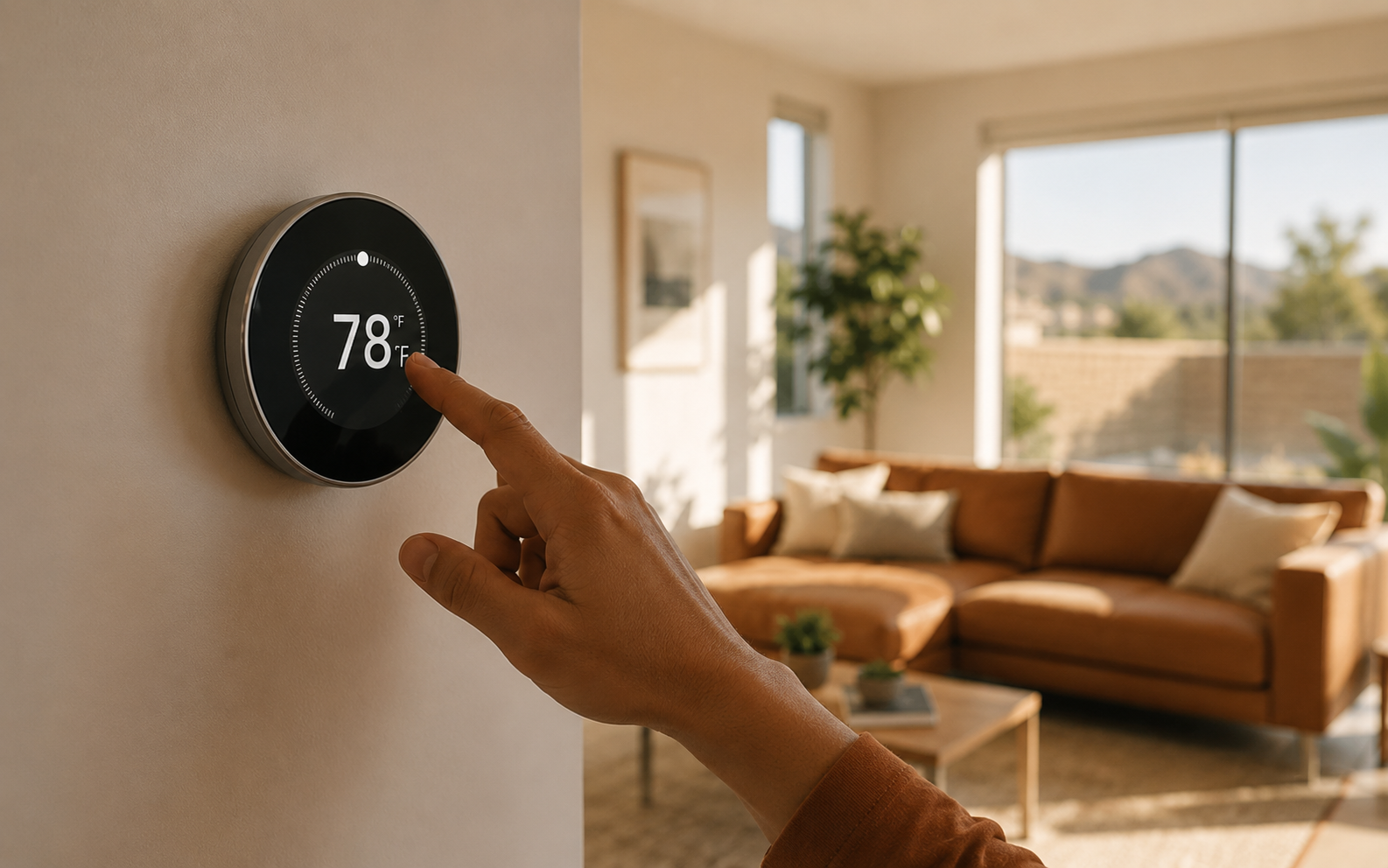
TL;DR
The best summer thermostat setting in California is about 78 degrees F when you are home and awake, around 82 asleep, and around 85 when away, per ENERGY STAR. The DOE says setting back 7-10 degrees F for 8 hours a day saves roughly 10% a year on cooling. Every degree you raise the setpoint trims runtime, and a programmable or smart thermostat captures the savings automatically without sacrificing comfort.
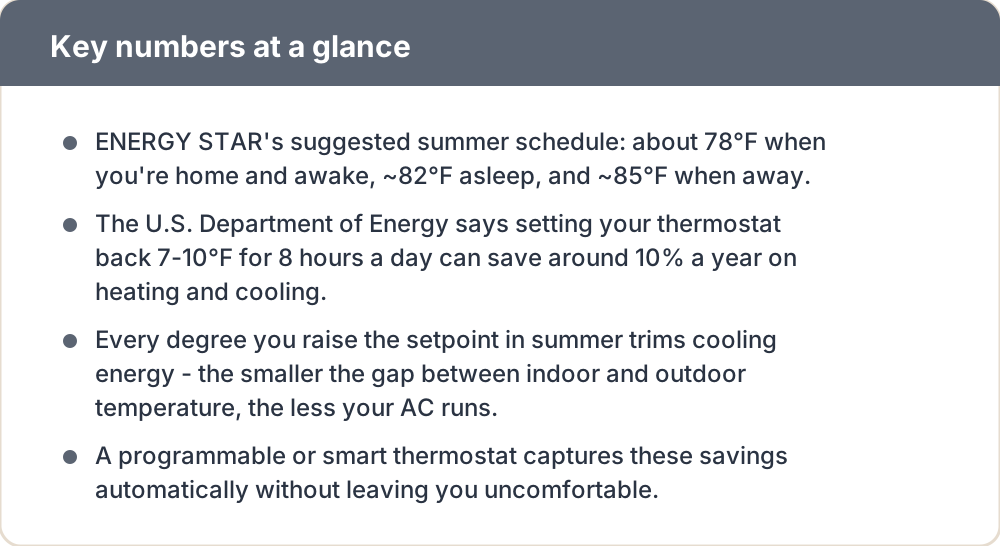
- ENERGY STAR's suggested summer schedule: about 78°F when you're home and awake, ~82°F asleep, and ~85°F when away.
- The U.S. Department of Energy says setting your thermostat back 7-10°F for 8 hours a day can save around 10% a year on heating and cooling.
- Every degree you raise the setpoint in summer trims cooling energy - the smaller the gap between indoor and outdoor temperature, the less your AC runs.
- A programmable or smart thermostat captures these savings automatically without leaving you uncomfortable.
On this page
What's the best thermostat setting for summer?
ENERGY STAR's widely cited guidance is to set your thermostat around 78°F when you're home and awake in summer, nudge it up to about 82°F while you sleep, and let it drift to roughly 85°F when the house is empty. The goal isn't a single magic number - it's keeping the gap between your indoor and outdoor temperature as small as you comfortably can, because that gap is what makes your AC work.
How much does a higher setpoint actually save?
The U.S. Department of Energy estimates that setting your thermostat back 7°-10°F from its normal setting for 8 hours a day can save about 10% a year on heating and cooling. In a hot inland California climate where the AC runs hard from June through September, that 10% is a meaningful chunk of your summer electric bill.
| Time | Suggested setting | Why |
|---|---|---|
| Home & awake | ~78°F | Comfortable, smaller temp gap |
| Asleep | ~82°F | You feel less; big overnight savings |
| Away (work/errands) | ~85°F | System idles, not off |
| Before you return | Pre-cool to 78°F | Comfort without overworking the AC |
Why does every degree matter more in the Inland Empire?
On a 105°F Ontario afternoon, cooling your home to 72°F means fighting a 33-degree gap; cooling to 78°F cuts that to 27 degrees. Your AC runs less, cycles less, and draws less power. The hotter your climate, the more each degree of setback is worth - which is exactly why this matters more here than in a mild coastal town.
Should I turn the AC off completely when I leave?
Usually no. Letting the house get extremely hot forces the AC to work overtime to recover, and in humid spells it can let moisture build up. The better move is to set back to about 85°F while you're away so the system idles rather than shutting off, then have it cool back down before you return.
How a programmable or smart thermostat helps
A programmable thermostat runs this schedule for you so you're not manually adjusting it (and forgetting). Smart thermostats go further - they learn your routine, use your phone's location to ease off when you leave, and show you where the energy goes. That automation is how most homes actually capture the DOE's ~10% savings.
A simple summer schedule to copy
Use the table below as a starting point, then adjust a degree or two for your own comfort. Ceiling fans let you raise the setpoint a few extra degrees because moving air feels cooler - just remember fans cool people, not rooms, so turn them off when you leave.
Frequently asked questions
It's not harmful, but it's expensive in a hot climate - the lower you set it, the bigger the gap with the outdoor heat and the more your AC runs. Moving from 72°F to 78°F when home can noticeably cut your summer bill.
Setting back to about 85°F usually beats turning it fully off - the DOE notes setbacks of 7-10°F for 8 hours save around 10% a year, without the long, hard recovery run a fully-off house needs.
Around 82°F is ENERGY STAR's summer sleep suggestion. Pair it with a fan and most people sleep comfortably while the AC barely runs.
Local next step
Turn this guide into a site-specific answer.
Guides explain the decision. Equipment condition, access, and safe next steps still need to match the home or business. Review the relevant service scope or request an assessment for Ontario, the Inland Empire, or East Los Angeles County. Availability depends on the current schedule.