How Much Does It Cost to Replace an AC in California? (2026)
A full AC replacement runs about $5,000-$12,000 in 2026, and new R-454B systems cost 15-30% more than the old units they replace. Here's what actually drives the price in California.

Owner & Lead HVAC Technician, Alex Air & Heating · EPA 608 Universal Certified · Ontario, CA
TL;DR
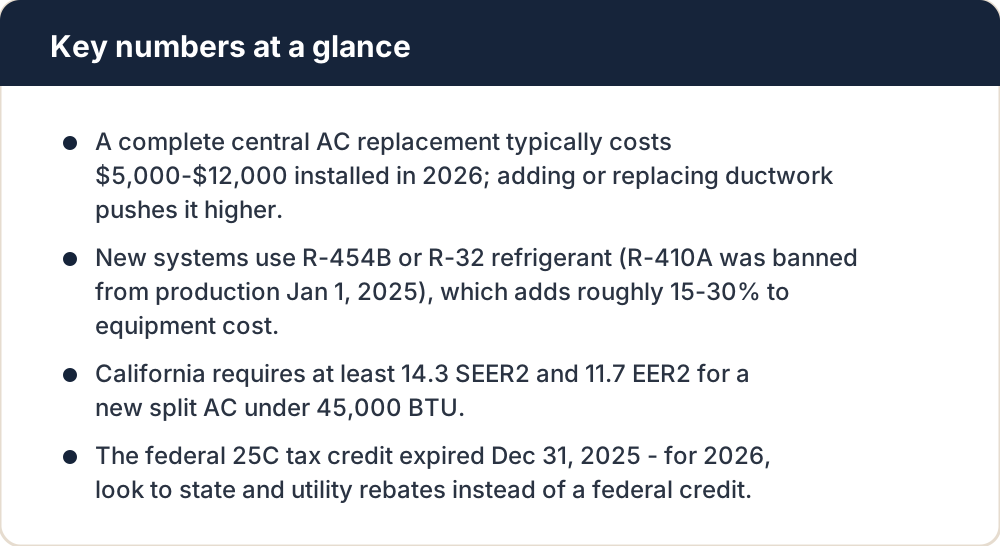
Replacing a central AC in California costs about $5,000-$12,000 installed in 2026, with new or added ductwork pushing it higher. New systems use R-454B or R-32 refrigerant (R-410A was banned from production January 1, 2025), which adds roughly 15-30% to equipment cost, and California requires at least 14.3 SEER2 and 11.7 EER2. The federal 25C tax credit expired December 31, 2025-look to state and utility rebates instead.
- A complete central AC replacement typically costs $5,000-$12,000 installed in 2026; adding or replacing ductwork pushes it higher.
- New systems use R-454B or R-32 refrigerant (R-410A was banned from production Jan 1, 2025), which adds roughly 15-30% to equipment cost.
- California requires at least 14.3 SEER2 and 11.7 EER2 for a new split AC under 45,000 BTU.
- The federal 25C tax credit expired Dec 31, 2025 - for 2026, look to state and utility rebates instead of a federal credit.
On this page
- What does a full AC replacement cost in 2026?
- What drives the price up or down?
- Why are 2026 systems more expensive than a few years ago?
- What efficiency (SEER2) do I need in California?
- Is there still a tax credit for a new AC in 2026?
- Repair or replace - when is replacement the smarter buy?
- How to get an honest replacement quote in the Inland Empire
What does a full AC replacement cost in 2026?
Most California homeowners pay between $5,000 and $12,000 to replace a central air conditioning system in 2026, installed. Where you land depends on the size of your home, the efficiency (SEER2) you choose, and whether your ductwork needs work. A simple like-for-like swap on a small home sits near the bottom of that range; a high-efficiency system on a larger home, or one that needs new ducts, sits at the top.
What drives the price up or down?
Five things move the number most:
- System size (tonnage) - bigger homes need more capacity
- Efficiency rating - higher SEER2 units cost more up front but cut summer bills
- Ductwork - repairing or replacing ducts can add thousands
- Refrigerant type - new A2L systems (R-454B/R-32) cost more than the old R-410A units
- Difficulty of the install - access, electrical upgrades, and permits
| Scope | Typical cost (2026) |
|---|---|
| Like-for-like swap, smaller home | $5,000-$7,500 |
| Mid-range high-efficiency system | $7,500-$10,000 |
| High-efficiency + larger home | $10,000-$12,000+ |
| Add/replace ductwork | +$2,000-$8,000 |
Why are 2026 systems more expensive than a few years ago?
The refrigerant transition. R-410A - the refrigerant in almost every system installed over the last 15 years - was banned from new manufacture and import on January 1, 2025 under the EPA's AIM Act. New equipment is built for R-454B or R-32, which are far kinder to the climate but roughly 15-30% more expensive to produce. That cost shows up in your 2026 quote.
What efficiency (SEER2) do I need in California?
California sits in the U.S. Department of Energy's Southwest region, which has stricter minimums than most of the country. A new split-system AC under 45,000 BTU must be at least 14.3 SEER2 and also meet an 11.7 EER2 minimum; larger systems must be at least 13.8 SEER2. Higher-efficiency units cost more but pay you back on every hot Inland Empire afternoon.
Is there still a tax credit for a new AC in 2026?
No federal one. The federal 25C Energy Efficient Home Improvement Credit - which used to give up to $600 for a qualifying high-efficiency central AC - expired December 31, 2025. For any system installed in 2026, there is no 25C credit. Don't let an outdated article talk you into counting on it.
What still helps: state and utility rebates and IRA rebate programs were not repealed. Amounts vary by county and utility, so check your local program before you buy.
Repair or replace - when is replacement the smarter buy?
If your system is under about 10 years old and the repair is minor, fix it. But once you're facing a compressor or evaporator coil on a 12+ year old R-410A unit, replacement usually wins: parts and refrigerant for old systems keep getting pricier, and a new high-efficiency unit cuts your summer bills.
How to get an honest replacement quote in the Inland Empire
Get an itemized, written quote that lists the equipment, SEER2/EER2 ratings, refrigerant type, ductwork, permits, and the warranty. Compare quotes on the same SEER2 tier, ask about local rebates (not the expired federal credit), and make sure the installer sizes the system with a real load calculation rather than just matching what was there.
Frequently asked questions
Mostly the refrigerant change. R-410A was banned from production on January 1, 2025, so new systems use R-454B or R-32, which cost about 15-30% more to build. Higher SEER2 minimums and general price inflation add to it.
No. The federal 25C credit expired December 31, 2025. For 2026 there is no federal credit, but state and utility rebates and IRA programs may still help - check your local utility.
At least 14.3 SEER2 and 11.7 EER2 for a split AC under 45,000 BTU (California is in the DOE Southwest region), and at least 13.8 SEER2 for larger units.
Local next step
Turn this guide into a site-specific answer.
Guides explain the decision. Equipment condition, access, and safe next steps still need to match the home or business. Review the relevant service scope or request an assessment for Ontario, the Inland Empire, or East Los Angeles County. Availability depends on the current schedule.