9 Commercial HVAC Warning Signs That Need Fast Service
Commercial HVAC emergency signs: safe observations that help a facility manager decide when to request urgent evaluation.

Owner & Lead HVAC Technician, Alex Air & Heating · EPA 608 Universal Certified · Ontario, CA
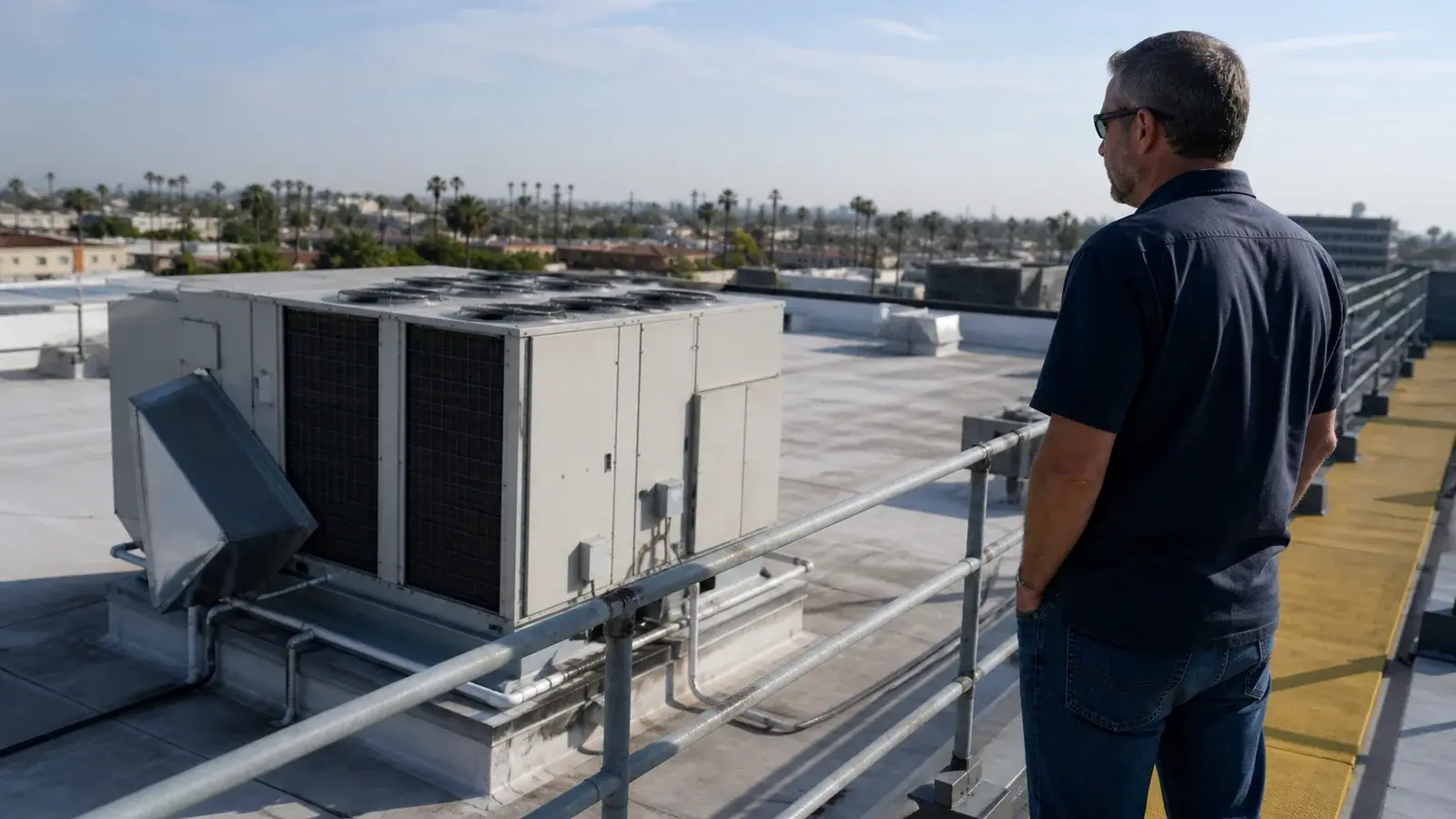
TL;DR
Commercial HVAC emergency signs are conditions that affect safety, essential operations, or the building’s ability to maintain a workable environment—not merely an inconvenient noise. Smoke, electrical odor, repeat electrical trips, water near electrical equipment, loss of required ventilation, or a critical comfort failure warrant urgent evaluation. Keep people away from unsafe equipment, document what is safely observable, and request qualified service; availability depends on the schedule.
- Document safe observations and scope before deciding.
- Do not treat a general rule as a project-specific conclusion.
- Service availability depends on the schedule.
On this page
Which commercial HVAC warning signs need fast evaluation?
Commercial HVAC emergency signs are conditions that affect safety, essential operations, or the building’s ability to maintain a workable environment—not merely an inconvenient noise. Smoke, electrical odor, repeat electrical trips, water near electrical equipment, loss of required ventilation, or a critical comfort failure warrant urgent evaluation. Keep people away from unsafe equipment, document what is safely observable, and request qualified service; availability depends on the schedule.
Put safety and essential operations first
When a safety or essential-operation risk appears, stop non-essential activity and keep people away from unsafe equipment. Do not open electrical panels, handle wiring, or repeatedly reset a breaker.
Nine warning signs to document safely
| Record | Why it matters | Next action |
|---|---|---|
| Safety observation | Determines whether people should keep clear | Request qualified evaluation |
| Affected area | Shows operational importance | Describe occupants or use |
| Control message | Preserves visible evidence | Report exact message |
| Time pattern | Adds useful context | Record when observed |
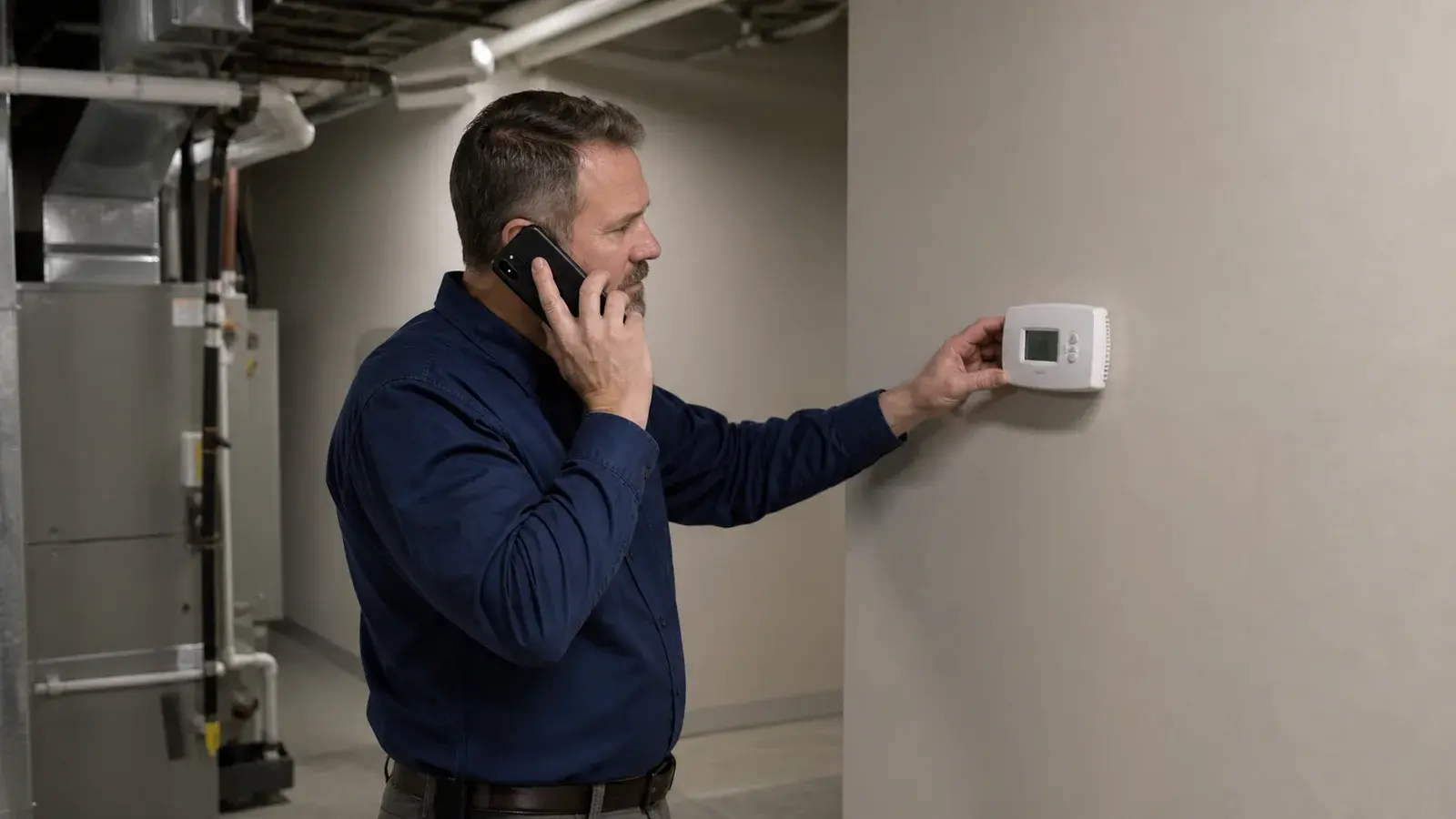
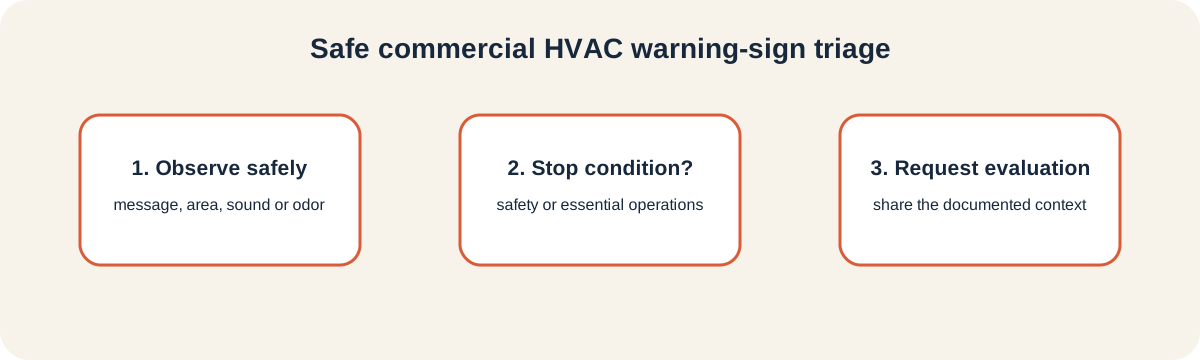
What to report when requesting service
Report the affected area, when it began, people or operational impact, system message, and what was safely observed. Do not infer an internal fault.
A local next step
Alex Air & Heating states service coverage for Ontario, Inland Empire, and East LA County. Request commercial HVAC repair; availability depends on the schedule.
Frequently asked questions
Commercial HVAC emergency signs are conditions that affect safety, essential operations, or the building’s ability to maintain a workable environment—not merely an inconvenient noise. Smoke, electrical odor, repeat electrical trips, water near electrical equipment, loss of required ventilation, or a critical comfort failure warrant urgent evaluation. Keep people away from unsafe equipment, document what is safely observable, and request qualified service; availability depends on the schedule.
No. Leave equipment off after a repeat trip and request qualified evaluation.
No. Availability depends on the schedule and the documented condition.
Area affected, time observed, operational impact and safe observations.
Local next step
Turn this guide into a site-specific answer.
Guides explain the decision. Equipment condition, access, and safe next steps still need to match the home or business. Review the relevant service scope or request an assessment for Ontario, the Inland Empire, or East Los Angeles County. Availability depends on the current schedule.