Warehouse HVAC Maintenance in the Inland Empire
Warehouse HVAC maintenance works best when each comfort-conditioning unit is tied to actual run time, dock-door air exchange, dust and the consequence of downtime—not a generic calendar.

Owner & Lead HVAC Technician, Alex Air & Heating · EPA 608 Universal Certified · Ontario, CA
TL;DR
Warehouse HVAC maintenance in the Inland Empire works best as an asset-based preventive program: inventory each comfort-conditioning unit, identify loads such as dock doors, dust and operating hours, then assign inspections, filter checks and documented follow-up by unit condition. It should cover building comfort equipment, not process HVAC; exact tasks and intervals must follow equipment manuals and observed site conditions.
- Start with an asset list, not a calendar copied from another warehouse.
- Dock doors, dust, run hours and zone use change the maintenance scope.
- Keep comfort HVAC separate from process or industrial equipment in the written plan.
- Document findings and owners so recurring issues can be reviewed before they become interruptions.
On this page
Build warehouse HVAC maintenance around the actual load
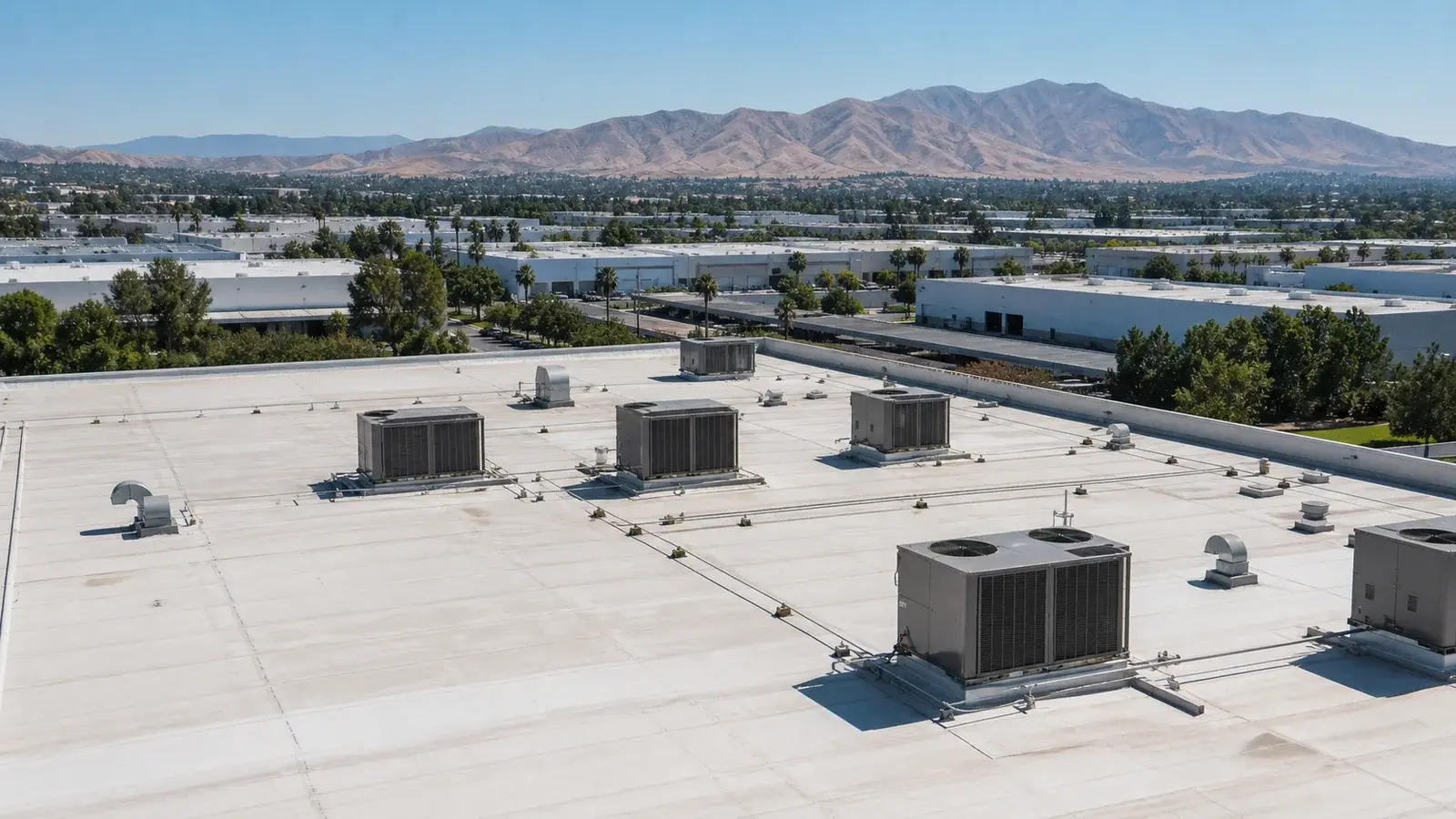
Warehouse HVAC maintenance in the Inland Empire should begin with how the building is used. Dock doors, dust, long operating hours, zoning and comfort expectations can affect a rooftop or unitary system differently from a small office. ASHRAE maintenance guidance is a useful framework for commercial comfort systems, while process or industrial HVAC needs its own scope. Start with a commercial HVAC maintenance conversation, not a one-size-fits-all checklist.
Create an asset-first maintenance record
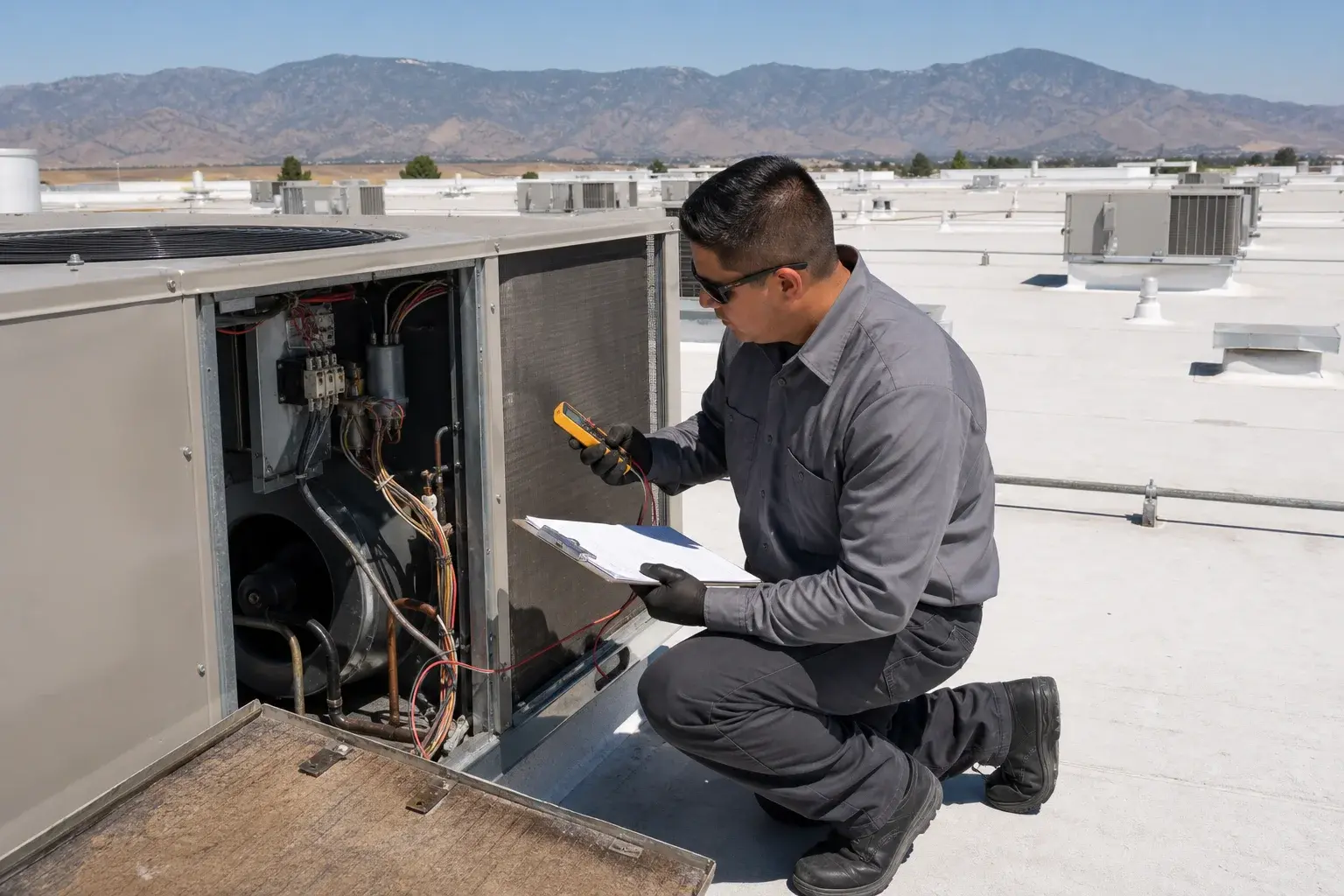
Give every comfort-conditioning asset a stable record before assigning work. The aim is to connect observed conditions to the unit and zone involved, so the next visit begins with evidence rather than memory.
- Unit location and zone served
- Model, controls and filter information from the equipment record
- Typical run hours, dock-door activity and dust exposure
- Safe roof or equipment access notes
- Prior findings, corrective actions and the responsible contact
| Operating condition | Maintenance planning question | Record to keep |
|---|---|---|
| High dock-door traffic | Which nearby zones see the largest air-exchange load? | Door-use pattern and related comfort reports |
| Dust-prone activity | Do filters and coils need condition-led attention? | Filter condition and inspection finding |
| Long daily schedules | Are controls and operating hours aligned with use? | Schedule and override history |
| Recurring comfort complaint | Which unit, zone and time are involved? | Location, time, condition and follow-up owner |
Use a repeatable inspection-to-follow-up workflow
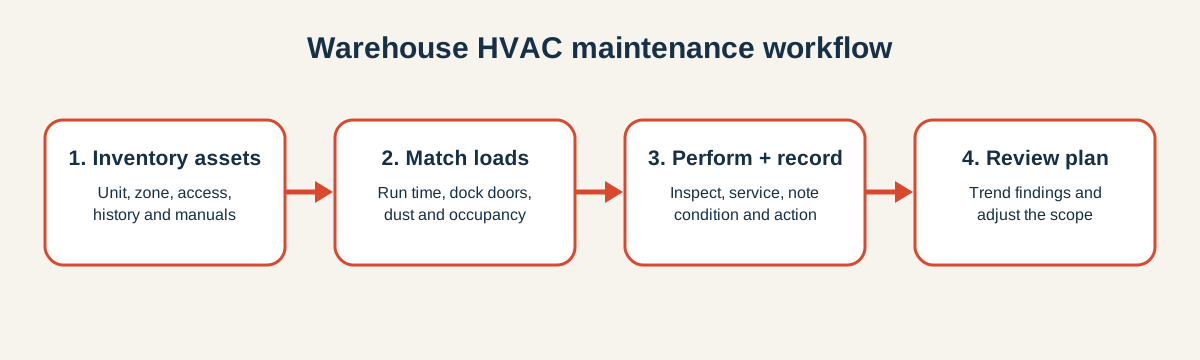
A planned visit should identify the assets to inspect, the condition to record, any follow-up owner and the next review point. The U.S. Department of Energy notes that effective operations and maintenance helps commercial equipment operate as intended and reduces avoidable failures; that is a planning principle, not a promise of a particular result.
- 1Confirm the current asset list and access conditions.
- 2Review changes in hours, tenant use, doors, dust or reported comfort.
- 3Inspect the agreed equipment and record observed condition.
- 4Assign any corrective item with a clear owner and follow-up date.
- 5Review recurring findings before setting the next scope.
Connect records to service and capital decisions
Condition records help a facilities team distinguish routine work from a recurring issue that needs a larger conversation. They also make it easier to compare like-for-like proposals without claiming a fixed life, cost or uptime outcome. For related office planning, see the office HVAC maintenance checklist; for a broader baseline, see commercial HVAC maintenance in Los Angeles County.
Need a documented scope for a warehouse in a listed Inland Empire or East Los Angeles County service area? Review the property, assets and operating conditions through commercial HVAC maintenance.
Frequently asked questions
There is no universal interval. A useful schedule reflects the equipment manual, run time, dust, door activity, access, prior findings and the consequence of a comfort outage. Set the cadence by asset condition and revise it from documented results.
Record each comfort-conditioning unit’s location, served zone, model information, filters, access notes, operating schedule, known history and responsible party. This gives a maintenance provider a usable starting point instead of a generic unit count.
Not automatically. This guide addresses building comfort equipment. Process HVAC, refrigeration and specialized industrial systems can have different design, safety and maintenance requirements and should be scoped separately.
Frequent door openings and traffic can change air exchange, dust exposure and the load on nearby zones. Record where and when those conditions occur so the plan can focus inspections and follow-up on the affected equipment.
Alex Air & Heating serves listed Inland Empire and East Los Angeles County communities. A commercial maintenance discussion can start with the property type, asset list and operating needs; availability and final scope depend on the site and schedule.
Local next step
Turn this guide into a site-specific answer.
Guides explain the decision. Equipment condition, access, and safe next steps still need to match the home or business. Review the relevant service scope or request an assessment for Ontario, the Inland Empire, or East Los Angeles County. Availability depends on the current schedule.