AC Not Turning On? 9 Things to Check (and the One You Should Never DIY)
Before you panic in a heatwave, most 'dead' AC units come down to a tripped breaker, the thermostat, or a $15 float switch. Here is the exact order to check - and the one repair you should never do yourself.

Owner & Lead HVAC Technician, Alex Air & Heating · EPA 608 Universal Certified · Ontario, CA
TL;DR
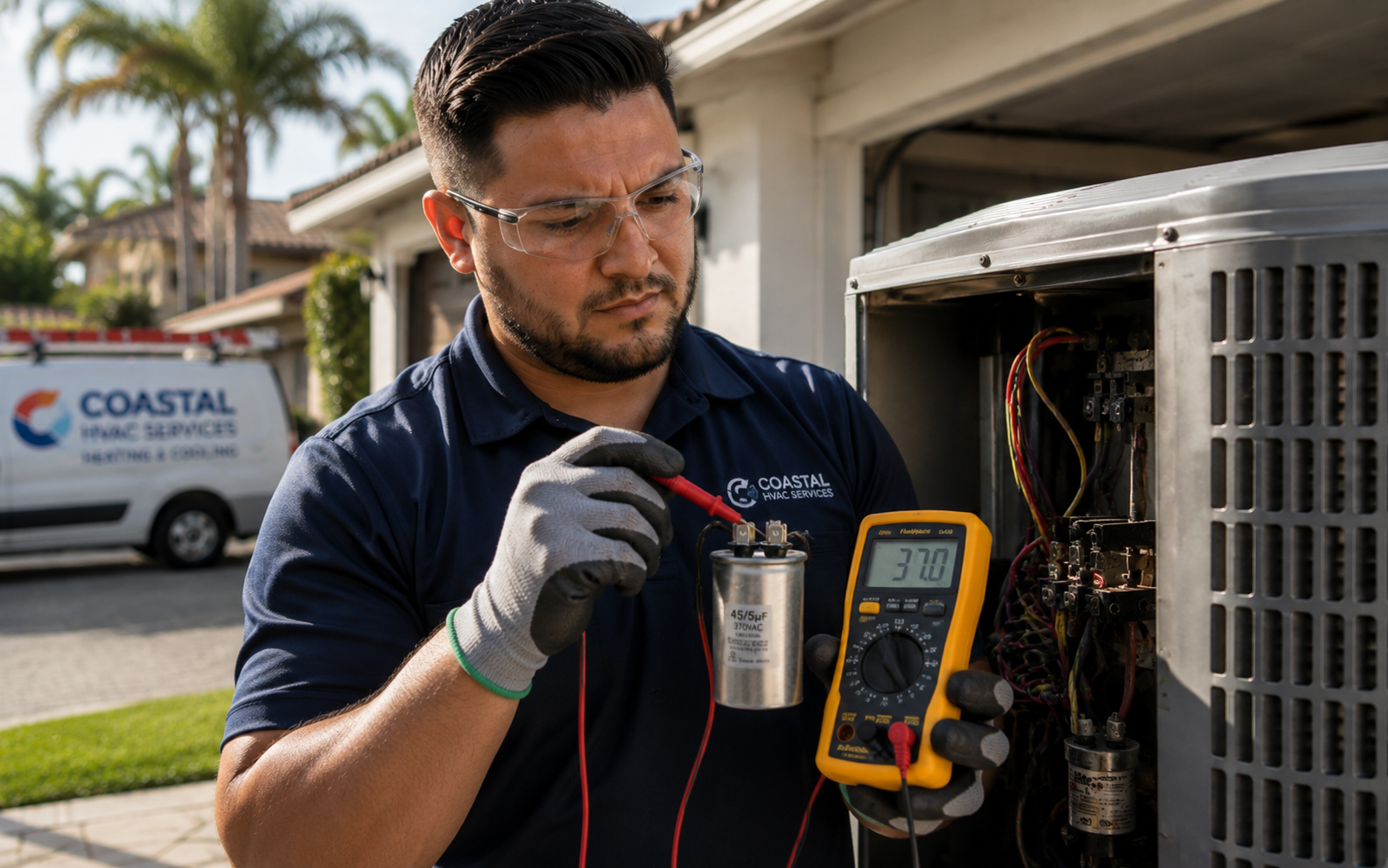
If your AC will not turn on, check in this order: a tripped breaker, the thermostat (wrong mode or dead batteries), a blown fuse, and a clogged condensate line that tripped the float safety switch. A failed capacitor causes about 30% of no-cool calls but is a pro repair, since capacitors store a lethal charge. If the breaker trips again after one reset, stop and call a technician-repeated resets are a fire risk.
- The three most frequent causes are a tripped breaker, a bad or dead-battery thermostat, and a blown fuse - start there.
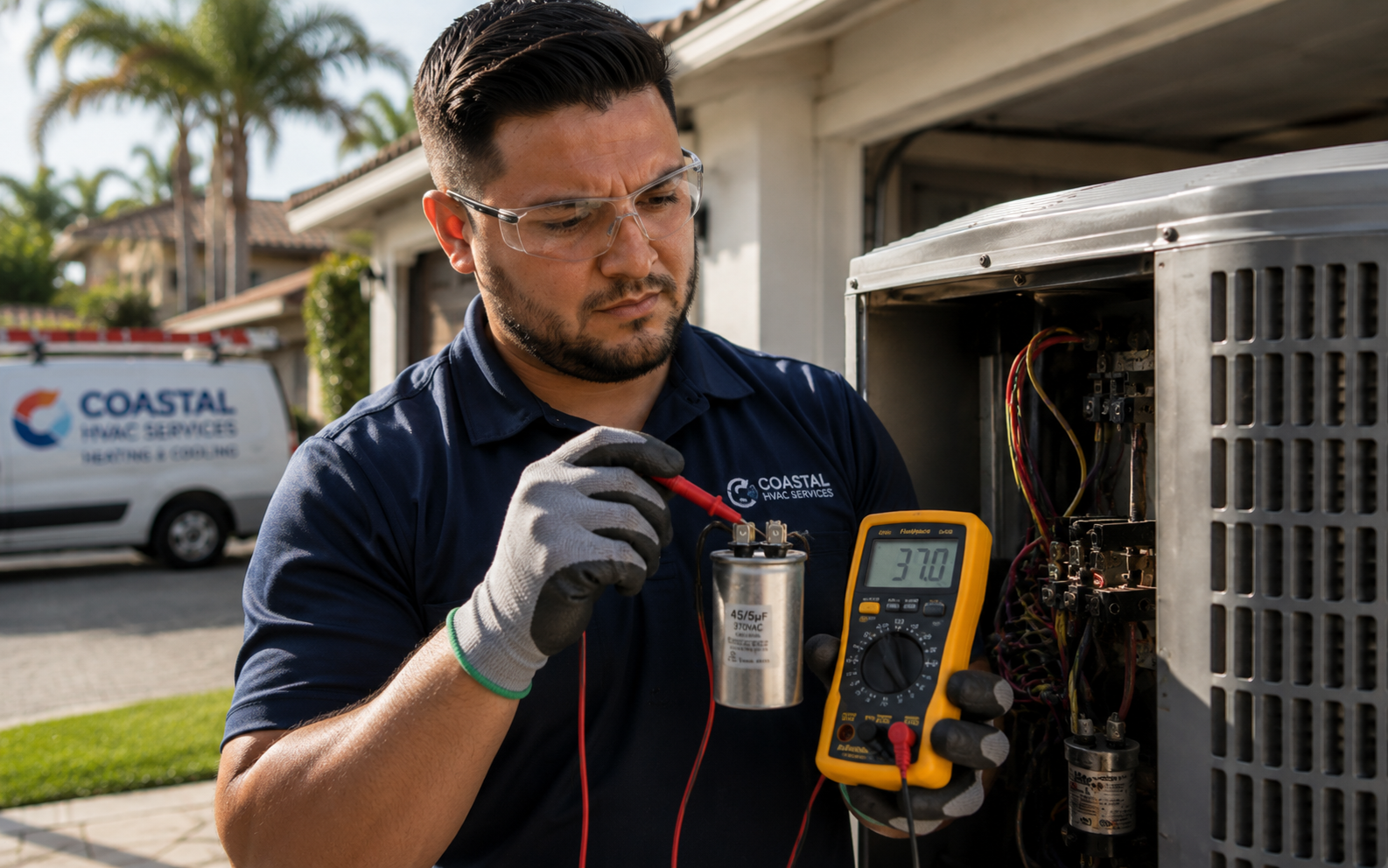
- A failed capacitor causes roughly 30% of no-cool service calls, but it is a pro repair: capacitors store a lethal charge.
- A clogged condensate line trips the float safety switch and silently shuts the system off - an easy cause to miss.
- If the breaker trips again after one reset, stop. Repeated resets are a fire risk - turn the AC off and call a technician.
On this page
Start here: the 3 most common reasons an AC will not turn on
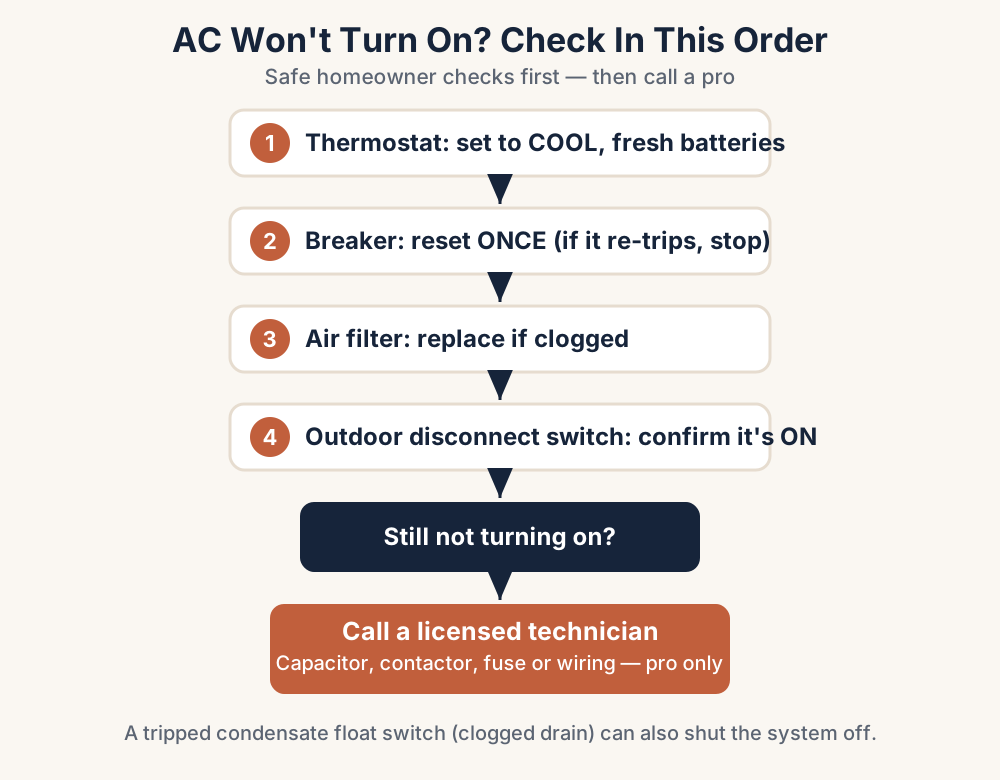
According to Carrier, the most frequent causes of an AC that will not start are, in order, a tripped circuit breaker, a thermostat problem, and a blown fuse. Before anything else: make sure the thermostat is set to COOL with fresh batteries and the temperature set below the room reading, then check your electrical panel.
The 9 reasons your AC will not turn on
- 1Tripped circuit breaker - reset once; if it trips again, stop and call a pro.
- 2Thermostat set wrong or with dead batteries - set to COOL, replace batteries.
- 3Blown fuse in the disconnect box or air handler.
- 4Outdoor disconnect switch left in the OFF position after service.
- 5Clogged air filter causing the system to shut down on safety.
- 6Tripped condensate float switch from a clogged drain line.
- 7Failed run capacitor - about 30% of no-cool calls (pro repair).
- 8Burned contactor that will not send power to the compressor (pro repair).
- 9Bad low-voltage transformer or wiring on the 24V control circuit (pro repair).
| Check | Safe to DIY? | Notes |
|---|---|---|
| Thermostat mode + batteries | Yes | Set to COOL, below room temp |
| Reset breaker (once) | Yes | If it re-trips, stop |
| Replace clogged filter | Yes | Common quick fix |
| Confirm outdoor disconnect is ON | Yes | Often left off after service |
| Capacitor / contactor | No | Stores a lethal charge |
| Fuse / transformer / wiring | No | Electrical repair |
| Refrigerant / motor | No | Licensed tech only |
One reset is fine. A breaker that trips again is warning you of a short or overload - forcing it back repeatedly is a real fire hazard. Turn the AC off at the thermostat and call a technician.

A new 2025+ cause: the refrigerant leak-sensor lockout
Systems installed after the 2025 refrigerant change use A2L refrigerants (R-454B or R-32) and ship with built-in leak-detection sensors. If that sensor trips, the system can lock out and refuse to start as a safety measure - a brand-new 'won't turn on' cause that older troubleshooting articles never mention. It needs a technician to diagnose.
When to call an Inland Empire technician
If you have checked the thermostat, breaker, filter and disconnect and your AC still will not start - or the breaker trips again, or you smell burning - it is time for a pro. Capacitors, contactors, fuses and wiring are inexpensive parts but genuinely unsafe to work on live. In a Southern California heatwave, same-day service is usually available if you call early.
Sources & references
Frequently asked questions
No sound usually points to a power problem: a tripped breaker, blown fuse, an outdoor disconnect switch left off, or a tripped condensate float switch. Check those first. If power is fine but the outdoor unit still will not start, a failed capacitor or contactor is the likely culprit - and that is a pro repair.
No. Reset it once. If it trips again, leave it off and call a technician. A breaker that keeps tripping is telling you there is a short or an overload, and repeatedly forcing it back on is a genuine fire risk.
We do not recommend it. Even with the power off, a capacitor can hold a lethal electrical charge and must be discharged safely. It is an inexpensive part but a dangerous DIY - this is the one on this list to leave to a pro.
That is classic float-switch behavior. A clogged condensate drain lets water back up in the pan, the float safety switch senses it, and it shuts the system off to prevent water damage. Clearing the drain line usually fixes it.
Local next step
Turn this guide into a site-specific answer.
Guides explain the decision. Equipment condition, access, and safe next steps still need to match the home or business. Review the relevant service scope or request an assessment for Ontario, the Inland Empire, or East Los Angeles County. Availability depends on the current schedule.