SEER2 Explained: What California's 2026 AC Efficiency Rules Mean for You
SEER2 is the efficiency standard every new AC must meet. In California - a DOE 'Southwest' state - the minimum is 14.3 SEER2 plus an added 11.7 EER2 rule, and the federal tax credit that used to help pay for an upgrade ended in 2025. Here is what actually applies in 2026.

Owner & Lead HVAC Technician, Alex Air & Heating · EPA 608 Universal Certified · Ontario, CA
TL;DR
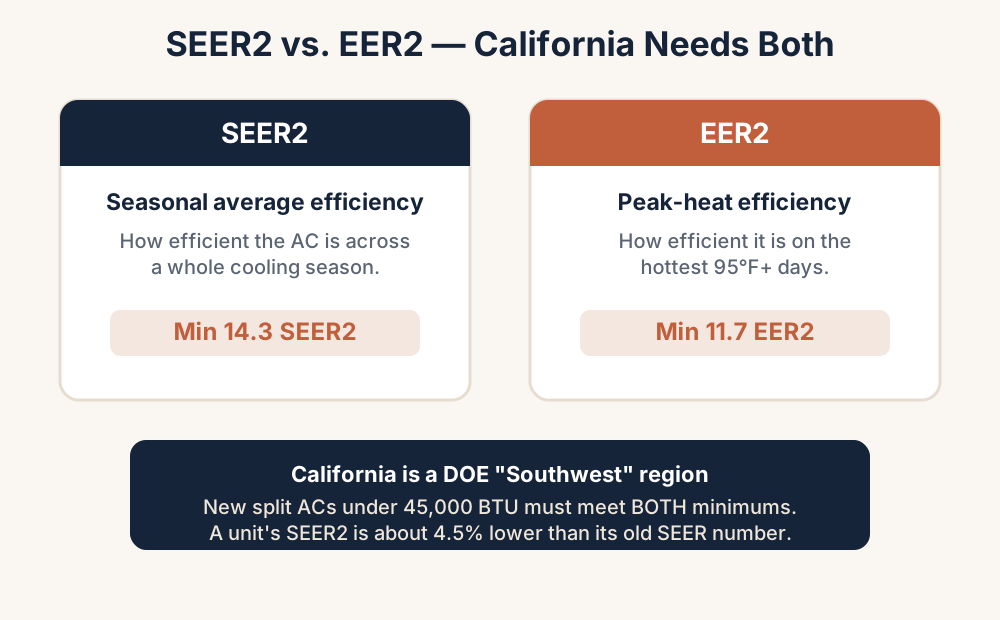
SEER2 is the efficiency standard every new AC must meet, and a unit's SEER2 rating is about 4.5% lower than its old SEER number. California sits in the DOE 'Southwest' region, so split ACs under 45,000 BTU must be at least 14.3 SEER2 and also meet an 11.7 EER2 minimum. New 2026 systems use R-454B or R-32, and the federal 25C tax credit expired December 31, 2025.
- SEER2 (effective January 1, 2023) is a tougher, more realistic efficiency test - a unit's SEER2 number is about 4.5% lower than its old SEER number.
- California is in the DOE 'Southwest' region: split ACs under 45,000 BTU must be at least 14.3 SEER2 AND meet an 11.7 EER2 minimum.
- R-410A refrigerant was banned from production on January 1, 2025; new 2026 systems use R-454B or R-32 (A2L).
- Important 2026 update: the federal 25C tax credit for high-efficiency HVAC expired December 31, 2025 - look to state, utility and IRA rebates instead.
On this page
What is SEER2, and why did it replace SEER?
SEER2 (Seasonal Energy Efficiency Ratio 2) is the efficiency rating every new central AC and heat pump must meet. It took effect January 1, 2023, replacing the old SEER test. The key change: SEER2 tests equipment against much higher external static pressure - 0.5 inches of water column instead of 0.1 - which reflects the resistance of real ductwork. Because the test is harder, the same physical unit scores about 4.5% lower in SEER2 than it did in SEER.
| SEER (old) | SEER2 (current) | |
|---|---|---|
| Effective | Before 2023 | Jan 1, 2023 |
| Test static pressure | 0.1 in. WC | 0.5 in. WC (realistic) |
| Same unit rating | e.g. 15 SEER | about 14.3 SEER2 |
| Reflects real ducts? | Less | More |
What is the minimum SEER2 in California?
This is where California differs from most of the country. The U.S. is split into three regions, and California sits in the Southwest - the only region that adds an EER2 (peak-heat) minimum on top of SEER2, because of our hot, dry summers. Here are the minimums that actually govern what you are allowed to install here.
| Equipment | Minimum SEER2 | Minimum EER2 / HSPF2 |
|---|---|---|
| Split AC under 45,000 BTU/h | 14.3 SEER2 | 11.7 EER2 |
| Split AC 45,000 BTU/h and up | 13.8 SEER2 | 11.2 EER2 |
| Split heat pump (all sizes) | 14.3 SEER2 | 7.5 HSPF2 |
The other 2025 change: R-410A is out, R-454B and R-32 are in
Alongside SEER2, the refrigerant standard changed. Under the EPA's AIM Act, R-410A was banned from new manufacture and import on January 1, 2025. New systems now use R-454B or R-32 - 'A2L' refrigerants with a dramatically lower climate impact (R-454B has a global-warming potential around 466 versus about 2,088 for R-410A). A2L systems are mildly flammable by classification, ship with built-in leak sensors, and cost roughly 15-30% more than the old units.
With R-410A production banned, remaining supply is scarce and prices have surged. If an aging R-410A unit needs refrigerant, weigh the rising recharge cost against replacing it with a new, efficient R-454B system.
Wait - didn't there used to be a tax credit? (2026 update)
Yes, and this is where most articles are now wrong. Through 2025, the federal 25C Energy Efficient Home Improvement Credit gave up to $2,000 for a qualifying heat pump and up to $600 for a high-efficiency central AC (which required 17.0 SEER2 / 12.0 EER2). But the One Big Beautiful Bill Act terminated 25C after December 31, 2025. For any system installed in 2026, there is no federal 25C credit - do not let an outdated blog talk you into counting on it.
State and utility rebates and IRA rebate programs (such as HOMES / HEEHRA) were not repealed and can still offset a high-efficiency upgrade. Amounts vary by county and utility, so check your local program before you buy.
What SEER2 means when you replace your AC in the Inland Empire
Practically, when you replace a system in Ontario or East LA County in 2026, it must be at least 14.3 SEER2 / 11.7 EER2, and it will use R-454B or R-32. Higher SEER2 units cost more up front but cut summer bills - often the right call given how hard AC works here. Compare quotes on a SEER2-to-SEER2 basis, ask about EER2 (it matters most on our hottest days), and check for local rebates instead of the expired federal credit.
Frequently asked questions
California is in the DOE Southwest region, which has stricter rules than most of the country. A new split-system central AC under 45,000 BTU/h must be at least 14.3 SEER2 and also meet an 11.7 EER2 minimum. Larger split ACs (45,000 BTU/h and up) must be at least 13.8 SEER2 / 11.2 EER2.
No. SEER2 uses a tougher test that better reflects real-world ductwork conditions, so the same physical unit scores about 4.5% lower in SEER2 than it did in old SEER. A '15 SEER' unit is roughly '14.3 SEER2.' Always compare SEER2 to SEER2.
No. The federal 25C Energy Efficient Home Improvement Credit expired on December 31, 2025. For systems installed in 2026 there is no 25C credit - but state and utility rebates and IRA rebate programs may still help, so check your local utility before you buy.
R-454B or R-32. Both replaced R-410A, which was banned from new production on January 1, 2025. These are 'A2L' refrigerants with far lower climate impact; systems built for them cost a bit more but are the new standard.
Local next step
Turn this guide into a site-specific answer.
Guides explain the decision. Equipment condition, access, and safe next steps still need to match the home or business. Review the relevant service scope or request an assessment for Ontario, the Inland Empire, or East Los Angeles County. Availability depends on the current schedule.