How Much Does AC Repair Cost in 2026? Real Prices by Problem (Inland Empire)
Most AC repairs run $150-$600, but a capacitor is $120-$400 while a compressor can top $2,400. Here is what each repair really costs in 2026 - plus why refrigerant is getting pricier.

Owner & Lead HVAC Technician, Alex Air & Heating · EPA 608 Universal Certified · Ontario, CA
TL;DR
Most AC repairs in 2026 run $150-$600 all in, but the real AC repair cost depends on the part: a capacitor is $120-$400 while a compressor can top $2,400 - so the diagnosis, not the brand, drives your bill.
- Most AC repairs cost $150-$600, with the U.S. average around $350; a diagnostic visit is usually $75-$200 and is often credited toward the repair.
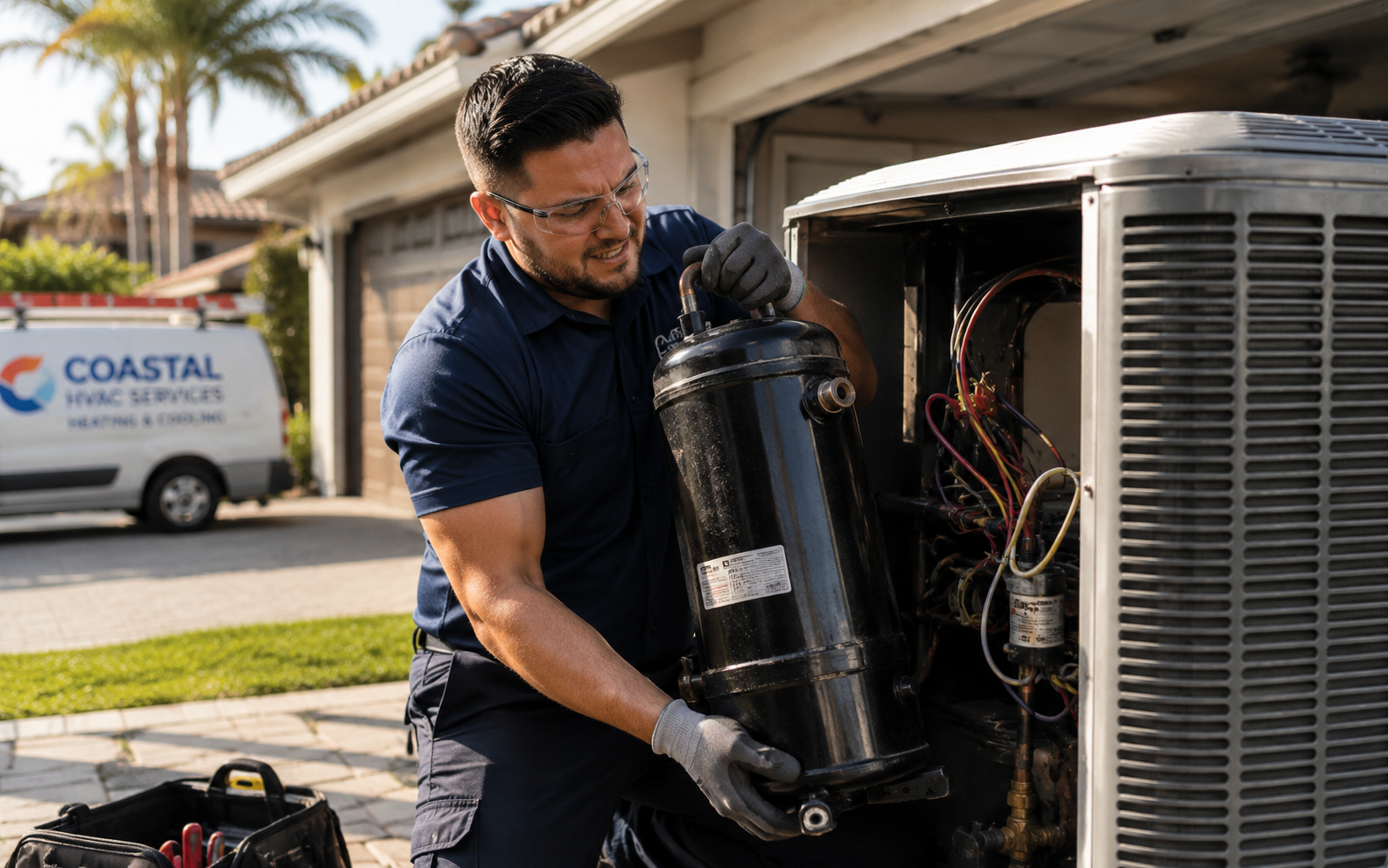
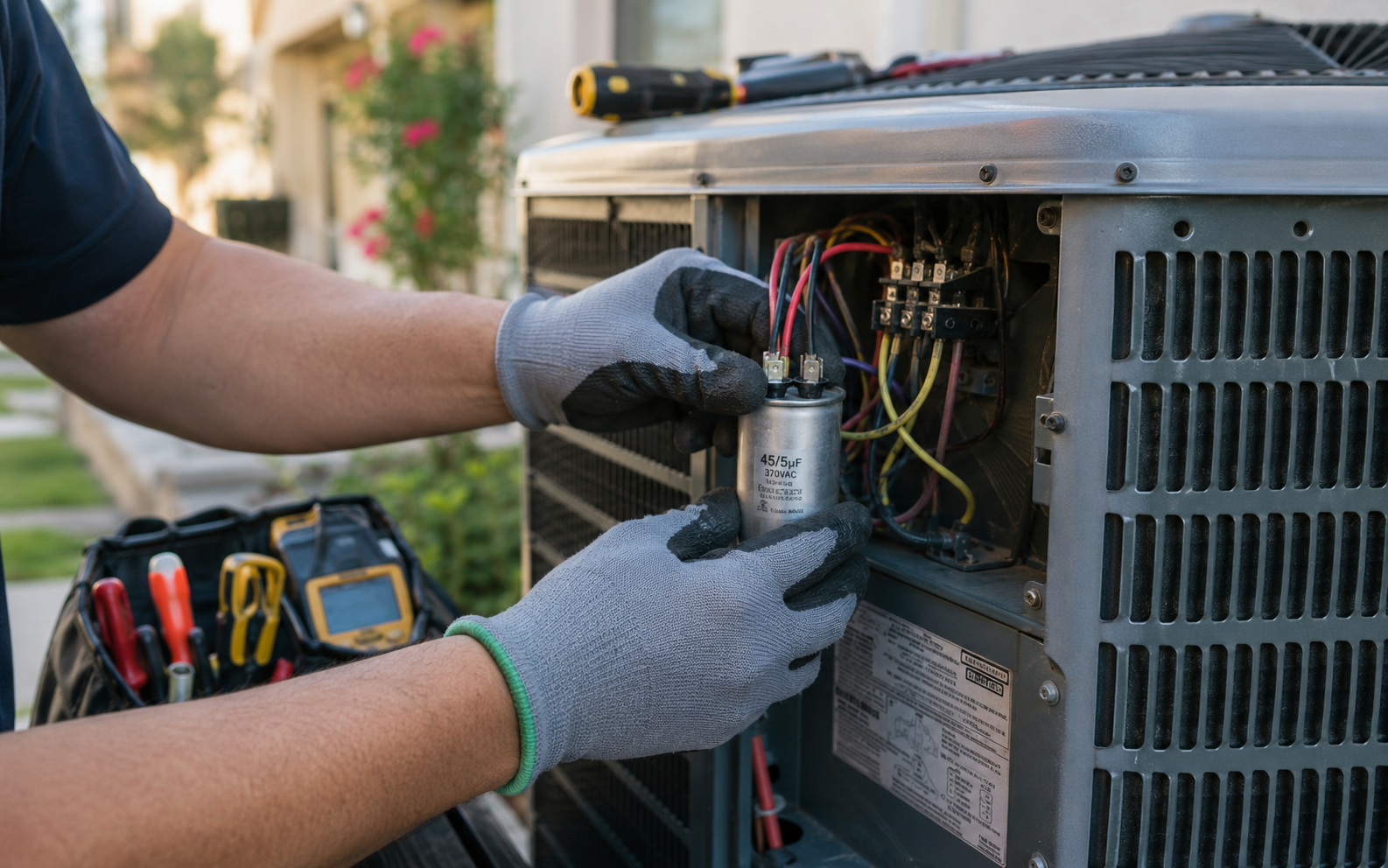
- The most common single repair - a failed capacitor - runs $120-$400. A new compressor is the expensive one at $850-$2,400+.
- Refrigerant recharges ($100-$600) are climbing because R-410A was banned from production on January 1, 2025.
- In the Inland Empire expect $95-$200/hr labor; some Ontario and Pomona companies waive the service-call fee if you book the repair.
On this page
What is the average AC repair cost in 2026?
Most air-conditioning repairs cost between $150 and $600, with the national average landing around $350. On top of that, expect a $75-$200 diagnostic (service-call) fee to find the problem - though many companies credit it toward the repair if you go ahead. Licensed labor in the Inland Empire runs about $95-$200 per hour, and after-hours or heatwave emergency visits add $150-$500.
| Repair | Typical cost (2026) | How common |
|---|---|---|
| Capacitor replacement | $120-$400 | Very common |
| Contactor replacement | $150-$400 | Common |
| Refrigerant recharge (R-410A) | $100-$600 | Common |
| Condensate drain clearing | ~$100 | Common |
| Condenser fan motor | $400-$1,000 | Occasional |
| Evaporator coil | $1,000-$4,500 | Less common |
| Compressor replacement | $850-$2,400+ | Expensive / less common |
Which AC repairs are cheap, and which are expensive?
The good news: the repairs we see most often are on the affordable end. A blown capacitor - the number-one cause of a no-cool call - is a $120-$400 fix. Contactors, drain lines and thermostats are all in the low hundreds. The expensive failures are the compressor and evaporator coil, which is exactly when you start weighing repair against replacement.
Why is my AC repair quote higher than last year?
One word: refrigerant. R-410A - the refrigerant in nearly every system installed over the last 15 years - was banned from new manufacture and import on January 1, 2025 under the EPA's AIM Act. Remaining supply is limited, and prices for related refrigerants jumped more than 300% during 2025. So any repair that requires topping off an older R-410A system costs more now, and that will only continue.
If your system is 10+ years old and needs refrigerant, paying rising R-410A prices to chase a leak can cost more over two summers than putting that money toward a new, more efficient R-454B system. Ask for both numbers before you decide.
Should I repair or replace my AC?
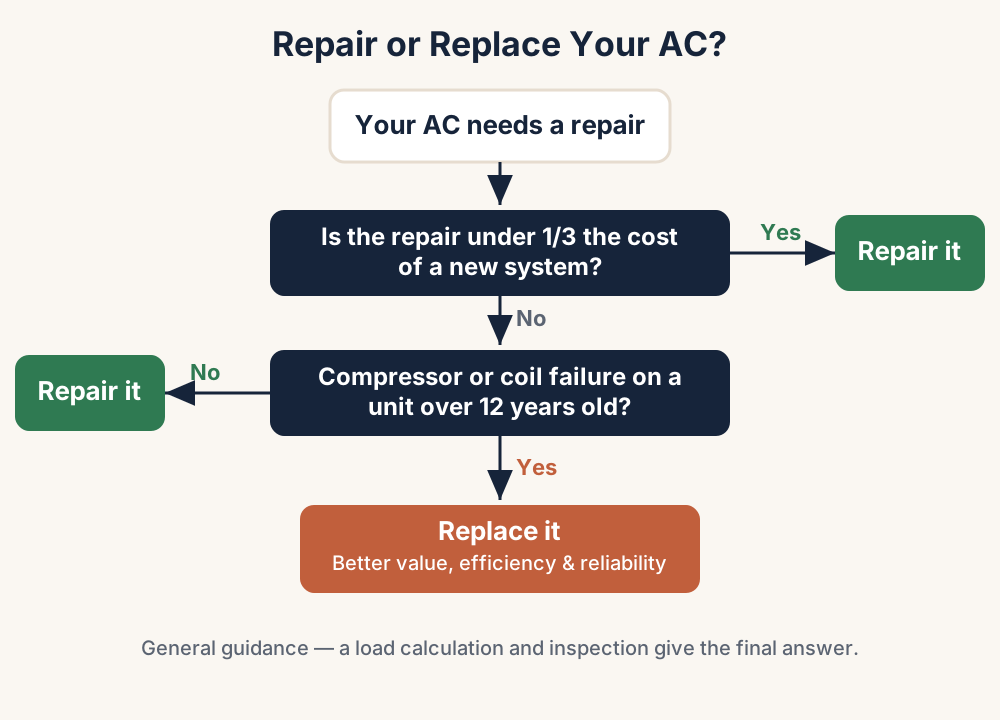
A simple rule of thumb: if the repair costs less than a third of a new system and your unit is under about 10 years old, repair it. If you are facing a compressor or coil on a 12+ year old system, replacement usually wins on cost, efficiency and reliability.
How do I avoid overpaying for AC repair?
- Get the diagnostic fee and repair price in writing before any work begins.
- Ask whether the diagnostic fee is credited toward the repair.
- For refrigerant issues, insist on a leak search - not just a top-off.
- Replace your filter and clear the condenser first; these free steps fix a surprising number of 'weak cooling' calls.
- Get a second quote on any repair over about $1,500.
Frequently asked questions
Often yes, if the repair is minor (capacitor, contactor, fan motor) and the system still uses affordable refrigerant. Once you are facing a compressor or evaporator coil on a 10-12+ year old R-410A unit, replacement usually makes more financial sense because parts, refrigerant and efficiency all work against the old system.
The biggest driver is refrigerant. R-410A was banned from new production on January 1, 2025, so what is left is scarce and prices have spiked. Any repair that involves recharging an older R-410A system now costs more, and that gap will keep widening.
Most Inland Empire companies charge a $75-$200 diagnostic to find the problem, and many (including us) credit that fee toward the repair if you move forward. Always get the diagnostic fee and the repair price in writing before work starts.
Typically $100-$350, and up to $600 on a large system. But low refrigerant almost always means a leak - simply adding more without finding and sealing the leak just pays to lose it again.
Local next step
Turn this guide into a site-specific answer.
Guides explain the decision. Equipment condition, access, and safe next steps still need to match the home or business. Review the relevant service scope or request an assessment for Ontario, the Inland Empire, or East Los Angeles County. Availability depends on the current schedule.