Central AC vs. Ductless Mini Split: Which Is Right for Your California Home? (2026)
Central AC costs $5,000-$12,000 and cools the whole house through ducts; a mini split starts around $2,000-$5,500 per zone and skips ducts entirely. Here is how to choose for an Inland Empire home in 2026.

Owner & Lead HVAC Technician, Alex Air & Heating · EPA 608 Universal Certified · Ontario, CA
TL;DR
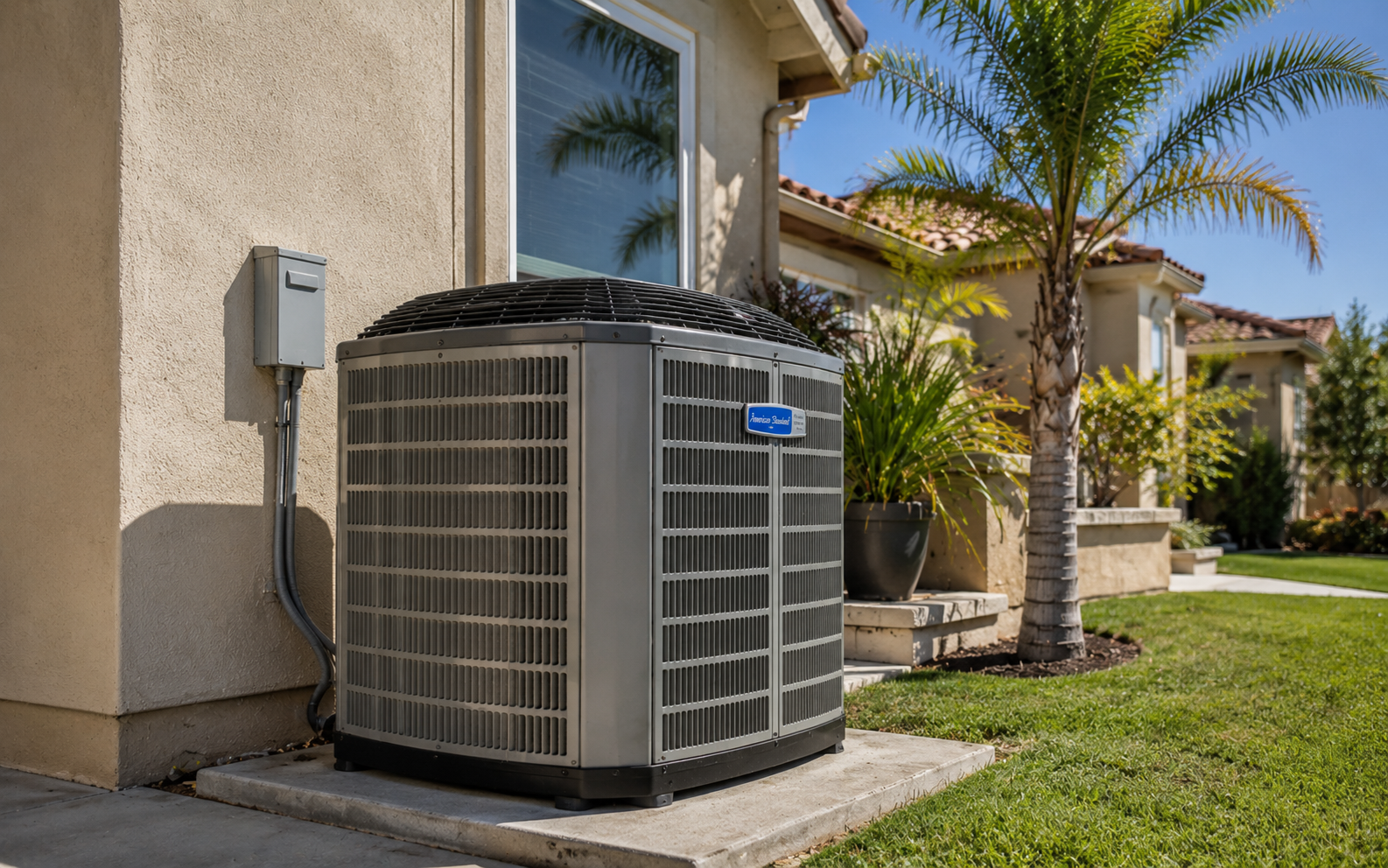
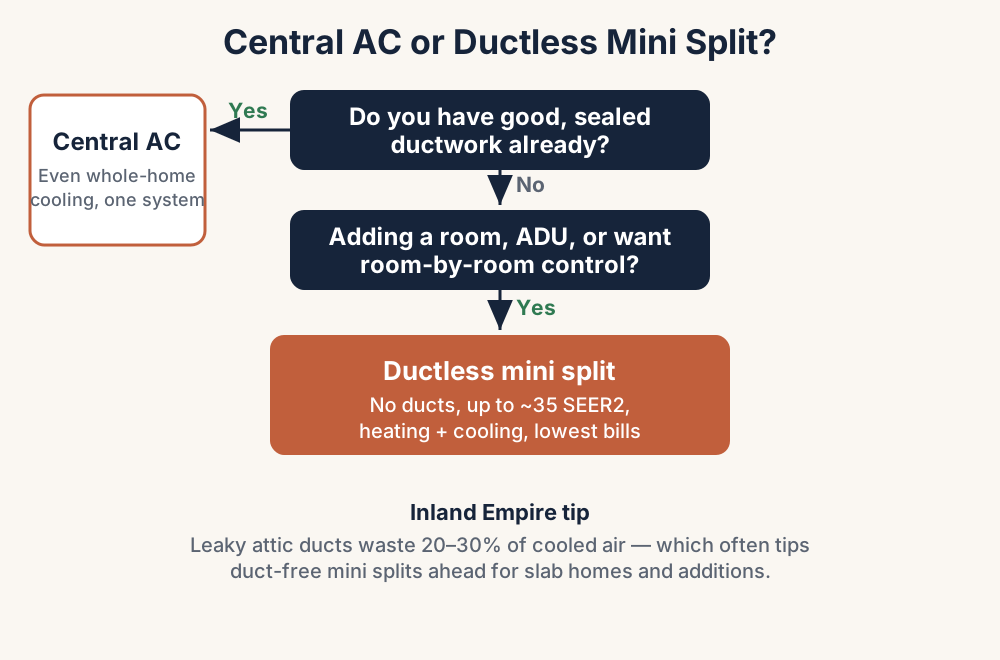
Central AC costs about $5,000-$12,000 installed and cools the whole house through existing ducts, while a ductless mini split runs roughly $2,000-$5,500 per zone and needs no ductwork at all. Choose central AC if your ducts are already in good shape; choose a mini split for homes without ducts, room additions, ADUs, or when you want room-by-room control.
- Central AC: $5,000-$12,000 installed - best when you already have good ductwork and want one system for the whole home.
- Ductless mini split: about $2,000-$5,500 per zone - best for homes with no ducts, additions, or room-by-room control, and reaches up to ~35 SEER2.
- Leaky attic ducts waste 20-30% of cooled air, which narrows central AC's real-world efficiency edge in the Inland Empire.
- Both are now R-454B/R-32 (A2L) systems after the 2025 R-410A ban, so 2026 equipment costs about 15-30% more than older units.
On this page
Central AC vs. mini split at a glance
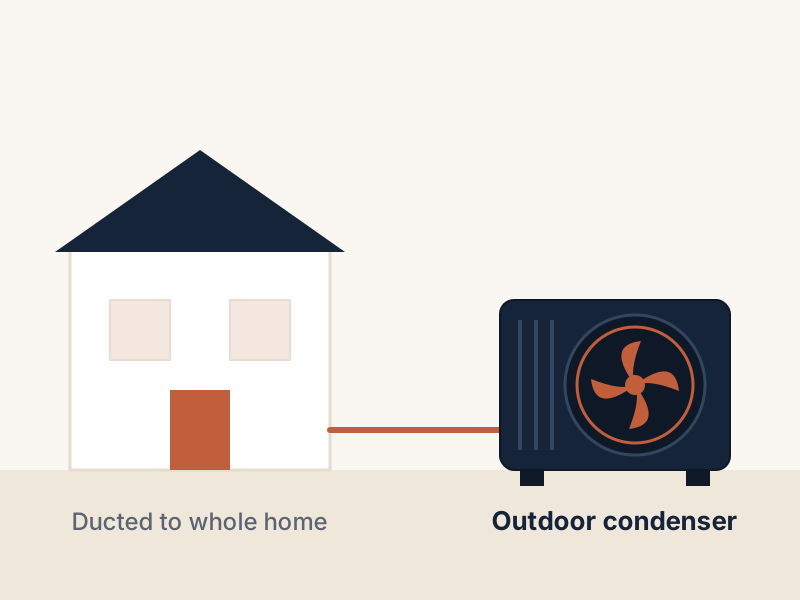
The short version: central AC uses one outdoor unit and ducts to cool the whole house evenly, and shines when you already have good ductwork. A ductless mini split mounts units in individual rooms or zones, skips ducts entirely, hits higher efficiency, and lets you cool room by room. Here is how they compare on the numbers that matter.
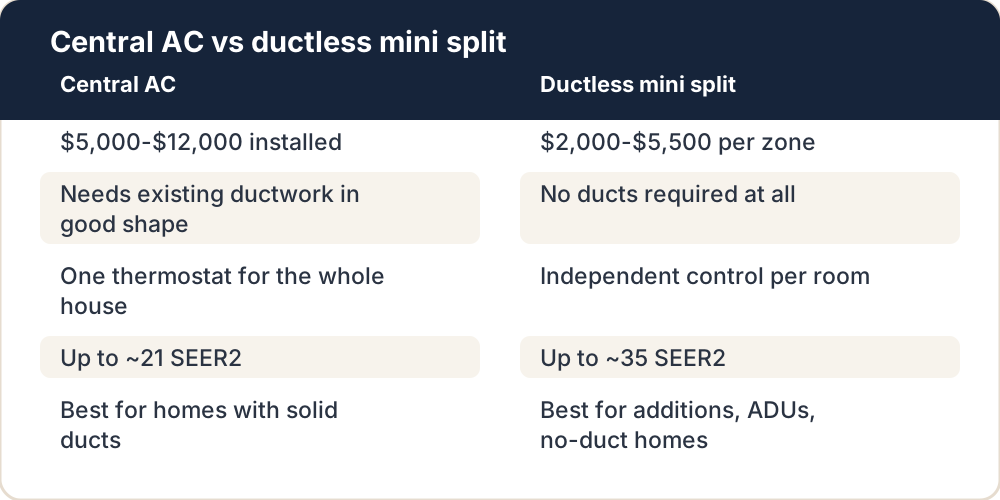
| Factor | Central AC | Ductless mini split |
|---|---|---|
| Install cost | $5,000-$12,000 | $2,000-$5,500 per zone |
| Efficiency | ~14-21 SEER2 | Up to ~35 SEER2 |
| Ductwork | Required | None |
| Zoning | Whole-home (add-on zoning) | Built-in, per room |
| Lifespan | 15-20 years | 20-30 years |
| Best for | Homes with good ducts | No ducts, additions, room control |
How much does each cost to install in 2026?
Central AC runs $5,000-$12,000 installed for most homes, and adding brand-new ductwork can push a full project much higher. A ductless mini split is about $2,000-$5,500 for a single zone, scaling to roughly $4,000-$9,000 for two zones and $10,500-$14,500+ for five. If you are covering a whole large home, add up the zones - that is where central AC can become the better value.
Efficiency: why duct-loss math matters in the Inland Empire
Mini splits reach much higher efficiency ratings - up to about 35 SEER2 versus roughly 14-21 for central AC. But the real-world gap is even wider here, because ducts running through a 130-150 degree Inland Empire attic leak 20-30% of the cool air they carry. A mini split delivers its cooling straight into the room, with no duct losses at all - which is why many homeowners see 30-40% lower cooling bills after switching.
When central AC is the better choice
- You already have good, sealed ductwork in reasonable condition.
- You want a single, hidden system with just one wall unit... err, no wall units at all.
- You prefer even, whole-home cooling with one thermostat.
- You are matching a new furnace and want everything on one system.
When a ductless mini split wins
- Your home has no ductwork (common in older and slab homes).
- You are cooling an addition, converted garage, ADU or sunroom.
- You want room-by-room control to stop cooling empty rooms.
- Efficiency and long-term energy savings are your priority.
- You want cooling and efficient heating from one system.
After the January 2025 R-410A ban, new central and ductless systems both use R-454B or R-32. Expect 2026 equipment to cost about 15-30% more than the old R-410A units it replaces - budget for it either way.
Inland Empire bottom line
If your Ontario or East LA County home already has solid ducts and you want simple whole-home cooling, central AC is hard to beat on value. If you have no ducts, are adding a room, or want the lowest possible summer bills, a ductless mini split is usually the smarter long-term investment. When in doubt, a load calculation on your specific home settles it.
Frequently asked questions
For a single room or a small home, yes - one mini split zone ($2,000-$5,500) is cheaper than a full central system. But once you need to cool a whole 3-4 bedroom house, a multi-zone mini split (often $9,000-$14,500+) can cost as much as or more than central AC. It depends on how many zones you need.
Very. They excel in our climate: high efficiency (up to ~35 SEER2), room-by-room control so you are not cooling empty rooms, and no ductwork to leak in a hot attic. They are especially good for slab homes, older houses without ducts, and additions or converted garages.
Yes - almost all mini splits are heat pumps, so they both cool and heat efficiently. In the mild Inland Empire and East LA County winters, a mini split heat pump is often all the heating a home needs.
Central AC typically lasts 15-20 years; a well-maintained ductless system can last 20-30 years. Regular maintenance and clean filters make a big difference to both.
Local next step
Turn this guide into a site-specific answer.
Guides explain the decision. Equipment condition, access, and safe next steps still need to match the home or business. Review the relevant service scope or request an assessment for Ontario, the Inland Empire, or East Los Angeles County. Availability depends on the current schedule.