Air Duct Sealing Cost in Southern California (2026)
Southern California duct sealing commonly ranges from a minor accessible repair to a multi-thousand-dollar tested project. See realistic planning ranges and quote factors.

Owner & Lead HVAC Technician, Alex Air & Heating · EPA 608 Universal Certified · Ontario, CA
TL;DR
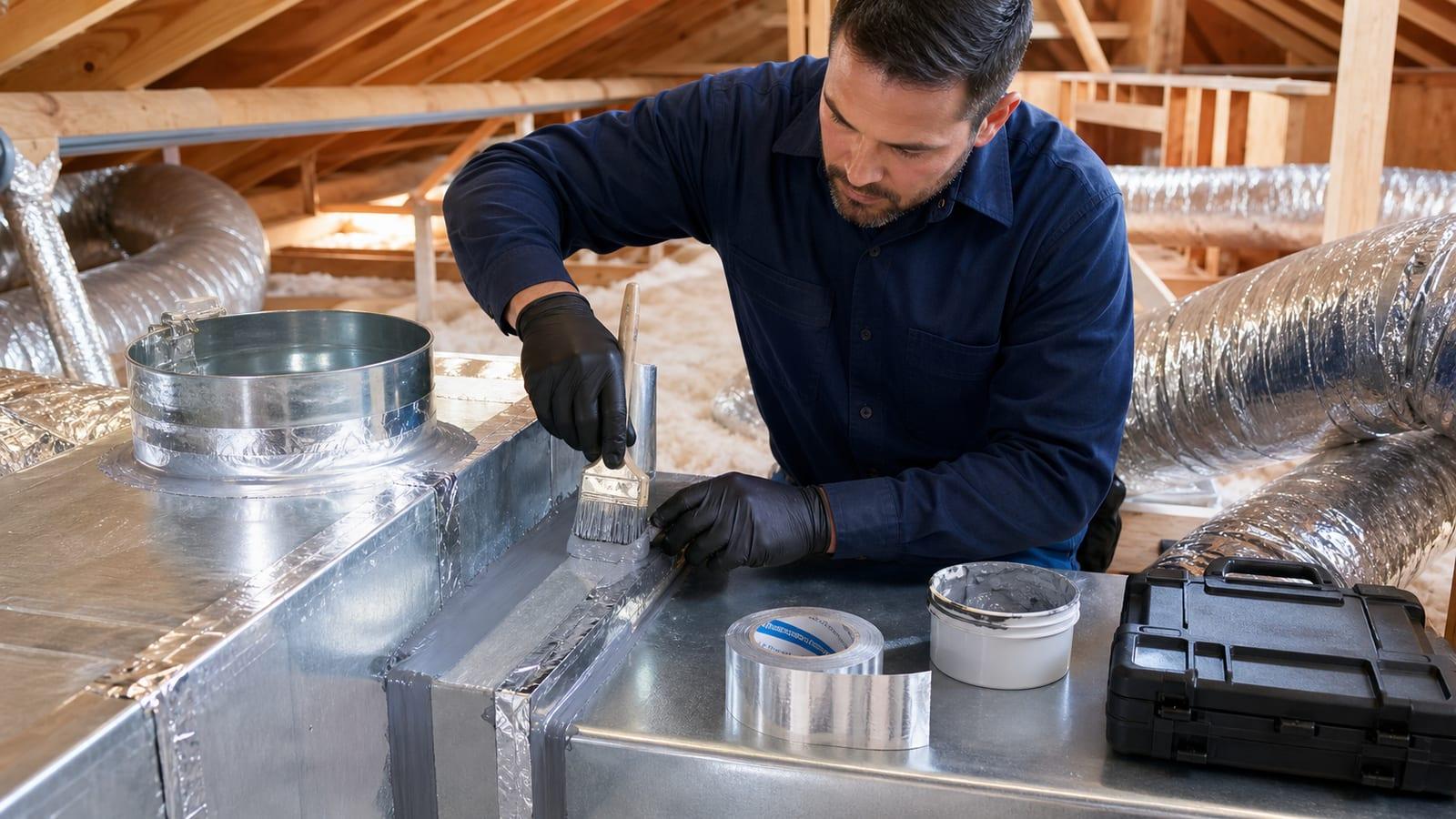
Air duct sealing in Southern California is best budgeted as a scoped project, not a flat per-vent price. Minor accessible sealing may start around $500, while whole-system manual or aerosol work with testing commonly plans around $1,200 to $3,500 or more. Access, leakage severity, system size, repair needs, insulation restoration, and California verification requirements determine the final written quote.
- Use $500 to $3,500+ only as a 2026 planning range; a site inspection and defined test method are required for a real quote.
- Accessibility is usually the largest labor variable: open attic plenums cost less to seal than concealed runs or tight crawlspaces.
- Manual mastic sealing fixes accessible joints; aerosol methods can address many small hidden leaks but cannot reconnect or rebuild damaged ducts.
- ENERGY STAR says typical homes lose about 20% to 30% of duct airflow through leakage, so measured sealing can improve comfort as well as energy use.
- A comparable estimate separates diagnostics, physical repairs, sealing, insulation restoration, permit/ECC verification, and replacement allowances.
On this page
- What does air duct sealing cost in Southern California in 2026?
- Which six factors change a duct-sealing quote most?
- How do manual and aerosol duct sealing compare?
- What should a complete duct-sealing estimate show?
- Is duct sealing worth the money?
- How does California verification affect the final cost?
- What is different about duct sealing in the Inland Empire?
What does air duct sealing cost in Southern California in 2026?
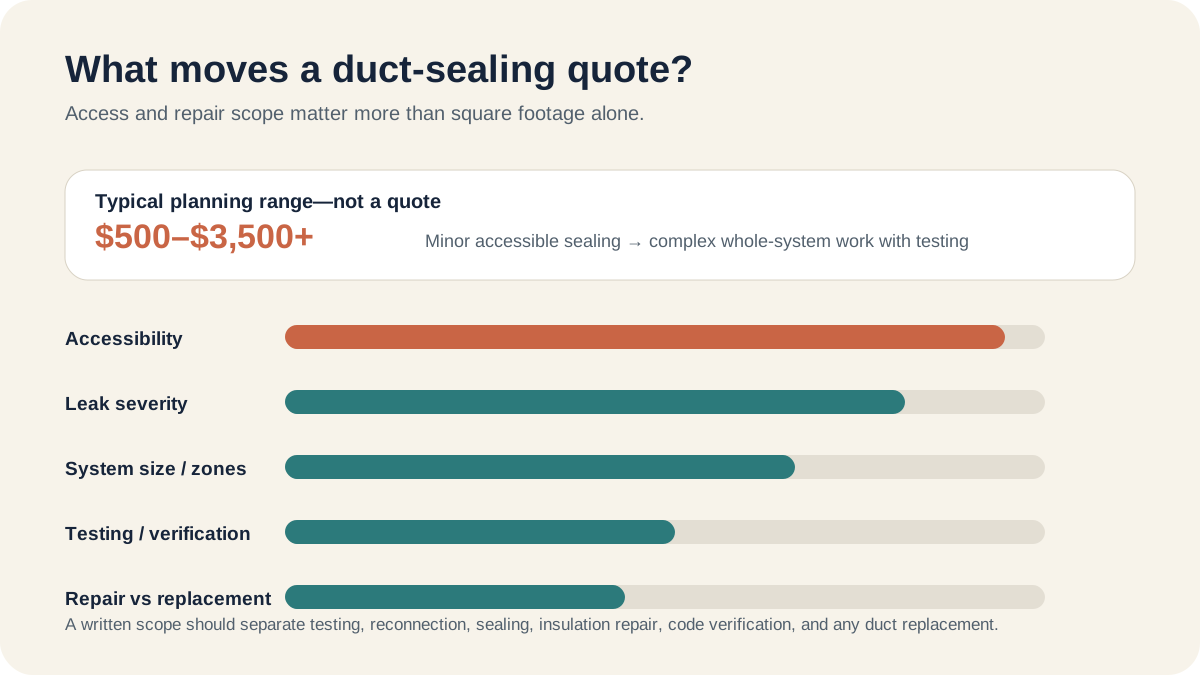
For early budgeting, use roughly $500 for limited accessible sealing and $1,200 to $3,500 or more for a whole-system project involving many joints, difficult access, specialized aerosol equipment, physical repairs, or verified before-and-after testing. These are planning ranges assembled from current Southern California market examples, not a published tariff and not an Alex Air & Heating quote. A real price requires inspection because two 2,000-square-foot homes can have completely different duct layouts.
| Scope | 2026 planning range | Usually includes |
|---|---|---|
| Inspection / basic diagnostic testing | $150–$450 | Visual condition review; pressure testing may be separate |
| Minor accessible sealing | $500–$1,200 | A limited number of reachable joints, collars, or boots |
| Moderate whole-system manual sealing | $1,200–$2,500 | Multiple plenums and branches, mastic/foil work, insulation restoration |
| Complex or concealed-leak project | $2,000–$3,500+ | Difficult access, aerosol option, extensive setup, testing or repairs |
| Partial or full duct replacement | $5,000–$12,000+ | New runs or redesign when sealing is not structurally appropriate |
The lowest bid is not automatically the lowest total cost. A price that excludes diagnosis, air-handler cabinet leaks, damaged flex runs, insulation repair, or required field verification may grow after work begins. A useful estimate defines the starting condition and the expected finish line.
Which six factors change a duct-sealing quote most?
- 1Access: open attic ductwork is faster to reach than ducts behind finished ceilings or in low crawlspaces.
- 2Leak severity: sealing several failed collars differs from treating dozens of small seams across two systems.
- 3Physical damage: disconnected, crushed, torn, or unsupported runs need repair before sealant.
- 4System size: more trunks, branches, zones, and air handlers require more setup, material, and testing.
- 5Method: manual mastic work and aerosol sealing solve different access patterns and use different equipment.
- 6Compliance: permit-related work may require registered documents and independent ECC-Rater verification.
How do manual and aerosol duct sealing compare?
Manual sealing is the first choice for visible joints and major failures because a technician can reconnect collars, support flex runs, apply mastic, and restore the insulation jacket. Aerosol sealing is useful when the duct material is sound but many small leaks are concealed. The system is temporarily blocked at registers and equipment, then sealant is introduced into the pressurized duct network to close small openings from inside.
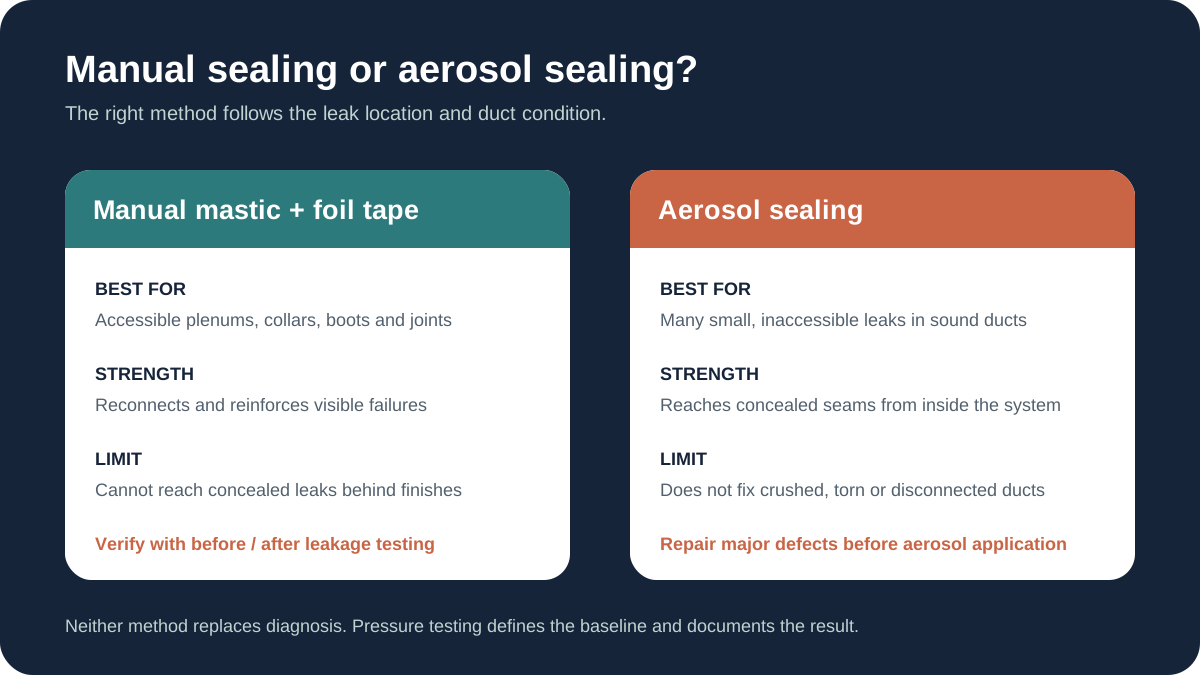
Neither method repairs everything. Aerosol cannot bridge a fully disconnected run, resize an undersized return, remove contamination, or straighten crushed flex duct. Manual work cannot reach every concealed seam without opening finishes. A trustworthy proposal explains why the chosen method fits the measured problem.
What should a complete duct-sealing estimate show?
| Line item | Question to ask | Why it matters |
|---|---|---|
| Baseline | Is leakage measured or only visually estimated? | A number allows before/after comparison |
| Repair scope | Are loose collars, torn flex, supports, boots and cabinet seams included? | Sealant cannot replace mechanical repair |
| Sealing method | Which joints are manual and which are aerosol? | Prevents paying for a method that cannot reach or repair the failure |
| Insulation | Will disturbed insulation and vapor jackets be restored? | Uninsulated ducts can still lose heat and condense |
| Verification | Is post-test or ECC-Rater cost included? | Documents performance and code compliance |
| Exclusions | What damage becomes a change order? | Makes competing estimates comparable |
Is duct sealing worth the money?
It is usually worth evaluating when ducts run through an attic, several rooms are difficult to condition, or measured leakage is significant. ENERGY STAR's 20% to 30% typical airflow-loss estimate explains the opportunity, but it is not a guaranteed bill reduction. The economic return depends on how much leakage reaches outside conditioned space, local electricity rates, system runtime, and repair cost. Comfort may be the fastest benefit: more of the existing equipment's airflow reaches the intended rooms.
Start with diagnosis. The companion guide to leaky air duct signs and testing shows how to separate leakage from equipment faults, insulation problems, and poor duct sizing. If an estimate skips measurement and jumps directly to a whole-house price, ask what evidence defines the scope.
How does California verification affect the final cost?
California Energy Commission requirements can make duct testing part of a permitted HVAC alteration. For applicable projects, the cited thresholds may be no greater than 10% total leakage or 7% leakage to outside, with alternate verification routes and exceptions in defined cases. Rater coordination, registered documentation, permit fees, and retesting should be shown clearly rather than hidden inside an unexplained lump sum.
What is different about duct sealing in the Inland Empire?
In Ontario, Pomona, Walnut, Diamond Bar, Chino, and Rancho Cucamonga, many forced-air systems place flex ducts and plenums above the ceiling in vented attics. Summer attic temperatures increase the penalty for supply leaks and the load created by return leaks. Good sealing protects the capacity you already paid for; it does not compensate for an undersized return, poor room-by-room design, or failing equipment.
Alex Air & Heating can inspect the duct system, identify physical repairs, explain whether manual or aerosol sealing fits, and separate optional work from permit-related verification. Request a written duct repair estimate for your Inland Empire or East Los Angeles County home.
Sources & references
- 1.ENERGY STAR — Duct Sealing
- 2.California Energy Commission — 2025 Single-Family HVAC Requirements
- 3.U.S. Department of Energy — Consumer Guide to Air Sealing the Home
- 4.California Energy Commission — Home Energy Rating System Program
- 5.Climate Pros SD — Duct Leak Repair Costs and Testing
- 6.Prime Genius Heating & Air — Air Duct Sealing Cost Guide
Frequently asked questions
A practical 2026 planning range is about $500 for minor accessible sealing to $3,500 or more for a larger whole-system project with difficult access, extensive repairs, aerosol treatment, or verification. This is not a quote. Home size, duct layout, leakage, material condition, testing, and insulation restoration can move the actual price substantially.
Sometimes, but never assume it. Ask whether the quote includes a diagnostic baseline, an after-sealing test, and any required independent ECC-Rater verification. A visual inspection alone cannot quantify improvement. Separating those line items also makes two contractor proposals easier to compare.
Either method can cost more depending on access and system size. Manual mastic work is labor-intensive but ideal for reachable connections and physical repairs. Aerosol sealing requires specialized equipment and setup but reaches small concealed leaks. It does not repair crushed flex duct, open collars, contamination, or undersized runs, which must be addressed separately.
It can when significant supply leakage sends conditioned air into an attic or return leakage pulls hot unconditioned air into the system. ENERGY STAR estimates typical duct losses around 20% to 30%, but your bill reduction will not equal the leakage percentage because equipment efficiency, weather, thermostat settings, and envelope losses still matter. Measure first rather than promise a fixed savings percentage.
Some permitted HVAC alterations require third-party Energy Code Compliance field verification; ordinary stand-alone repairs may follow a different path. The permit and compliance documents determine the requirement. Ask the contractor who coordinates the rater, whether that fee is included, and which leakage threshold or alternate verification method applies.
Replacement is usually better when ducts are crushed, torn, contaminated, badly undersized, poorly routed, or too deteriorated to hold a durable seal. Sealing remains attractive when the system is structurally sound and most failures are at joints. A condition report and pressure test help prevent paying to seal ductwork that really needs redesign.
Local next step
Turn this guide into a site-specific answer.
Guides explain the decision. Equipment condition, access, and safe next steps still need to match the home or business. Review the relevant service scope or request an assessment for Ontario, the Inland Empire, or East Los Angeles County. Availability depends on the current schedule.