Heat Pump Defrost Cycle in Southern California: What Homeowners May Notice
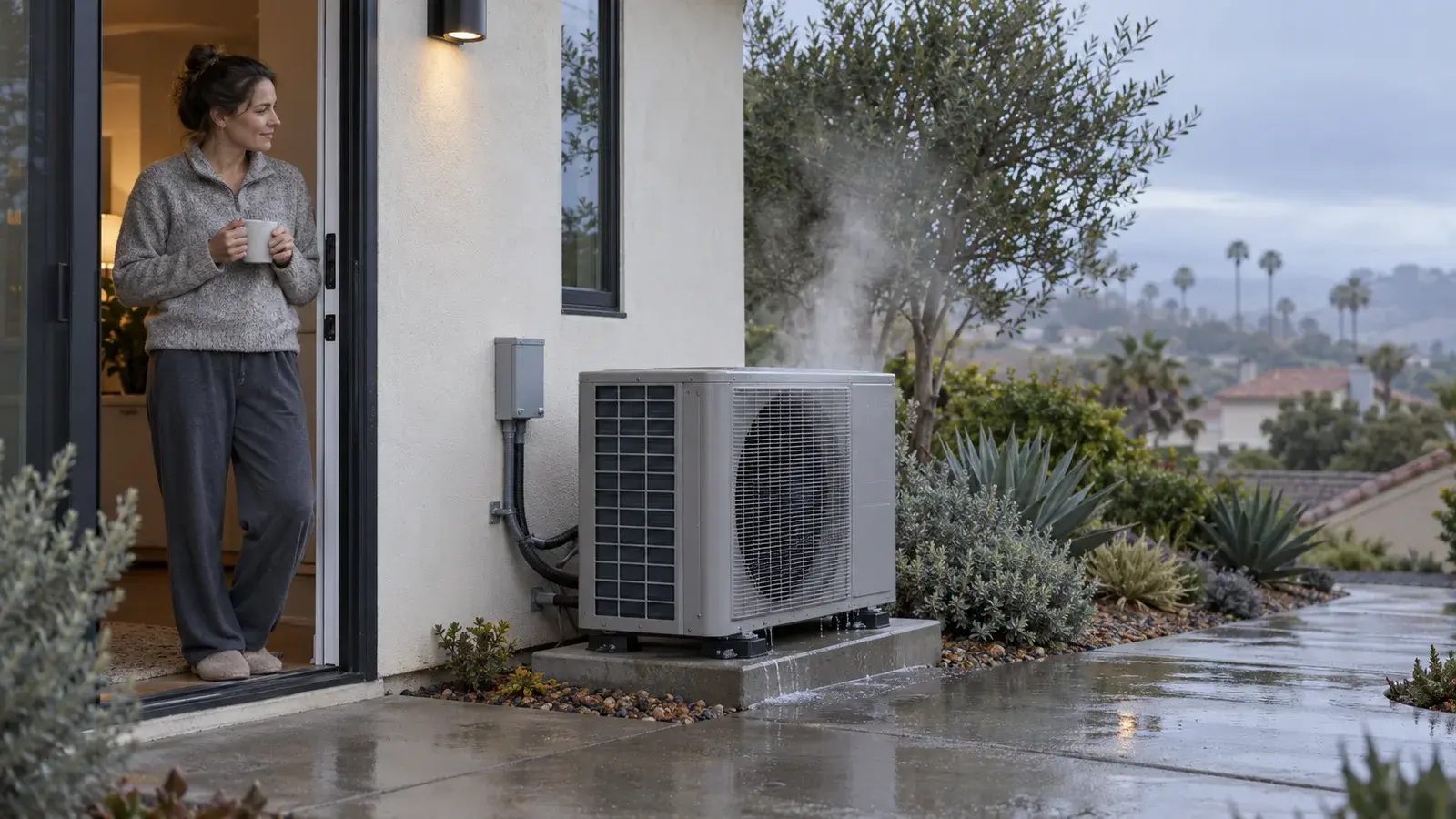
On a cool, damp heating morning, light vapor, water, a brief fan pause or a sound change can be part of defrost—if normal heating returns.

Owner & Lead HVAC Technician, Alex Air & Heating · EPA 608 Universal Certified · Ontario, CA
TL;DR
A heat pump can enter defrost even in Southern California when it is heating in cool, damp weather. You may see light vapor or water outside, hear a brief sound change, notice the outdoor fan pause, or feel a short indoor-air change. The useful test is whether frost clears and normal heating returns; persistent ice or lost comfort deserves service.
- Defrost is a heating-mode response to frost on the outdoor coil; Southern California does not need snow for cool, damp conditions to matter.
- Light vapor, water runoff, a temporary fan pause or a brief sound/airflow change can fit defrost, but none proves the diagnosis by itself.
- Record mode, weather, visible frost and whether heating returns. Keep the cabinet closed and arrange service for persistent ice or comfort loss.
On this page
Quick answer: a brief change can be normal if heating returns
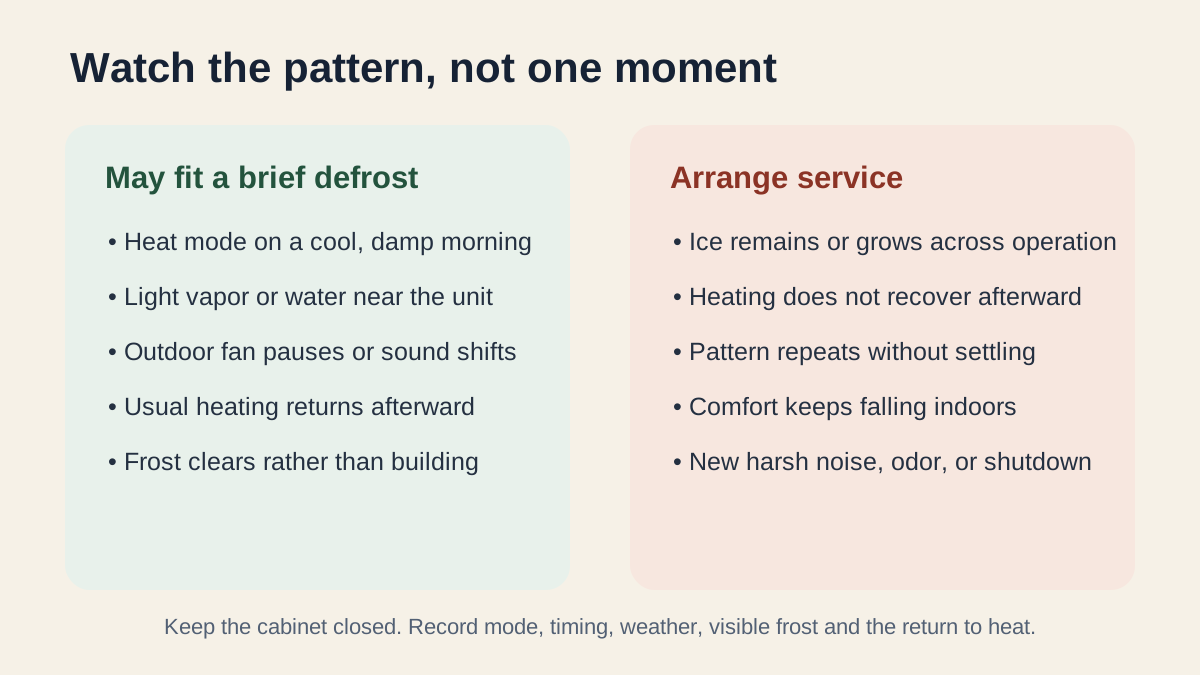
During a cool, damp Southern California morning, a heat pump operating in Heat mode may temporarily reverse its refrigerant cycle to warm the outdoor coil and clear frost. From the house or a normal walkway, you might see light vapor or water, hear the outdoor sound change, notice the outdoor fan pause, or feel the indoor air change briefly. Those observations fit a defrost pattern only when the event settles, frost clears and the home returns to normal heating.
Why defrost can happen in Southern California
A heat pump collects outdoor heat while the outdoor coil is colder than the surrounding air. On a cool, humid morning, moisture can collect and frost on that coil even when there is no snow and daytime weather feels mild. The system’s controls decide when defrost is needed. That decision varies by equipment and conditions, so a fixed outdoor-temperature threshold, frequency or duration is not a reliable rule for every home.
| Observation | How to understand it | Useful next check |
|---|---|---|
| Light frost on the outdoor coil while heating | Can develop in cool, damp air; frost alone does not name a failed part | See whether the system initiates a short change and the frost clears |
| Light vapor and water near the unit | Melting frost can create visible vapor and runoff | Keep clear and confirm it looks like water vapor—not smoke or a burning event |
| Outdoor fan pauses or sound changes | Some systems change fan and refrigerant operation during defrost | Note Heat mode, timing and whether the familiar heating pattern returns |
| Indoor air feels different briefly | The heating output may change during the transition; some systems use configured backup heat | Watch whether room comfort and normal heating recover |
| Ice persists, grows or heating never settles | That no longer fits a simple observe-and-recover pattern | Keep the unit closed and arrange heat-pump service |
What to record without touching the equipment
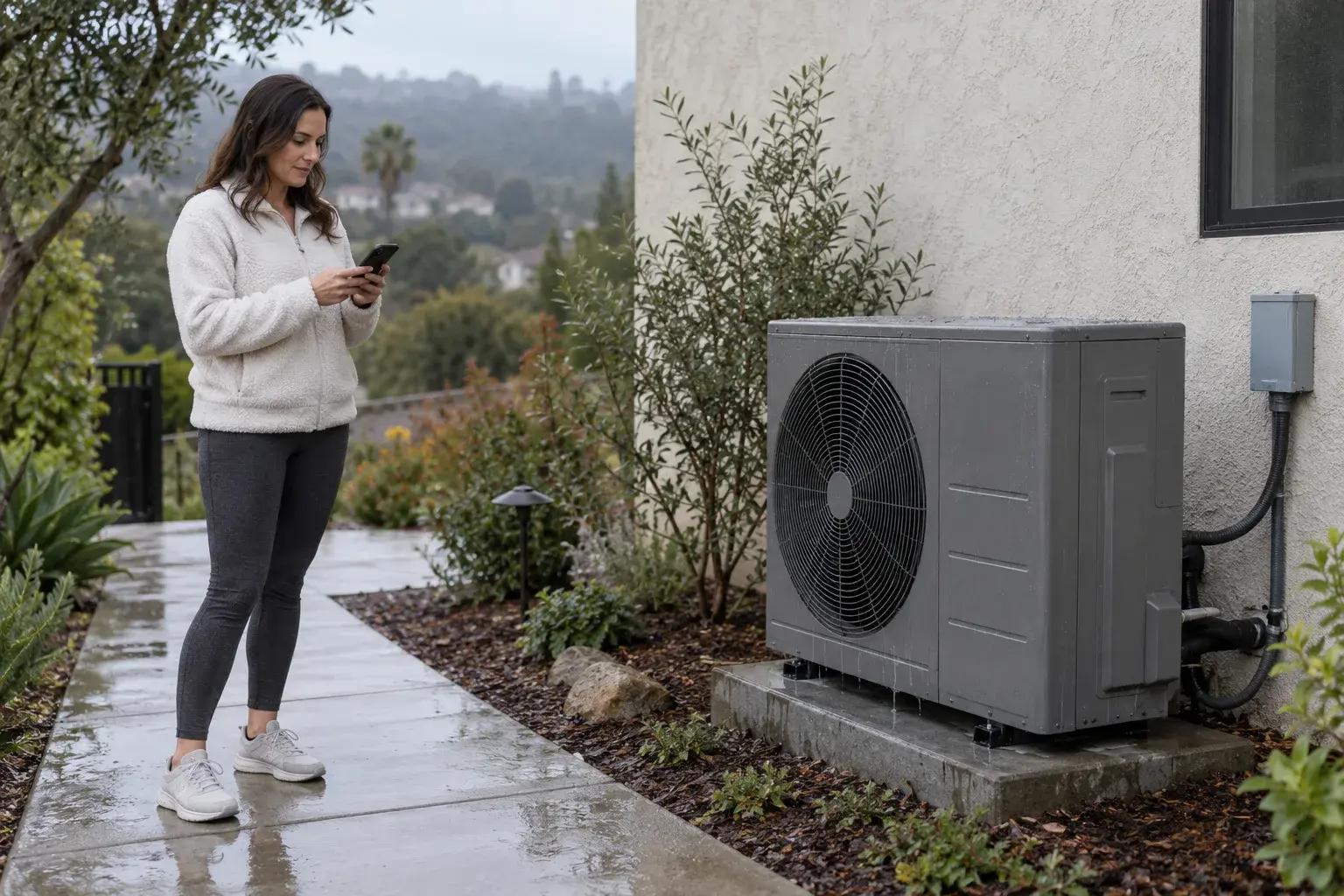
Write down the thermostat mode, approximate outdoor conditions, when the change began, what you could see from a safe location and whether warm airflow and room comfort returned. A short phone video taken from a normal walkway can show vapor, fan behavior and visible frost. Do not reach through the grille, open a panel, touch tubing or electrical parts, block drainage, force a defrost, or repeatedly cycle the thermostat to reproduce the event.
No single clock separates normal from abnormal
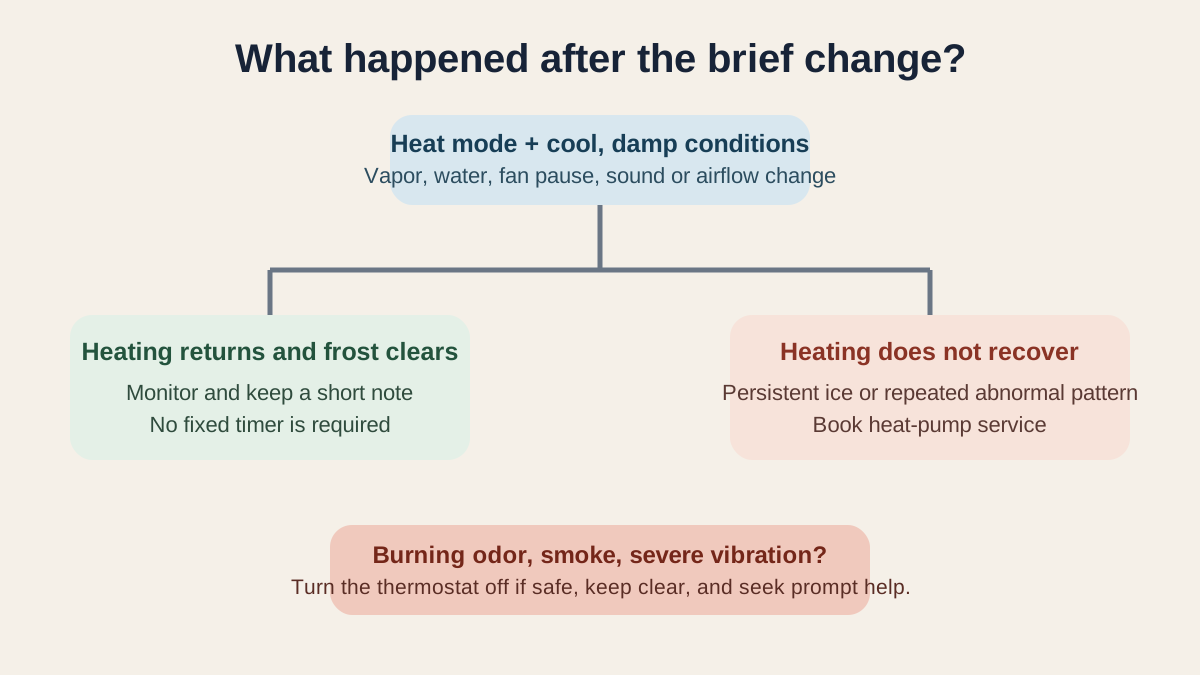
Manufacturer materials sometimes describe model-specific cycle lengths, but those figures do not create one limit for every heat pump. A more useful homeowner question is: did the frost clear, did the outdoor behavior settle, and did the home resume heating? A short unfamiliar event that fully recovers can be documented. A repeating pattern that never settles, a coil that stays substantially iced, or indoor comfort that continues to fall deserves a service appointment.
When to monitor, book service or stop
- Monitor a brief event when Heat mode is active, the weather is cool and damp, light frost or vapor clears, and normal heating returns.
- Book service when ice remains or grows, the system repeatedly shifts without settling, the home does not recover, or the pattern is new and persistent.
- Turn the thermostat off if safe and seek prompt help for smoke, burning odor, severe vibration, electrical signs or another immediate safety concern.
A local next step without guessing the failed part
For a defrost pattern that does not clear or a home that does not return to heat, request heat-pump repair in Ontario, the Inland Empire or nearby eastern Los Angeles County service areas. If the main issue is ongoing cool air indoors, use the separate guide to a heat pump blowing cold air in Heat mode. If the issue is a new sound outside defrost, compare its timing with heat-pump noises that may or may not need service.
Frequently asked questions
Yes. While heating, the outdoor coil can become cold enough for moisture in cool, damp air to frost on it. Snow is not required. Whether a particular event is defrost still depends on mode, timing and the return to normal heating.
A light vapor cloud can appear when frost melts during defrost. Watch from a safe distance. Smoke, a burning odor, harsh vibration or a system that does not resume heating calls for a different, prompt response.
Some systems pause the outdoor fan during defrost. A fan pause alone does not identify a problem; note whether it is brief and whether the system returns to its usual heating pattern.
There is no single homeowner timer that applies to every model, control strategy and weather condition. Compare with the equipment manual and your unit’s normal pattern rather than relying on a universal minute limit.
Arrange service when ice remains or grows instead of clearing, the system repeatedly changes without settling, heating does not recover, or the home keeps losing comfort. Do not chip, heat or wash ice from the unit.
Local next step
Turn this guide into a site-specific answer.
Guides explain the decision. Equipment condition, access, and safe next steps still need to match the home or business. Review the relevant service scope or request an assessment for Ontario, the Inland Empire, or East Los Angeles County. Availability depends on the current schedule.