Leaky Air Ducts: 7 Signs, Tests, and the Right Fix
Learn the seven strongest signs of leaky air ducts, how professional leakage testing works, and when a Southern California home needs sealing, repair, or replacement.

Owner & Lead HVAC Technician, Alex Air & Heating · EPA 608 Universal Certified · Ontario, CA
TL;DR
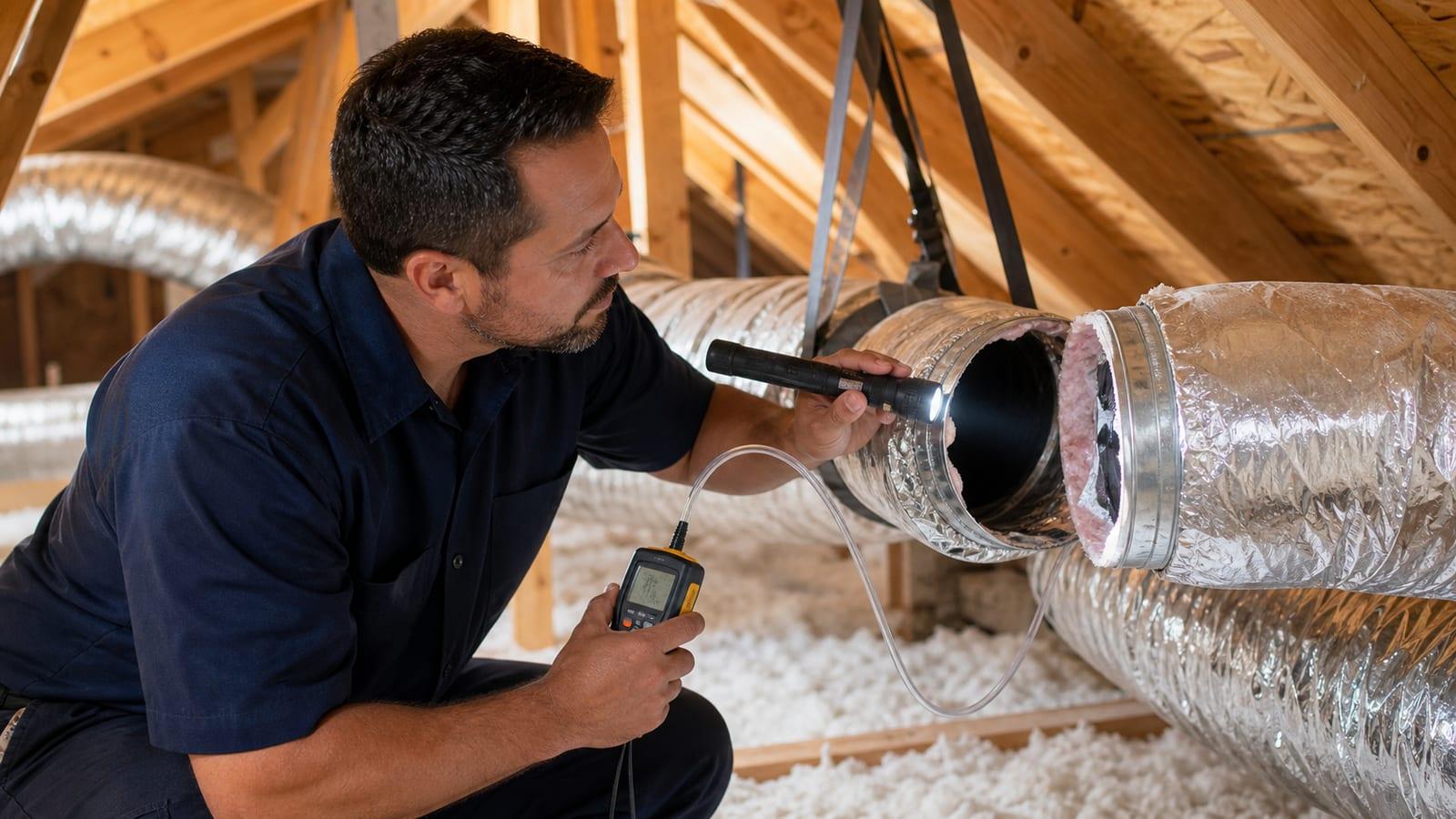
Leaky air ducts usually show up as stubborn hot rooms, long AC cycles, unusual dust near registers, weak airflow, or an attic that feels accidentally cooled. Those clues are not proof by themselves: the reliable diagnosis is an inspection plus duct-pressure testing. Repair disconnected runs first, seal accessible joints with mastic or UL-rated foil tape, and retest before considering wholesale replacement.
- ENERGY STAR estimates that a typical home can lose about 20% to 30% of the air moving through its duct system through leaks, holes, and poor connections.
- A hot room can come from leakage, but also from undersized ducts, low airflow, insulation, solar gain, or equipment trouble—testing separates them.
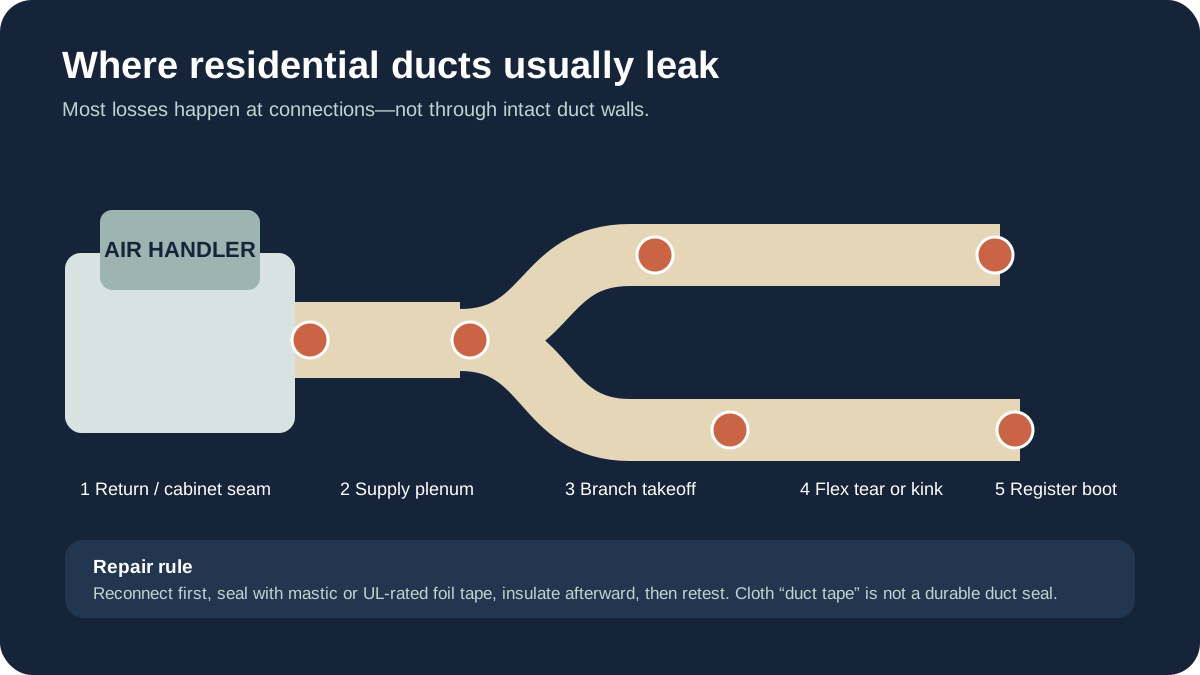
- The most common leak points are the air-handler cabinet, plenums, branch takeoffs, flex-duct collars, register boots, and damaged return ducts.
- California HVAC alterations may trigger verified duct-leakage limits of 10% total leakage or 7% leakage to outside, subject to the project's applicable requirements and exceptions.
- Sealing is appropriate for sound ducts with failed joints; crushed, contaminated, brittle, or badly undersized ductwork may need partial or full replacement instead.
On this page
- How can you tell if your air ducts are leaking?
- What are the seven strongest signs of leaky air ducts?
- Where do residential duct systems usually leak?
- How does professional duct leakage testing work?
- Which duct repairs work—and which shortcuts fail?
- When is sealing enough, and when should ducts be replaced?
- What does California Title 24 change for duct repairs?
- What should homeowners in Ontario and East Los Angeles County do next?
How can you tell if your air ducts are leaking?
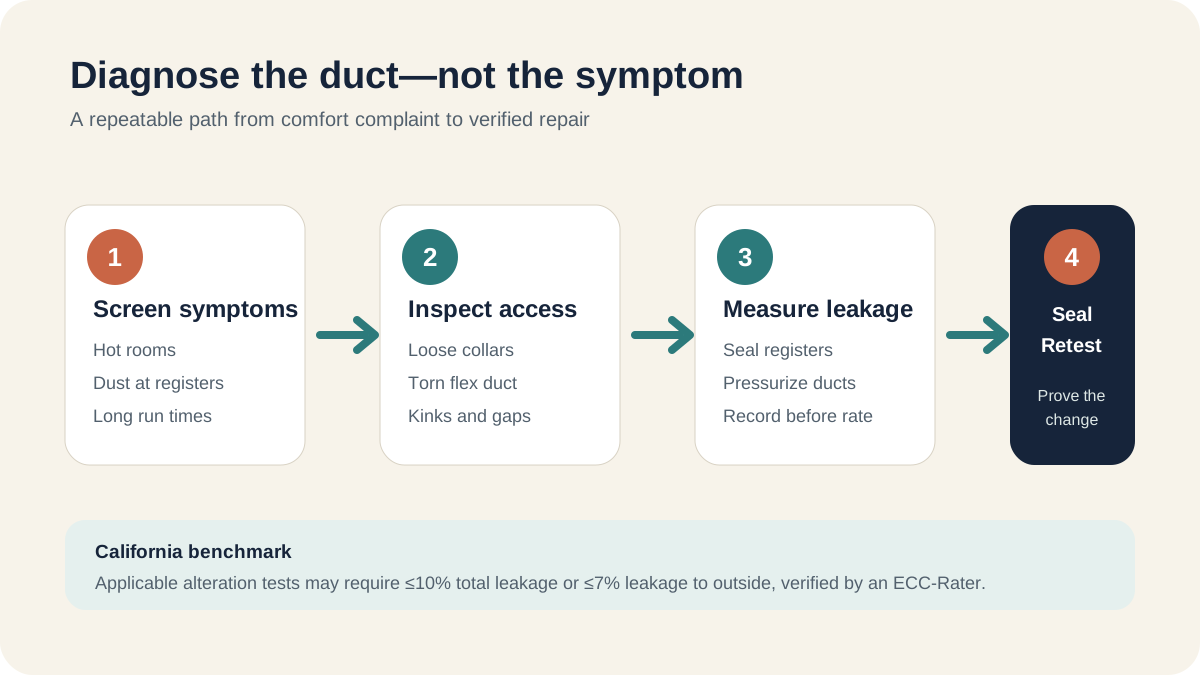
The fastest answer is to look for a pattern, not one symptom. A back bedroom that stays warm, weak airflow at the farthest register, rising summer bills, and dust marks around the same vents together justify a duct inspection. ENERGY STAR reports that typical homes can lose about 20% to 30% of the air moving through their ducts through leaks and poor connections. In an Ontario or Pomona attic, that can mean paid-for cooling escapes into a space that may be far hotter than the house.
What are the seven strongest signs of leaky air ducts?
| Clue | What a duct leak can do | Other causes to rule out |
|---|---|---|
| One or more stubborn hot rooms | Supply air escapes before reaching distant rooms | Solar gain, insulation, undersized run, closed damper |
| Weak airflow at several registers | Disconnected or torn supply trunk loses volume | Dirty filter, blower setting, frozen coil |
| Long cooling cycles | Delivered capacity falls while attic losses rise | Extreme outdoor heat, low charge, dirty condenser |
| Dust streaks around vents | Return leaks can pull attic or wall-cavity particles | Loose boot, filter bypass, household dust source |
| Whistling or fluttering in the attic | Pressure forces air through a failed seam | High static pressure or restrictive filter |
| Attic feels cool while AC runs | Supply leakage is conditioning the attic | Nearby equipment cabinet leakage |
| Odor appears only with the blower | Return leakage can draw air from an attic or chase | Drain, coil, filter, or local odor source |
These signs overlap with other problems. If only one room is affected, start with our uneven cooling diagnosis. If dust is the main complaint, use the separate house-dust and AC guide. A duct-leak diagnosis owns a narrower question: is conditioned air escaping, or is unconditioned air being pulled into the return side?
Where do residential duct systems usually leak?
Most failures occur at connections. The air-handler cabinet meets the return and supply plenums; plenums feed branch takeoffs; flexible ducts attach to metal collars; and each run ends at a register boot. Heat cycles, vibration, poor support, old adhesive, pest damage, and attic access can loosen those joints. A torn flex run or completely disconnected collar is not a sealing-only problem—it must be mechanically repaired first.
How does professional duct leakage testing work?
- 1Document the complaint and inspect accessible supply and return ductwork before disturbing it.
- 2Temporarily seal the registers and connect a calibrated duct tester to the system.
- 3Pressurize the ducts to the required test pressure and record total leakage or leakage to outside, depending on the test.
- 4Locate accessible failures, complete the approved repair scope, restore insulation, and repeat the same test so the homeowner has a comparable before-and-after result.
A blower-door test measures leakage through the building envelope; a duct-pressure test measures the duct system. They answer related but different questions. For permit work, the project documents specify which field verification is required and an independent Energy Code Compliance rater may need to confirm it.
Which duct repairs work—and which shortcuts fail?
| Condition | Appropriate response | Avoid |
|---|---|---|
| Loose accessible metal joint | Mechanically reconnect, apply mastic, restore insulation | Covering movement with cloth duct tape |
| Sound flex duct loose at collar | Reconnect inner liner, clamp, seal, reinstall insulation jacket | Sealing only the outer insulation |
| Many small inaccessible leaks | Evaluate aerosol sealing after major defects are repaired | Using aerosol to bridge a disconnected run |
| Crushed, torn, brittle, or contaminated run | Replace the failed section and verify airflow | Trying to coat structural damage |
| Suspect asbestos wrap or old sealant | Stop work and obtain qualified assessment | Cutting or disturbing the material |
ENERGY STAR recommends mastic sealant or metal tape for accessible ducts and specifically warns that ordinary cloth duct tape is not long-lasting. Work in an attic also has fall, heat, electrical, and respiratory hazards. A visible joint near a safe platform is different from crawling across ceiling joists in a 130°F attic.
When is sealing enough, and when should ducts be replaced?
Sealing is usually the better first option when the duct layout and sizing are acceptable, the insulation remains serviceable, and the failures are mainly at joints. Replacement becomes more reasonable when flex duct is brittle or crushed, multiple runs are undersized, contamination cannot be removed safely, or access labor approaches the cost of new runs. Our companion Southern California duct-sealing cost guide separates testing, minor sealing, complex sealing, and replacement planning ranges.
What does California Title 24 change for duct repairs?
California treats duct performance as part of the HVAC installation, not an optional accessory. The California Energy Commission explains that replacing an indoor or outdoor split-system component can trigger duct sealing and field verification. Where the cited alteration criteria apply, testing may require no more than 10% total leakage or 7% leakage to outside; exceptions and alternate visual/smoke-test paths can apply. That is why a written scope should state who performs testing, who coordinates the ECC-Rater, and what result counts as passing.
What should homeowners in Ontario and East Los Angeles County do next?
Homes in Ontario, Pomona, Diamond Bar, Walnut, Claremont, Chino, and Rancho Cucamonga often place ducts in hot vented attics. That location magnifies a supply leak during summer and can let a return leak pull dust from insulation and framing cavities. Before buying a larger AC, verify airflow and duct integrity; bigger equipment cannot repair a disconnected branch.
Alex Air & Heating can inspect accessible runs, distinguish leakage from airflow or equipment faults, and provide a written repair scope. Request a duct repair assessment for your Inland Empire or East Los Angeles County home.
Frequently asked questions
The strongest signs are rooms that stay hotter or colder than the rest of the home, weak airflow at distant registers, unusually long HVAC cycles, dust streaks around vents, rattling or whistling in the attic, and a noticeable temperature change in the attic when the system runs. None proves leakage alone, so confirm with inspection and pressure testing.
A technician seals the supply and return registers, connects a calibrated fan to the duct system, pressurizes it to a specified test pressure, and measures how much airflow is required to hold that pressure. That airflow represents leakage. A smoke pencil, thermal camera, or visual inspection can then help locate accessible failures for repair.
A homeowner may safely seal a clearly visible, accessible joint with HVAC mastic or UL-rated foil tape after turning the system off. Do not enter unsafe attics, disturb suspect asbestos materials, cover electrical components, or use cloth duct tape. Hidden leakage, disconnected runs, combustion-safety concerns, and code verification belong to trained professionals.
No. Duct cleaning removes debris from inside a duct; duct sealing closes holes and failed joints. Cleaning does not reconnect a loose collar or seal a return leak. If dust is entering through a damaged return, repair and seal the leak first, then decide whether cleaning is justified based on actual contamination.
Seal ducts that are correctly sized, structurally sound, and mostly accessible but leak at seams and connections. Replace sections that are crushed, torn, contaminated, badly undersized, or too deteriorated to hold a durable seal. A measured leakage rate plus a physical condition report makes this decision more reliable than age alone.
Many California HVAC replacements and alterations trigger duct sealing and third-party field verification, although project-specific exceptions apply. The California Energy Commission states that applicable alteration testing may require no more than 10% total duct leakage or 7% leakage to outside. Confirm the exact requirement with the permit documents and ECC-Rater.
Local next step
Turn this guide into a site-specific answer.
Guides explain the decision. Equipment condition, access, and safe next steps still need to match the home or business. Review the relevant service scope or request an assessment for Ontario, the Inland Empire, or East Los Angeles County. Availability depends on the current schedule.