How to Protect HVAC From Construction Dust During a Remodel
A practical before, during, and after plan for protecting registers, returns, filters, and equipment while renovation dust is produced.

Owner & Lead HVAC Technician, Alex Air & Heating · EPA 608 Universal Certified · Ontario, CA
TL;DR
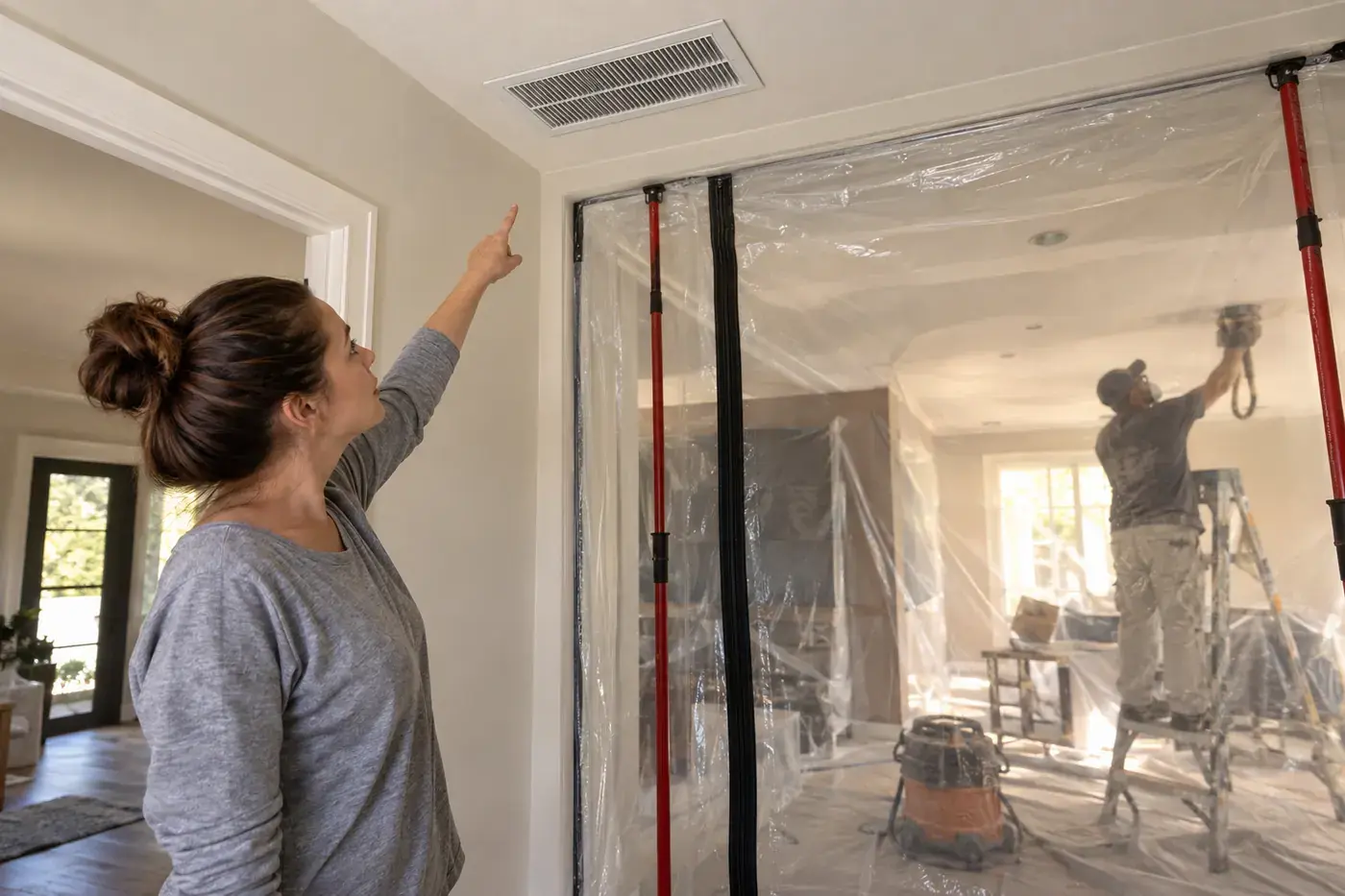
To protect HVAC from construction dust, plan dust containment before work starts, shut the system down during heavy dust-generating tasks when safe and practical, and seal supply and return openings inside the work zone while the system is off. Never run the system with a needed return blocked. Coordinate any cooling, heating, ventilation, or combustion-safety exception with the contractor and HVAC professional. After cleanup, remove covers and assess the filter before normal operation.
- Contain dust at its source and agree on the HVAC operating plan before demolition or sanding.
- Cover both supply and return openings within the work zone only while the affected system is off; never operate against blocked airflow.
- At handoff, remove every temporary cover, replace a construction-loaded filter as appropriate, and request assessment if dust entered ducts or equipment.
On this page
Quick Answer: protect the air path before dust starts
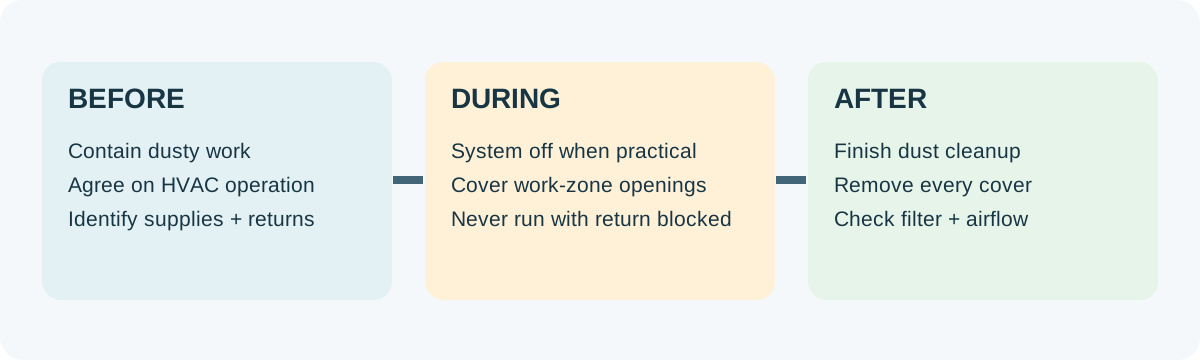
The most reliable approach is a coordinated work-zone plan: contain demolition and sanding dust, keep the HVAC from pulling work-zone air when possible, temporarily protect registers and returns only while the system is off, and verify every opening is uncovered before restart. EPA renovation guidance treats duct protection and ventilation as part of the project plan, not as a filter-only fix.
Key takeaways
- Separate the dusty room from occupied areas with a maintained barrier.
- Decide who may turn the HVAC on and who removes temporary covers.
- A covered return is a stop sign for that system—not an invitation to run it harder.
- Record any open ducts or equipment exposure for the cleanup handoff.
Before the remodel: agree on containment and system operation
Identify which supplies and returns serve the work area, and ask the contractor how demolition, cutting, sanding, debris removal, and ventilation will be contained. Plan how occupied rooms will remain safe and comfortable. If the home has combustion appliances or other ventilation needs, do not improvise a fan or pressure strategy: EPA warns that poorly planned exhaust can create backdraft concerns. Ask the contractor and HVAC professional to resolve exceptions before work starts.
During dusty work: protect both sides of the air path
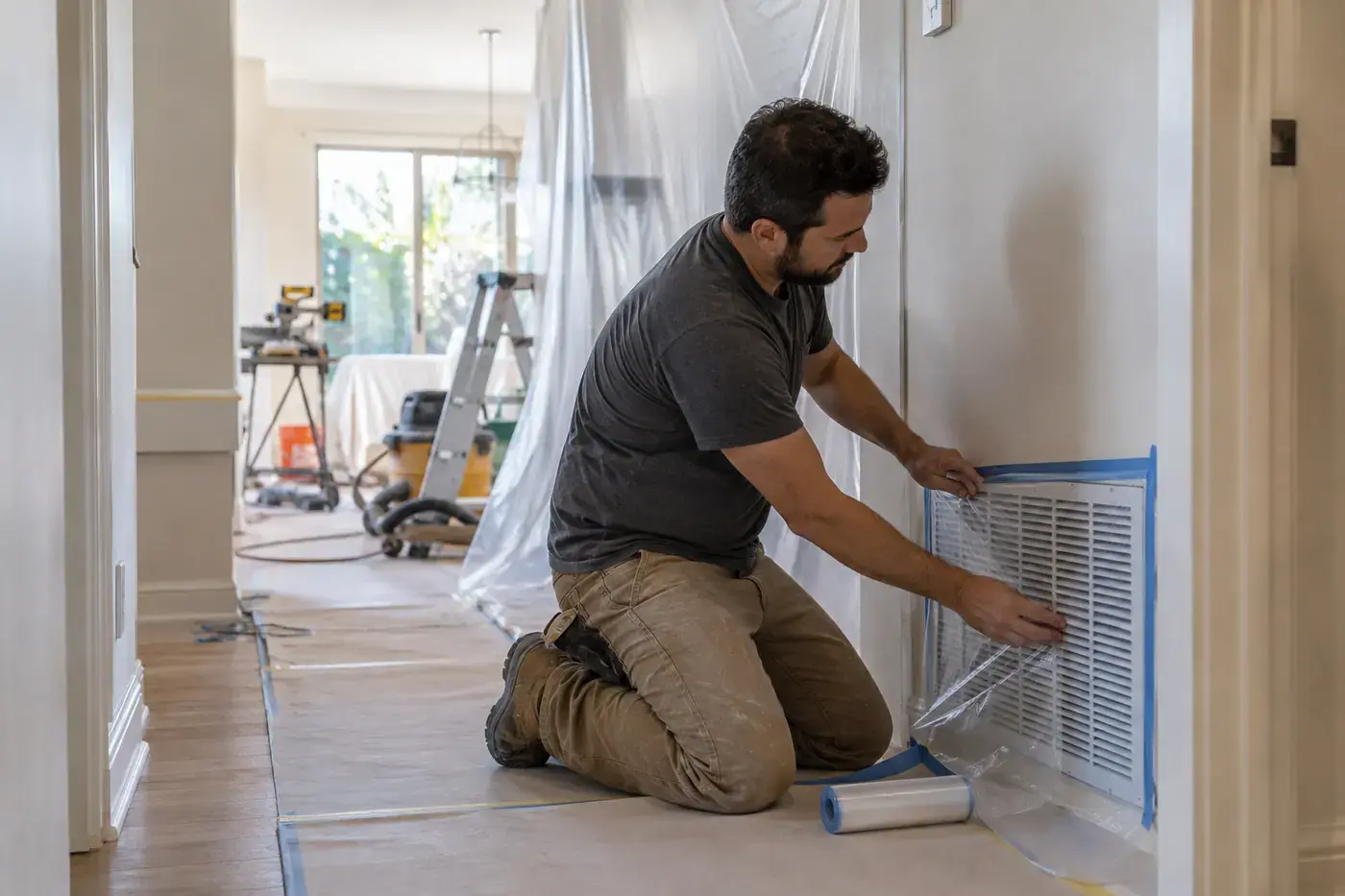
EPA recommends sealing duct openings in the work area and, when practical, avoiding HVAC operation during airborne-dust work. Protect both supply and return grilles within the isolated zone, but only with the affected system shut down and a clear removal plan. Do not cover registers elsewhere indiscriminately, leave a return sealed while the fan operates, or assume a high-MERV filter alone can contain fine construction dust. If the system must operate, the contractor and HVAC professional should plan how to isolate work-zone air and use a system-compatible filter.
After cleanup: reopen, inspect, and then restart
Once dust-producing work and cleanup are complete, confirm all temporary covers and barriers over supplies and returns are removed. Check the accessible filter and replace a construction-loaded filter with one that fits the system. Ask a professional to inspect if ducts were left open, debris reached the air handler, or dust keeps appearing after cleanup. EPA's renovation guidance calls for inspecting ductwork and replacing temporary construction filters before occupancy where applicable; it does not imply every home needs duct cleaning.
What protection cannot guarantee
A plastic barrier, vent cover, or filter cannot guarantee zero dust or a particular air-quality result. Older buildings or hazardous materials can trigger separate containment rules; have the renovation contractor identify those obligations rather than treating HVAC protection as a substitute. For post-project air and ventilation questions, read indoor air quality after a home remodel. If the filter seems to reduce airflow after the work, use the safe filter restriction check.
Local maintenance handoff
For homes in Ontario, Pomona, the Inland Empire, and nearby East Los Angeles County service areas, Alex Air & Heating can discuss an on-site HVAC assessment when dust exposure, filter loading, or changed airflow remains a concern. Share the work dates, which openings were covered, whether the system ran, and any visible debris. Visit AC maintenance to request an evaluation; availability and findings depend on the individual site.
Frequently asked questions
During heavy dust-producing work, EPA guidance favors keeping the system off where safe and practical. A home that needs heating, cooling, ventilation, or combustion-air protection needs a site-specific plan with the contractor and HVAC professional.
They can temporarily seal supply and return openings inside the isolated work zone while the affected HVAC system is off. They must track and remove those covers before the system runs again; do not block a return on an operating system.
No. A filter does not replace source containment, isolated work zones, and a plan for operating the system. A dense or loaded filter may also be unsuitable for a particular system.
No. Inspect for actual contamination first. If debris entered open ducts or equipment, ask a qualified professional what cleaning or other corrective work is warranted; routine blanket cleaning is not assumed.
Finish dust cleanup, remove all temporary register and return covers, check an accessible filter and replace it if loaded or per its instructions, then confirm normal airflow. Seek service if there is persistent dust, unusual airflow, odor, or visible debris in equipment.
Local next step
Turn this guide into a site-specific answer.
Guides explain the decision. Equipment condition, access, and safe next steps still need to match the home or business. Review the relevant service scope or request an assessment for Ontario, the Inland Empire, or East Los Angeles County. Availability depends on the current schedule.