Wildfire Smoke and Your HVAC Filter: A California Homeowner’s Safe Plan
A compatible HVAC filter is one layer of a smoke-day plan—not a universal upgrade or a replacement for keeping smoky outdoor air outside.

Owner & Lead HVAC Technician, Alex Air & Heating · EPA 608 Universal Certified · Ontario, CA
TL;DR
During wildfire smoke, a clean, correctly sized HVAC filter can help clean air that passes through a compatible central system. It cannot seal the house or substitute for local air-quality guidance. Prepare before smoke arrives: confirm filter fit and airflow compatibility, keep a spare, close outdoor openings when smoke affects air quality, and use a portable cleaner in the room you occupy when appropriate.
- A central filter only treats air that reaches the system return.
- MERV 13 or higher may help during smoke events only where the system can accommodate it.
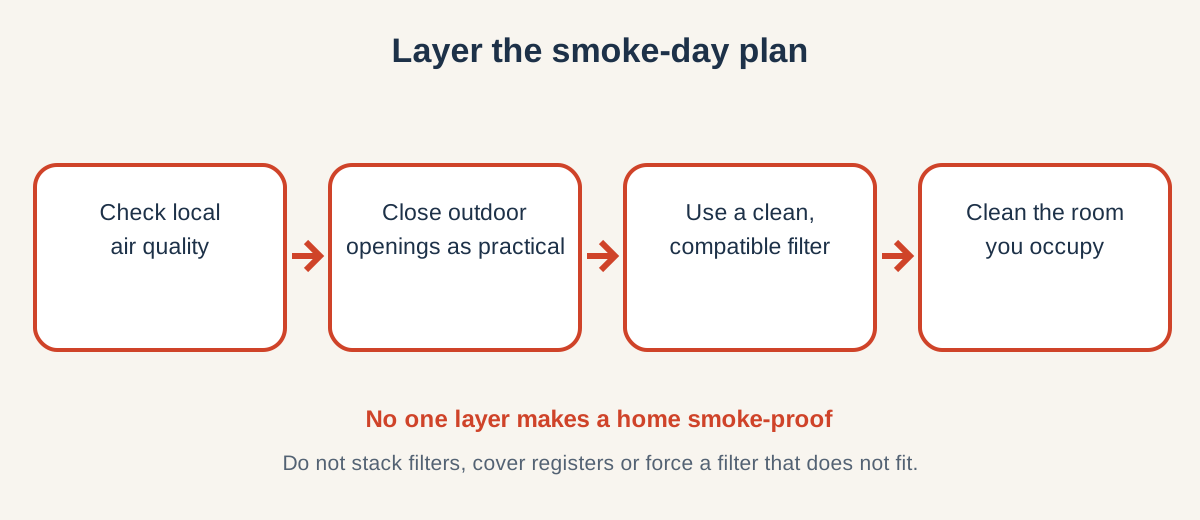
- Do not stack filters, cover registers, or force a filter that does not fit.
On this page
Quick answer: prepare a compatible filter plan before smoke arrives
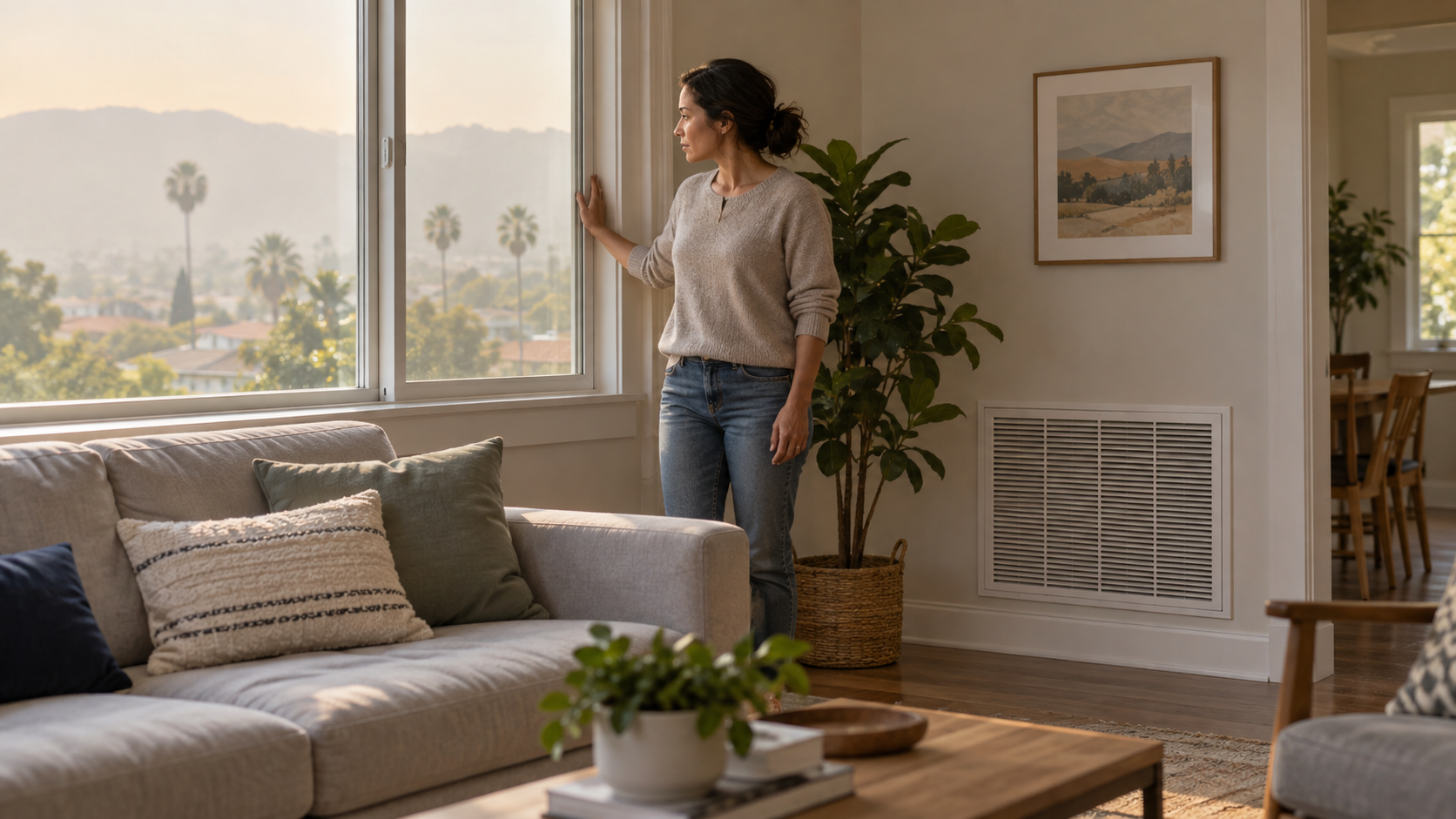
During wildfire smoke, a clean, correctly sized HVAC filter can be one part of a broader indoor-air plan. It is not a universal upgrade: the filter must fit the return and be compatible with the system’s airflow. California guidance also emphasizes following local air-quality information, keeping doors and windows closed when smoke is affecting outdoor air, and considering a portable air cleaner for the room where people spend time. Set up the plan before a smoky day so you are not guessing under pressure.
Start with the air path you actually have
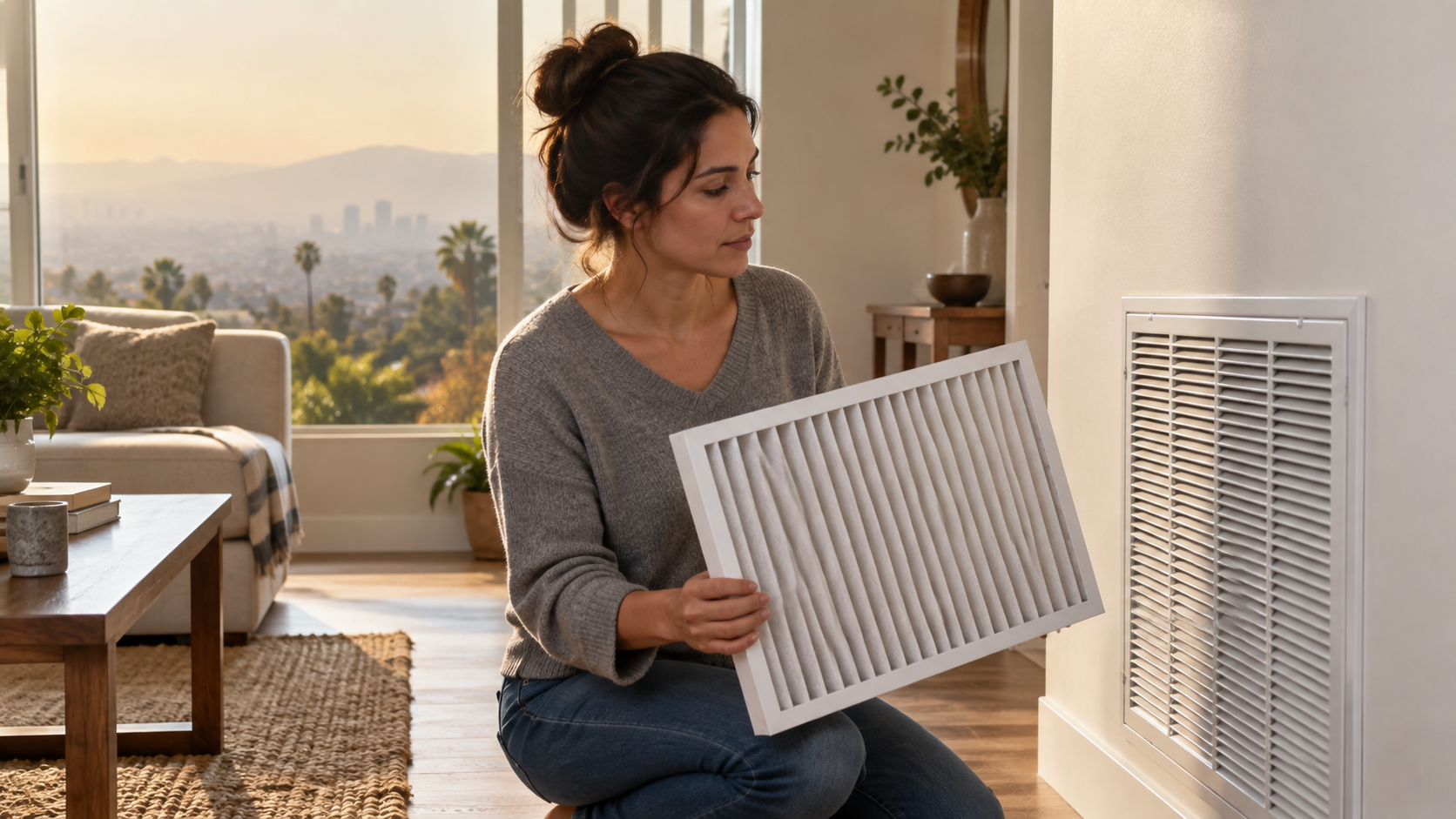
A central forced-air system can filter air that passes through its return. It cannot filter outdoor air that enters through an open window, a door opening, or another leak before it reaches the return. Check the filter’s exact dimensions and airflow arrow before the season, keep a compatible spare on hand, and use the normal access panel only—do not alter wiring, equipment panels or ductwork. If a denser filter previously made airflow weak, do not assume a higher-rated filter is the answer without a system-specific discussion.
| Tool or action | What it can help with | Important boundary |
|---|---|---|
| Compatible central HVAC filter | Captures particles from air moving through the return | It must fit and allow appropriate airflow; it does not seal the house |
| Closing windows and doors when smoke affects outdoor air | Reduces a major path for smoky outdoor air | Use safe ventilation and follow public-health or local emergency directions |
| Portable air cleaner in an occupied room | Targets the room where people spend the most time | Choose and place it according to its manufacturer instructions; it does not replace every home’s HVAC plan |
| Local AQ information | Helps time the plan to conditions | An AQ number does not diagnose your home or your HVAC system |
Choosing a filter without creating an airflow problem
The EPA notes that MERV 13 or higher can be useful during smoke events where the HVAC system can accommodate it. “Where it can accommodate it” is the critical phrase. Filter depth, return design, blower settings and the particular equipment all affect resistance. Use the exact size the system takes and follow the direction arrow. If you are unsure whether a MERV level is appropriate, or you have previously noticed weak airflow with a denser filter, ask for a maintenance discussion rather than stacking filters or forcing one into place.
A calm, practical smoke-day routine
Check current local air-quality information. When smoke is affecting outdoor air, close windows and exterior doors as practical, use the HVAC filter arrangement already confirmed for the system, and concentrate any portable air cleaner in the room you are using. Watch for a filter that becomes visibly loaded sooner than usual and replace it with the same compatible type as needed. Do not tape over returns, cover supply registers, or operate a system that is showing an electrical or burning-odor concern.
When an HVAC maintenance conversation is useful
Book a check before the next smoke season if you do not know your filter size, cannot tell whether the cabinet is accepting the filter cleanly, or have experienced weak airflow after a filter change. A technician can discuss the return path, filter fit and a practical maintenance rhythm without promising that one product solves every indoor-air condition. Alex Air & Heating serves Ontario, Pomona, the Inland Empire and nearby eastern Los Angeles County service areas. Start with AC maintenance, then see Can an HVAC Filter Restrict Airflow? and Indoor Air Quality After a Home Remodel.
Frequently asked questions
No. EPA guidance qualifies this by system compatibility. Confirm the exact size, depth and fit, and request advice if a denser filter has reduced airflow before.
The answer depends on your home, the system’s operation and local conditions. A compatible filter arrangement and closed outdoor openings can be part of a plan; follow local public-health and emergency guidance.
No. It works on air that travels through the return; it does not make a home airtight or remove every exposure path.
Inspect it and replace a visibly loaded filter with the same compatible type as needed. Avoid a fixed interval when conditions and filter loading differ.
Local next step
Turn this guide into a site-specific answer.
Guides explain the decision. Equipment condition, access, and safe next steps still need to match the home or business. Review the relevant service scope or request an assessment for Ontario, the Inland Empire, or East Los Angeles County. Availability depends on the current schedule.