Indoor Air Quality After a Home Remodel: HVAC Questions to Ask
Indoor air quality after remodel work: ask about dust control, HVAC coordination, ventilation, and the observations that need a qualified review.

Owner & Lead HVAC Technician, Alex Air & Heating · EPA 608 Universal Certified · Ontario, CA
TL;DR
Indoor air quality after a remodel is best managed by controlling dust at the source, agreeing on the work-area ventilation plan, and coordinating how the HVAC system will be treated during dust-producing work. A filter or portable cleaner can support this plan, but neither guarantees all pollutants are removed. Ask who controls dust, what is protected, and what conditions need a qualified HVAC review before returning the system to normal operation.
- Start with dust containment and a project-specific ventilation conversation.
- A cleaner or filter can supplement source control and ventilation; it is not a guarantee.
- Do not alter ducts or HVAC equipment yourself after a remodel.
On this page
What should you ask about indoor air quality after a remodel?
For indoor air quality after remodel work, begin with the plan for dust, ventilation, and the home’s HVAC air paths—not a promise that one product will fix every concern. EPA recommends controlling pollution at its source and using ventilation; the right approach depends on the work and the home.
Before dust-producing work: agree on the HVAC questions
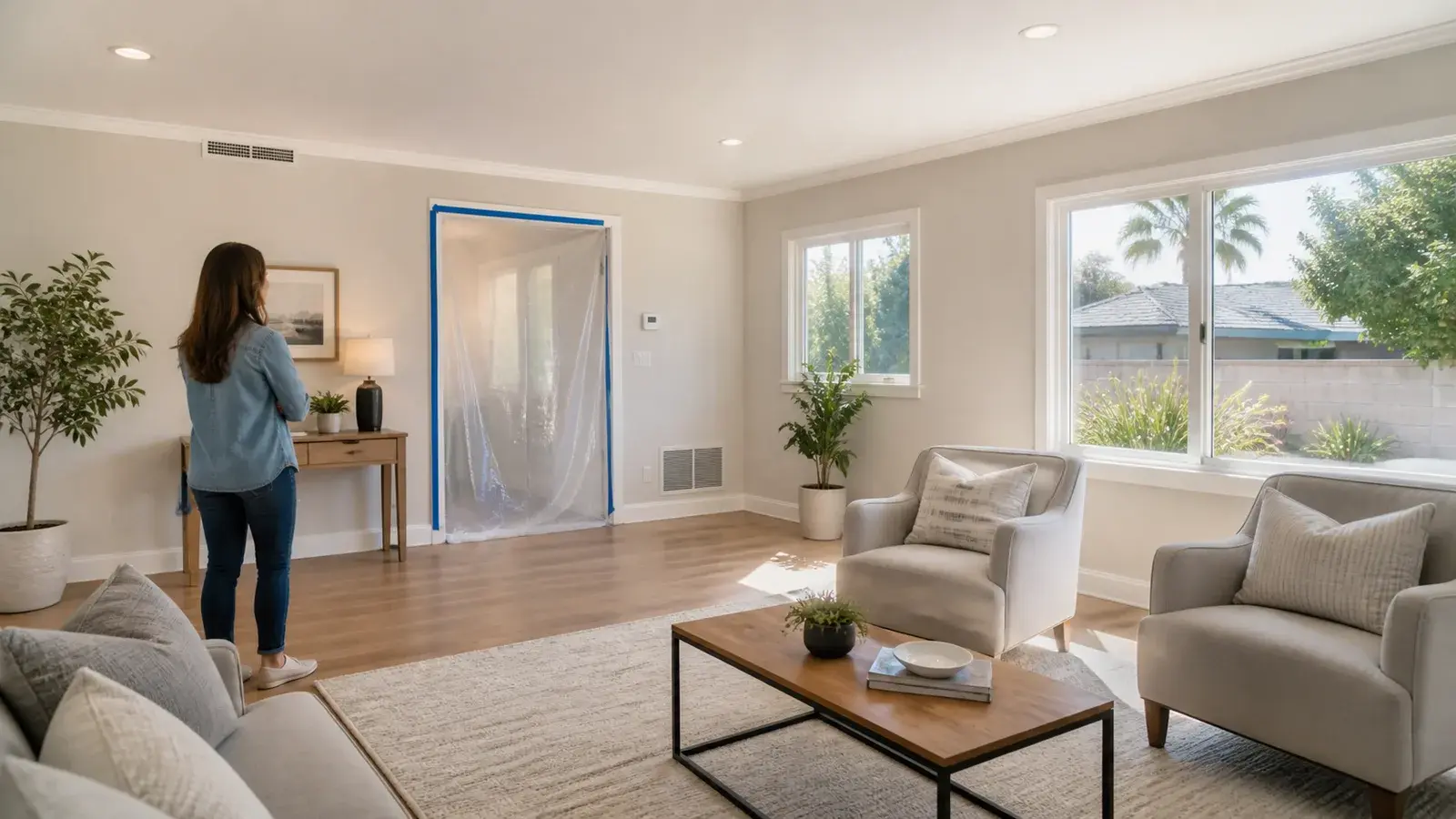
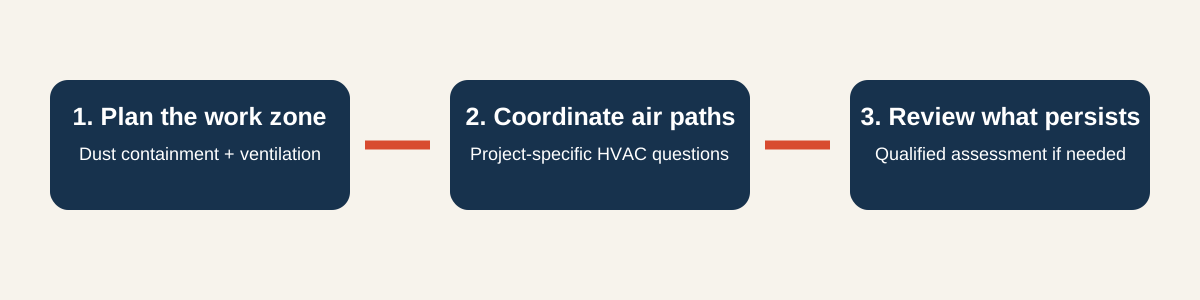
Ask the remodel team which area is the work zone, how dust will be contained, how the area will be ventilated, and who will coordinate the HVAC system. EPA notes that registers in the active work area may need protection during dusty activities, while the project still needs a suitable ventilation strategy. Do not independently seal, open, or modify ducts or equipment.
| Question | Why it matters | Who should confirm it |
|---|---|---|
| Where is the active work zone? | Keeps the conversation tied to actual dust-producing work | Remodel team |
| How will dust and ventilation be managed? | Source control and air movement work together | Remodel team and HVAC professional as needed |
| How will HVAC air paths be coordinated? | A home-specific plan avoids assumptions about returns and registers | Project team |
| What remains unusual after cleanup? | Persistent comfort or airflow observations deserve a qualified review | Homeowner and HVAC professional |
Do not treat filtration as a complete answer
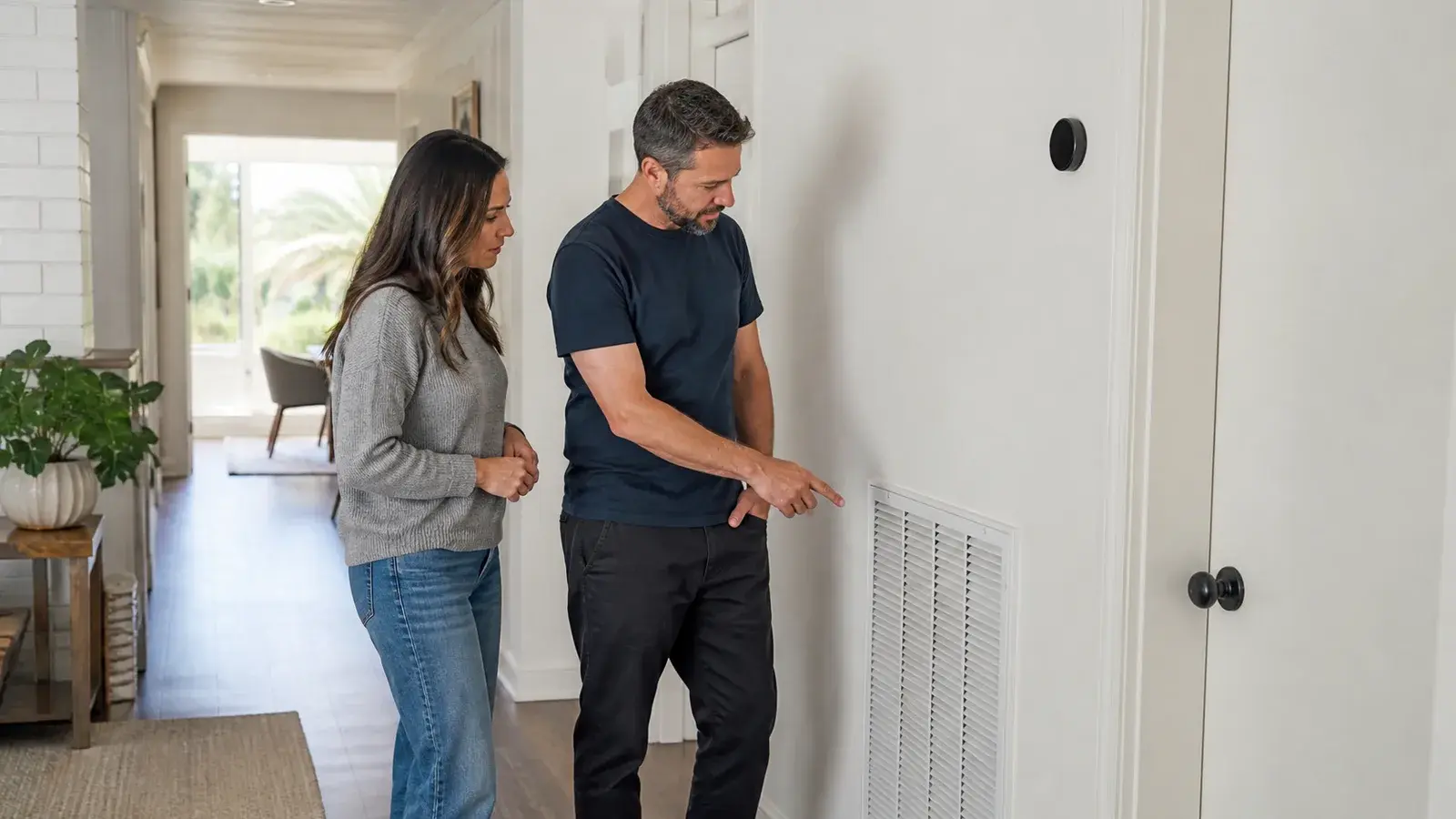
EPA explains that air cleaners and HVAC filters can support indoor air quality, but they do not remove every pollutant and do not replace source control or ventilation. The selected equipment and its suitability remain home- and system-specific; this article does not give medical advice or a performance guarantee.
When to ask for a qualified HVAC assessment
After the work area is cleaned, note persistent comfort differences, unusual dust patterns, or airflow concerns without trying to diagnose the system remotely. A qualified review can separate a return-air, duct, control, equipment, or building-condition question from an assumption.
A local next step
For homes in Ontario, Pomona, the Inland Empire, and nearby East LA County service areas, request AC maintenance for a system-specific discussion. You can also read blocked return air vent signs and our indoor air quality guide. Availability depends on the schedule.
Frequently asked questions
Dust-producing work can affect air paths and duct openings in the work area. The appropriate precautions depend on the work, home, and ventilation plan.
No. EPA describes filtration as a supplement to source control and ventilation, not a replacement for either.
Ask how dust will be contained, how ventilation will be managed, how the system will be coordinated during dusty work, and what will be reviewed before normal operation resumes.
Request one if comfort, airflow, unusual dust, or other concerns continue after the work area is cleaned and the project team has completed its plan.
Local next step
Turn this guide into a site-specific answer.
Guides explain the decision. Equipment condition, access, and safe next steps still need to match the home or business. Review the relevant service scope or request an assessment for Ontario, the Inland Empire, or East Los Angeles County. Availability depends on the current schedule.