Can an HVAC Filter Restrict Airflow? How to Check Safely
A dirty, ill-fitting, or system-incompatible filter can contribute to weak airflow. Learn what to observe and when measured service is needed.

Owner & Lead HVAC Technician, Alex Air & Heating · EPA 608 Universal Certified · Ontario, CA
TL;DR
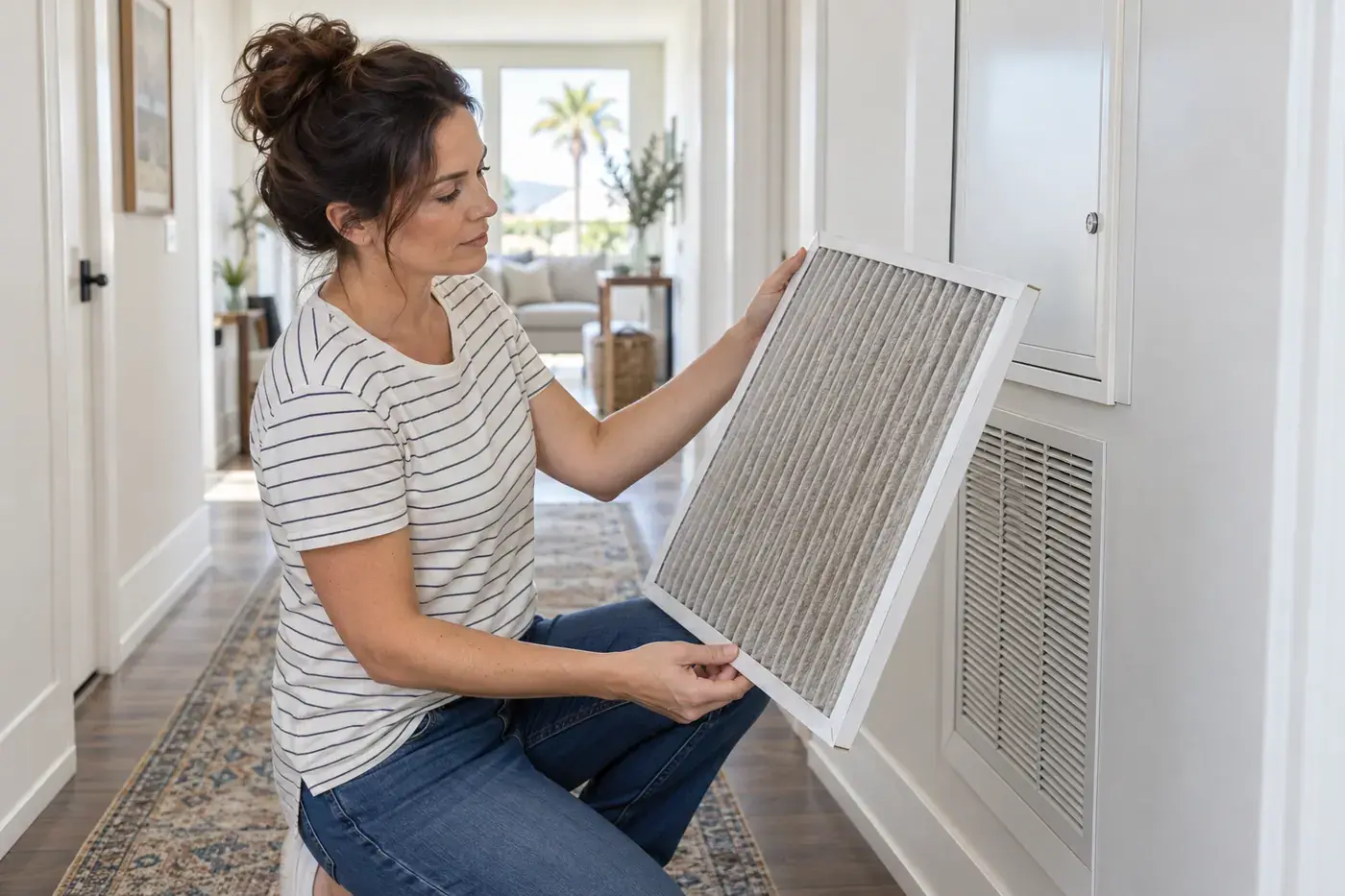
Yes. An HVAC filter can restrict airflow when it is heavily loaded, the wrong size or type, installed incorrectly, or too resistant for the system's available fan and duct capacity. A higher MERV number alone does not prove a problem. Turn the system off before checking a user-accessible filter, follow the equipment's fit and replacement instructions, and never run without a required filter. Persistent weak airflow needs professional measurement, not guesswork.
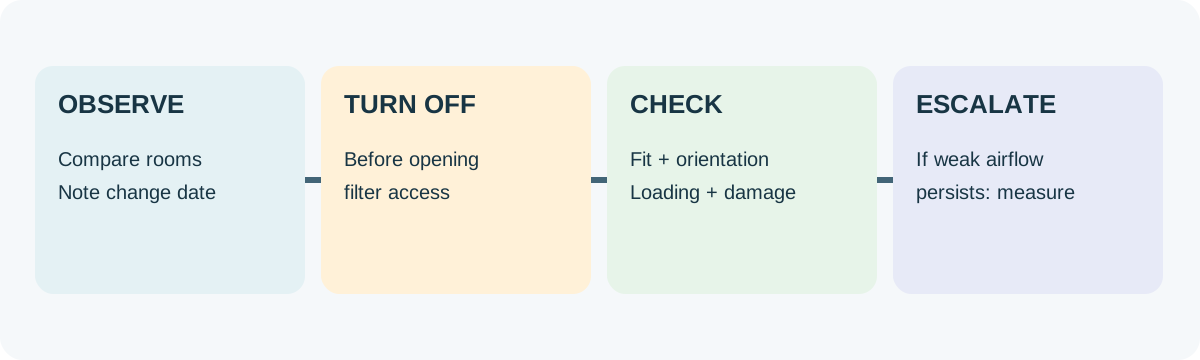
- Compare airflow at several supplies and note whether the change followed a filter swap.
- With the system off, check only the user-accessible filter for loading, fit, orientation, and damage.
- Do not remove a required filter for a running-system test; persistent symptoms need measured evaluation.
On this page
Quick Answer: a filter can be part of an airflow restriction
An HVAC filter restricting airflow is possible, but a weak vent does not identify the filter as the cause. EPA guidance notes that a dirty filter can substantially reduce airflow and that more efficient media may add resistance. The right question is whether the installed filter, filter slot, fan, and ducts work together—not whether one MERV number is universally safe or unsafe.
Key takeaways
- A change after a filter swap is useful timing evidence, not proof.
- A correctly sized filter should sit in its intended slot without bending or bypass gaps.
- Do not use a running-system no-filter test.
- Professional pressure and airflow measurements distinguish filter resistance from other causes.
Why a filter may add too much resistance
| Observation | Possible explanation | Safe next step |
|---|---|---|
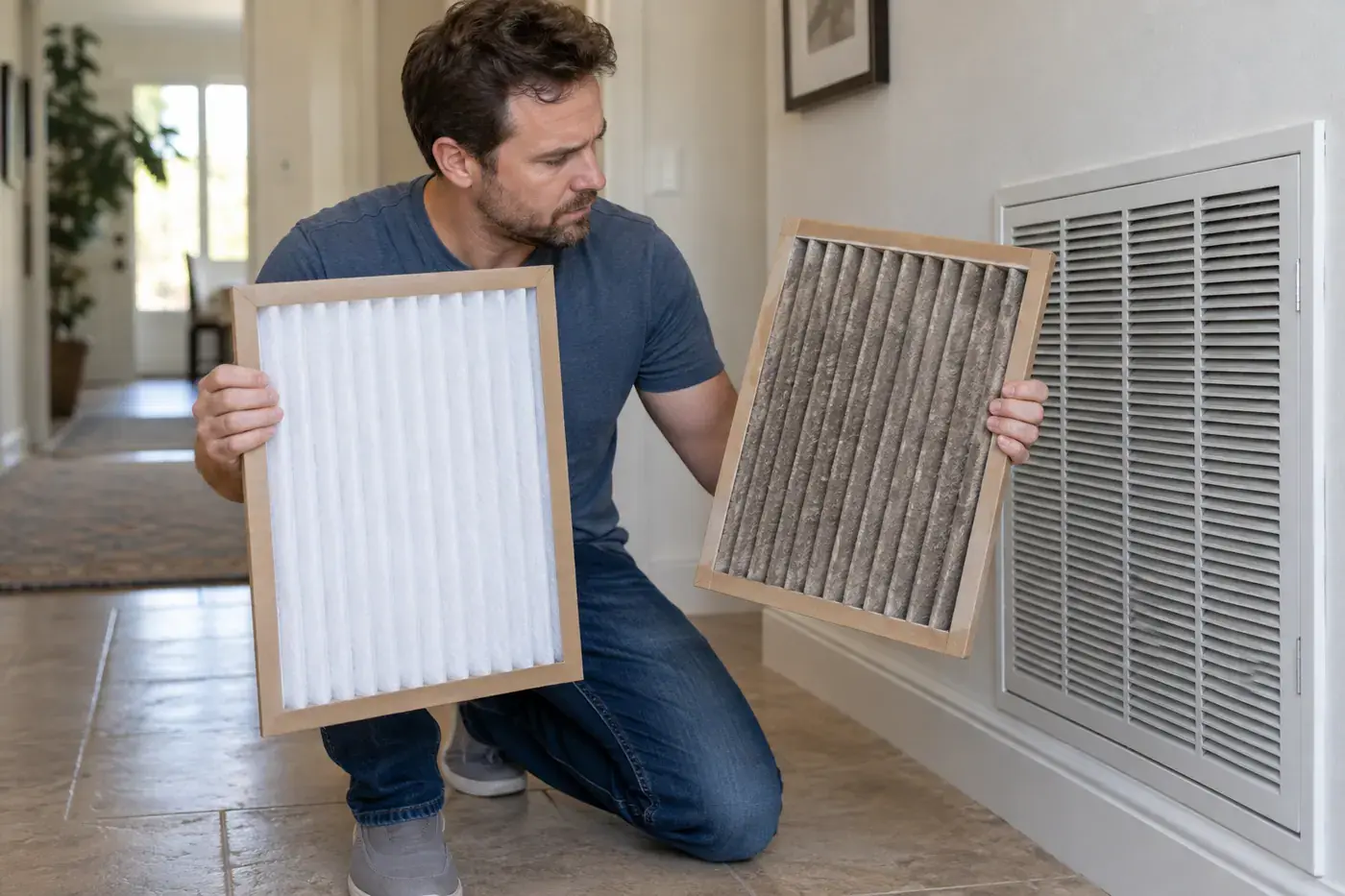
| Visible heavy dust loading | Resistance may have increased as the media loaded | Replace per manufacturer instructions |
| Bent, damaged, or loose fit | Incorrect dimensions or slot fit may allow bypass or interfere with airflow | Check specified size and seating with system off |
| Weak air soon after a filter change | New filter may be incompatible—or another fault may coincide | Record filter type and request assessment if persistent |
| Only one room has weak air | Local register or duct path may be involved | Compare several accessible supplies |
A safe filter check at home
Note the thermostat mode, which rooms have weak air, and when the change began. Turn the HVAC off before opening only a normal user-accessible filter grille or slot. Check whether the filter is visibly loaded or damaged, matches the equipment's specified dimensions, seats snugly, and follows the airflow arrow. Replace it according to the equipment and filter instructions, then close the grille before operation. Do not open an air-handler cabinet, alter wiring, or run the system without a required filter.
MERV and pressure drop are system-specific
EPA recommends choosing the highest MERV rating a system can accommodate and consulting a qualified technician when compatibility is uncertain. ASHRAE explains that resistance depends on design and loading; a deeper or larger-area filter may behave differently from a thin filter with the same rating. Avoid universal claims that all high-MERV filters are safe or harmful. For selection rather than symptom triage, read our air filter MERV rating guide.
When the filter is not the whole answer
A blocked return, closed or obstructed supply, dirty coil, duct problem, or blower condition can also cause weak airflow. If a suitable fresh filter does not resolve a multi-room pattern, ask for a measured evaluation. Our blocked return-air guide covers another accessible observation; if symptoms followed remodeling, see construction dust protection. Stop operation for smoke, burning odor, or repeated breaker trips.
Local maintenance handoff
Alex Air & Heating serves Ontario, Pomona, the Inland Empire, and nearby East Los Angeles County communities. For persistent weak airflow, note the filter size and type, last change date, affected rooms, and whether the symptom began after replacement. Request an on-site evaluation through AC maintenance; no part or result can be confirmed from symptoms alone.
Frequently asked questions
Yes. As captured particles build up, resistance can increase; a heavily loaded filter can contribute to reduced airflow. Other restrictions or blower issues can look similar.
No. Pressure drop depends on the filter design, media area, size, loading, and the particular fan and duct system. Choose the highest efficiency the system can accommodate, using manufacturer guidance or a technician's assessment.
Do not operate a system that requires a filter without one. Unfiltered air can contaminate equipment, and an informal comparison does not diagnose the actual pressure or airflow problem.
Confirm its specified size, fit, orientation, and compatibility after turning the system off. If it is correct but weak airflow persists, ask a technician to measure the system rather than repeatedly trying denser or thinner filters.
Request evaluation when weak airflow persists after a correctly installed, suitable filter, several rooms are affected, or there is icing, unusual noise, or repeated cycling. Smoke, burning odor, or repeated breaker trips warrants stopping operation.
Local next step
Turn this guide into a site-specific answer.
Guides explain the decision. Equipment condition, access, and safe next steps still need to match the home or business. Review the relevant service scope or request an assessment for Ontario, the Inland Empire, or East Los Angeles County. Availability depends on the current schedule.