How to Pay for a New HVAC System: Financing Options in California
A new AC or heat pump runs $5,000-$12,000, and few people pay cash. Here are the real ways to finance HVAC in California in 2026 - and how to keep the total cost down.

Yuan Pan
Owner & Lead HVAC Technician, Alex Air & Heating · EPA 608 Universal Certified · Ontario, CA
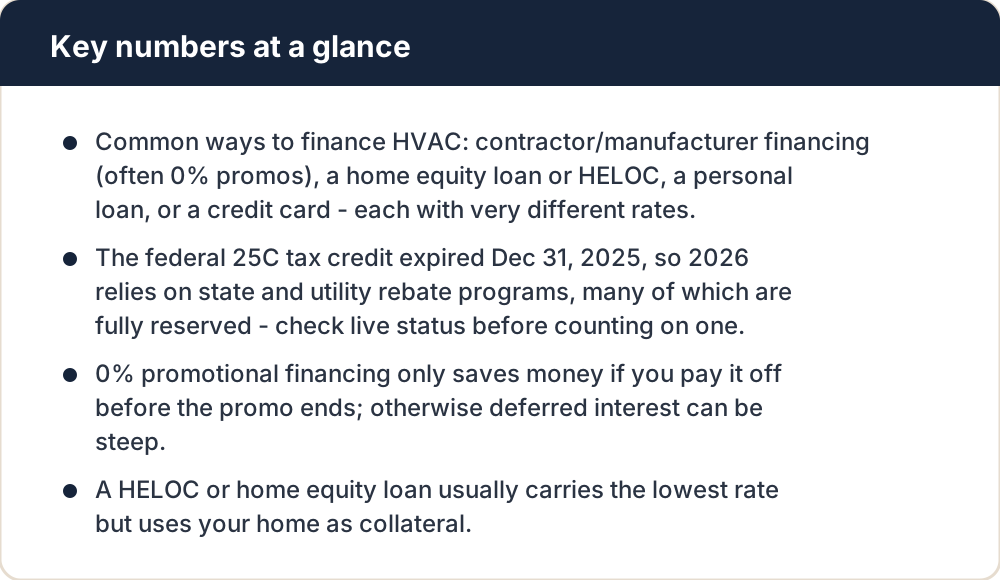
- Common ways to finance HVAC: contractor/manufacturer financing (often 0% promos), a home equity loan or HELOC, a personal loan, or a credit card - each with very different rates.
- The federal 25C tax credit expired Dec 31, 2025, so 2026 relies on state and utility rebate programs, many of which are fully reserved - check live status before counting on one.
- 0% promotional financing only saves money if you pay it off before the promo ends; otherwise deferred interest can be steep.
- A HELOC or home equity loan usually carries the lowest rate but uses your home as collateral.
On this page
How do most people pay for a new HVAC system?
Because a full AC or heat pump replacement typically costs $5,000-$12,000, most homeowners finance it rather than pay cash. The right choice depends on the interest rate you can get, whether you can use home equity, and how fast you can repay. Below are the main options, cheapest to most expensive on rate.
Contractor & manufacturer financing
Many HVAC companies offer financing through a lender partner, often with promotional 0% or low-APR periods (for example, 12-24 months no interest). This is convenient and quick to approve. The catch: many of these are deferred-interest plans - if you don't pay the full balance before the promo ends, interest can be charged back to day one. Great if you'll pay it off on schedule; expensive if you won't.
| Option | Typical rate | Best for |
|---|---|---|
| Home equity loan / HELOC | Lowest | Homeowners with equity, lowest rate |
| Contractor 0% promo | 0% (then high) | Those who can pay off before promo ends |
| Personal loan | Moderate | No home equity, want fixed payments |
| Credit card | Highest | Small balances paid off fast only |
Home equity loan or HELOC
If you have equity in your home, a home equity loan (lump sum, fixed rate) or a HELOC (revolving line) usually offers the lowest interest rate of any option, because it's secured by your home. The trade-off is exactly that - your home is collateral, and closing can take longer. Best for homeowners who want the lowest rate and have equity to tap.
Personal loan or credit card
An unsecured personal loan gives you a fixed payment without risking your home, at a higher rate than home equity. A credit card should generally be a last resort for a purchase this size unless it's a 0% intro card you'll clear quickly - standard card APRs make HVAC very expensive over time.
What about rebates and tax credits in 2026?
The federal 25C tax credit that used to help with a high-efficiency system expired December 31, 2025 - there is no federal credit for 2026. California state and utility programs (such as heat-pump incentives) still exist on paper, but many single-family funding pools have been reserved or exhausted, so check the current status of any program before you build it into your budget. Standard AC-only replacements have very limited rebate support in 2026.
How to keep the total cost down
A few habits save the most money:
- Compare the APR and total repaid, not just the monthly payment.
- If you take 0% promo financing, set a payoff plan to beat the deadline.
- Get itemized quotes and choose the right size - oversizing wastes money up front and on bills.
- Ask which local rebates are actually still open before assuming you'll get one.
- Weigh a slightly higher-efficiency unit: it costs more to finance but lowers every summer bill.
Frequently asked questions
Only if you pay the full balance before the promotional period ends. Many 0% plans are deferred-interest - miss the deadline and interest can be charged back to the original purchase date. Read the terms and set a payoff plan.
No federal one - the 25C credit expired December 31, 2025. Some California state/utility rebates remain but are often reserved or exhausted, so verify current availability before relying on it.
For most homeowners with equity, a home equity loan or HELOC has the lowest interest rate because it's secured by the home. The trade-off is that your home is the collateral.