How Much a New Furnace Costs to Install in 2026 ($4,000–$12,000 in California)
California installs typically start around $5,000. See 2026 prices by AFUE and size, what Title 24 adds, and why 25C credits are gone.

Owner & Lead HVAC Technician, Alex Air & Heating · EPA 608 Universal Certified · Ontario, CA
TL;DR
A new furnace costs about $3,800-$12,000 installed in 2026, and California jobs commonly start around $5,000 because of higher labor and Title 24 requirements. Standard 80% AFUE units run about $3,800-$6,200 installed, while 96%+ AFUE high-efficiency models run about $7,500-$12,000. Permits and Title 24 field verification, possibly including HERS duct testing, add cost. The federal 25C tax credit expired December 31, 2025-only utility rebates and financing remain.
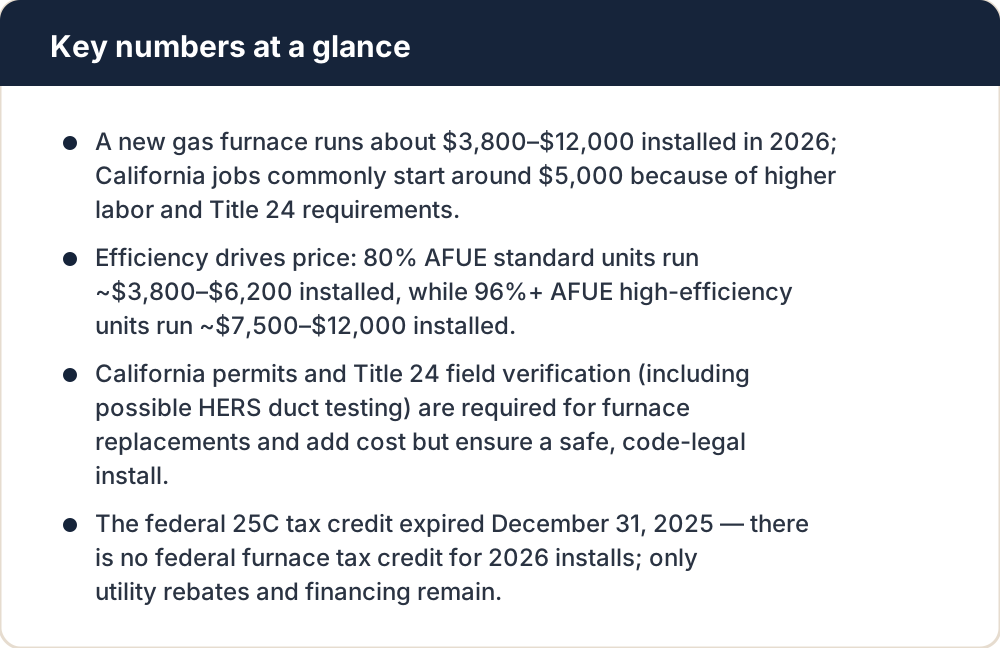
- A new gas furnace runs about $3,800–$12,000 installed in 2026; California jobs commonly start around $5,000 because of higher labor and Title 24 requirements.
- Efficiency drives price: 80% AFUE standard units run ~$3,800–$6,200 installed, while 96%+ AFUE high-efficiency units run ~$7,500–$12,000 installed.
- California permits and Title 24 field verification (including possible HERS duct testing) are required for furnace replacements and add cost but ensure a safe, code-legal install.
- The federal 25C tax credit expired December 31, 2025 — there is no federal furnace tax credit for 2026 installs; only utility rebates and financing remain.
On this page
How much does a new furnace cost in 2026?
A new furnace typically costs between about $3,800 and $12,000 installed in 2026, with a national average around $4,800. In California — including the Inland Empire — expect to start near $5,000 and up, because labor rates are higher and every replacement must meet the state's Title 24 energy code. The final number is driven mostly by three things: the fuel type, the efficiency (AFUE) rating, and the size (BTU) your home needs.
To set expectations: a straightforward, like-for-like swap of a mid-efficiency gas furnace in a home with good existing ductwork sits toward the lower-middle of that range. A high-efficiency condensing furnace, a larger home, added ductwork or gas-line changes, or a two-stage/modulating unit pushes you toward the top. Below we break down the price by type and efficiency, then cover what drives the cost, permits, and 2026 rebates.
Furnace cost by type and efficiency (AFUE)
Efficiency is the biggest single lever on price. AFUE measures how much fuel becomes usable heat — an 80% AFUE furnace wastes 20% up the flue, while a 96% AFUE condensing furnace wastes only 4%. Higher AFUE costs more upfront but less to run. Here's the 2026 landscape for installed prices:
- Standard efficiency (80–89% AFUE): roughly $3,800–$6,200 installed. Lowest upfront, higher running cost, still allowed under the current 80% federal minimum.
- Mid efficiency (90–95% AFUE): roughly $5,200–$8,800 installed. A common sweet spot for value.
- High efficiency (96%+ AFUE): roughly $7,500–$12,000 installed. Condensing design, lowest running cost, often required for a sealed-combustion or tight home.
- Electric furnace: roughly $2,000–$7,000 installed. Cheapest to buy, but electricity costs more per unit of heat than gas in most of California, so running cost is usually higher.
Note a coming change worth planning around: the Department of Energy's new 95% AFUE minimum standard for gas furnaces takes effect in late 2028, so mid-efficiency units will eventually phase out. If you're buying now, a 95–96% AFUE furnace is future-proof.
| Type / efficiency | AFUE | Installed cost | Best for |
|---|---|---|---|
| Electric furnace | 100% (resistance) | $2,000–$7,000 | Low upfront, no gas line; higher running cost |
| Standard gas | 80–89% | $3,800–$6,200 | Tight budget, like-for-like swap |
| Mid-efficiency gas | 90–95% | $5,200–$8,800 | Value sweet spot |
| High-efficiency gas | 96%+ | $7,500–$12,000 | Lowest running cost, tight homes |
| Heat pump (alternative) | 250–350% (COP) | $6,000–$12,000+ | Heats and cools; best for mild SoCal |
What drives the price up or down
Beyond efficiency, several factors move your quote. Size matters: furnaces are sized in BTUs to your home's heat load, and a proper Manual J load calculation — not a rule of thumb — determines it. Bigger homes need bigger, pricier units, but oversizing wastes money and causes short-cycling.
Installation complexity is often the hidden cost. Replacing ductwork, moving the unit, upsizing a gas line, adding a new flue or condensate drain for a high-efficiency model, or fixing code issues all add labor. A clean like-for-like swap is cheapest; a fuel-type change or relocation is the most expensive.
Equipment tier also matters. Single-stage furnaces are cheapest; two-stage and modulating (variable-capacity) furnaces cost more but run quieter, more efficiently, and more evenly — a nice upgrade for our long mild shoulder seasons. Brand, warranty length, and whether you need a matching blower for a future heat pump or AC round out the estimate.
Gas vs. electric furnace vs. heat pump
Gas furnaces dominate California installs because natural gas is relatively affordable here and most homes already have a gas line and flue. They cost more to install than an electric furnace but far less to run.
Electric furnaces are the cheapest to install (about $2,000–$7,000) and have no combustion or flue, but they're expensive to operate at California electricity rates — they use resistance heat, which is only 100% efficient. For that reason, few SoCal homeowners choose a straight electric furnace.
The better electric alternative is a heat pump, which moves heat rather than making it and runs at 250–350% efficiency — a strong fit for our mild winters, and it cools in summer too. If you're replacing an aging furnace and AC together, price a heat pump alongside the furnace before deciding; it may deliver more value for a similar total.
Permits, Title 24, and HERS testing in California
In California, a furnace replacement legally requires a permit, and the work must comply with Title 24 Part 6, the state's Building Energy Efficiency Standards. Permits filed on or after January 1, 2026 must meet the 2025 Energy Code. This isn't optional red tape — it protects you: it forces correct sizing, safe combustion venting, and proper condensate handling, and it means an inspector verifies the job.
Depending on the scope, the code may require field verification such as a HERS-rater duct-leakage test when ducts are altered or exposed. As of January 1, 2026, those diagnostic and field-verification provisions live directly in the Energy Code, with an exception that lets urgent HVAC changeouts register the compliance certificates before the permit is finalized. Permit and testing fees vary by city (Ontario, Pomona, and each jurisdiction set their own) and typically add a few hundred dollars — but skipping the permit risks fines, insurance problems, and trouble at resale. A reputable licensed contractor pulls the permit for you and builds it into the quote.
Rebates and financing in 2026
Here's the most important 2026 update, because many cost guides are outdated: the federal Energy Efficient Home Improvement Credit (Section 25C) expired December 31, 2025. There is no federal tax credit for a furnace installed in 2026. Any article telling you to claim up to $600 for a high-efficiency furnace is describing a program that has ended — don't count on it.
What's left to lower your out-of-pocket cost:
- Utility rebates: Southern California Edison and SoCalGas periodically offer rebates on qualifying high-efficiency HVAC equipment — check their current catalogs, as gas furnaces typically qualify for smaller amounts than heat pumps.
- Manufacturer and seasonal promotions: brands and contractors run spring/fall install discounts and instant rebates.
- Financing: most licensed HVAC contractors offer monthly financing (often 0% intro or fixed-APR plans) so you can spread a $5,000–$10,000 install over time.
- Bundle savings: replacing furnace and AC together, or switching to a heat pump, can unlock larger utility incentives than a furnace alone.
Rebate programs change funding often, so verify current eligibility with the utility or your contractor before signing.
How to get an accurate quote
Prices online are ranges; your real number comes from an in-home assessment. Insist on a proper Manual J load calculation so the furnace is sized to your home, not guessed. Get the quote itemized — equipment, labor, permit and Title 24 fees, any duct or gas-line work, and the warranty — so you can compare bids fairly.
Verify the contractor holds an active California C-20 HVAC license at the CSLB website, and confirm they pull the permit rather than asking you to skip it. For Inland Empire and East LA County homeowners in Ontario, Pomona, Diamond Bar, Walnut, Claremont, and Rowland Heights, getting two or three itemized, permitted quotes is the surest way to a fair 2026 price.
Frequently asked questions
Most California furnace installs run from about $5,000 to $12,000 depending on efficiency and size, higher than the national average because of labor rates and Title 24 code requirements. A standard 80% AFUE like-for-like swap is toward the low end; a 96%+ AFUE high-efficiency unit in a larger home is toward the top.
Often yes over the life of the unit. A 96% AFUE furnace wastes only 4% of its fuel versus 20% for an 80% AFUE model, so it costs less to run every year. The payback depends on how much you heat — in our mild climate the heating season is short, so run the numbers, but a 95–96% unit is also future-proof against the 2028 federal 95% minimum.
Yes. A furnace replacement legally requires a permit and must comply with Title 24, the state energy code. Permits filed on or after January 1, 2026 follow the 2025 Energy Code, which may require HERS duct-leakage testing when ducts are altered. A licensed contractor pulls the permit and includes the fees in the quote; skipping it risks fines and resale problems.
No federal one. The Section 25C Energy Efficient Home Improvement Credit, which offered up to $600 for a qualifying high-efficiency furnace, expired December 31, 2025 and does not apply to 2026 installs. Look instead to utility rebates from SCE and SoCalGas and contractor financing to reduce your cost.
Local next step
Turn this guide into a site-specific answer.
Guides explain the decision. Equipment condition, access, and safe next steps still need to match the home or business. Review the relevant service scope or request an assessment for Ontario, the Inland Empire, or East Los Angeles County. Availability depends on the current schedule.