HVAC Maintenance for a Rental Property in Ontario, CA
A practical Ontario, CA rental-property HVAC maintenance record and communication routine for landlords, managers, and owners.

Owner & Lead HVAC Technician, Alex Air & Heating · EPA 608 Universal Certified · Ontario, CA
TL;DR
HVAC maintenance for an Ontario, CA rental property works best as a simple record-and-communication routine: identify each system, note routine service and filter work, record tenant-reported changes as observations, and keep each visit’s written scope and next-step notes together. The lease and local authorities determine responsibilities; this guide is not legal advice. For equipment concerns, arrange a site-specific maintenance assessment based on current availability.
- Keep one property file for each HVAC system, rather than relying on a tenant or manager’s memory.
- A dated observation helps a future service conversation; it does not establish the cause of a problem.
- The lease and local authorities, not a generic checklist, determine rental-property responsibilities.
On this page
Quick Answer: create one HVAC record for each rental system
For an Ontario, CA rental property, start with an equipment identity sheet and add every dated service note, filter detail, tenant or manager observation, and recommended next step to that same file. This makes a future maintenance conversation more specific without treating paperwork as a diagnosis or a legal conclusion.
Key takeaways
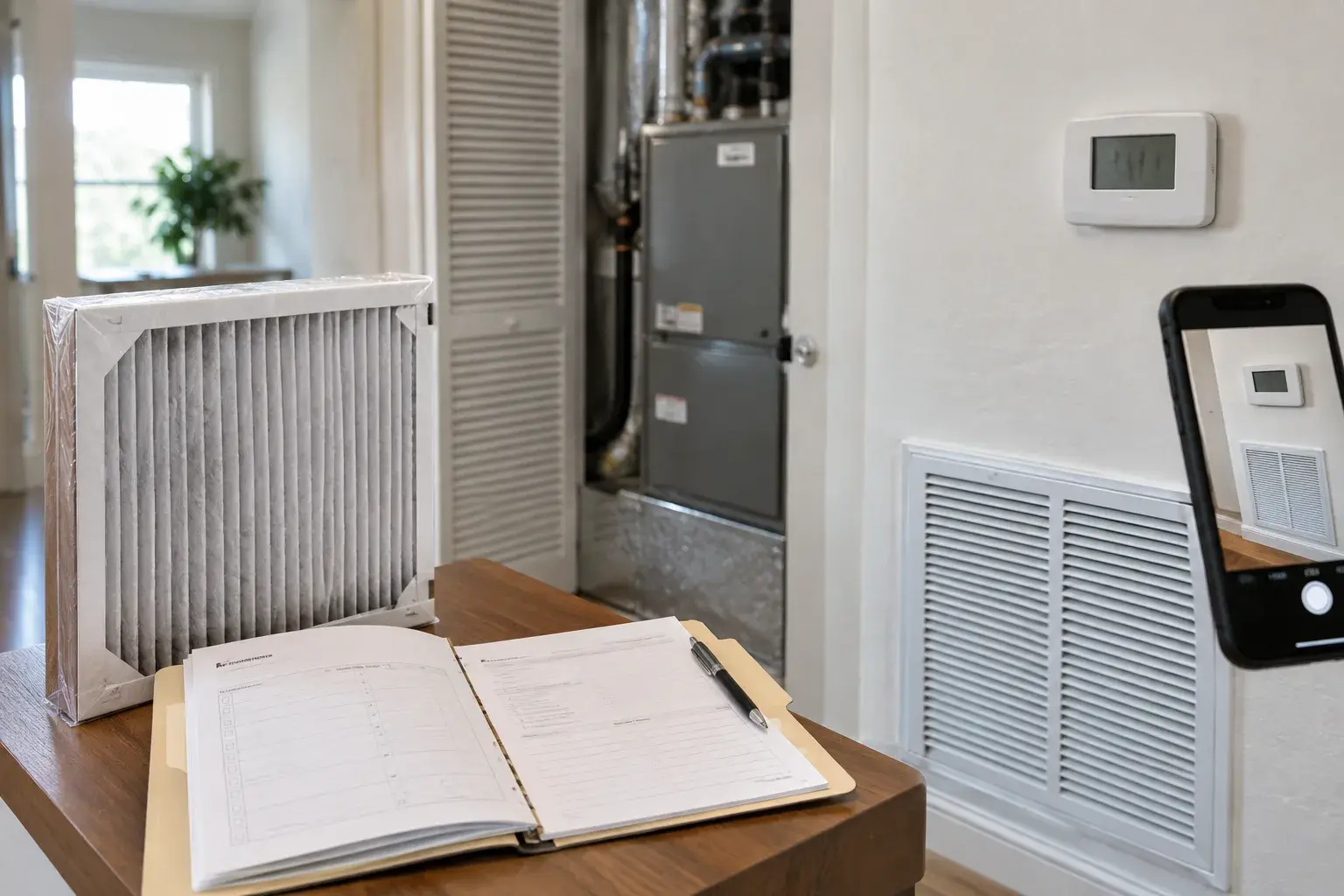
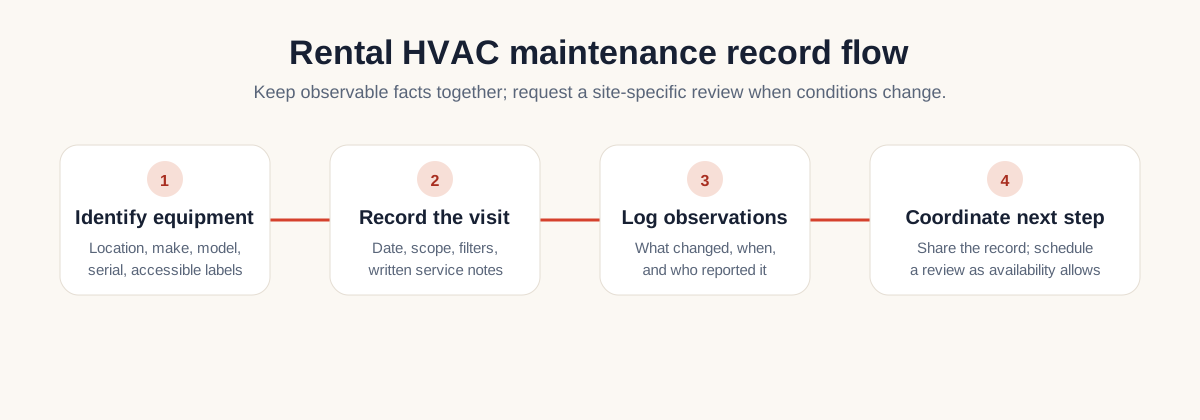
- Record accessible make, model, serial, system location, and a dated photo of the equipment label.
- Keep the service provider’s written scope and notes with the date of the visit.
- Log observations in plain language: what changed, where, when, and who noticed it.
- Use the record to coordinate a next step; do not use it to assign lease responsibility or diagnose remotely.
Build a rental-property HVAC file before a concern occurs
A single folder—digital, paper, or both—reduces guesswork when ownership, occupants, or service contacts change. Put only observable information in it: accessible equipment details, a service visit’s written scope, filters or parts noted by the provider, and dated communication about a changed condition. ENERGY STAR’s homeowner guidance notes that filters need regular attention; the useful rental-property practice is also recording what was checked and when.
| Record | What to include | Why it helps later |
|---|---|---|
| Equipment identity | Accessible make, model, serial, location, dated label photo | Helps distinguish one system from another |
| Service visit | Date, written scope, observations, filters or parts noted | Shows what the visit covered—not a promise about future conditions |
| Occupant or manager note | Room or system, date, ordinary settings, what changed | Gives a reviewer concrete context |
| Next-step note | Recommended follow-up and the contact who received it | Keeps communication from getting lost during a handoff |
Use a clear report-and-review sequence
Ask the reporter to describe the condition without guessing at a cause: which area or system is involved, when it was first noticed, what ordinary control setting was in use, and whether the condition is continuing. Attach relevant dated photos only when they show accessible labels or visible context. Do not ask residents to open equipment, remove panels, alter wiring, or make a safety judgment.
Keep maintenance, communication, and responsibility separate
Maintenance records support clearer conversations, but they do not decide who must act under a lease or local requirement. California’s Office of the Attorney General publishes landlord-tenant consumer guidance; use the signed agreement and applicable local authorities for responsibility questions. This article does not provide legal advice. ASHRAE’s maintenance standards also distinguish a documented scope from an assumption that every building or system follows the same schedule.
A local next step
For a rental property in Ontario, use our HVAC maintenance page to request a site-specific discussion based on current availability. Then keep the visit documentation with the property record. For the record list itself, read what to keep after an HVAC tune-up and the broader HVAC maintenance checklist.
Frequently asked questions
Keep accessible equipment identification, dated service notes, filter information, written recommendations, and dated observations together in the property file.
A dated written note can preserve useful context: the room or system affected, when it was noticed, ordinary settings, and whether the condition changed. It is not a diagnosis.
That depends on the lease and applicable local requirements. This article is a maintenance-record guide, not legal advice or a lease interpretation.
No. A checklist records the scope of a visit. A changed condition can still need a site-specific assessment.
Request an assessment when an observation persists, recurs, involves unusual operation, or needs professional review. Appointment availability depends on the current schedule.
Local next step
Turn this guide into a site-specific answer.
Guides explain the decision. Equipment condition, access, and safe next steps still need to match the home or business. Review the relevant service scope or request an assessment for Ontario, the Inland Empire, or East Los Angeles County. Availability depends on the current schedule.