Fall Furnace Tune-Up Checklist Before Heating Season
Use this Southern California furnace checklist before the first cool night: homeowner-safe checks first, then documented professional service for combustion and venting.

Owner & Lead HVAC Technician, Alex Air & Heating · EPA 608 Universal Certified · Ontario, CA
TL;DR
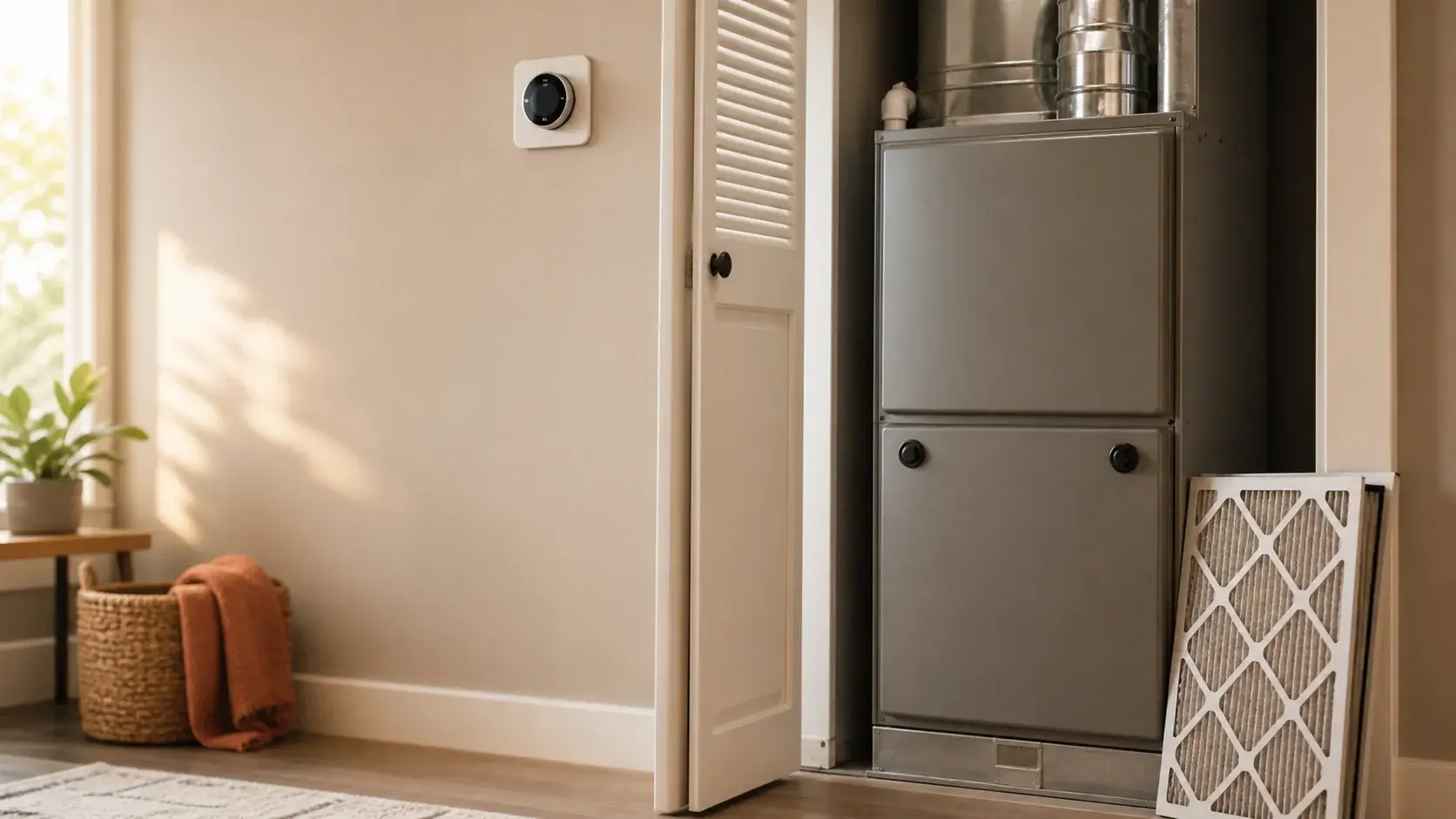
Before the first cool night, set the thermostat to HEAT, replace a dirty filter, clear supply and return vents, confirm the furnace panel is seated, and watch one normal cycle. Then schedule a professional tune-up for combustion, heat-exchanger, safety-control and venting checks. Stop immediately for gas odor, delayed ignition, a CO alarm or repeated breaker trips.
- Start with visible checks: thermostat mode, filter condition, airflow, panel fit and one complete heat cycle.
- A seasonal checklist is not a combustion test; fuel-burning equipment and venting need professional inspection.
- Keep the service date, filter size, findings, photos and recommended next step in one home-maintenance record.
- For Ontario, Pomona, Diamond Bar, Walnut, Claremont and nearby Inland Empire homes, request a written scope through [furnace repair](/services/furnace-repair).
On this page
What should you check before the first fall heating cycle?
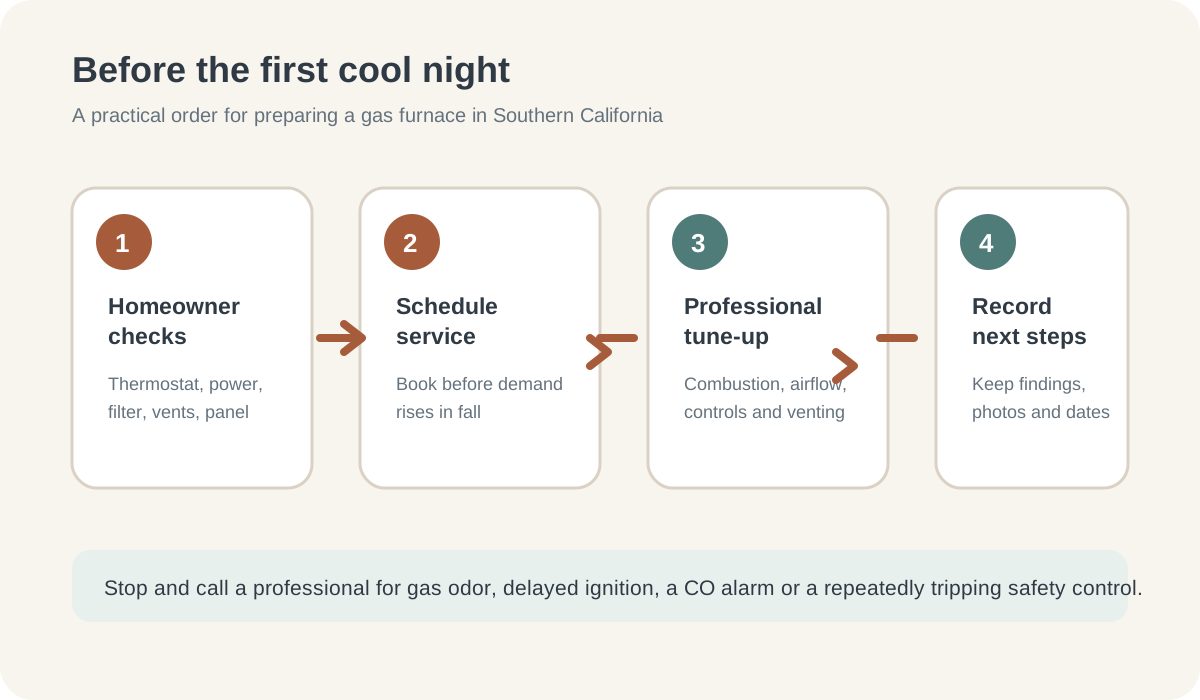
The safest order is simple: confirm the thermostat is calling for heat, check the filter and airflow, make sure the access panel is seated, and watch one normal cycle from outside the equipment cabinet. These checks can reveal an obvious setup problem, but they do not prove that a gas furnace is safe. For a written scope or a furnace that will not run normally, start with furnace repair in Ontario, the Inland Empire or East Los Angeles County.
Use the homeowner checks to prepare useful information. Do not adjust gas pressure, bypass a rollout switch, remove a safety control or open the combustion compartment as a DIY tune-up.
Homeowner-safe pre-season checks
Select HEAT, set the fan to AUTO and raise the target above room temperature. A blank display may need a battery, while a tripped breaker or service switch can make a healthy furnace appear dead. Reset a breaker once; if it trips again, stop and ask for diagnosis.
Turn the system off and inspect the filter. A loaded filter restricts airflow and can contribute to an overheated heat exchanger or limit-control shutdown. Replace it with the correct size, open blocked grilles and confirm the front panel is seated. ENERGY STAR recommends regular heating and cooling maintenance, but a filter check is not a substitute for fuel-burning equipment inspection.
| Check | Normal observation | Stop or schedule |
|---|---|---|
| Thermostat | HEAT mode, fan AUTO, display works | Blank display or no call for heat |
| Filter and grilles | Correct filter seated; paths open | Heavy dust, blocked return or weak airflow |
| Access panel | Panel closes; interlock not defeated | Loose panel or bypassed switch |
| One heat cycle | Starts, warms, runs and shuts down | Boom, gas odor, retry or CO alarm |
What should a professional furnace tune-up cover?
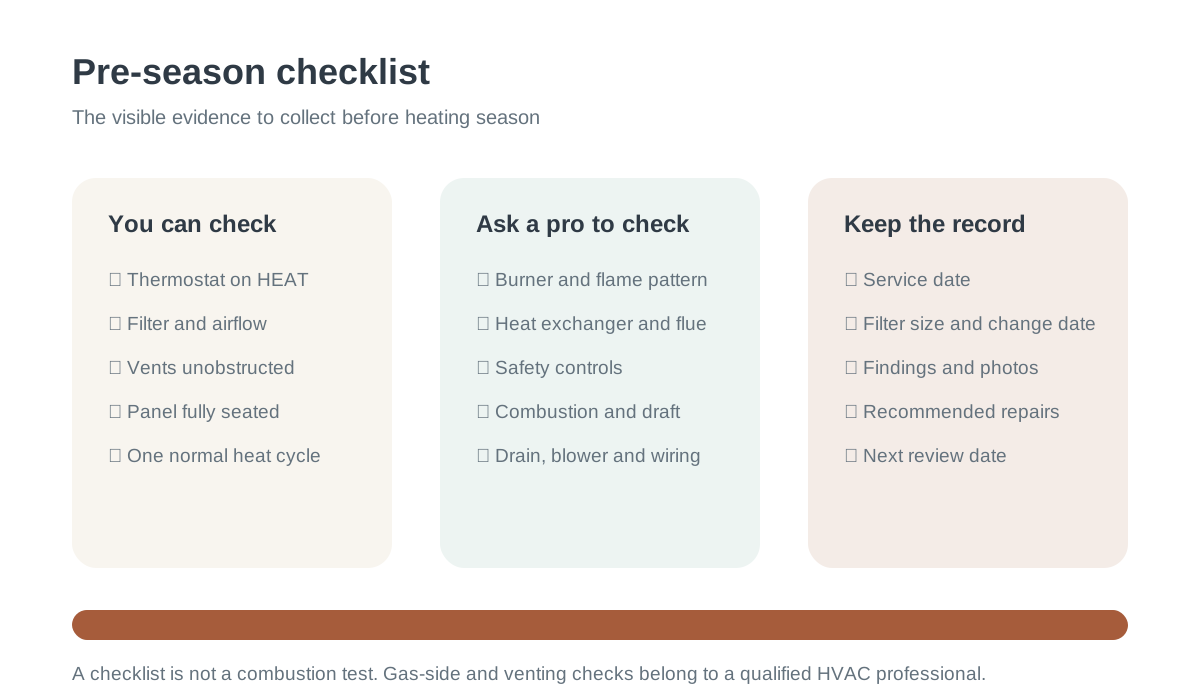
A professional visit should connect symptoms, equipment and vent path rather than simply reset a control. Depending on the design, the technician may inspect the burner and flame, heat exchanger, blower and airflow, electrical connections, condensate drain, safety controls and flue or vent termination. The exact tests depend on the manufacturer instructions and available instruments.
How to plan for a Southern California heating season
A mild climate changes timing, not the need for preparation. A furnace can sit unused for months, so a controlled first cycle may reveal a filter problem, failed igniter, vent obstruction or control fault before a cold morning. Schedule early enough to review written findings and make a separate decision about any repair; maintenance is not an automatic replacement recommendation.
When to skip the checklist and call now
- Gas odor, delayed ignition or soot around the furnace.
- A carbon-monoxide alarm or headache, dizziness, nausea or confusion that improves after leaving.
- A breaker trips again, a safety switch is bypassed or the furnace repeatedly locks out.
- The flue or vent connector appears damaged, disconnected or blocked.
- The furnace cannot complete a normal cycle after the basic checks.
What to record after service
Keep the service date, equipment model if available, filter size, symptoms, technician findings, photos and recommended next step. If the system later shows a no-ignition symptom, compare the record with our furnace not igniting guide. For an older unit, it also gives context when reviewing furnace service life.
Ready for a documented pre-season check? Request a local furnace repair assessment and ask what was observed, what was tested and what needs attention next.
Frequently asked questions
Do the homeowner checks before the first cool night and schedule professional service before you need daily heat. A furnace that has sat idle still deserves a controlled startup and safety review before regular use.
You can check thermostat mode, replace the filter, clear vents, confirm the panel is seated and observe one normal cycle. Do not adjust the gas train, bypass a safety switch or test flue performance yourself.
Ask for a written scope covering the burner and flame, heat exchanger, vent path, blower and airflow, controls, condensate drain where applicable and manufacturer-specific maintenance points.
No. Turn the system off, leave the area if needed, avoid switches or flames, and contact the gas utility or emergency services as appropriate. A gas odor or delayed ignition is not a checklist item.
Local next step
Turn this guide into a site-specific answer.
Guides explain the decision. Equipment condition, access, and safe next steps still need to match the home or business. Review the relevant service scope or request an assessment for Ontario, the Inland Empire, or East Los Angeles County. Availability depends on the current schedule.