What Records Should You Keep After an HVAC Tune-Up?
An HVAC tune-up records checklist that helps future maintenance and repair conversations start with dated, useful facts.

Owner & Lead HVAC Technician, Alex Air & Heating · EPA 608 Universal Certified · Ontario, CA
TL;DR
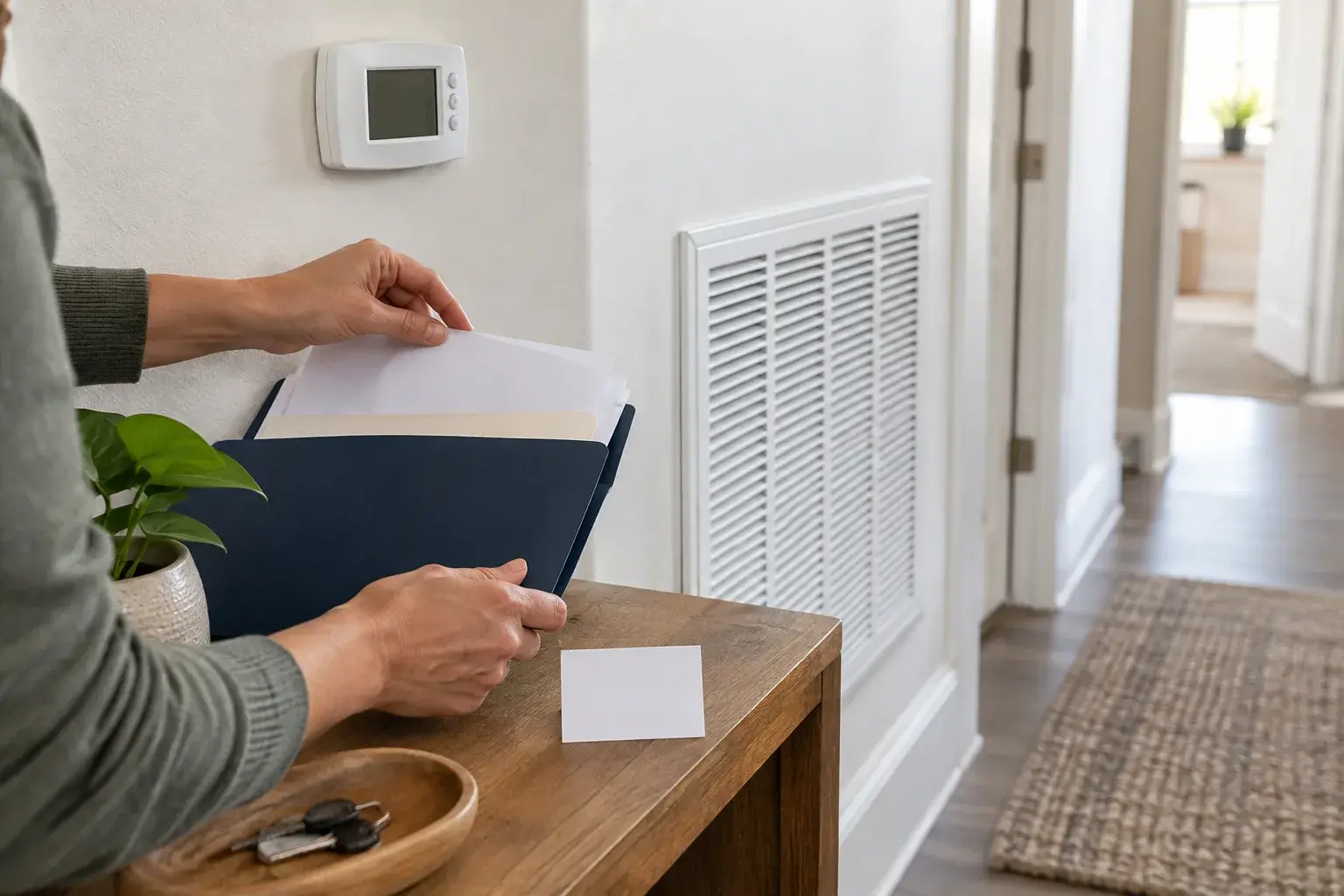
After an HVAC tune-up, keep the service invoice or written scope, the system’s make/model/serial details, filters or parts noted, technician observations, recommended follow-up and dated photos of accessible equipment labels. Store these records with the property file so future maintenance or repair conversations begin with facts rather than memory. A tune-up record documents the visit; it does not replace a site-specific diagnosis when conditions change.
- Keep the original written service scope, not just a calendar reminder that a visit occurred.
- Pair visit notes with accessible equipment identity details and dated label photos.
- Record future observations separately so they are not confused with the technician’s documented visit.
On this page
Quick Answer: keep the written scope, equipment identity, and follow-up context
After a tune-up, file the provider’s written service scope or invoice with the visit date, accessible system identification, filters or parts noted, technician observations, recommended follow-up, and dated photos of accessible equipment labels. Keep later observations in a separate dated note. This approach gives the next service conversation useful context without claiming that a past visit explains a new condition.
Key takeaways
- Keep the original service documentation and date together.
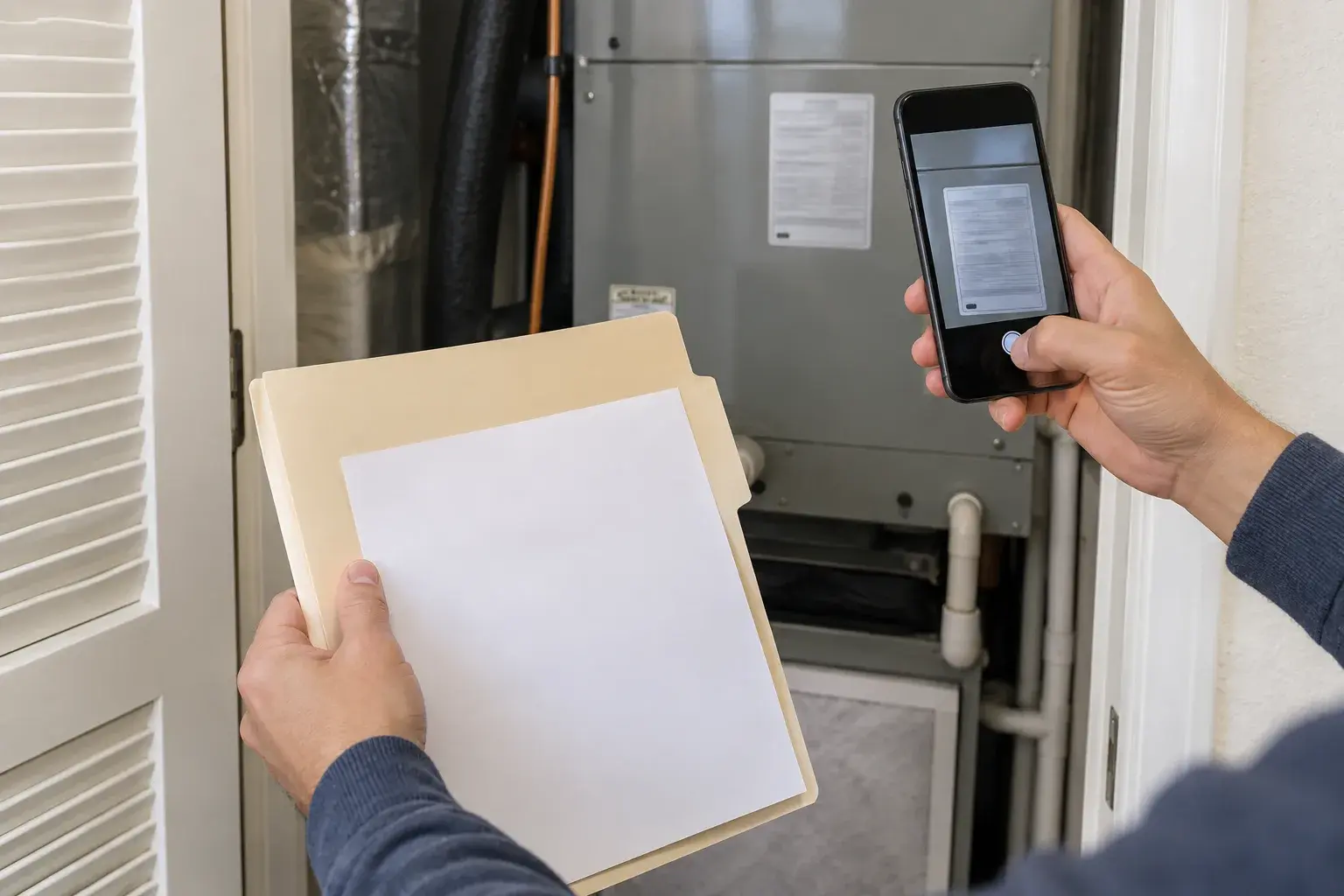
- Record accessible make, model, serial, location, and label photos.
- File recommendations and later observations as separate, dated items.
- Request a new assessment when conditions change; a past tune-up is not a remote diagnosis.
The HVAC tune-up records checklist
The goal is not to create a technical diagnosis at home. It is to keep the facts that a future technician, property manager, or owner may need to understand the equipment and the prior visit. Manufacturer maintenance guidance commonly emphasizes routine filter attention and professional service; retain the visit’s actual written details rather than assuming a generic checklist describes what happened at your home.
| Keep this | Examples | Use it for |
|---|---|---|
| Written visit record | Invoice, work order, scope, date | Confirming what the provider documented |
| Equipment identity | Make, model, serial, location, accessible label photo | Matching the record to the correct system |
| Service details | Filter information, parts noted, observations, recommendations | Giving future service conversations useful context |
| Later observation log | Date, affected room or system, ordinary settings, what changed | Describing a new concern without guessing at the cause |
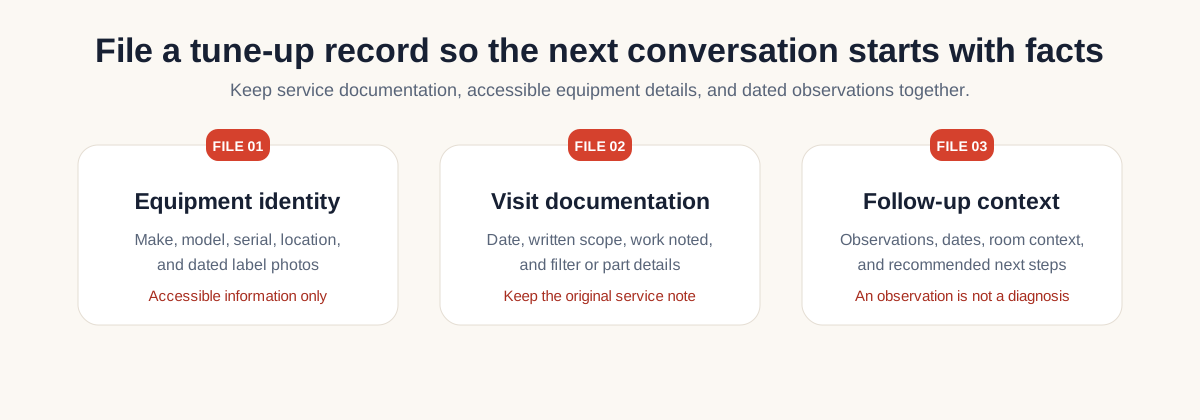
File the record in three groups
Keep the equipment identity, the service visit documentation, and later observations together but visibly separate. That separation matters: an observation can help explain why someone requested service, but it is not a technical conclusion. EPA indoor-air guidance supports addressing sources and ventilation thoughtfully; this checklist stays focused on recordkeeping rather than making an indoor-air or equipment diagnosis.
What not to treat as a tune-up record
A verbal recollection, an undated calendar entry, or a photo with no system context may be less useful than a written visit record. Do not turn a recommendation into proof that work was completed, and do not treat a prior tune-up as confirmation that a later noise, comfort concern, or operating change has the same cause.
Use the record when you request maintenance
When you contact a provider through our HVAC maintenance page, have the system location, prior service record, and any new dated observation ready. For a rental-property handoff process, see HVAC maintenance for a rental property in Ontario, CA. For a broader visit-scope explainer, use our HVAC maintenance checklist. Appointments depend on current availability.
Frequently asked questions
Keep the invoice or written scope with the date, system location, work noted, and any recommended follow-up. It is useful context for future service discussions.
Keep accessible make, model, serial, system location, and dated photos of accessible labels. Do not remove panels or disturb equipment to collect information.
Yes. If the provider notes the filter type, size, or replacement, retain that note with the visit record. Follow the equipment and filter instructions for any routine care.
No. They document a prior visit and provide context. A changed condition may need a new site-specific assessment.
Keep them while they remain useful for the property and equipment history. The appropriate retention period can depend on the owner’s own recordkeeping needs; this is not legal guidance.
Local next step
Turn this guide into a site-specific answer.
Guides explain the decision. Equipment condition, access, and safe next steps still need to match the home or business. Review the relevant service scope or request an assessment for Ontario, the Inland Empire, or East Los Angeles County. Availability depends on the current schedule.