Is an HVAC Maintenance Plan Worth It? The Real Cost-vs-Savings Math for 2026
Plans run about $150-300/year. With up to 15% efficiency gains plus warranty protection, here's exactly when a membership pays off, and when it doesn't.

Owner & Lead HVAC Technician, Alex Air & Heating · EPA 608 Universal Certified · Ontario, CA

TL;DR
An HVAC maintenance plan (about $150-$300 a year) is worth it if you are keeping your system several years: it usually includes 1-2 tune-ups, priority scheduling, and 10-20% off repairs, and ENERGY STAR ties airflow and charge problems to up to 15% efficiency loss that the tune-ups recover. The biggest hidden value is warranty protection-many manufacturers require documented annual maintenance. Skip it if the system is already failing or you are selling soon.
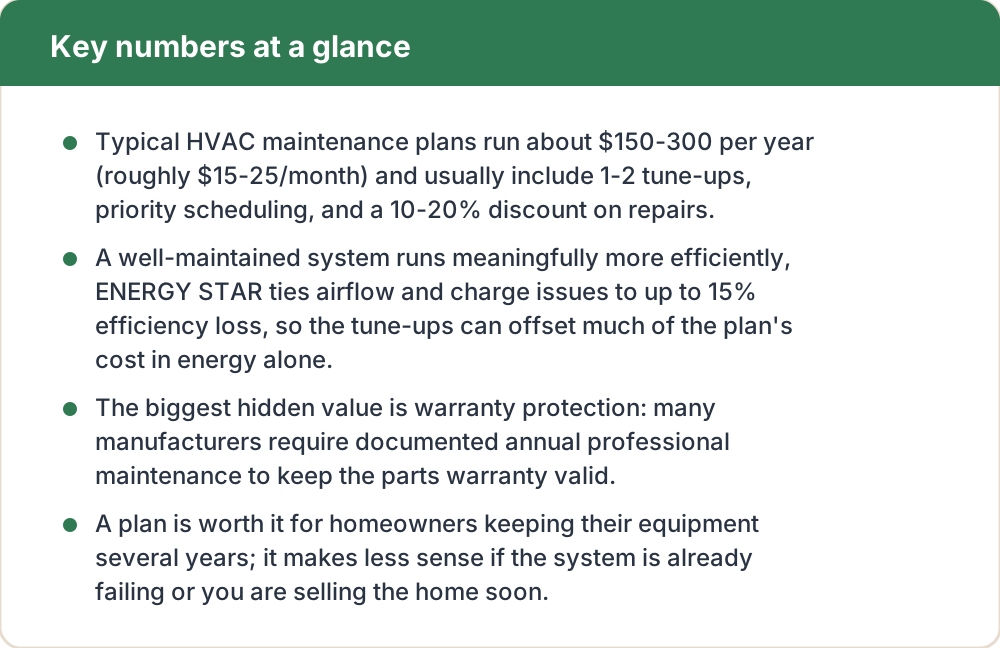
- Typical HVAC maintenance plans run about $150-300 per year (roughly $15-25/month) and usually include 1-2 tune-ups, priority scheduling, and a 10-20% discount on repairs.
- A well-maintained system runs meaningfully more efficiently, ENERGY STAR ties airflow and charge issues to up to 15% efficiency loss, so the tune-ups can offset much of the plan's cost in energy alone.
- The biggest hidden value is warranty protection: many manufacturers require documented annual professional maintenance to keep the parts warranty valid.
- A plan is worth it for homeowners keeping their equipment several years; it makes less sense if the system is already failing or you are selling the home soon.
On this page
- What is an HVAC maintenance plan, and what does it include?
- How much does a plan cost in 2026?
- The energy-savings math: does a tune-up pay for itself?
- Equipment life and fewer breakdowns: the reliability payoff
- The warranty angle most homeowners miss
- When a maintenance plan is worth it, and when it isn't
- How to evaluate a plan before you sign
What is an HVAC maintenance plan, and what does it include?
An HVAC maintenance plan (also called a service agreement or membership) is a yearly subscription in which a contractor performs scheduled tune-ups and gives members perks in exchange for a flat annual or monthly fee. Instead of remembering to book service each spring and fall, you are on the schedule automatically, and you get priced and prioritized as a member rather than a one-off caller.
Plans vary, but most bundle a recognizable core: one or two seasonal tune-ups (cooling in spring, heating in fall), priority or same-day scheduling during busy season, a discount on any repairs, and often waived or reduced diagnostic fees. The value question is whether those inclusions add up to more than the flat fee, and for many homeowners they do.
- 1-2 seasonal tune-ups (spring cooling, fall heating)
- Priority scheduling during peak heat and cold
- 10-20% discount on repairs and parts
- Waived or reduced diagnostic/service-call fees
- Maintenance records that satisfy warranty requirements
How much does a plan cost in 2026?
Most residential maintenance plans land in the range of about $150 to $300 per year, or roughly $15 to $25 per month, depending on your area, the number of systems, and the perks included. Higher-tier plans with two full tune-ups, bigger repair discounts, and guaranteed priority service sit at the upper end; basic single-visit plans sit lower.
Compare that to buying tune-ups a la carte. A single standalone tune-up commonly runs in the low hundreds of dollars, so a plan that includes two visits plus a repair discount often costs about the same as, or less than, paying for those visits separately, before you count any savings from the perks.
| Factor | Annual maintenance plan | No plan (pay as you go) |
|---|---|---|
| Typical yearly cost | ~$150-300 (1-2 tune-ups included) | $0 until service is needed |
| Seasonal tune-ups | Scheduled automatically, spring and fall | Easy to forget; often skipped |
| Efficiency | Restored airflow/charge; up to ~15% savings potential | Gradual efficiency loss as system fouls |
| Repair pricing | 10-20% member discount, fees often waived | Full price plus diagnostic fee |
| Peak-season service | Priority / front of the line | Days-long wait during heatwaves |
| Warranty compliance | Documented service keeps parts warranty valid | Missing records can void a claim |
| Best for | Systems you will keep several years | Systems near end of life or a home you're selling |
The energy-savings math: does a tune-up pay for itself?
The strongest financial case for regular maintenance is efficiency. ENERGY STAR notes that airflow problems can cut a system's efficiency by up to 15 percent, and the U.S. Department of Energy estimates that a clean filter alone lowers energy use 5-15 percent. A tune-up restores airflow, verifies the refrigerant charge, and cleans the coils, the three biggest levers on your cooling bill.
In the Inland Empire, where systems run hard through months of triple-digit heat, a few percentage points of efficiency across a long, brutal cooling season adds up. For many homeowners the recovered energy offsets a large share of the plan's annual cost, which effectively makes the tune-ups, and everything else in the plan, close to free.
Equipment life and fewer breakdowns: the reliability payoff
Beyond monthly bills, maintenance protects the single most expensive thing in your home's comfort system: the equipment itself. Catching a weak capacitor, a loose electrical connection, a low charge, or a clogged drain during a calm spring visit prevents the cascading failures that destroy compressors and blower motors on the hottest days.
There is a comfort-and-timing dividend too. When your AC quits during a July heatwave, plan members typically go to the front of the line for service while non-members wait days. In a region where indoor heat can become a genuine health risk for kids and older adults, priority service is worth real money the first time you need it.
The warranty angle most homeowners miss
Here is the detail that quietly makes plans worth it: many HVAC manufacturers require documented annual professional maintenance as a condition of keeping the parts warranty valid. If a compressor or major component fails during the warranty period, the manufacturer can ask for proof of that annual service before approving the claim, and without records, you may be stuck paying for a part that should have been covered.
A maintenance plan solves this automatically. The contractor performs and documents the service on schedule, so your paper trail is intact if you ever file a claim. On an expensive component, that single benefit can dwarf years of plan fees. If you own newer equipment still under warranty, read your warranty terms, then treat the plan as inexpensive insurance on that coverage.
When a maintenance plan is worth it, and when it isn't
A plan makes clear sense if you intend to keep your system for several more years, if it is still under a warranty that requires documented maintenance, or if you simply want the reliability, discounts, and priority service without having to remember to book each season. For most Inland Empire homeowners with a functioning system they plan to keep, the math favors the plan.
It makes less sense in a few situations. If your system is already failing and replacement is inevitable, your money is better spent on the new unit than on maintaining a lost cause. If you are selling the home within a few months, a year-long commitment may not fit. And if a plan is priced far above local norms or vaguely defined, compare what is actually included before signing.
How to evaluate a plan before you sign
Treat a maintenance agreement like any other contract: know exactly what you are buying. Ask how many visits are included and what each covers, get the repair-discount percentage in writing, and confirm whether the diagnostic fee is waived. Verify that the tune-up documentation will satisfy your equipment manufacturer's maintenance requirement.
Finally, make sure the company itself is legitimate. In California, you can verify a contractor's license and standing through the Contractors State License Board (CSLB) before committing to a multi-year relationship. A plan is only as good as the company standing behind it.
- Number of visits and exactly what each includes
- Repair/parts discount percentage, in writing
- Whether diagnostic and service-call fees are waived
- That records will satisfy your manufacturer's warranty terms
- The contractor's CSLB license status and reviews
Frequently asked questions
Most residential plans run about $150 to $300 per year, roughly $15 to $25 a month, depending on your location, number of systems, and included perks. That usually covers one or two tune-ups plus a repair discount, which often costs about the same as paying for those tune-ups individually.
Often, yes. Tune-ups restore efficiency, and ENERGY STAR ties airflow and charge problems to up to 15% efficiency loss, so recovered energy can offset much of the fee, especially in the Inland Empire's long cooling season. Add member repair discounts and warranty protection and the plan frequently pays for itself.
It can. Many manufacturers require documented annual professional maintenance to keep the parts warranty valid and may deny a claim if you cannot show proof of service. A maintenance plan performs and documents that service automatically, protecting potentially thousands of dollars of coverage on major components.
When your system is already failing and replacement is inevitable, put that money toward the new unit instead. It also may not fit if you are selling the home within a few months. And always compare what is actually included, and verify the contractor's CSLB license, before committing to a multi-year agreement.
Local next step
Turn this guide into a site-specific answer.
Guides explain the decision. Equipment condition, access, and safe next steps still need to match the home or business. Review the relevant service scope or request an assessment for Ontario, the Inland Empire, or East Los Angeles County. Availability depends on the current schedule.