MERV 8 vs 11 vs 13: How to Pick an HVAC Filter Without Starving Your System
MERV runs 1-16 and rates capture of 0.3-10 micron particles. EPA suggests MERV 13, but the wrong choice can cut airflow 15%. Here is how to pick for IE homes.

Owner & Lead HVAC Technician, Alex Air & Heating · EPA 608 Universal Certified · Ontario, CA
TL;DR
Pick an HVAC filter by matching its MERV rating to your system: MERV runs 1-16, and most homes belong in the MERV 8-13 range. MERV 8 captures 70%+ of 3-10 micron particles, while EPA-recommended MERV 13 catches smoke and wildfire haze. But too high a MERV in a 1-inch slot can cut airflow up to 15%, so MERV 11 is the safe Inland Empire sweet spot-choose MERV 13 only if your system can handle it.
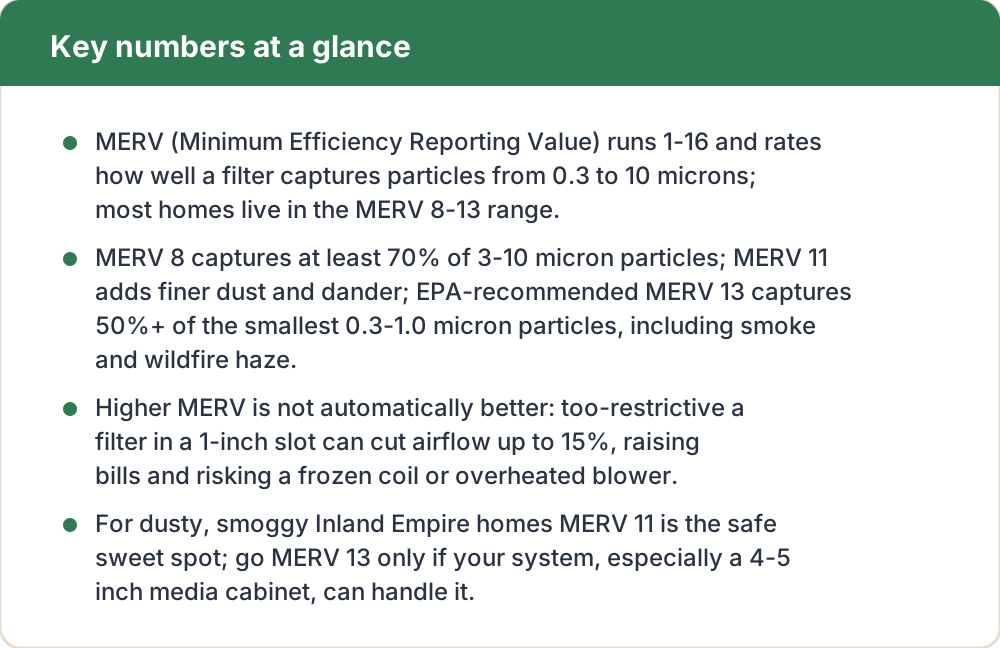
- MERV (Minimum Efficiency Reporting Value) runs 1-16 and rates how well a filter captures particles from 0.3 to 10 microns; most homes live in the MERV 8-13 range.
- MERV 8 captures at least 70% of 3-10 micron particles; MERV 11 adds finer dust and dander; EPA-recommended MERV 13 captures 50%+ of the smallest 0.3-1.0 micron particles, including smoke and wildfire haze.
- Higher MERV is not automatically better: too-restrictive a filter in a 1-inch slot can cut airflow up to 15%, raising bills and risking a frozen coil or overheated blower.
- For dusty, smoggy Inland Empire homes MERV 11 is the safe sweet spot; go MERV 13 only if your system, especially a 4-5 inch media cabinet, can handle it.
On this page
- What does MERV actually mean?
- MERV 8: the residential baseline
- MERV 11: the allergy and pet sweet spot
- MERV 13: maximum home filtration, if your system can take it
- Why too-high a MERV can starve, and even damage, your system
- Which MERV should you use? Match it to your household
- Sizing and replacement: getting the practical details right
What does MERV actually mean?
MERV stands for Minimum Efficiency Reporting Value, the industry standard (ASHRAE 52.2) for rating how effectively an air filter captures airborne particles. The scale runs from 1 to 16 for residential and light commercial filters, and the rating reflects how well the filter traps particles ranging from 0.3 to 10 microns, a span that includes everything from coarse dust down to smoke and fine haze.
The higher the number, the more (and smaller) particles the filter captures. But higher also means denser media that is harder to pull air through, and that tradeoff, filtration versus airflow, is the entire decision. The EPA advises choosing a filter with at least a MERV 13 rating, or as high as your system fan and filter slot can accommodate, and that last clause is the part homeowners miss.
MERV 8: the residential baseline
A MERV 8 filter captures at least 70 percent of particles in the 3-10 micron range, which covers common household dust, pollen, mold spores, and most pet dander. It is the long-standing residential default because it protects the equipment and keeps air reasonably clean while offering the least resistance to airflow.
For a home with no allergy concerns, no pets, and no wildfire-smoke worries, MERV 8 is perfectly adequate and the safest bet for older or lower-powered blowers. Its weakness: it does little for the smallest particles, the ones that penetrate deepest into your lungs and dominate Inland Empire smog.
| MERV | Captures (approx.) | Best for | Airflow impact | Typical replacement |
|---|---|---|---|---|
| MERV 8 | 70%+ of 3-10 micron: dust, pollen, most dander | Basic homes, older/low-power blowers | Lowest resistance | Every 60-90 days |
| MERV 11 | Adds fine dust, more dander, mold, some bacteria (1-3 micron) | Pets, mild allergies, average IE dust | Low to moderate; fine for most systems | Every 30-90 days |
| MERV 13 | 50%+ of 0.3-1.0 micron: smoke, fine haze, bacteria | Asthma, smoke/smog protection, capable systems | Higher; needs a capable blower or 4-5 in. cabinet | Every 30-60 days |
MERV 11: the allergy and pet sweet spot
MERV 11 steps up capture in the 1-3 micron range, pulling in finer dust, more pet dander, mold, and some bacteria-carrying particles, while still flowing enough air for the vast majority of modern residential systems. For most Inland Empire homes with pets, mild allergies, or simply a lot of freeway and warehouse dust, MERV 11 is the practical sweet spot.
Importantly, upgrading from MERV 8 to MERV 11 is usually a clean swap: most furnaces and air handlers handle it without any change to the system or your replacement schedule. You get noticeably better filtration without meaningfully choking airflow.
MERV 13: maximum home filtration, if your system can take it
MERV 13 is the highest rating most homeowners should consider, and it is what the EPA recommends when your equipment can handle it. It captures roughly 50 percent or more of the smallest 0.3-1.0 micron particles and about 85 percent or more of 1-3 micron particles, which brings smoke, many bacteria, and fine combustion and wildfire haze into range, exactly the pollutants that plague the Inland Empire.
The catch is airflow. A MERV 13 in a standard 1-inch slot can noticeably restrict a system that was not designed for it. MERV 13 shines in systems with a deep 4- or 5-inch media cabinet, where the large surface area keeps resistance low. If you want MERV 13 filtration, the right move is often to have a pro install a media cabinet rather than cram a dense 1-inch filter into an existing slot.
Why too-high a MERV can starve, and even damage, your system
It is tempting to assume the highest number equals the cleanest air, but a filter that is too restrictive for your equipment does the opposite. ENERGY STAR notes that airflow problems can reduce a system's efficiency by up to 15 percent. Choke the return air and the blower works harder and hotter, energy bills climb, and in cooling mode the evaporator coil can drop below freezing and ice over, a common cause of a system that runs but blows warm.
Over time, chronic airflow starvation stresses the blower motor and compressor, the two most expensive parts to replace. That is why the EPA explicitly says you may need to consult an HVAC professional to determine the highest-efficiency filter that will work with your specific system. A MERV 11 that flows freely will clean your air better in practice than a MERV 13 that your blower cannot pull through.
Which MERV should you use? Match it to your household
Start with your equipment and your needs, not the biggest number on the box. If anyone in the home has asthma or allergies, if you have pets, or if you want protection during smoke and smog events, lean toward MERV 11-13. If your system is older or you are unsure of its capacity, MERV 8-11 is the safer range.
- No pets, no allergies, older system: MERV 8
- Pets, mild allergies, average IE dust: MERV 11 (best all-around)
- Asthma, wildfire smoke, smog concern, capable system or 4-5 in. cabinet: MERV 13
- When in doubt about airflow capacity, size down and change the filter more often
Sizing and replacement: getting the practical details right
Read the size printed on the frame of your current filter (for example 16x25x1) and match it exactly, including thickness. Note the airflow-direction arrow on the frame and install it pointing toward the furnace or air handler. A filter installed backward, or one that is loose and lets air bypass around the edges, undoes its own rating.
Replacement cadence depends on MERV and conditions. ENERGY STAR recommends inspecting monthly and changing at least every three months; denser MERV 11-13 filters load faster and, in dusty IE homes or during Santa Ana winds and smoke events, often need changing every 30-60 days. A clogged high-MERV filter is worse for your system than a fresh lower-MERV one, so whatever you choose, keep it clean.
Frequently asked questions
No. A filter that is too dense for your system restricts airflow, which ENERGY STAR says can cut efficiency by up to 15%, raise bills, and cause the evaporator coil to freeze. The best filter is the highest MERV your blower can pull air through freely, which for many homes is MERV 11, not 13.
MERV 11 is the practical sweet spot for most homes with pets or mild allergies, capturing fine dust and dander while still flowing well. For asthma or wildfire-smoke sensitivity, MERV 13 is better if your system can handle it, ideally in a 4-5 inch media cabinet installed by a pro.
Not safely in every case. Many systems, especially those with a standard 1-inch filter slot, were not designed for the resistance of a dense MERV 13. The EPA recommends consulting an HVAC professional to find the highest-efficiency filter your system can accommodate before jumping to MERV 13.
Inspect monthly and change at least every three months per ENERGY STAR, but denser filters and heavy freeway or warehouse dust push that to every 30-60 days here. During Santa Ana winds or smoke events, check more often; a clogged high-MERV filter is harder on your system than a clean lower-MERV one.
Local next step
Turn this guide into a site-specific answer.
Guides explain the decision. Equipment condition, access, and safe next steps still need to match the home or business. Review the relevant service scope or request an assessment for Ontario, the Inland Empire, or East Los Angeles County. Availability depends on the current schedule.