Thermostat Fan Auto vs On in Fall: What Changes Around the House?
Auto usually runs the indoor fan with a heating or cooling call; On keeps it moving continuously. Here is what that changes—and what it does not.

Owner & Lead HVAC Technician, Alex Air & Heating · EPA 608 Universal Certified · Ontario, CA
TL;DR
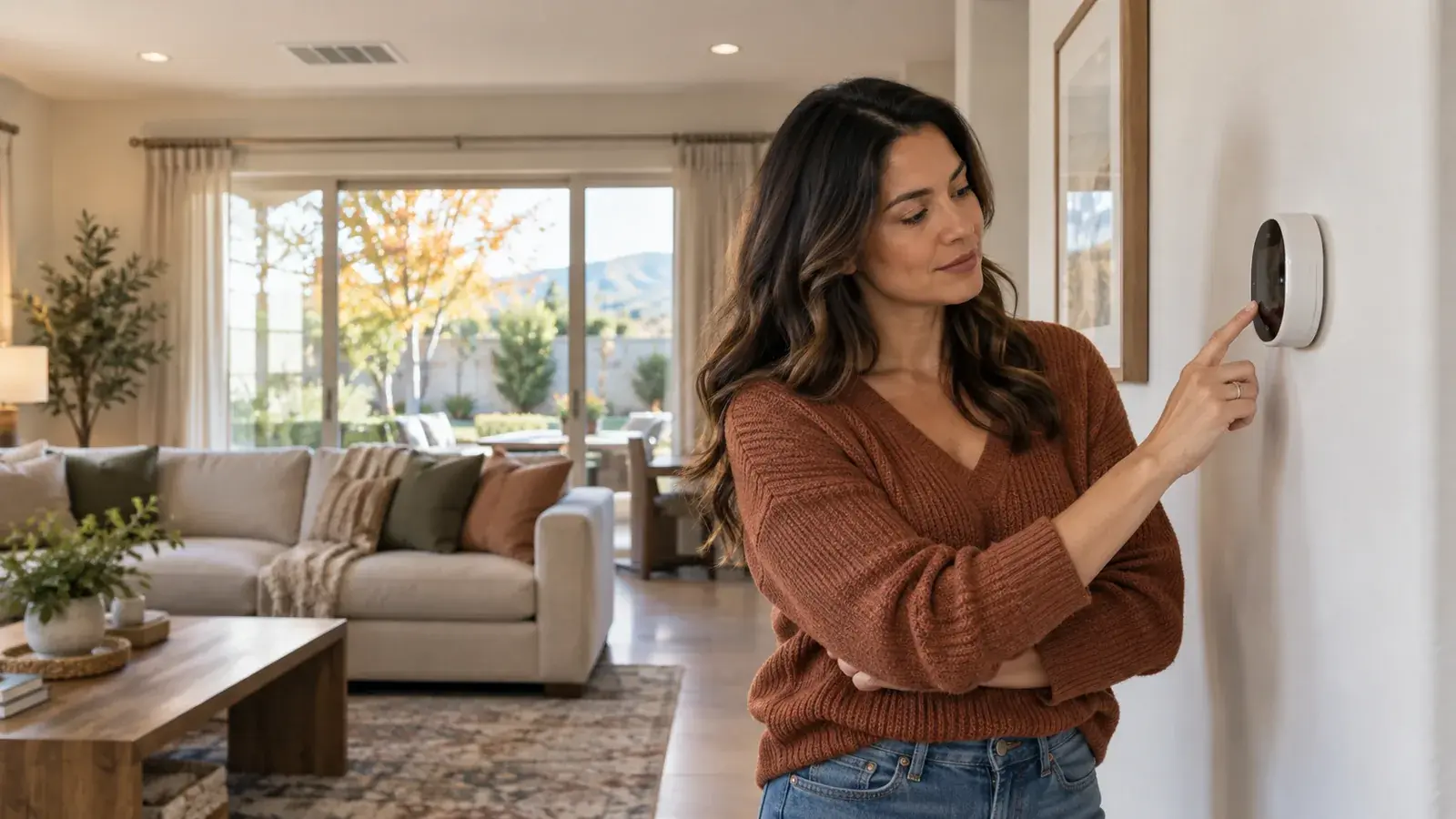
Fan Auto usually runs the indoor blower only while the system is actively heating or cooling. Fan On keeps the blower moving continuously, even between calls. In a mild California fall, that mainly changes air movement, sound, filter runtime and how noticeable room differences feel—it does not automatically bring in outdoor air or guarantee lower bills.
- Fan Auto/On controls the indoor blower; it is different from Heat/Cool/Auto system mode and from Hold/Schedule.
- On can keep air mixing between calls, but it does not prove that outdoor air is entering or that a duct problem is solved.
- Compare one setting at a time and note airflow, sound, room comfort and filter condition before deciding what works for your home.
On this page
- Quick answer: Auto follows calls; On keeps air moving
- First, separate fan setting from system mode and schedule
- What may change around the house in mild fall weather
- A useful home comparison without chasing the controls
- When the setting is not the whole answer
- Questions to bring to a thermostat conversation
- A local next step
Quick answer: Auto follows calls; On keeps air moving
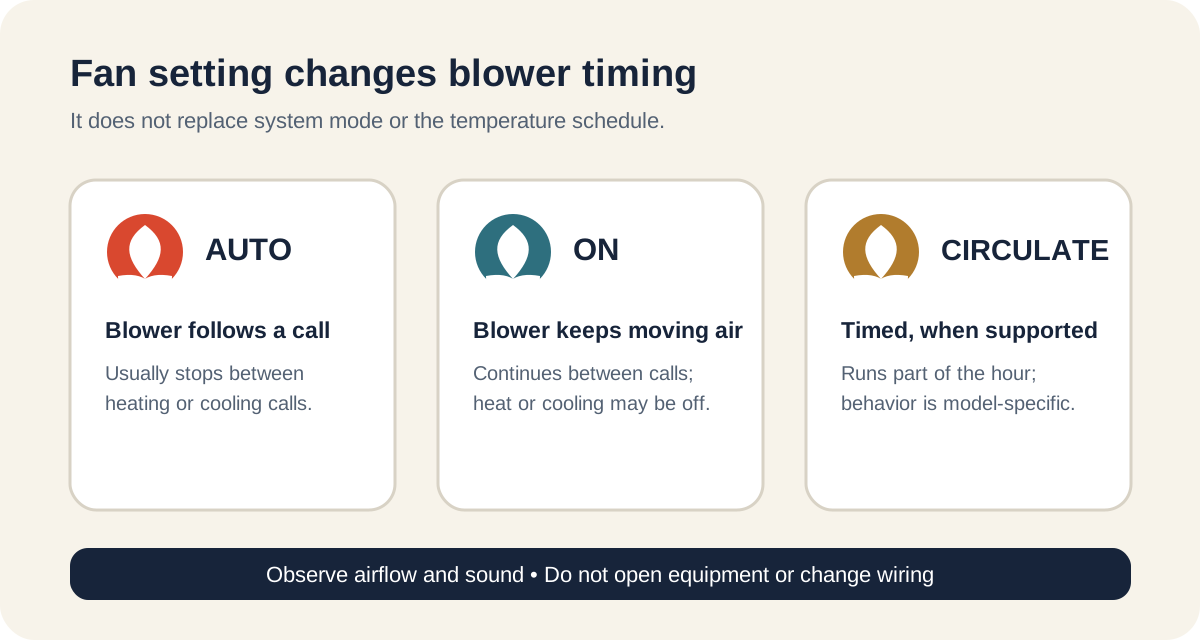
Choose Fan Auto if you want the blower to run mainly with a heating or cooling call. Choose Fan On if you want continuous indoor air movement between calls. In a mild fall, when the system may go long stretches without heating or cooling, the difference can be easy to notice: Auto may leave the house quiet, while On keeps a steady register sound and air movement. Neither setting is a diagnosis or a universal efficiency choice.
First, separate fan setting from system mode and schedule
Thermostat screens often place several controls close together. Fan Auto/On controls the indoor blower. Heat, Cool, Off or system Auto decides whether the thermostat may request heating or cooling. Hold and Schedule decide which temperature is requested and when. Changing the fan from Auto to On does not change the temperature plan, and it does not mean the furnace burner or outdoor unit is operating continuously.
| Control | What it normally changes | What it does not prove |
|---|---|---|
| Fan Auto / On / Circulate | When the indoor blower moves air | That heating, cooling or outdoor ventilation is active |
| Heat / Cool / Off / system Auto | Which type of comfort call is allowed | That the equipment has started or every room will match |
| Schedule / Hold | The requested temperature and timing | A fixed runtime, recovery speed or utility result |
What may change around the house in mild fall weather
With Fan Auto, supply-register airflow usually stops when a heating or cooling call ends. With Fan On, air continues to recirculate, so you may hear the blower and feel low, steady airflow even when the outdoor unit or furnace heat is not running. Continuous mixing can make some room-to-room differences feel less pronounced, but the result depends on the duct layout, door positions, return path and blower controls.
Fan On also adds filter runtime because more air passes through the return path. That does not automatically mean better indoor air quality: the filter must fit the system, the airflow must remain appropriate, and many systems simply recirculate indoor air rather than introduce fresh outdoor air. A filter may need attention sooner when the fan runs more often, but there is no one replacement interval for every home.
A useful home comparison without chasing the controls
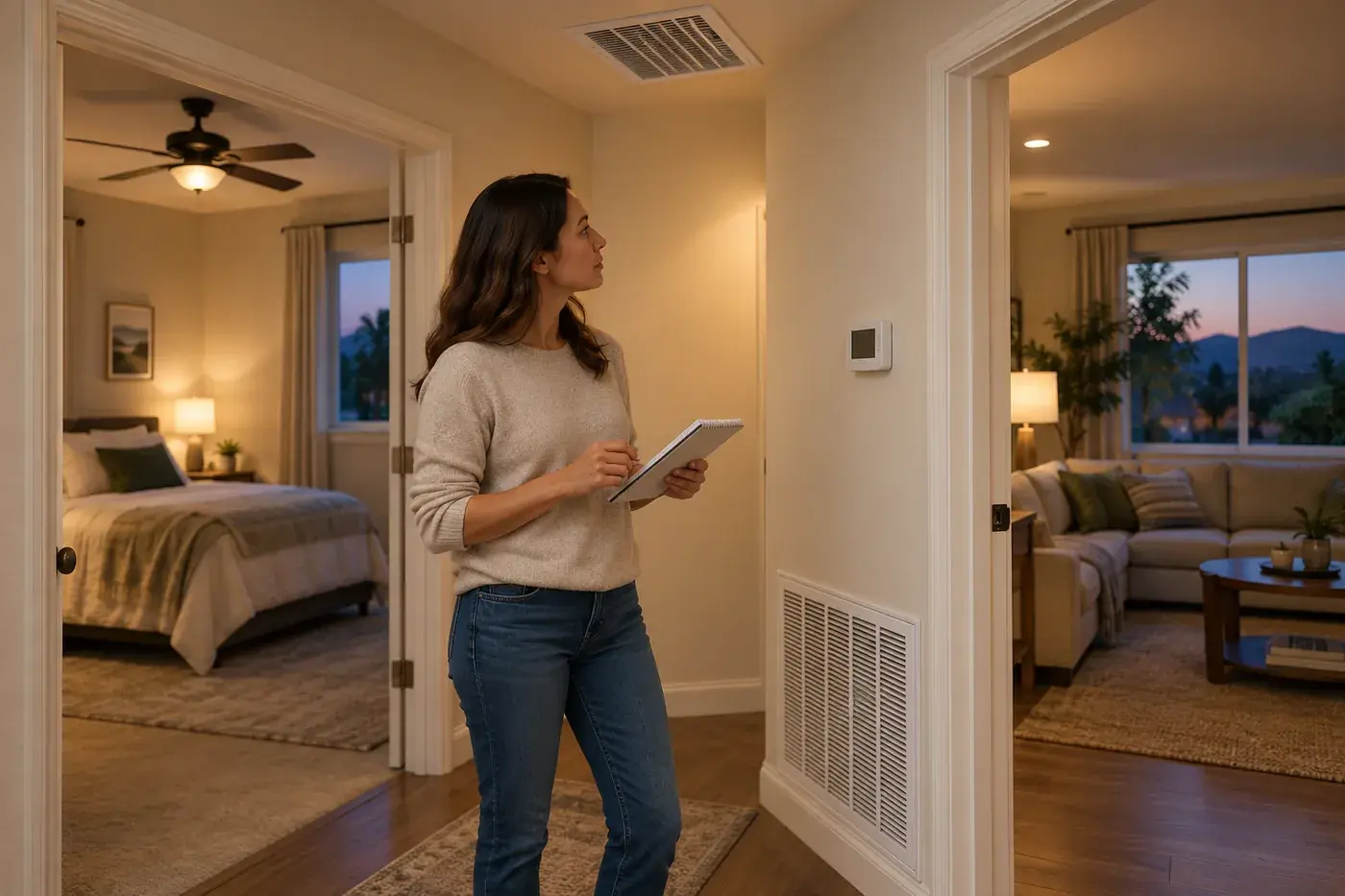
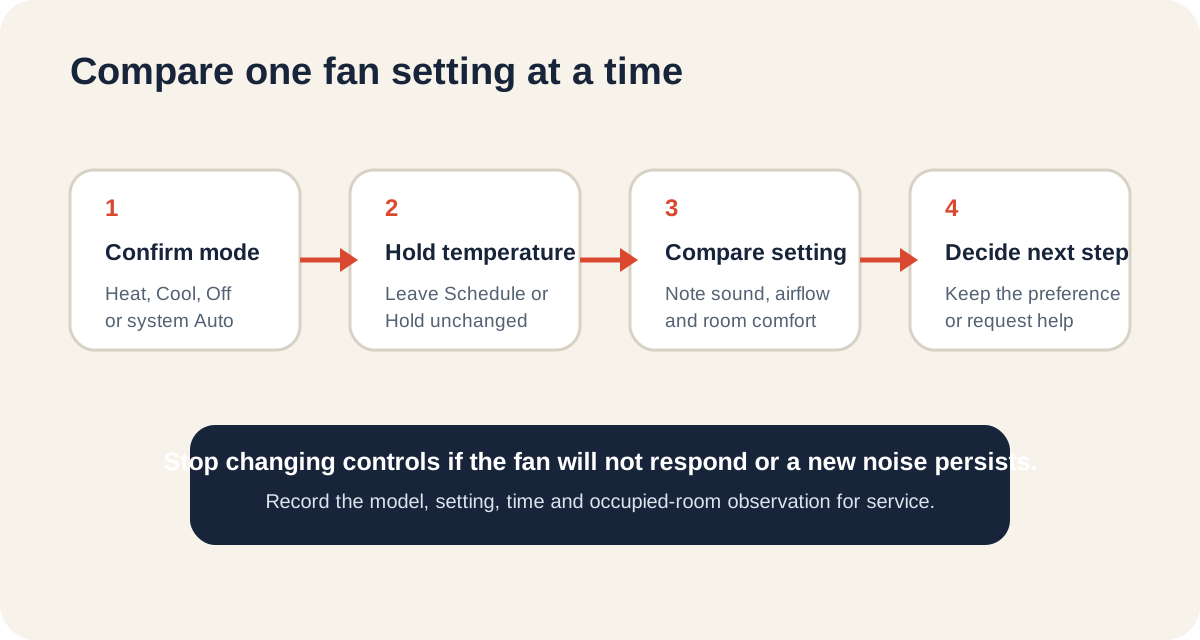
Use a normal mild-weather day. Confirm the system mode, then leave the temperature plan unchanged while comparing Fan Auto with Fan On for a reasonable period. From occupied rooms, note whether the register sound is continuous or call-based, whether one room changes relative to another, and whether the thermostat display matches the fan behavior you expected. Keep supply registers and return grilles unobstructed; do not open equipment or change wiring.
When the setting is not the whole answer
Book a control or airflow check if the fan will not respond to the selected setting, cycles in a way the thermostat manual does not describe, produces a new persistent noise, or leaves major room differences that do not improve with ordinary door and register positions. Also ask for help before replacing a thermostat when wiring, communicating controls, multi-stage equipment or a heat pump may affect compatibility.
Questions to bring to a thermostat conversation
- Does this thermostat support Auto, On and a timed Circulate option with my equipment?
- Is the fan behavior coming from the thermostat, an equipment control or an accessory such as ventilation?
- Will the existing wiring support the proposed control without an improvised workaround?
- If one room remains uncomfortable, should the next step focus on control settings, return path, duct airflow or equipment operation?
A local next step
If the controls are confusing, the fan does not follow its setting, or you are comparing a compatible replacement, request smart thermostat installation for your Ontario, Inland Empire or nearby eastern Los Angeles County home. For the temperature-plan side of the screen, read Hold vs Schedule in a mild California fall. For the broader upgrade decision, see Is a smart thermostat worth it?.
Frequently asked questions
Auto usually runs the blower with a heating or cooling call. On tells the blower to keep running between calls as well. Exact behavior can vary by thermostat and system.
No. The indoor blower can run while the heating or cooling equipment is off. Fan setting and system mode are separate controls.
Not necessarily. Most residential recirculating systems move indoor air unless a separate outdoor-air or ventilation system is installed and configured.
It may change how air mixes, but it cannot confirm or correct a blocked register, duct defect, equipment issue or sizing problem. Persistent room differences deserve an airflow discussion.
On supported thermostats, Circulate runs the fan for part of each hour rather than continuously. The schedule and availability are model-specific, so check the installed thermostat instructions.
Local next step
Turn this guide into a site-specific answer.
Guides explain the decision. Equipment condition, access, and safe next steps still need to match the home or business. Review the relevant service scope or request an assessment for Ontario, the Inland Empire, or East Los Angeles County. Availability depends on the current schedule.