AC Blower Motor Failure Signs: What Homeowners Can Observe
Weak airflow, new indoor-unit sounds, and intermittent or absent air may involve the blower system, but they do not confirm a failed motor.

Owner & Lead HVAC Technician, Alex Air & Heating · EPA 608 Universal Certified · Ontario, CA
TL;DR
Common AC blower motor failure signs include weak or absent airflow at several supply registers, a new hum, squeal, scrape, or rattle near the indoor unit, and airflow that starts and stops unexpectedly. These symptoms can also come from a dirty filter, blocked air path, blower wheel, capacitor, control, wiring, coil, or duct problem, so observation should lead to professional testing—not a remote motor diagnosis.
- Compare airflow across several supply registers before calling one room a blower problem.
- Record the sound, location, timing, thermostat call, and whether airflow is intermittent or absent.
- Keep the indoor cabinet closed; motor, capacitor, control, and wiring tests are professional work.
On this page
- Quick Answer: observe the pattern, not just one symptom
- Key takeaways
- AC blower motor failure signs homeowners can document
- First separate the indoor blower from the outdoor fan
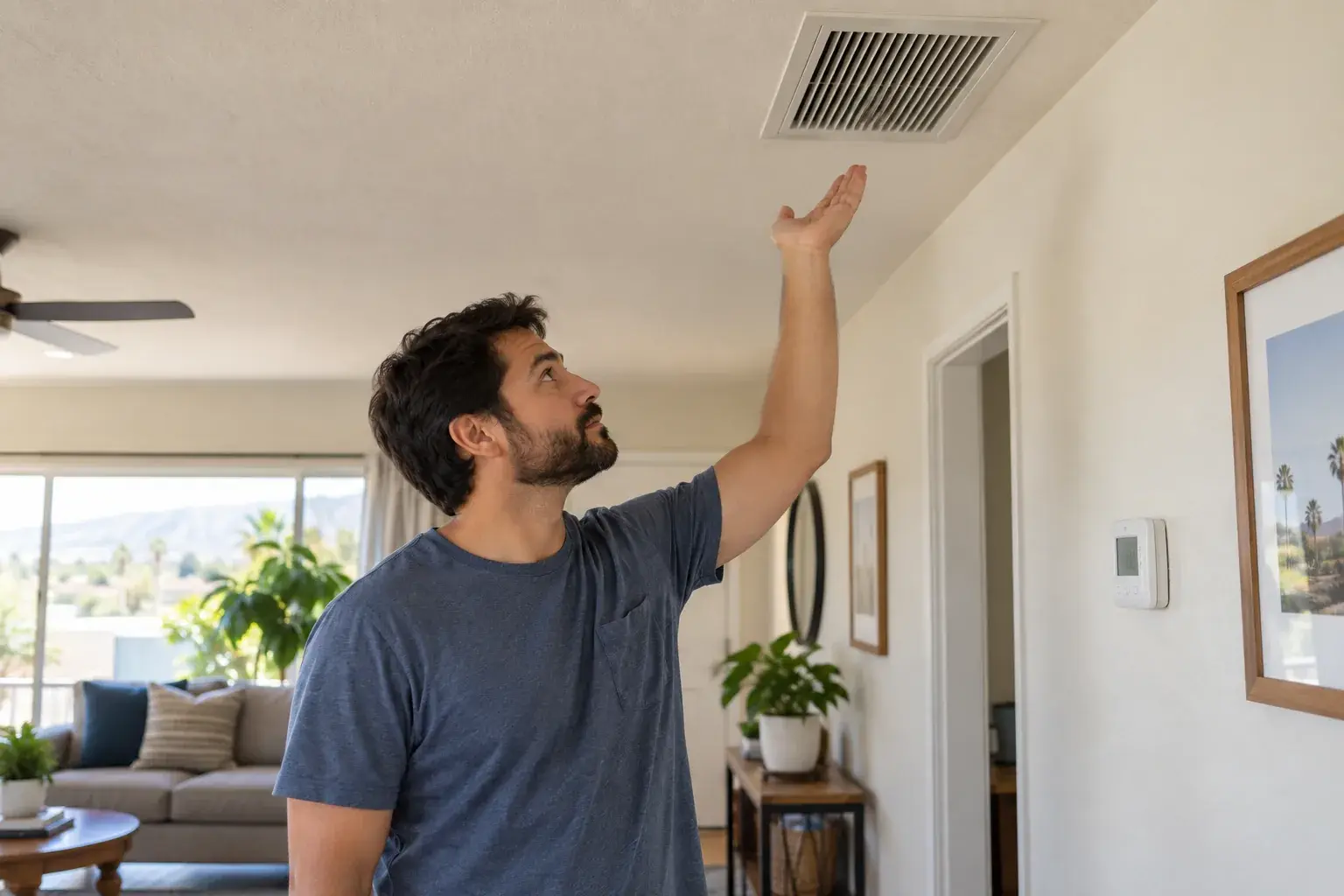
- Safe homeowner observations
- What professional testing should separate
- When to stop running the system
- Local next step for Inland Empire and East LA County homes
Quick Answer: observe the pattern, not just one symptom
AC blower motor failure signs usually appear as a pattern: weak or missing air at multiple registers, new sounds near the indoor unit, or airflow that becomes intermittent during a cooling call. Lennox and Carrier both list airflow and sound changes among blower warning signs, but a professional still has to separate the motor from the wheel, capacitor or module, controls, electrical supply, filter, coil, and duct system.
Key takeaways
- The indoor blower is different from the outdoor condenser fan.
- One weak room may indicate a local register or duct issue rather than a central blower problem.
- A new hum, squeal, scrape, or rattle is useful only when paired with location and timing.
- Smoke, burning odor, repeated trips, or severe mechanical noise is a stop condition.
AC blower motor failure signs homeowners can document
| Observation | What it may involve | Useful next detail |
|---|---|---|
| Weak air at many supply registers | Blower, filter, coil, return path, controls, or ducts | Which rooms and whether the pattern changed suddenly |
| No air during a cooling call | Power, control, motor, capacitor/module, safety, or air-handler issue | Thermostat mode and whether the outdoor unit appears to run |
| Humming near the indoor unit | Motor, control, electrical, or another indoor component | Where the sound is strongest and whether air starts |
| Squeal, scrape, or rattle | Wheel, bearing, loose part, motor, or debris | When the sound starts and whether it changes with airflow |
| Air starts and stops unexpectedly | Control, motor protection, power, or another system condition | Cycle length and thermostat call |
The phrase “may involve” matters. Carrier's blower guide includes weak airflow, unusual noise, repeated trips, and overheating indicators, while also noting electrical and control issues. Those symptoms support a service request, not a parts order.
First separate the indoor blower from the outdoor fan
The indoor blower moves air through the return, coil, ducts, and supply registers. The outdoor condenser fan serves a different part of the cooling system. An outdoor unit that appears to run while little air reaches the rooms is useful context, but it still does not prove the indoor motor failed. Likewise, indoor airflow does not confirm the outdoor unit is operating correctly.
Safe homeowner observations
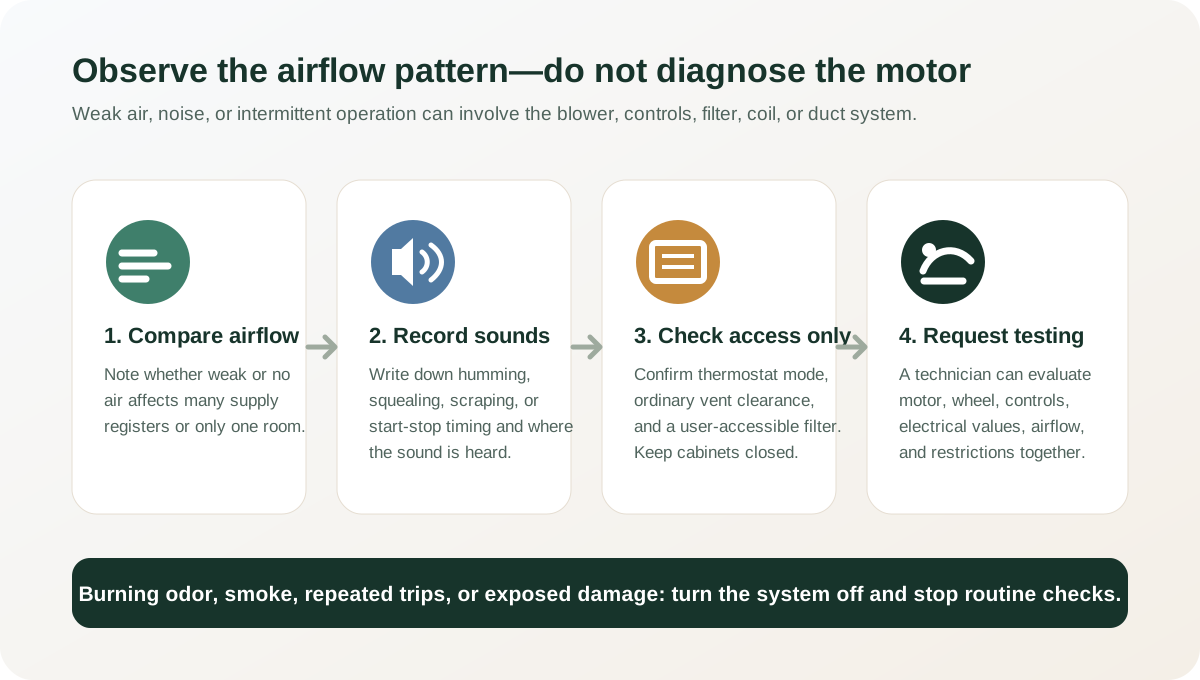
Compare air movement at several accessible supply registers, note whether return and supply openings are blocked by ordinary household items, confirm the thermostat mode and fan setting, and check only a normal user-accessible filter. Do not remove the air-handler door, reach into a blower compartment, spin a wheel, touch a capacitor, or test wiring. ENERGY STAR assigns motor voltage/current, electrical connections, controls, and blower adjustment to a contractor's maintenance checklist.
What professional testing should separate
A measured evaluation can check the thermostat call, control response, available voltage, motor current, capacitor or electronic module where applicable, blower wheel condition, filter and coil restriction, duct pressure or airflow, and whether protection is opening. The result may be a motor issue, another component, or an airflow restriction. Trane's sound guidance similarly recommends recording when a sound occurs and having HVAC repair identify the cause.
When to stop running the system
Turn the system off and stop routine observation if there is smoke, a burning electrical odor, repeated breaker trips, exposed damage, or severe scraping. For the specific repeated-trip path, use why an AC keeps tripping the breaker. If the entire system is simply unresponsive without those signs, start with AC not turning on.
Local next step for Inland Empire and East LA County homes
Alex Air & Heating serves Ontario, Pomona, the Inland Empire, and nearby East Los Angeles County communities; this does not imply a Los Angeles city storefront. Use our AC repair page to request an on-site evaluation. Share the affected rooms, sound location, timing, thermostat mode, accessible filter condition, and whether airflow is weak, absent, or intermittent. Appointment availability depends on the current schedule.
Frequently asked questions
Weak or no airflow at multiple supply registers, new humming or mechanical sounds near the indoor unit, intermittent air movement, and a blower that does not start during a cooling call can justify evaluation. None proves the motor itself has failed.
Yes. A dirty or unsuitable filter, blocked return or supply path, dirty coil, duct problem, control issue, blower wheel, capacitor, wiring, or motor condition can produce similar symptoms.
The indoor blower moves conditioned air through the home's ducts and registers. The outdoor fan moves air through the condenser. Seeing one operate does not confirm the other is healthy.
Homeowners can record airflow, sounds, timing, thermostat settings, and an accessible filter condition. Opening the cabinet or testing the motor, capacitor, controls, or wiring involves electrical and moving-part hazards and should be left to a qualified technician.
Turn it off and stop routine checks if you notice smoke, a burning electrical odor, repeated breaker trips, exposed damage, severe scraping, or another immediate safety concern.
Local next step
Turn this guide into a site-specific answer.
Guides explain the decision. Equipment condition, access, and safe next steps still need to match the home or business. Review the relevant service scope or request an assessment for Ontario, the Inland Empire, or East Los Angeles County. Availability depends on the current schedule.