AC Not Cooling After a Heat Wave: Safe Checks Before You Call
A safe, non-invasive checklist for when your AC is not cooling after a heat wave, plus stop conditions that call for professional diagnosis.

Owner & Lead HVAC Technician, Alex Air & Heating · EPA 608 Universal Certified · Ontario, CA
TL;DR
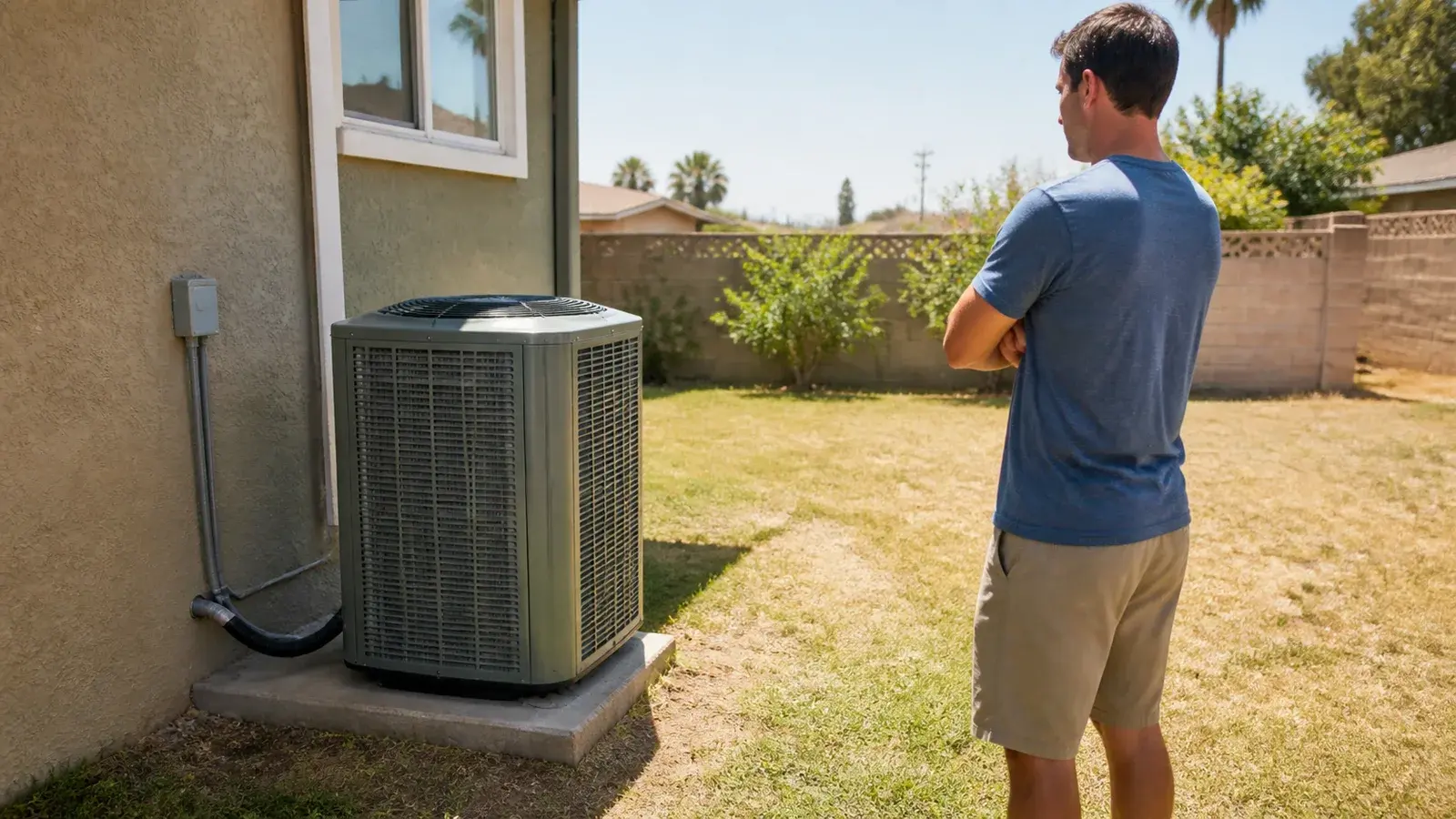
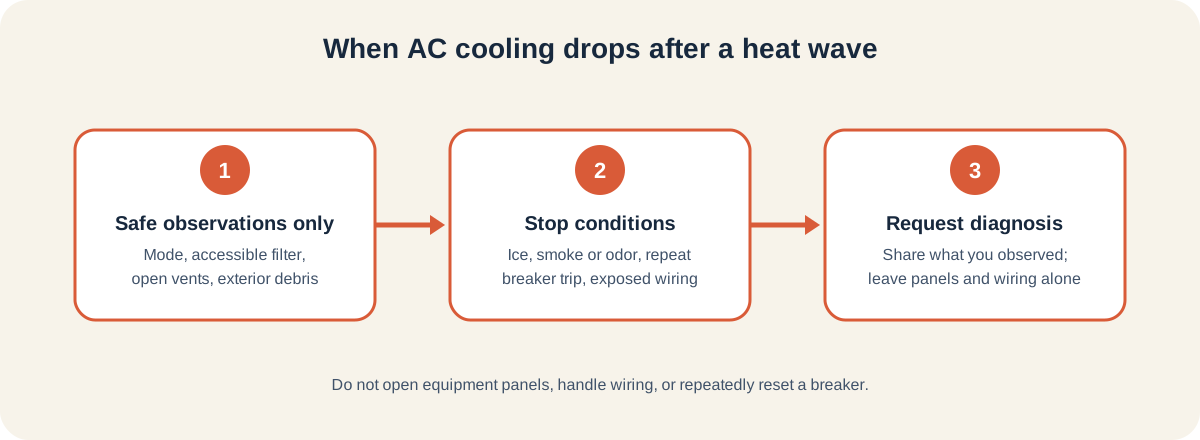
After a heat wave, start with safe observations: confirm the thermostat mode, replace a visibly dirty filter only if it is in a normal accessible slot, keep supply and return vents unobstructed, and look from a distance for debris around the outdoor unit. Do not open panels, handle wiring, or repeatedly reset a breaker. Stop and request professional help for ice, smoke, electrical odor, or a repeat trip.
- Keep checks limited to normal homeowner-accessible controls and filter access.
- A repeated breaker trip, smoke, electrical odor, ice, or exposed wiring is a stop condition.
- Share observations with a technician instead of trying to identify or repair an internal fault.
- For Ontario, Inland Empire, and East LA County service, availability depends on the schedule.
On this page
What can you safely check when AC cooling drops after a heat wave?
When an AC is not cooling after a heat wave, keep the first response simple and non-invasive. Confirm the thermostat is set to cooling, look at an accessible filter, make sure supply and return vents are not blocked, and observe the outdoor unit from a safe distance for loose leaves or debris nearby. These observations can be useful when you request AC repair, but they do not diagnose an internal fault.
Do not open equipment panels, touch wiring, add refrigerant, chip ice, or repeatedly reset a breaker. A visible problem is useful information; it is not an invitation to take equipment apart.
Safe checks before you call
| What you can check | Safe boundary | What to report |
|---|---|---|
| Thermostat mode | Read the display and confirm cooling is selected. | Mode, displayed message, and when cooling changed. |
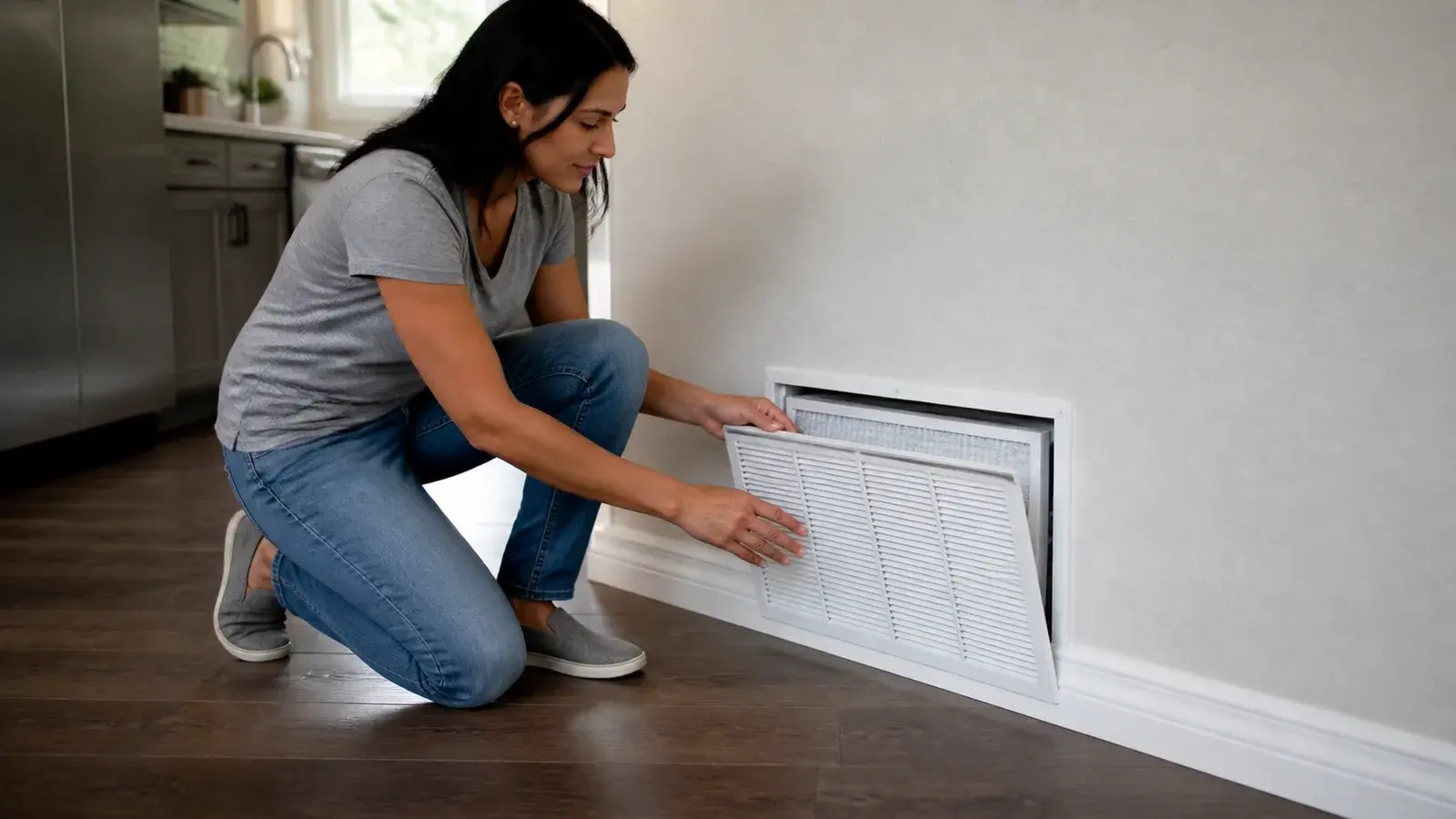
| Accessible filter | Replace only a visibly dirty filter in a normal homeowner slot. | Whether the filter was changed and airflow changed. |
| Vents and returns | Move ordinary furniture or objects blocking the openings. | Rooms with weak or no airflow. |
| Outdoor surroundings | Look from a distance; remove only loose debris around, not inside, the unit. | Visible debris, abnormal sound, or no outdoor operation. |
Stop conditions: leave the equipment alone
Stop the homeowner checks and request professional help if you see ice, smoke, an electrical odor, exposed wiring, or a breaker that trips again. Do not keep resetting a breaker. If cooling can be turned off at the thermostat without accessing equipment, do so; then describe what you observed.
Why the heat-wave context changes the conversation
A heat wave is useful context because it tells the technician when the performance change became noticeable. It does not by itself identify the cause or justify an internal repair. Record the time of day, whether the issue is continuous, and the safe observations above instead of trying to infer the technical fault.
For a diagnosis visit, see what an Ontario AC repair diagnosis visit should cover. If the system will not turn on at all, the separate issue path is AC not turning on.
A local next step
Alex Air & Heating states service coverage for Ontario, Pomona, the Inland Empire, and East Los Angeles County communities. Request AC repair service with your symptom timeline and safe observations. Appointment availability depends on the schedule.
Frequently asked questions
Many conditions can reduce cooling, and safe homeowner observations cannot identify the internal cause. Start with accessible settings, filter, and airflow observations, then request a diagnosis if cooling does not return or a stop condition appears.
You can replace a filter only if it is in the normal homeowner-accessible slot and you can do so without opening equipment panels. If access requires disassembly, leave it for a professional.
Do not repeatedly reset it. If it trips again, leave it off and request professional help; recurring electrical trips are a stop condition.
Do not chip or handle the ice and do not open panels. Turn cooling off at the thermostat if you can do so safely, leave the equipment alone, and request professional diagnosis.
Ontario and Pomona are within the company’s stated service footprint, along with Inland Empire and East Los Angeles County communities. Appointment availability depends on the schedule.
Local next step
Turn this guide into a site-specific answer.
Guides explain the decision. Equipment condition, access, and safe next steps still need to match the home or business. Review the relevant service scope or request an assessment for Ontario, the Inland Empire, or East Los Angeles County. Availability depends on the current schedule.