AC Repair in Ontario, CA: What a Diagnosis Visit Should Cover
What a useful AC repair diagnosis visit in Ontario, CA should document, what to prepare, and how to use the written scope for the next decision.

Owner & Lead HVAC Technician, Alex Air & Heating · EPA 608 Universal Certified · Ontario, CA
TL;DR
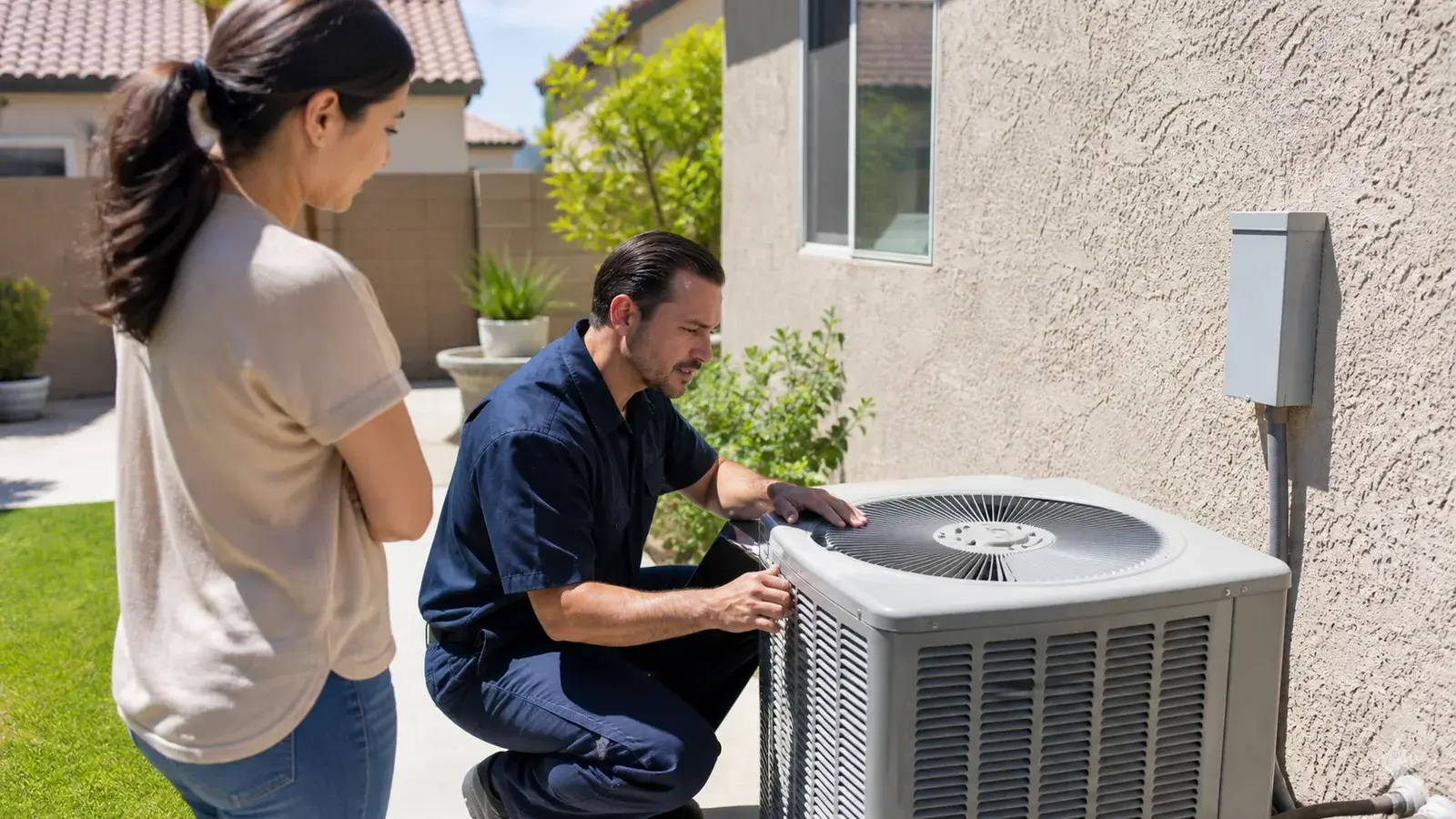
For AC repair in Ontario, CA, a useful diagnosis visit starts with your symptom history and safe access, then moves to evidence-based checks of the affected system. The written scope should identify observed conditions, separate proposed work from open questions, and explain the next decision. It is a decision document—not a promise about outcome, timing, or a particular repair.
- Bring a short symptom timeline rather than attempting equipment repairs before the visit.
- A useful scope distinguishes observations, recommended work, and items that need further evaluation.
- Ontario is within Alex Air & Heating’s service area; appointment availability depends on the schedule.
- A written diagnosis supports a clearer next decision without assuming a particular result.
On this page
What should an AC repair diagnosis visit in Ontario cover?
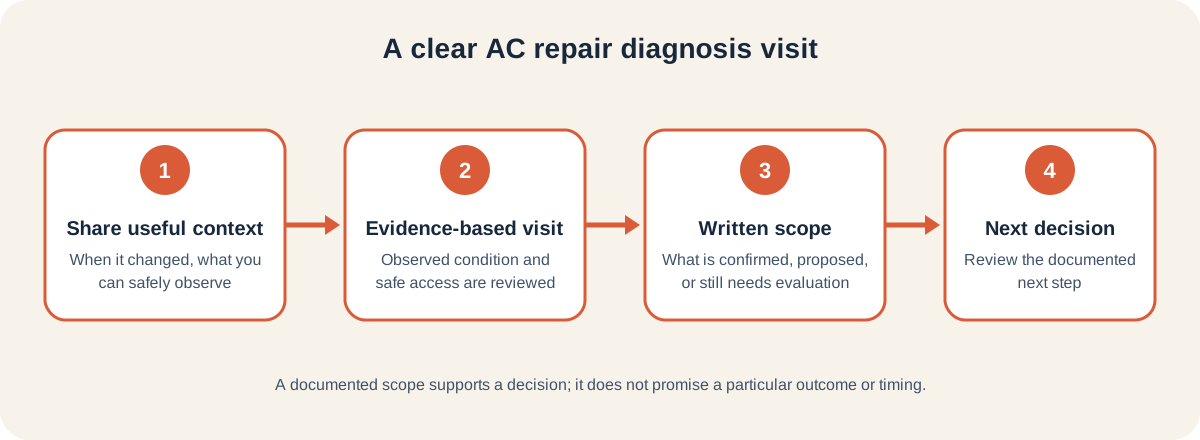
A useful AC repair diagnosis visit in Ontario, CA should turn a symptom into a clear, documented next decision. It begins with what changed and what can be safely observed, then records the conditions relevant to the system. The written scope should distinguish confirmed observations, proposed work, and questions that still require evaluation.
That structure helps a homeowner understand what is known without treating a diagnosis as a promise. If you are ready to request help, start with AC repair. Ontario is within our stated service area; availability depends on the schedule.
This article is about what a local diagnosis visit should document. If your AC is still on but cooling has dropped after extreme heat, use AC not cooling after a heat wave. If it will not power on at all, see AC not turning on.
Prepare useful context, not a DIY repair attempt
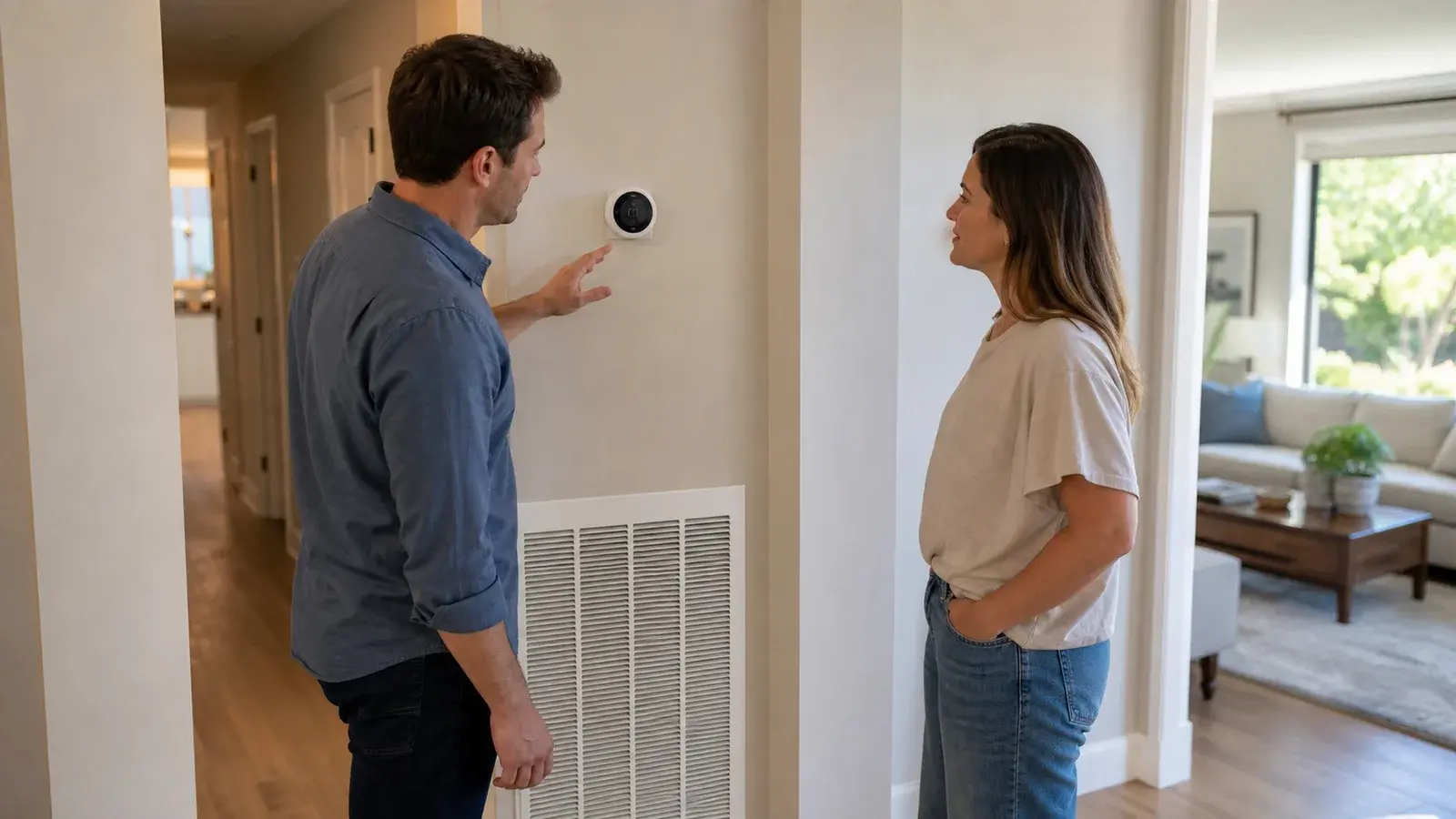
Before the visit, write down when the cooling change began and whether it is constant or intermittent. Note thermostat messages, unusual sounds, visible water, or any breaker trip you observed from a safe position. Keep pets and belongings clear of the equipment area when practical.
- A short timeline of the symptom and any recent change you noticed.
- The thermostat mode and message as displayed—without opening equipment.
- Safe access to the thermostat, indoor equipment area, and outdoor unit.
- Any repeat breaker trip, smoke, or electrical odor: leave the equipment off and report it.
What the written diagnosis should clarify
| Part of the scope | Why it matters | A useful question |
|---|---|---|
| Observed condition | Separates what was seen from assumptions. | What was observed during this visit? |
| Proposed next work | Makes the recommended action readable. | What does this work address? |
| Open question | Shows when further evaluation is needed. | What cannot be confirmed yet? |
| Next decision | Lets the homeowner review the documented path. | What information should I keep or consider next? |
Use the scope to choose the next step
A good scope gives you a record to review, not pressure to guess. Ask which conditions were directly observed, what the proposed work is intended to address, and whether a question remains unresolved. California’s Contractors State License Board also recommends consumers compare written information when selecting a contractor.
For a local appointment request, contact the AC repair team. The company serves Ontario, Inland Empire, and East Los Angeles County communities; it does not claim a Los Angeles city storefront.
When to stop and request help
Do not open electrical or equipment panels, handle wiring, or continue resetting a breaker. If there is smoke, an electrical odor, exposed wiring, or a breaker trips again, leave the equipment off and describe the condition when requesting service.
Frequently asked questions
It should begin with the reported symptom and safe access, then document the observations relevant to the affected system. The resulting scope should make clear what was observed, what work is proposed, and what still needs evaluation.
Note when the issue began, what the thermostat displayed, and any unusual sounds, water, or changes you could safely observe. Provide safe access to the thermostat and equipment area; do not remove panels or handle wiring.
No. A scope records the current assessment and the proposed next step. Conditions that cannot be confirmed without further evaluation should be identified as such rather than presented as a guarantee.
Do not repeatedly reset a breaker. If it has tripped again, leave the equipment off and tell the technician what occurred. Electrical concerns need professional evaluation.
Ontario is part of the company’s stated service area, along with the Inland Empire and East Los Angeles County communities. Appointment availability depends on the schedule.
Local next step
Turn this guide into a site-specific answer.
Guides explain the decision. Equipment condition, access, and safe next steps still need to match the home or business. Review the relevant service scope or request an assessment for Ontario, the Inland Empire, or East Los Angeles County. Availability depends on the current schedule.