Auxiliary Heat vs Emergency Heat: What the Thermostat Is Telling You
Auxiliary Heat is usually an automatic backup call in Heat mode; Emergency Heat is usually a manually selected backup-only mode.

Owner & Lead HVAC Technician, Alex Air & Heating · EPA 608 Universal Certified · Ontario, CA

TL;DR
Auxiliary Heat usually means the thermostat automatically called a configured backup source while Heat mode remains active. Emergency Heat usually means someone selected a backup-only mode that keeps the heat pump from operating. Labels, backup sources and sequencing vary by thermostat and system, so use the display as a control clue—not a fault diagnosis—and arrange service when the status is unexpected or comfort does not recover.
- Auxiliary Heat is normally system-controlled support; Emergency Heat is normally a manually selected operating mode.
- The same backup source may serve both labels, but it can be electric resistance or a furnace and may run differently in dual-fuel systems.
- Note the exact label, selected mode, recent setpoint change, weather and comfort result. Do not change installer settings, wiring or safety controls.
On this page
Quick answer: AUX is usually automatic; Emergency is usually selected
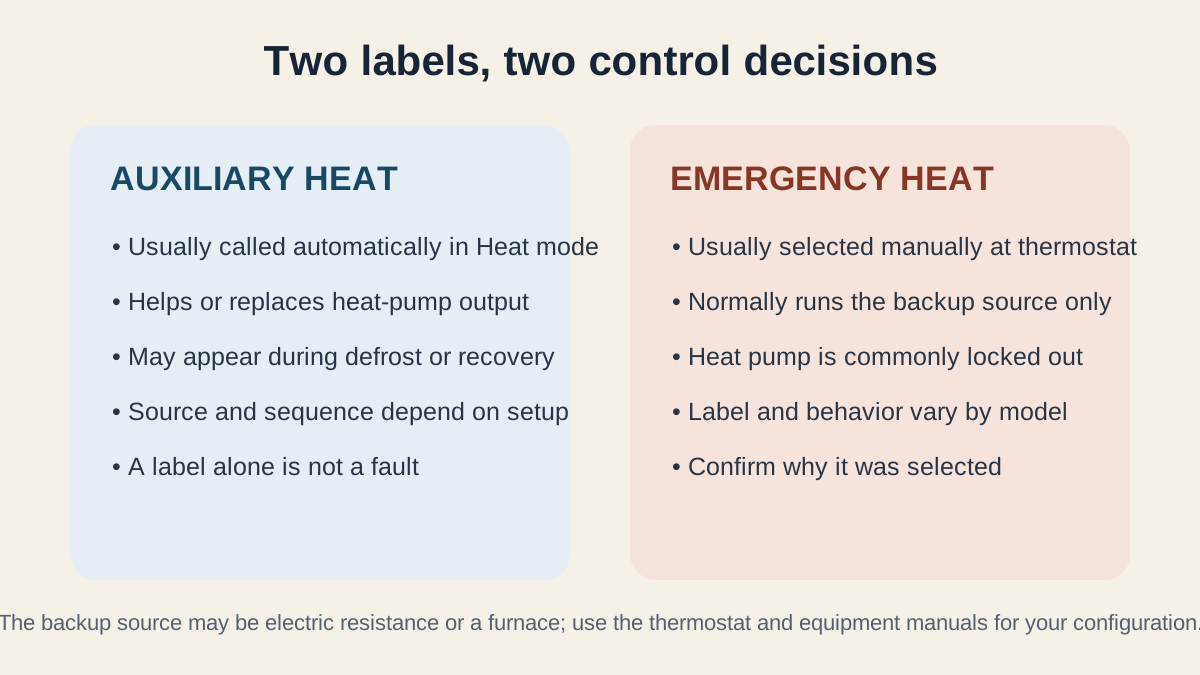
If the thermostat shows Auxiliary Heat while it is still in normal Heat mode, the control is usually asking a configured backup source to help the heat pump or take over under a programmed condition. If the thermostat is set to Emergency Heat, someone usually selected a separate backup-only mode; on many systems the heat pump is then locked out. That distinction is useful, but the label alone cannot tell you whether equipment has failed.
What the two labels usually mean
| Question | Auxiliary Heat | Emergency Heat |
|---|---|---|
| Who normally calls it? | The thermostat or equipment controls automatically | The homeowner, technician or another authorized user selects the mode |
| What mode is shown? | Normal Heat mode with an AUX or backup indication | Emergency Heat / EM Heat mode |
| What happens to the heat pump? | It may keep running with electric backup, or stop while a dual-fuel backup runs | It is commonly locked out while the backup source heats |
| What is the backup source? | Often electric resistance, but it can be a furnace or another configured source | Often the same backup source, although wiring/configuration can differ |
| Does the label prove a fault? | No | No—but confirm why the mode was selected and whether heat is being maintained |
Why Auxiliary Heat may appear
A configured thermostat can call auxiliary heat when the heating demand exceeds the heat pump’s current output, during a setpoint recovery, during defrost, or under another model-specific balance or staging rule. On an all-electric system, the compressor and electric backup may run together. On a dual-fuel system, controls may stop the heat pump and run the furnace instead. Because the sequence depends on the thermostat, backup source and installer configuration, AUX cannot be interpreted from the word on the screen alone.

What Emergency Heat changes
Emergency Heat is commonly a manual system mode. Selecting it normally prevents the heat pump from running and asks the backup source to carry the heating load. That can be useful when the equipment manual or a technician directs its use, but it is not a stronger version of ordinary Heat mode and it is not the automatic next step whenever AUX appears. If the thermostat shows Emergency Heat unexpectedly, first confirm the exact selected mode in the user guide; do not enter installer menus, move wires or bypass a lockout.
A California code note with a narrow boundary
California’s 2025 Energy Code applies to buildings with permit applications on or after January 1, 2026, and its HVAC requirements depend on whether the project is new construction, an addition or an alteration, plus building type, climate zone and listed exceptions. Certain covered heat-pump projects have supplemental-heat and thermostat-control requirements, including conditions related to defrost and user-selected emergency operation. That is a design and installation compliance question—not a universal instruction for every existing home or a reason to change thermostat installer settings.
What to observe before calling
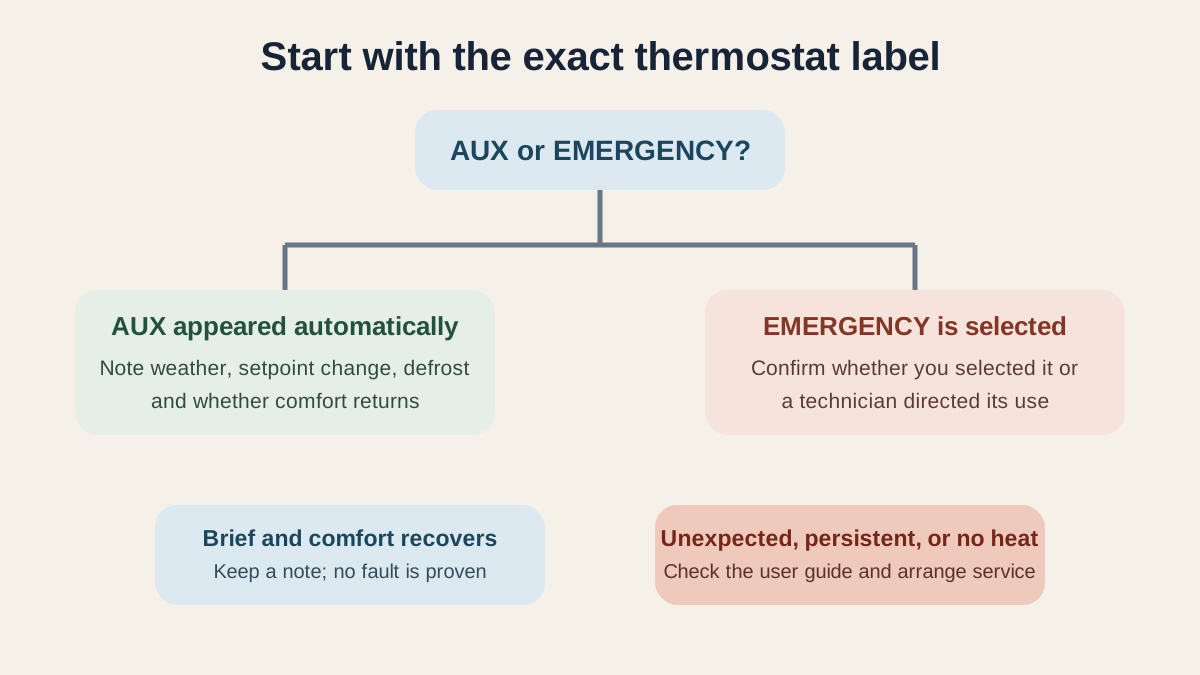
- The exact screen wording: AUX, Backup, Stage 2, Emergency, EM Heat or another model-specific label.
- Whether the thermostat is still in Heat mode or is actually set to Emergency Heat.
- Whether the label followed defrost, a schedule recovery or a recent setpoint change, and whether it later cleared.
- Whether the home reached comfort, whether the outdoor unit’s usual sound/operation changed from a safe distance, and whether an alert appeared.
- The thermostat and equipment model information available on the user-facing screen or documents—without opening cabinets.
When the display deserves service
Arrange a heat-pump and control check when AUX stays on in conditions where it normally cleared, Emergency Heat appears without anyone selecting it, the home does not warm, the system repeatedly changes states, or the behavior changed after thermostat or HVAC work. Turn the thermostat off if safe and seek prompt help for burning odor, smoke, severe electrical signs or another immediate hazard. The technician—not the display—should determine whether the issue is equipment, controls, configuration or normal staging.
A local next step
For an unexpected AUX/Emergency pattern or comfort loss in Ontario, the Inland Empire or nearby eastern Los Angeles County service areas, request heat-pump repair. If the change occurs around a brief outdoor thawing event, read the Southern California heat-pump defrost guide. If supply air remains cool rather than recovering, use the separate Heat-mode cold-air guide. For thermostat programming rather than backup heat, see Hold vs Schedule.
Frequently asked questions
They may use the same backup source, but they normally represent different control decisions. Auxiliary Heat is usually called automatically while the thermostat remains in Heat mode. Emergency Heat is usually a manually selected mode that uses backup heat and locks out the heat pump.
No. AUX can appear during a defrost event, a larger heating demand or another configured control condition. It deserves attention when it is unexpected, persistent, paired with lost comfort or different from the system’s normal pattern.
No. The thermostat must be configured for a heat pump with an available backup heat stage, and the labels and controls vary. Ductless and other systems may not present these options at all.
No. Electric resistance heat is common, but a dual-fuel system may use a gas or oil furnace. That affects whether the heat pump and backup run together or alternate.
Not simply because AUX appears. Emergency Heat commonly disables the heat pump and changes the system to backup-only operation. Use it only according to the installed thermostat/equipment instructions or professional direction.
Local next step
Turn this guide into a site-specific answer.
Guides explain the decision. Equipment condition, access, and safe next steps still need to match the home or business. Review the relevant service scope or request an assessment for Ontario, the Inland Empire, or East Los Angeles County. Availability depends on the current schedule.