Heat Pump Blowing Cold Air in Heat Mode: What to Notice Before Service
A heat pump can briefly feel cooler during a transition or defrost. The useful question is whether warmth returns, the home recovers, and the pattern has changed.

Owner & Lead HVAC Technician, Alex Air & Heating · EPA 608 Universal Certified · Ontario, CA
TL;DR
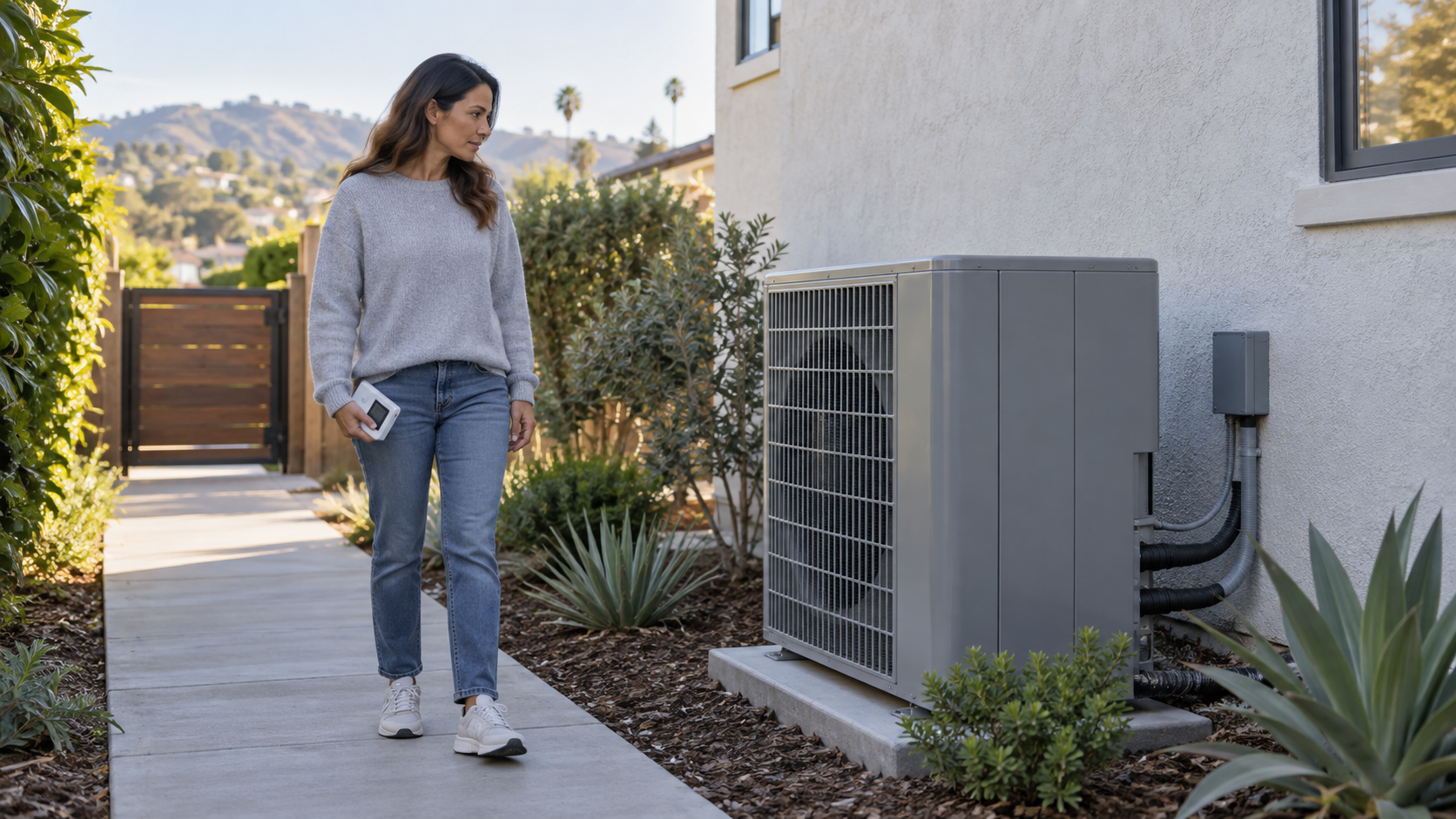
A heat pump may briefly deliver cooler-feeling air during a mode change or defrost cycle, and its normal heat can feel gentler than furnace heat. Watch the thermostat mode, fan setting, timing, location and whether your home returns to comfort. If cool air persists in Heat mode, comfort falls, or the behavior is new, schedule professional service rather than opening the equipment.
- A brief transition is different from persistent cool supply air while Heat is calling.
- The thermostat display, fan setting, timing and comfort recovery give a technician useful context.
- Do not open equipment panels or handle outdoor fan, electrical or refrigerant components.
On this page
Quick answer: a brief change can happen; persistent cold air deserves a visit
A heat pump does not make supply air feel like a gas furnace. During a mode change or a defrost cycle, the air can feel cooler for a short period while the system manages outdoor frost. What matters is the pattern: which mode is selected, whether the fan is set to Auto, where you feel the air, how long it continues, and whether the home returns to comfort. If cool air continues in Heat mode, comfort falls, or the behavior is new, arrange a professional check rather than trying to open or reset the equipment repeatedly.
What you can safely notice from the thermostat and living space
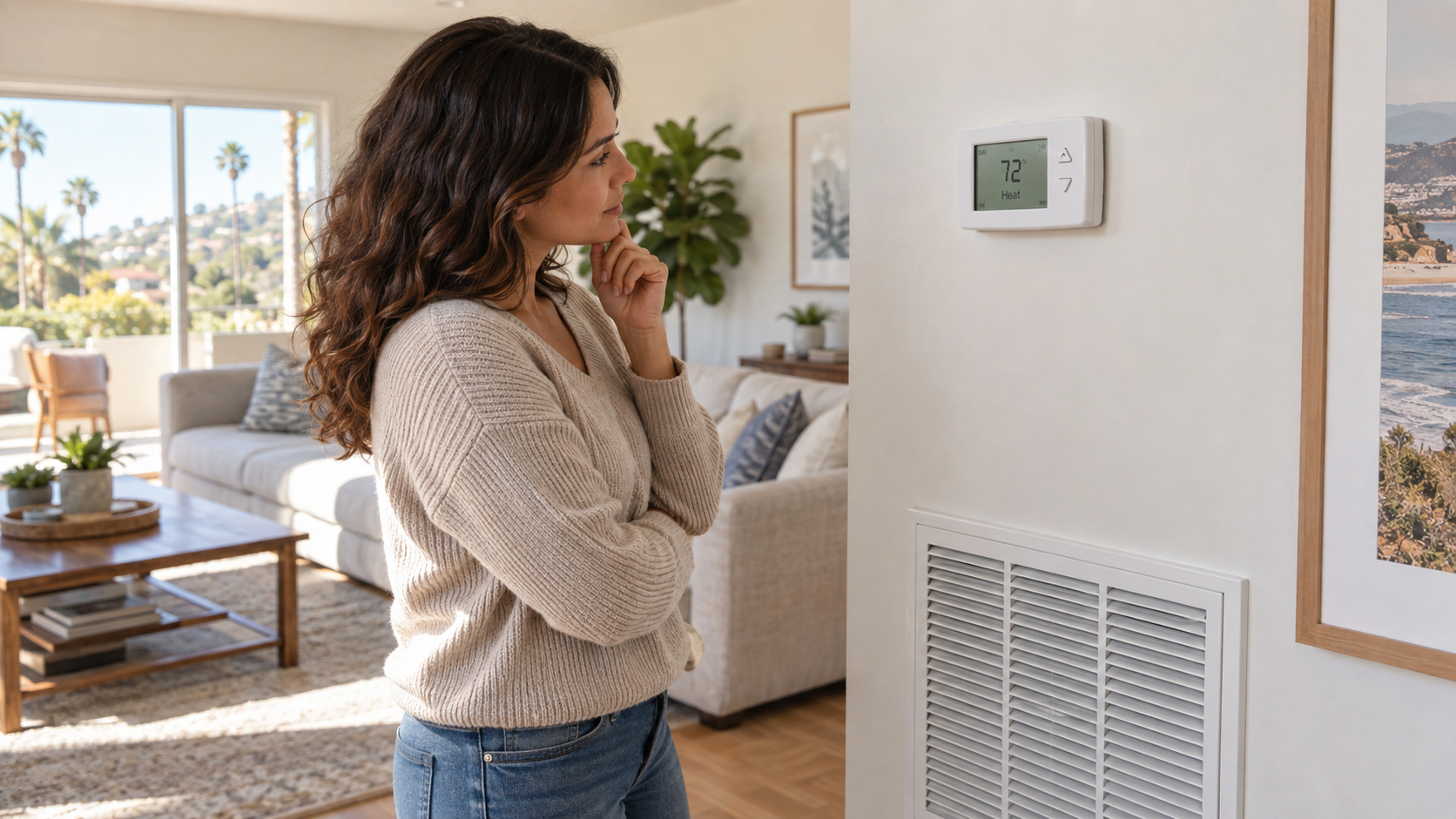
Start with the display, not the equipment cabinet. Note whether the thermostat says Heat, whether the fan is set to Auto rather than On, the set temperature, the room temperature, and when the cooler air begins. A fan set to On can keep moving room-temperature air between heating calls, which can feel cool at a register even though the heat pump is not actively heating. That observation is useful; it is not a diagnosis.
| What you notice | A reasonable next observation | When to book service |
|---|---|---|
| Brief cooler airflow around a change in operation | Note the time, thermostat mode and whether warmth returns | It repeats for long periods or the home does not recover |
| Air feels cool only while fan is set to On | Try the normal Auto fan setting and observe the next heating call | Cool supply air continues while Heat is calling |
| A new sound, error display, ice you can see from a distance, or falling room comfort | Record what changed and keep clear of the unit | Stop using the system if there is a burning odor, smoke, or an electrical concern; request prompt help |
| One room feels different from the rest | Note the register, room, time and usual pattern | The change is persistent or affects the whole home |
Why “cold air” can describe more than one experience
A heat pump transfers heat rather than creating high-temperature combustion heat, so its normal warm supply air can feel gentler than furnace air. Separately, the system may briefly manage a defrost cycle in cold or damp weather. Neither observation proves a fault. The more useful question is whether the equipment returns to its normal heating pattern and whether the home reaches and holds the selected comfort setting. Do not open panels, touch the outdoor fan, or try to clear ice from refrigerant or electrical parts.
When to stop observing and request service
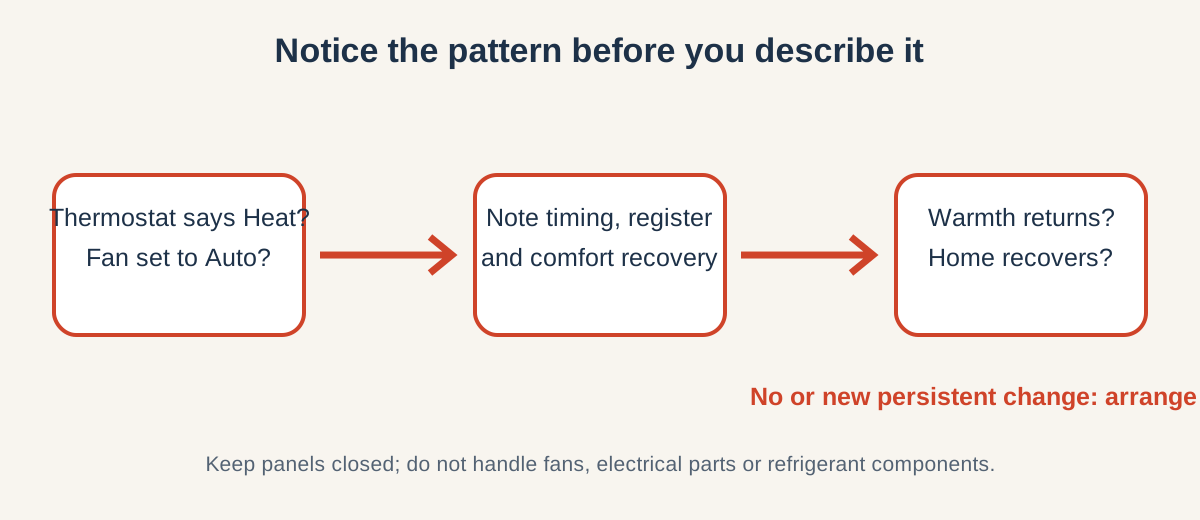
A persistent shift from the unit’s usual behavior is enough reason to call. Tell the service team whether the home stays cool despite a Heat call, whether the issue follows every call or only a transition, what the thermostat displays, and whether you noticed an unfamiliar sound, visible ice from a safe distance, or an error message. If you smell burning, see smoke, or have an electrical concern, turn the system off at the thermostat if it is safe to do so and seek prompt help.
For homeowners in Ontario, Pomona, the Inland Empire and nearby eastern Los Angeles County service areas, Alex Air & Heating can help assess a heat-pump repair concern. For a sound-focused observation guide, see Heat Pump Noises: What Can Be Normal and What Needs Service?. If you are comparing a replacement, Heat Pump vs AC for Cooling in California explains what changes in the full system.
Frequently asked questions
It can feel cooler briefly while the system manages a defrost cycle. The key observation is whether the unit returns to normal heating and the home recovers.
A fan set to On can circulate room-temperature air between heating calls. Set it to your usual Auto setting and observe the next heating call.
If there is burning odor, smoke or an electrical concern, turn it off at the thermostat if safe and seek prompt help. For persistent comfort changes without those signs, arrange service.
Do not chip, melt, or handle ice around electrical or refrigerant components. Record what you can see from a safe distance and request service if the condition persists.
Local next step
Turn this guide into a site-specific answer.
Guides explain the decision. Equipment condition, access, and safe next steps still need to match the home or business. Review the relevant service scope or request an assessment for Ontario, the Inland Empire, or East Los Angeles County. Availability depends on the current schedule.