Furnace Makes a Boom at Startup: What Should You Do Next?
A new loud boom from the furnace area at startup is a stop-and-service symptom, not a sound to reproduce by cycling the thermostat.

Owner & Lead HVAC Technician, Alex Air & Heating · EPA 608 Universal Certified · Ontario, CA
TL;DR
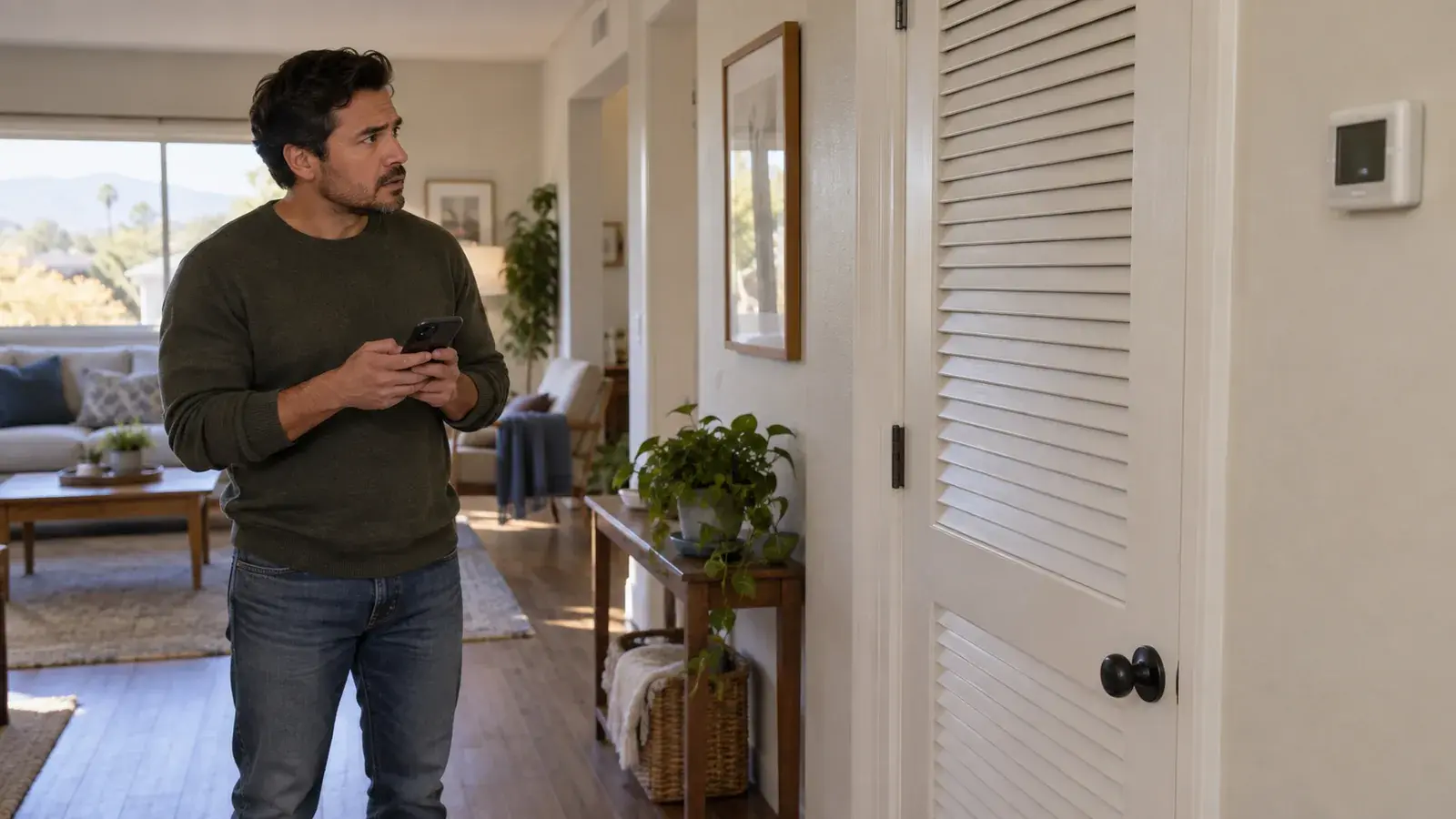
A new, loud boom from the furnace area as a heating cycle starts is not a sound to keep testing. Turn the system off at the thermostat and arrange furnace service. Do not reopen the cabinet, watch the flame, clean combustion parts or cycle the heat to reproduce it. If you smell gas or a carbon-monoxide alarm sounds, leave immediately and follow emergency guidance.
- A new loud boom at furnace startup is a stop-and-service symptom; do not keep cycling the heat to collect another example.
- From a safe distance, record timing, location, frequency and what changed—not a guessed part or cause.
- Gas odor, hissing or a carbon-monoxide alarm changes the response from a service appointment to immediate evacuation and emergency help.
On this page
Quick answer: stop the heat and arrange service
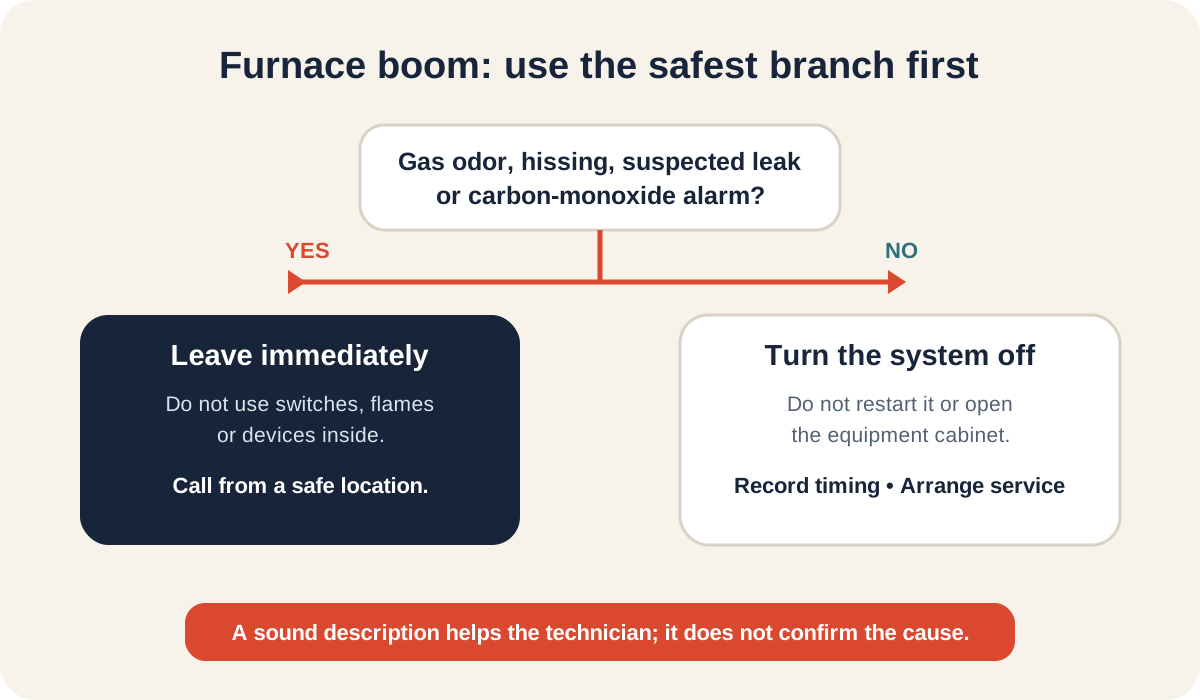
If a furnace makes a new, loud boom from the equipment area as a heating cycle starts, turn the system off at the thermostat and arrange furnace repair. Do not keep restarting it to hear the sound again. You can give a technician useful information without opening the cabinet, looking for a flame, removing panels or touching gas, electrical or combustion components.
Emergency signs change the next step
If you smell the distinctive odor added to natural gas, hear hissing near a gas appliance or line, or suspect a leak, leave immediately. Do not operate switches, appliances, garage-door openers, phones or other electrical devices inside. From a safe location, call SoCalGas at 1-800-427-2200 or 911 as appropriate. If a carbon-monoxide alarm sounds, get everyone into fresh air, call 911 and follow the alarm and emergency instructions. Carbon monoxide itself has no color or odor.
What the timing and location can tell a technician
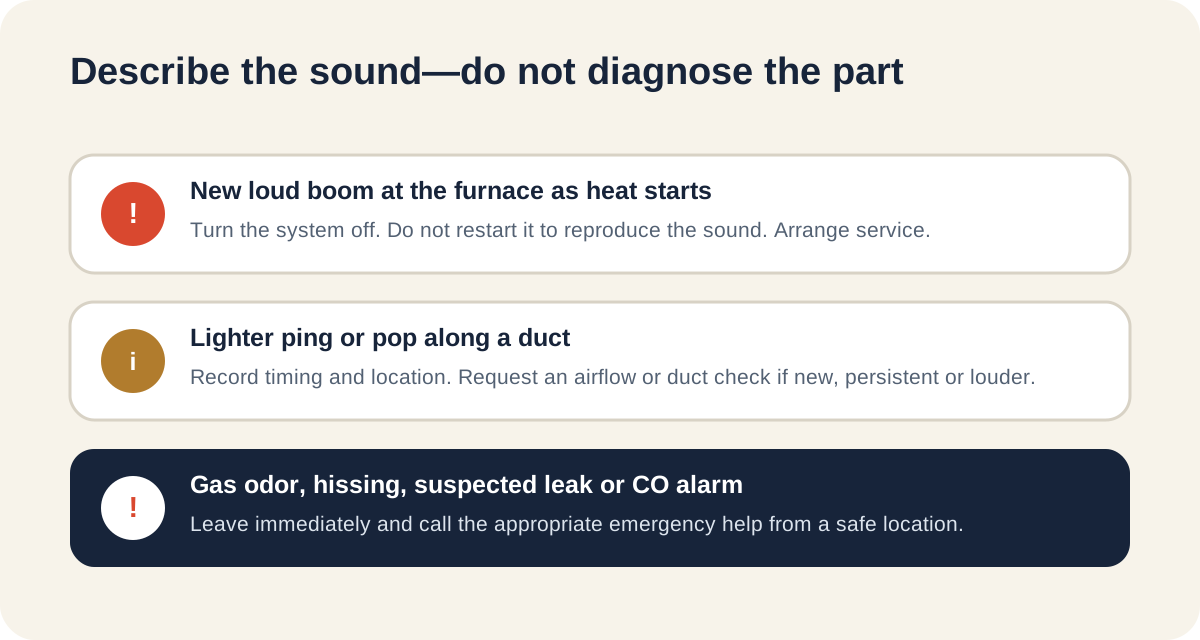
A sound description is most useful when it stays factual. Note whether the boom happened immediately after a heating request, later in the startup sequence, when the blower began, or after the system shut down. Note whether it seemed to come from the furnace closet, a nearby duct, a distant register or another part of the home. Also record whether it was a one-time change or repeated before you turned the system off. These clues guide inspection; they do not identify a part by themselves.
| What you notice | What to record | Safe next step |
|---|---|---|
| New loud boom at the furnace as heat starts | Time, thermostat request, apparent location, one-time or repeated | Turn the system off and arrange service |
| Lighter ping or pop farther along a duct | Room or register, timing with blower, whether it is new or getting louder | Record it; arrange an airflow/duct check if persistent or changed |
| Gas odor, hissing or suspected leak | Do not stay inside to investigate | Evacuate and call the gas utility or 911 from a safe location |
| Carbon-monoxide alarm | Do not search for the source | Move to fresh air, call 911 and follow emergency instructions |
What not to do
- Do not cycle the thermostat repeatedly to capture a recording or video.
- Do not remove the furnace door, look through openings for flame behavior or reach into the cabinet.
- Do not clean burners, igniters, sensors, gas valves or venting as a homeowner test.
- Do not bypass a switch, alarm or safety control, and do not reset a tripped protection repeatedly.
- Do not assume that a normal-looking thermostat display makes a loud startup boom safe.
How to prepare a useful service handoff
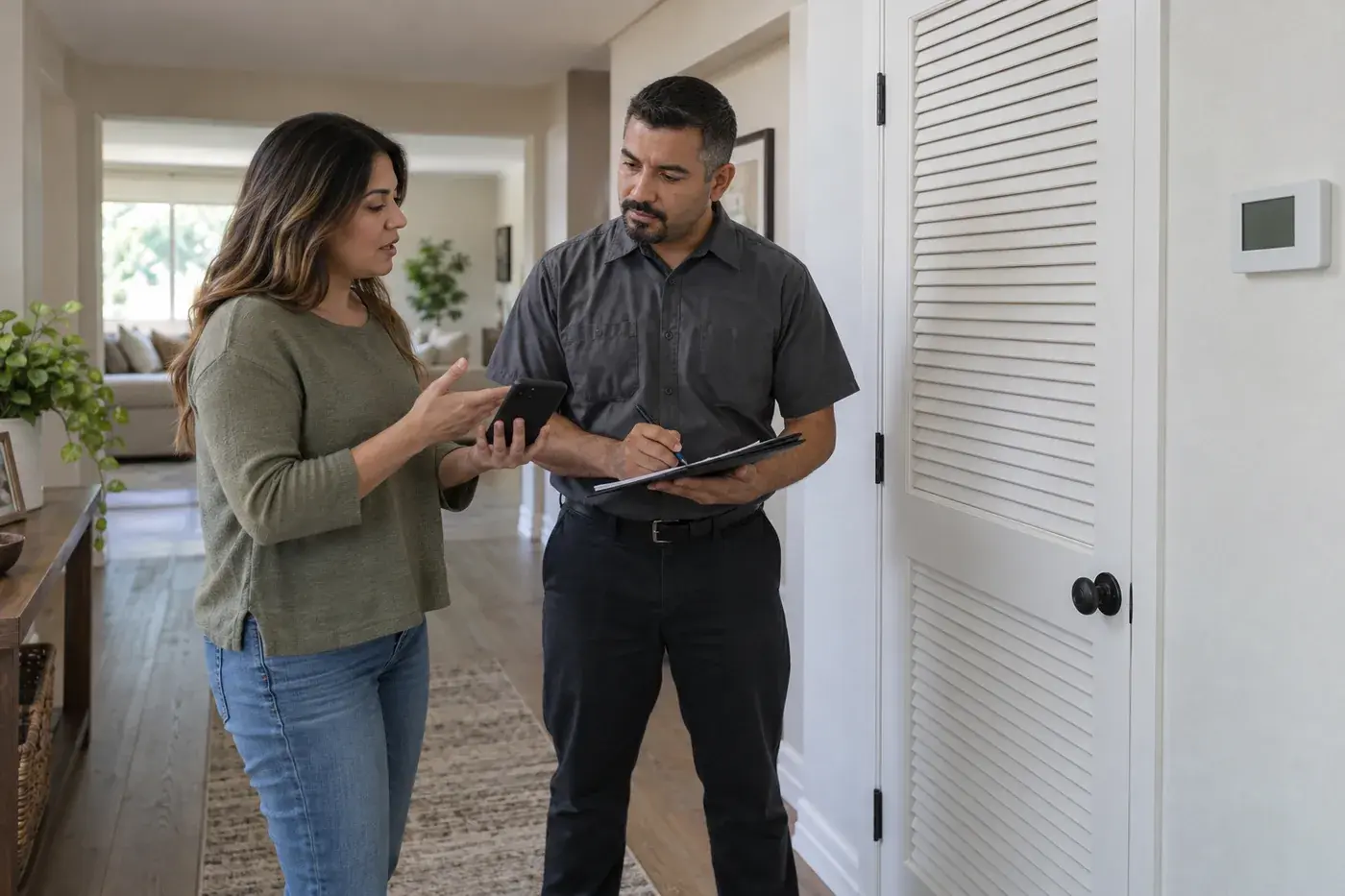
After the system is off and there is no emergency sign, write down the thermostat mode and requested temperature, the approximate time, where you were standing, when the boom occurred relative to airflow, and any recent filter, thermostat or service change. A recording already captured from an occupied space can help, but do not restart the furnace to make one. Keep the equipment access path clear for the visit.
How this differs from other furnace symptoms
This guide owns a specific task: responding to a new loud sound at startup. If the furnace instead completes very short heating cycles without reaching the set temperature, use the furnace short-cycling guide. If you are noticing repeated ignition-and-shutdown behavior without a boom, see flame-sensor symptoms and professional-check boundaries. For seasonal prevention and alarm questions, read the California furnace safety inspection guide.
A local next step
For a non-emergency startup boom after the system is switched off, request furnace repair for an Ontario, Inland Empire or nearby eastern Los Angeles County home. Describe the timing and location instead of guessing the component; the technician can inspect the startup sequence and safety controls on site.
Frequently asked questions
If the sound was new, loud and came from the furnace area as the cycle began, turn the system off at the thermostat and arrange service. Do not repeatedly restart it to test the sound.
No. Timing and location can narrow the conversation, but sound alone cannot confirm a cause. A technician needs to inspect and test the actual system.
Sheet metal can make lighter pops or pings as temperature and pressure change, often away from the furnace. A new loud boom at the furnace still deserves a stop-and-service response rather than a remote diagnosis.
Share when the sound occurred relative to the thermostat call and blower, where it seemed loudest, whether it repeated, and whether there was gas odor, a hissing sound, an alarm or a recent service or control change.
Leave the building immediately. From a safe location, contact the gas utility or emergency services as appropriate and follow their instructions. Do not use switches, flames or devices inside, and do not return until authorized.
Local next step
Turn this guide into a site-specific answer.
Guides explain the decision. Equipment condition, access, and safe next steps still need to match the home or business. Review the relevant service scope or request an assessment for Ontario, the Inland Empire, or East Los Angeles County. Availability depends on the current schedule.