Furnace Replacement in a Condo or Townhome: Planning Questions
Before replacing a condo or townhome furnace, verify equipment ownership, access, shared-space rules, system fit, and the written scope on site.

Owner & Lead HVAC Technician, Alex Air & Heating · EPA 608 Universal Certified · Ontario, CA
TL;DR
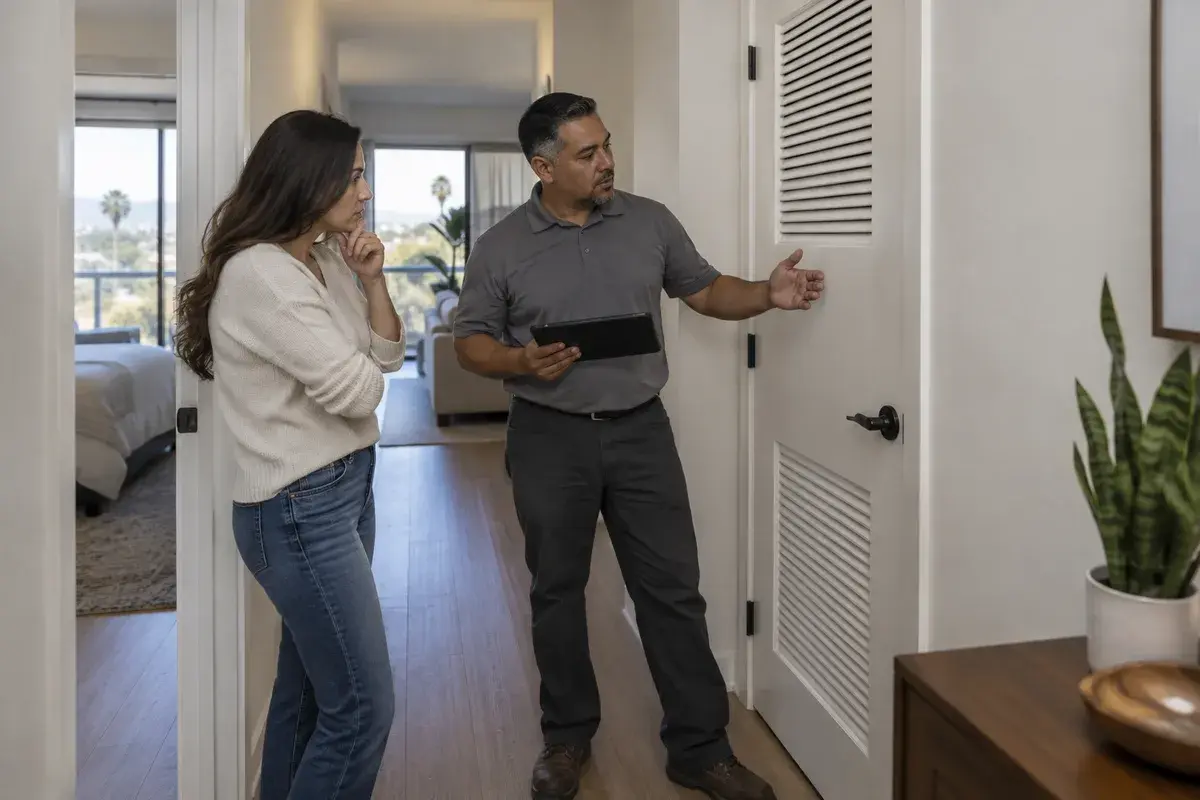
A condo or townhome furnace replacement starts with identifying where the equipment actually sits and who controls that space. Ask how the old unit leaves, how the new unit enters, whether shared halls, roofs, or utility areas are involved, and what the property documents require. Then have a qualified contractor verify sizing, venting, ducts, and the applicable permit and inspection path for this specific address before committing to a written scope.
- A furnace inside a private closet is a different planning problem from equipment in an attic, roof, garage, or shared mechanical room.
- Review the actual CC&Rs and manager instructions; neither “condo” nor “townhome” alone proves an approval or permit rule.
- Have equipment fit, venting, ducts, access, and responsibility documented by an on-site professional before final selection.
On this page
Quick Answer: plan the building before choosing the box
The most useful first question is not which furnace model to buy. It is whether a qualified installer can access, remove, fit, vent, and service an appropriate system in this particular condo or townhome. Building documents may add coordination for common space or exterior work, but requirements vary. Get the site and written scope checked before treating a like-for-like replacement as simple.
Key takeaways
- Locate the furnace and trace the entire removal and delivery route.
- Separate equipment ownership from access permission and code compliance.
- Request an assessment that addresses the complete heating system, not just cabinet dimensions.
Where is the furnace, and what space surrounds it?
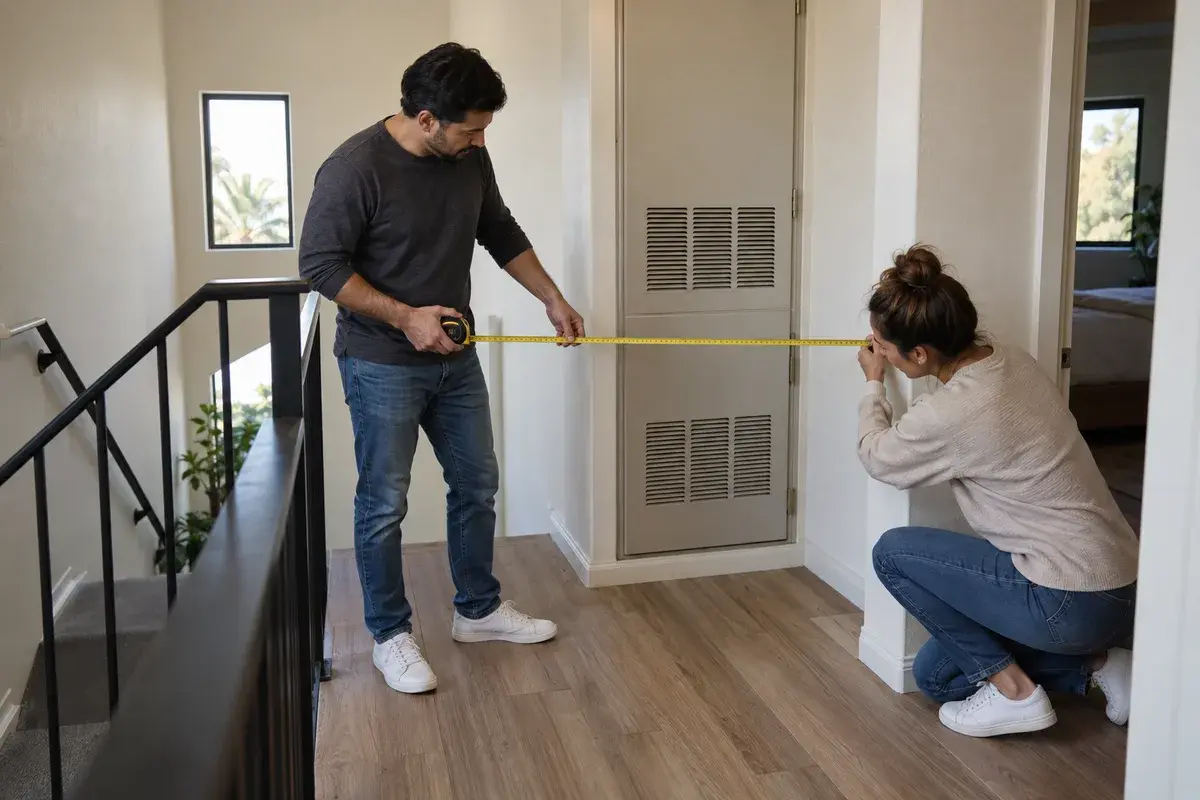
An in-unit closet, private garage, attic, roof, and shared mechanical room present different access and maintenance questions. Note which doors, hatches, stairs, elevators, and corridors an installer would use. Ask whether temporary protection or scheduling is needed in common space. Do not assume the owner may alter a shared roof, chase, wall, or vent just because the furnace serves one dwelling.
What do the property documents and manager actually require?
California DRE explains that common-interest developments can have CC&Rs and architectural guidelines governing improvements, with responsibilities that depend on the documents. Ask for the current rules, identify any exterior or common-area change, and seek the manager’s process in writing. Some townhomes have very different ownership structures from condominiums. This article cannot decide legal responsibility or whether approval is needed at a particular address.
What must the site assessment verify?
| Site question | Why it matters | Who confirms |
|---|---|---|
| Cabinet and service access | A unit must fit and remain accessible for safe service | Installer and property contact |
| Heating load and airflow | The old capacity may not match the current home or ducts | Qualified HVAC professional |
| Venting and combustion air | Existing route and termination may constrain the scope | Qualified HVAC professional and applicable authority |
| Shared route or exterior work | Access and permissions may affect sequencing | Property manager and owner |
| Permit and inspection path | Requirements depend on project and jurisdiction | Contractor and local authority |
DOE quality-installation guidance emphasizes proper sizing, component matching, airflow, and ducts. California Energy Commission HVAC guidance makes alteration requirements scope-dependent. Have the contractor identify what actually applies to the dwelling; a blog cannot promise a particular approval or compliance outcome.
What should the written scope settle?
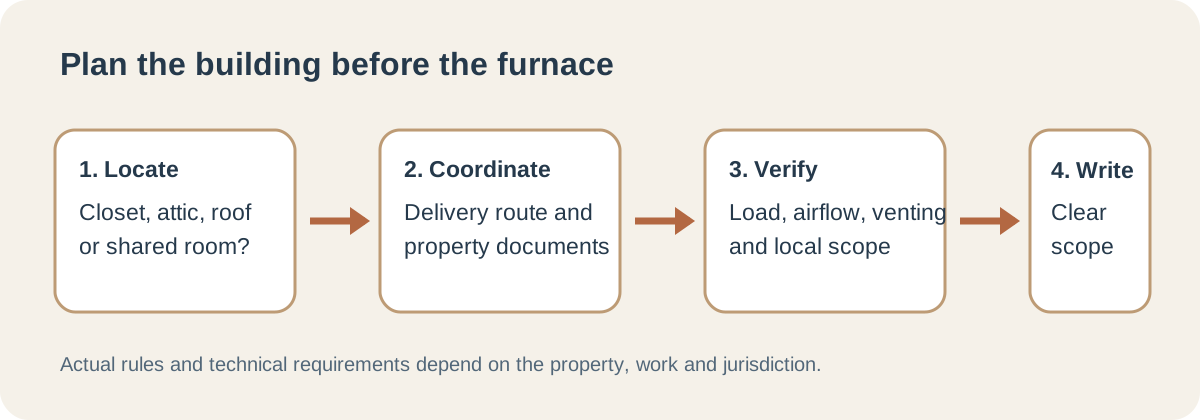
Ask the contractor to state the equipment and compatibility basis, removal and delivery route, any duct or vent changes, protection and restoration of affected spaces, who coordinates with property management, and who handles applicable permit or inspection steps. CSLB advises comparing written contractor information and checking license status. The scope should name open questions, not disguise assumptions as completed site findings.
Local handoff and next step
Alex Air & Heating serves Ontario, Pomona, the Inland Empire, and nearby eastern Los Angeles County communities; it does not claim a Los Angeles city storefront. If you are planning a replacement, request a site-specific furnace installation assessment. If the current unit is failing during operation, the furnace safety inspection guide explains professional checks; flame sensor symptoms covers one narrower start-stop pattern without remote diagnosis.
Frequently asked questions
No universal answer follows from the building label. Review the property’s governing documents and ask its manager whether this proposed work touches a common area, exterior, shared system, or approval process.
No. Ownership and maintenance responsibility depend on the property documents and equipment arrangement. Confirm the specific unit and any shared components before assigning responsibility.
Not automatically. A professional should verify the heating load, duct and airflow conditions, venting, installation clearances, and compatibility with the existing system.
Ask the contractor and the authority having jurisdiction to confirm what applies to the address and the actual project scope, and put responsibilities in the written agreement.
Share the equipment location, model information if accessible, building access route, property rules, manager contact, and any prior heating or airflow issues. Do not open or alter combustion equipment.
Local next step
Turn this guide into a site-specific answer.
Guides explain the decision. Equipment condition, access, and safe next steps still need to match the home or business. Review the relevant service scope or request an assessment for Ontario, the Inland Empire, or East Los Angeles County. Availability depends on the current schedule.