Furnace Flame Sensor Symptoms: When a Professional Check Is Needed
Repeated ignition and rapid shutdown may involve flame proving, but symptoms do not identify a failed sensor. Know what to observe and when to stop.

Owner & Lead HVAC Technician, Alex Air & Heating · EPA 608 Universal Certified · Ontario, CA
TL;DR
A furnace that appears to light and then stops heating soon afterward, sometimes retrying or entering a lockout, may have a flame-proving problem. That pattern is not proof of a bad flame sensor; airflow, burners, controls, wiring, venting, or other faults can also matter. Observe only the normal thermostat and any externally visible status display, record the sequence, and request professional service. Never open the cabinet, bypass a safety device, or work on combustion components.
- A brief flame followed by shutdown is a clue, not a flame-sensor diagnosis.
- Record what is visible without removing panels, repeating resets, or touching gas or electrical parts.
- Gas odor, a CO alarm, smoke, or suspected combustion hazard calls for leaving the area and emergency help, not troubleshooting.
On this page
Quick Answer: a shutdown pattern is not a component verdict
A furnace may initiate heat, establish a flame, then shut the burners down and try again or lock out. Flame sensing is one safety function in that sequence, but a homeowner cannot confirm the failed part from timing alone. Trane lists filters, burners, flame sensing, and controls among possible causes when burners stop after ignition. The useful action is to preserve observations and arrange a qualified check.
Key takeaways
- Treat the flame sensor as one possible cause, never a confirmed diagnosis from symptoms.
- Keep every furnace panel and safety device in place.
- Escalate gas odor, a CO alarm, smoke, or illness as an emergency.
What can you observe safely?
Without opening equipment, note the thermostat heat call, whether room air ever becomes warm, the start-stop sequence you can hear, and whether the system eventually remains off. If the unit has an externally visible display, write down its exact code and check the owner’s manual for its label; do not remove a panel to find one. Record when the behavior started and whether the filter was recently changed. These details help a technician, but they cannot diagnose flame current or combustion safety.
Why similar symptoms have different causes
| Observation | What it may suggest | Safe response |
|---|---|---|
| Burners appear to start, then heat stops quickly | Flame-proving sequence or another shutdown cause | Record the sequence; schedule service |
| Multiple start attempts, then no heat | A control may have locked out | Do not repeatedly reset; report exact behavior |
| Weak airflow or dirty accessible filter | Airflow may affect safe operation | Follow only the owner’s filter instructions |
| Gas odor, CO alarm, smoke or illness | Potential immediate hazard | Leave the area and seek emergency help |
ENERGY STAR places control, gas connection, burner combustion, and heat-exchanger checks with a professional. A visible sequence or fault label cannot separate sensor condition from burner, grounding, control, airflow, or venting problems. Avoid online advice that turns a safety-device concern into a routine do-it-yourself cleaning task.
When to stop and call for help
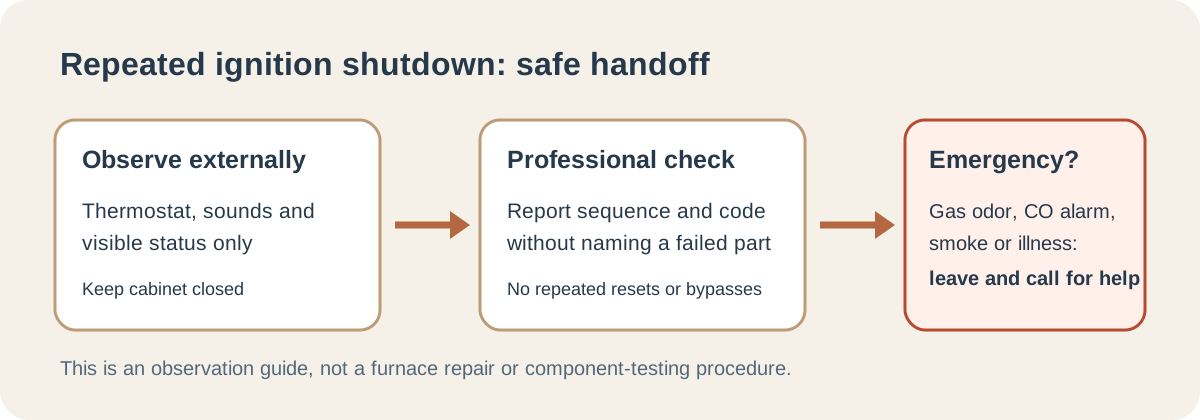
If the pattern repeats, the furnace locks out, or heating is unreliable, stop trying to force operation and contact a qualified HVAC professional. Do not bypass a flame sensor, jumper a switch, open the cabinet, handle gas fittings, or repeatedly cycle power. If you smell gas, a carbon-monoxide alarm sounds, smoke appears, or someone is ill, leave the area and contact emergency services or the gas utility from a safe location. CPSC notes that carbon monoxide itself has no smell, so a gas odor is not a CO test.
Local repair handoff
Alex Air & Heating serves Ontario, Pomona, the Inland Empire, and nearby eastern Los Angeles County communities; it does not claim a Los Angeles city storefront. Share your safe observations when requesting a furnace repair assessment. For the broader no-start question, see furnace not igniting; for professional safety scope, see furnace safety inspection. If replacement is being considered in a shared building, read the condo and townhome planning guide.
Frequently asked questions
No. Flame proving is one possibility, but burner, airflow, control, wiring, venting, or other faults may produce similar symptoms. A technician must test the actual system.
This guide does not recommend opening the furnace or handling a combustion safety component. Ask a qualified HVAC professional to diagnose and service it.
No. Repeated resets can erase useful fault history and keep a malfunctioning heating system cycling. Note the visible behavior and request service.
No. A code can point to a flame-proving or ignition sequence, but its meaning is model-specific and does not confirm the failed component. Give the exact displayed code to the professional.
If a carbon-monoxide alarm sounds, you smell gas, see smoke, or anyone feels unwell, leave the area and seek emergency assistance according to local emergency guidance. Do not re-enter to inspect the furnace.
Local next step
Turn this guide into a site-specific answer.
Guides explain the decision. Equipment condition, access, and safe next steps still need to match the home or business. Review the relevant service scope or request an assessment for Ontario, the Inland Empire, or East Los Angeles County. Availability depends on the current schedule.