What a Furnace Safety Inspection Checks in California
A California furnace safety inspection follows the combustion, airflow and vent path. Learn what a professional checks, what to record and when to shut the system down.

Owner & Lead HVAC Technician, Alex Air & Heating · EPA 608 Universal Certified · Ontario, CA
TL;DR
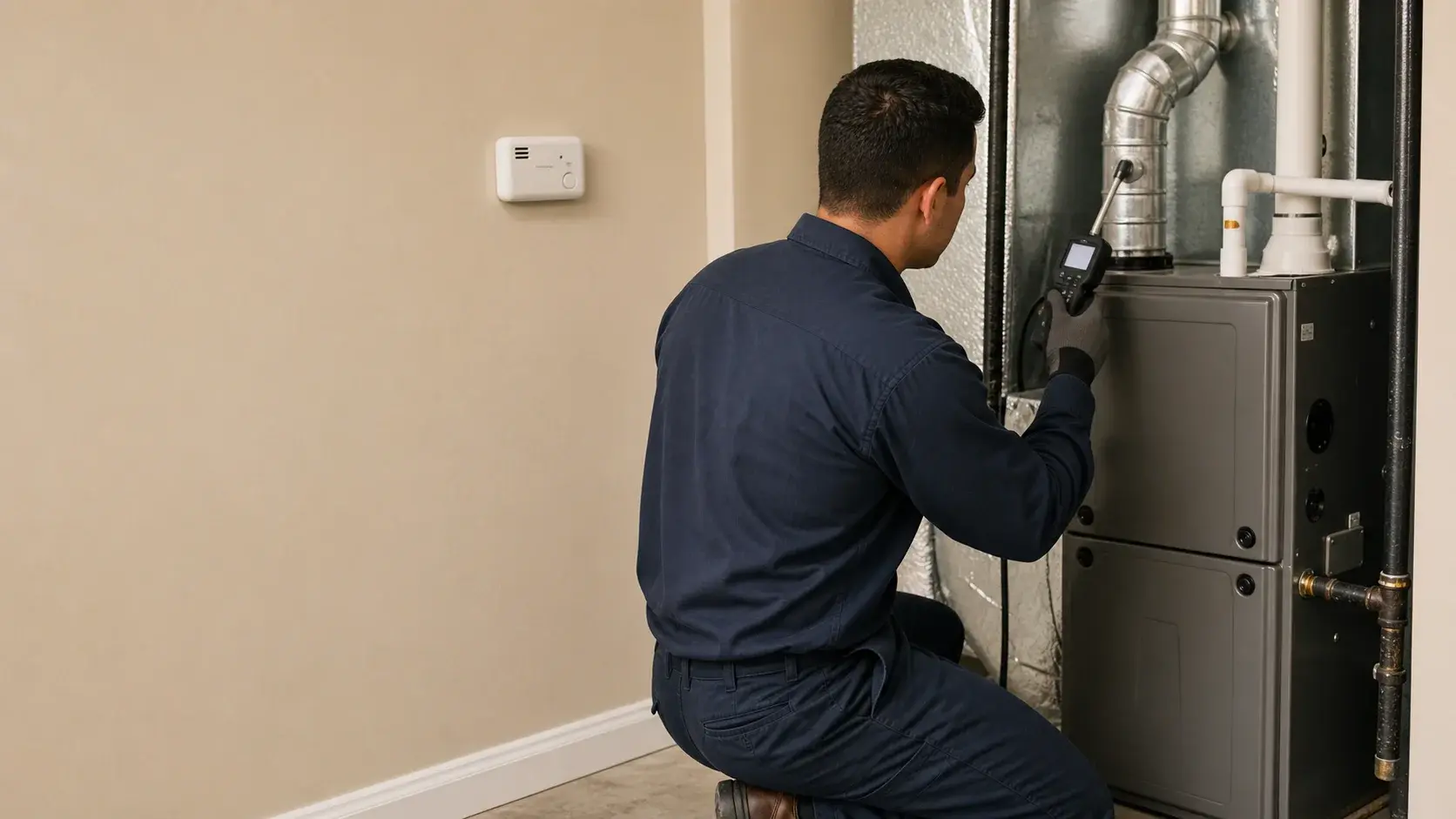
A California furnace safety inspection should follow the complete path from operating history to burner and flame, heat exchanger, blower and airflow, controls, condensate where applicable, flue, venting and carbon-monoxide risk. Homeowners can report symptoms and visible damage, but combustion, draft and safety-control testing belong to a qualified professional. A CO alarm, gas odor or delayed ignition means stop and seek urgent help.
- The inspection is a connected safety review, not just a filter change or a quick look at the thermostat.
- CPSC and EPA guidance emphasize professional inspection of fuel-burning heating systems and properly maintained venting.
- Ask for a written record that separates what was observed, what was tested and what action was recommended.
- California CSLB defines C-20 as the warm-air HVAC classification; verify the contractor and scope before gas-side work.
On this page
- What does a California furnace safety inspection actually check?
- 1. Review history and operating symptoms
- 2. Inspect the burner, flame and heat exchanger
- 3. Check venting, draft and condensate
- 4. Verify controls, airflow and carbon-monoxide safety
- What should be in the written service record?
- When to stop the furnace now
What does a California furnace safety inspection actually check?
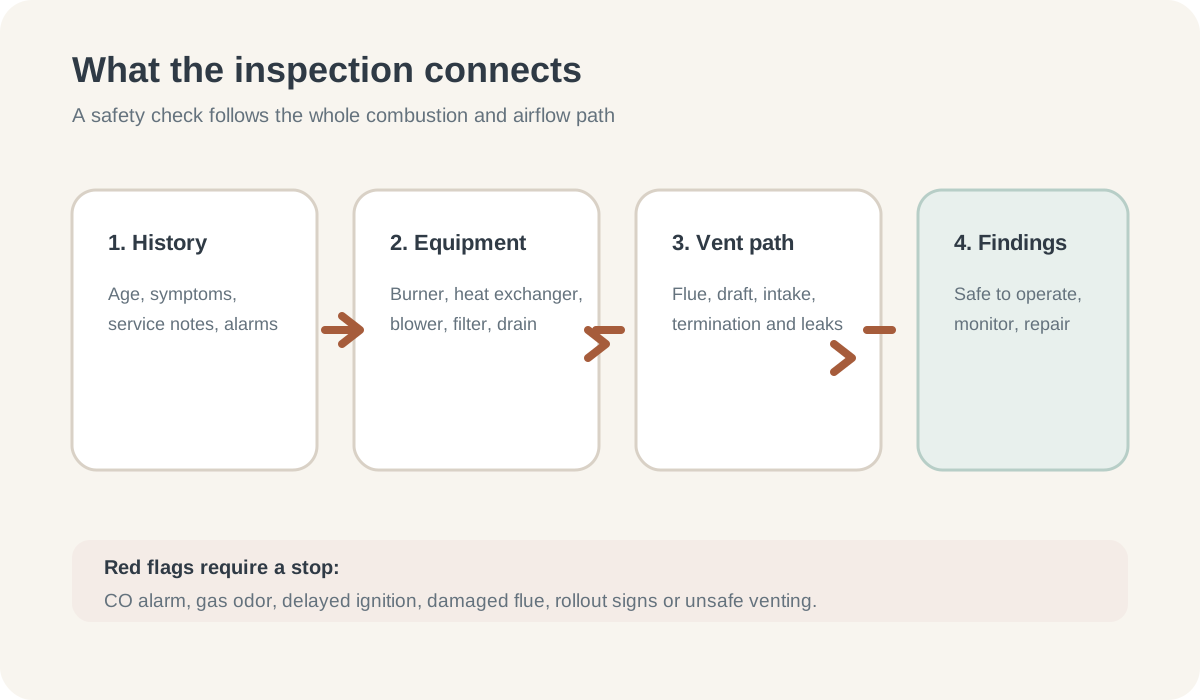
A useful safety inspection follows the whole system: operating history, burner and flame, heat exchanger, blower and airflow, controls, condensate on applicable furnaces, flue, venting and the surrounding installation. It should end with a written decision about normal operation, monitoring, repair or shutdown. If your furnace is failing to heat, request a documented furnace repair assessment rather than treating a safety inspection as a generic sales visit.
Gas odor, delayed ignition, soot, a CO alarm or symptoms that may indicate exposure are reasons to stop using the furnace and seek urgent help. Do not keep restarting a unit to finish a checklist.
1. Review history and operating symptoms
The appointment should start with questions: Has the furnace been idle since last season? Did it lock out, make a new sound, smell unusual or produce uneven heat? Has a CO alarm sounded? A filter change date, previous service record and photos of a diagnostic code can help the technician choose a safe test order.
2. Inspect the burner, flame and heat exchanger
The heating section is inspected for condition and a stable operating sequence. Depending on the furnace, that can include the burner area, ignition components, flame pattern, heat exchanger, blower compartment, wiring and visible safety controls. A homeowner should not remove panels or adjust gas pressure to imitate this work; the technician must follow equipment instructions and use appropriate instruments.
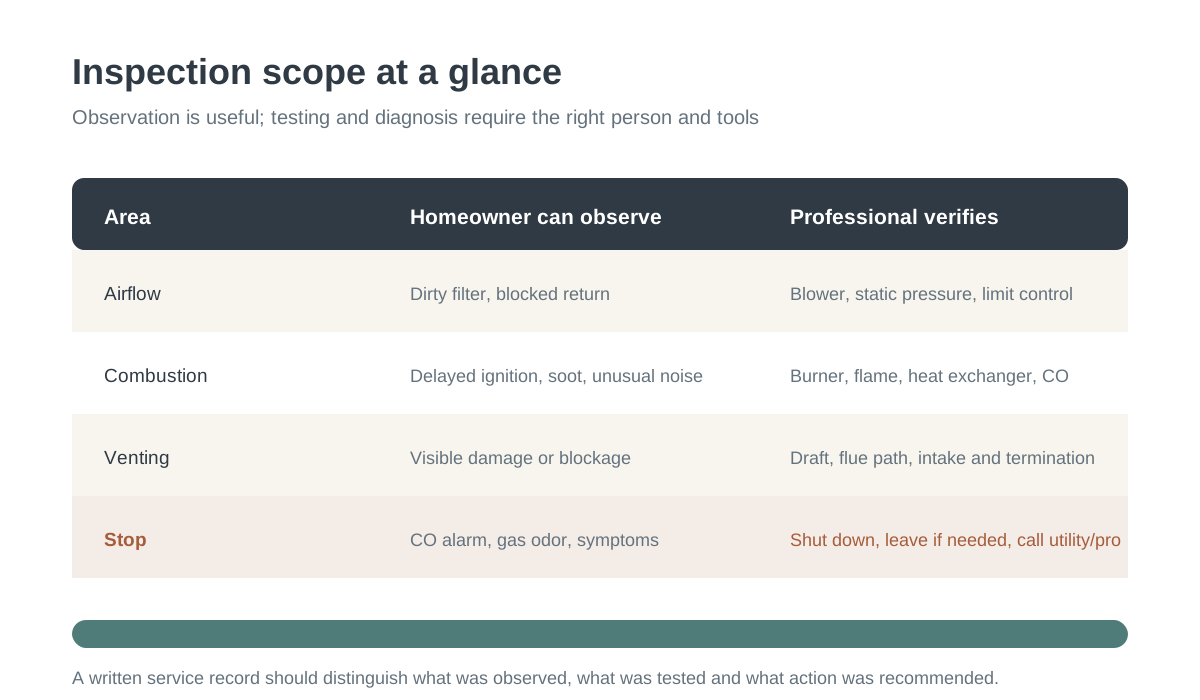
| Area | What a homeowner can report | What a professional verifies |
|---|---|---|
| Airflow | Dirty filter, blocked return, weak supply air | Blower performance, airflow and limit response |
| Combustion | Delayed ignition, soot, unusual sound or odor | Burner, flame, heat exchanger and combustion conditions |
| Venting | Visible damage, separation or blockage | Flue path, draft-related conditions and termination |
| Safety event | CO alarm or health symptoms | Safe shutdown recommendation and cause investigation |
3. Check venting, draft and condensate
The vent path is part of the heating appliance. A damaged, blocked, disconnected or poorly supported flue can change how combustion products leave the home. High-efficiency condensing furnaces also have an intake, exhaust and condensate drain or trap that can affect operation when blocked. The technician should explain which portions were inspected and which measurements were actually taken; a visual look does not prove safe draft.
4. Verify controls, airflow and carbon-monoxide safety
CPSC's 2026 heating guidance says fuel-burning heating systems can produce carbon monoxide when installed incorrectly, poorly maintained or affected by defective or blocked venting. EPA likewise identifies leaking furnaces, back-drafting and poorly adjusted combustion devices as possible CO sources and recommends annual professional inspection, cleaning and tune-up of central heating systems. A household alarm is not a substitute for correcting the furnace or vent condition.
What should be in the written service record?
- Equipment type and the operating symptom or reason for the visit.
- Areas inspected and measurements or tests actually performed.
- Filter size, airflow observations, control response and visible condition.
- Any venting, combustion, heat-exchanger, drain or electrical concern, with limitations clearly stated.
- A plain-language recommendation: operate, monitor, repair before use or shut down now.
When to stop the furnace now
Stop using the furnace for gas odor, delayed ignition or a boom, visible soot, a damaged flue, a CO alarm or symptoms such as headache, dizziness, nausea or confusion. Leave the area when appropriate and contact the gas utility or emergency services. Do not bypass a rollout, limit or door switch and do not repeatedly reset a lockout.
California CSLB describes the C-20 classification as covering warm-air heating, ventilation and air-conditioning systems, including ducts, flues, controls and filters. Verify an active contractor license and ask for a written scope before gas-side work. For related context, see our furnace not igniting guide and fall furnace checklist.
Need a local inspection or repair conversation? Request a furnace repair assessment across Ontario, Pomona, Diamond Bar, Walnut, Claremont, Rowland Heights and the Inland Empire.
Frequently asked questions
A professional may review operating history, inspect the burner and flame, heat exchanger, blower and airflow, controls, electrical connections, condensate drain, flue and vent termination, and perform the measurements appropriate to the equipment.
It should address combustion and venting conditions that can create carbon-monoxide risk, with the appropriate instruments and procedure. Ask the technician to document what was measured and where. A household CO alarm remains a separate layer of protection.
You can report noises, odors, visible damage, a dirty filter, blocked vents or unusual cycling. Do not remove combustion panels, adjust gas pressure, bypass a safety switch or interpret a flue or combustion measurement without the required training and instruments.
Turn it off and seek help for a gas odor, delayed ignition or boom, soot, a damaged or disconnected vent, a carbon-monoxide alarm, repeated rollout or limit trips, or symptoms such as headache, dizziness, nausea or confusion.
Local next step
Turn this guide into a site-specific answer.
Guides explain the decision. Equipment condition, access, and safe next steps still need to match the home or business. Review the relevant service scope or request an assessment for Ontario, the Inland Empire, or East Los Angeles County. Availability depends on the current schedule.