Furnace Short Cycling Before the Set Temperature: What to Observe Safely
Repeated brief furnace runs before the thermostat setting is reached need a pattern record, not a guessed part failure.

Owner & Lead HVAC Technician, Alex Air & Heating · EPA 608 Universal Certified · Ontario, CA
TL;DR
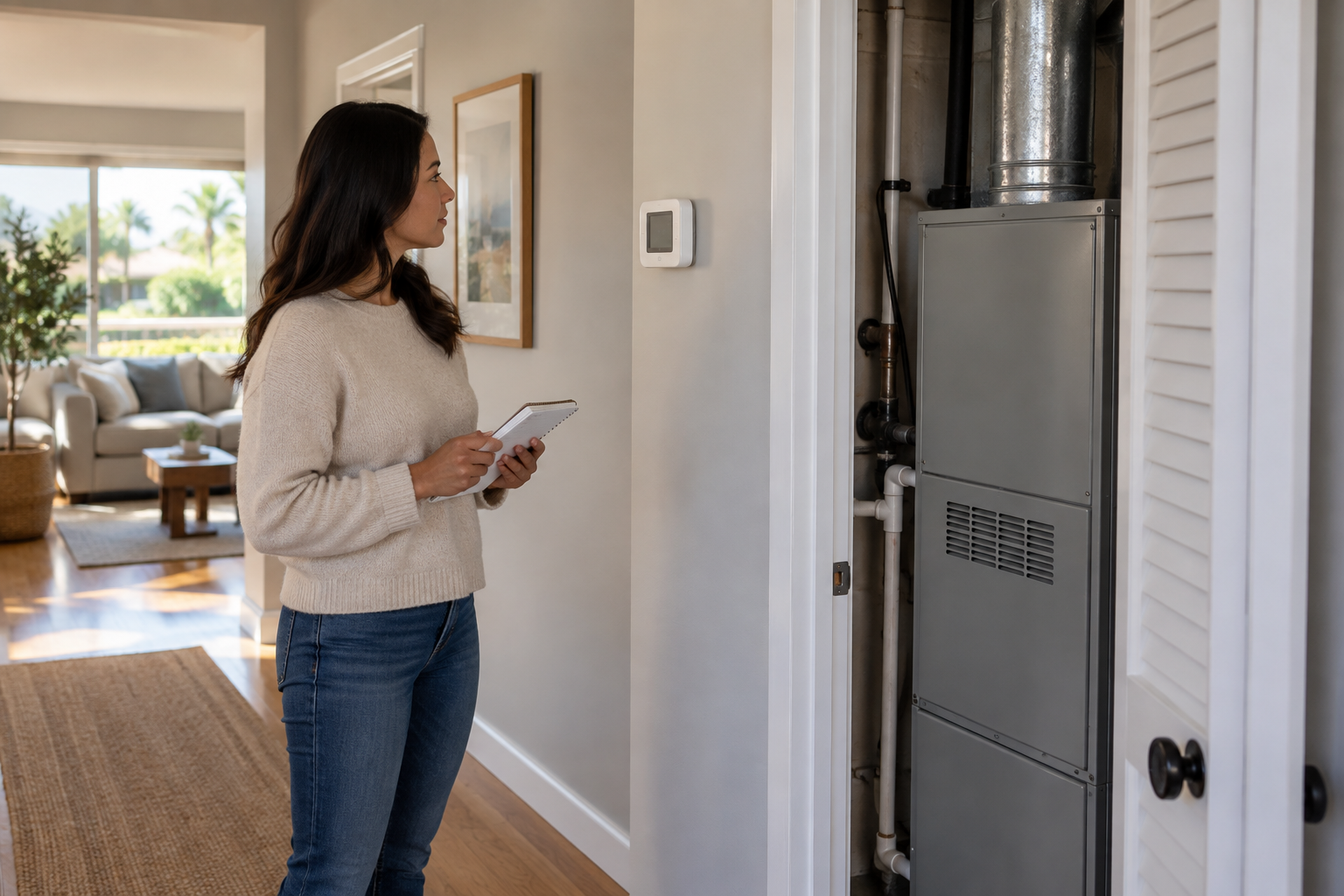
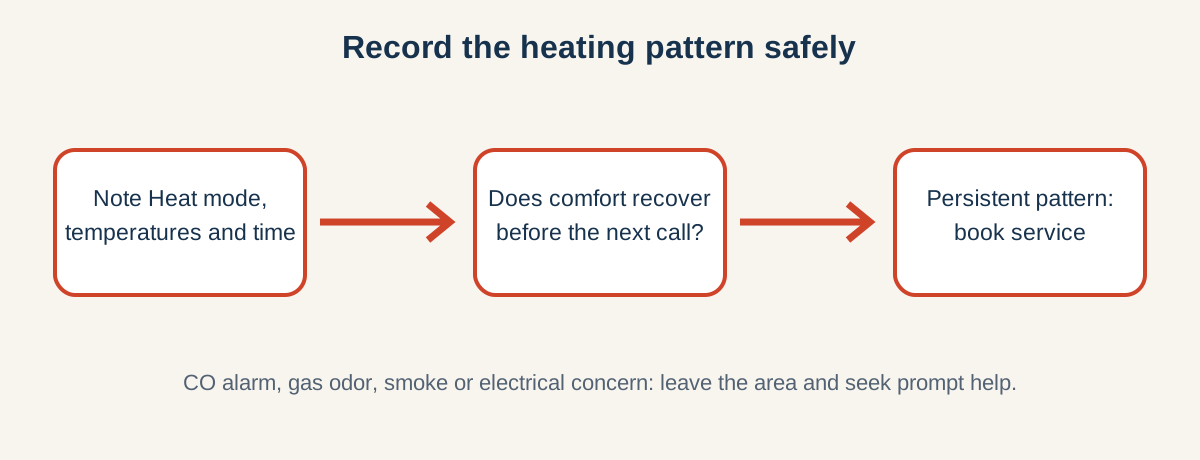
A furnace that repeatedly starts and stops before reaching the thermostat setting deserves a professional check. Record the selected mode, room and set temperatures, start/stop timing, whether warm air arrives, and whether comfort recovers. That pattern can have several causes, so keep the cabinet closed and do not reset or bypass safety controls. Seek prompt help for a CO alarm, gas odor, smoke, burning smell or electrical concern.
- A repeated brief heating call is a pattern to document, not proof of one failed part.
- Thermostat mode, temperatures, timing and comfort recovery are useful service clues.
- CO alarms, gas odor, smoke, burning smell and electrical concerns are stop signals.
On this page
Quick answer: repeated short runs before the setting is reached need a clear record
A furnace that starts, runs briefly, stops, then repeats before the thermostat reaches its setting is worth a service conversation. Mild weather, thermostat behavior, airflow, controls and combustion-related conditions can look similar from the living space. Keep the cabinet closed and do not try to relight, reset or bypass any safety control.
What you can safely notice
Write down the start and stop time of a Heat call, the room and set temperatures, whether warm air arrives, and whether the blower continues. A short run on an unusually mild day is not the same as repeated brief runs while the room stays below the setting. Do not use a guessed “normal” minute count as a diagnosis.
| What you notice | What to record | Safe next action |
|---|---|---|
| Repeated start/stop | Mode, temperatures and timing | Arrange service if persistent |
| Comfort does not recover | Rooms and blower behavior | Share the pattern |
| Safety concern | Do not inspect the appliance | Seek prompt help |

Why the cycle pattern matters more than a cause list
Manufacturers list several possible categories behind short cycling. That is why a brief run cannot prove a limit switch, flame sensor, heat exchanger or another part has failed. The flame-sensor guide owns the narrower apparent ignition-and-shutdown symptom; this guide covers the full heating call ending repeatedly before the room reaches target.
When to stop observing
Do not wait through repeated cycles if you notice a CO alarm, gas odor, smoke, burning smell or an electrical concern. Leave the area and follow applicable emergency guidance. Carbon monoxide cannot be identified by smell. For a persistent non-emergency pattern, arrange service and share the record.
Alex Air & Heating can discuss a furnace repair visit for Ontario, Pomona, the Inland Empire and nearby eastern Los Angeles County service areas. See Furnace Flame Sensor Symptoms and Furnace Safety Inspection in California.
Frequently asked questions
Write down the start and stop time of a Heat call, the room and set temperatures, whether warm air arrives, and whether the blower continues. A short run on an unusually mild day is not the same as repeated brief runs while the room stays below the setting. Do not use a guessed “normal” minute count as a diagnosis.
Manufacturers list several possible categories behind short cycling. That is why a brief run cannot prove a limit switch, flame sensor, heat exchanger or another part has failed. The flame-sensor guide owns the narrower apparent ignition-and-shutdown symptom; this guide covers the full heating call ending repeatedly before the room reaches target.
Do not wait through repeated cycles if you notice a CO alarm, gas odor, smoke, burning smell or an electrical concern. Leave the area and follow applicable emergency guidance. Carbon monoxide cannot be identified by smell. For a persistent non-emergency pattern, arrange service and share the record.
Alex Air & Heating can discuss a [furnace repair visit](/services/furnace-repair) for Ontario, Pomona, the Inland Empire and nearby eastern Los Angeles County service areas. See [Furnace Flame Sensor Symptoms](/blog/furnace-flame-sensor-symptoms) and [Furnace Safety Inspection in California](/blog/furnace-safety-inspection-california).
Local next step
Turn this guide into a site-specific answer.
Guides explain the decision. Equipment condition, access, and safe next steps still need to match the home or business. Review the relevant service scope or request an assessment for Ontario, the Inland Empire, or East Los Angeles County. Availability depends on the current schedule.