Heat Pump Noises: What Can Be Normal and What Needs Service?
A short whoosh during a heating-mode change can be ordinary; a new scraping or persistent rattle deserves attention. Use timing, location and your unit’s usual sound as clues.

Owner & Lead HVAC Technician, Alex Air & Heating · EPA 608 Universal Certified · Ontario, CA
TL;DR
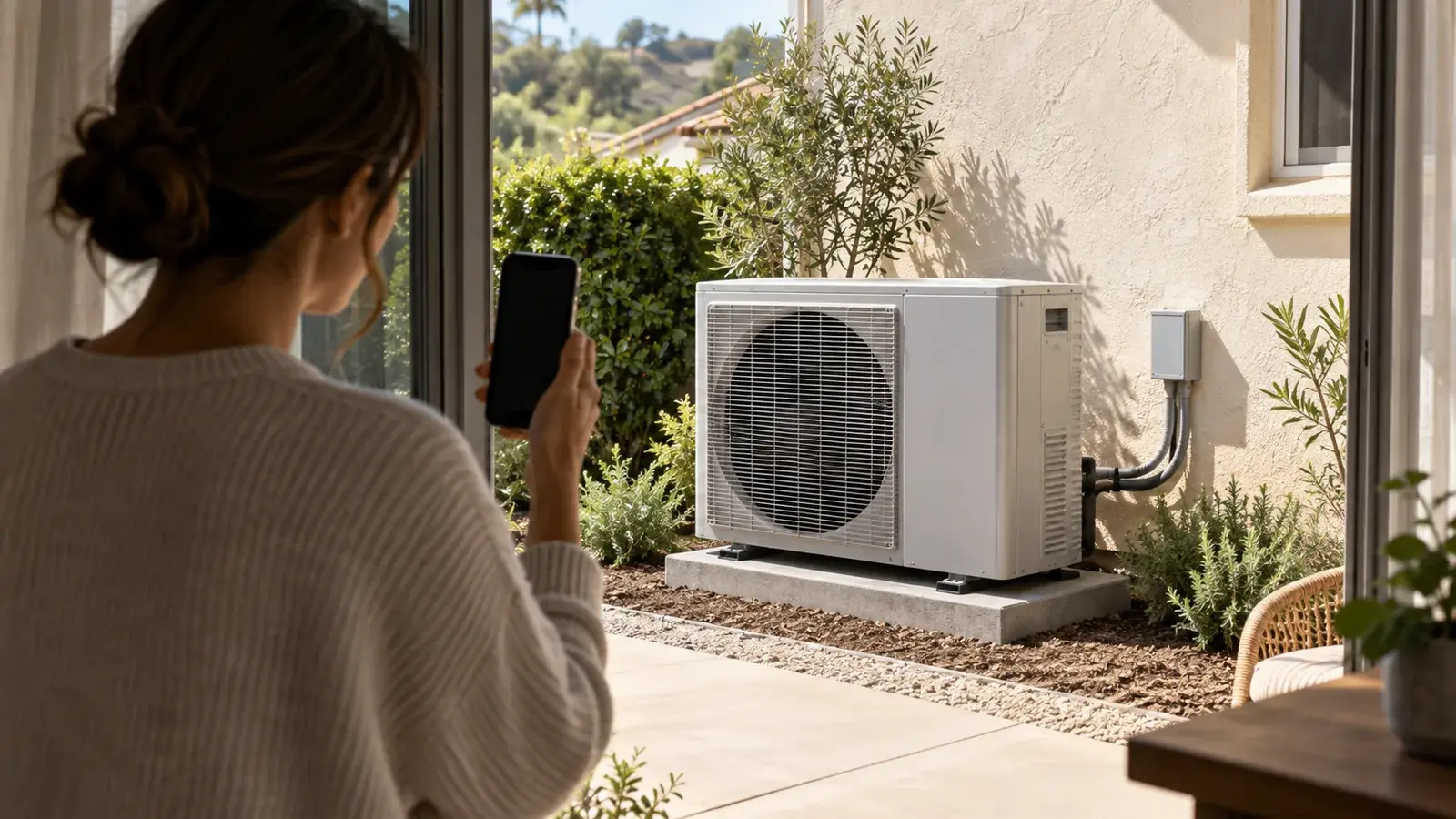
A heat pump may hum steadily and make a brief click or whoosh when it starts, stops, or changes mode. In cool-weather heating, defrost can briefly change outdoor sounds and pause the fan. What matters is whether the noise fits that moment and returns to the unit’s familiar sound. Turn the system off for sudden scraping, banging, burning odor, or severe vibration; arrange service for persistent or worsening changes.
- A short sound tied to a mode change is different from a sound that continues through the whole run.
- Heating-mode defrost may change outdoor sound; it does not explain an odd sound during cooling.
- Record mode, timing, location and change from your own unit’s baseline without opening any cabinet.
On this page
Quick answer: listen to the pattern, not a sound-word list
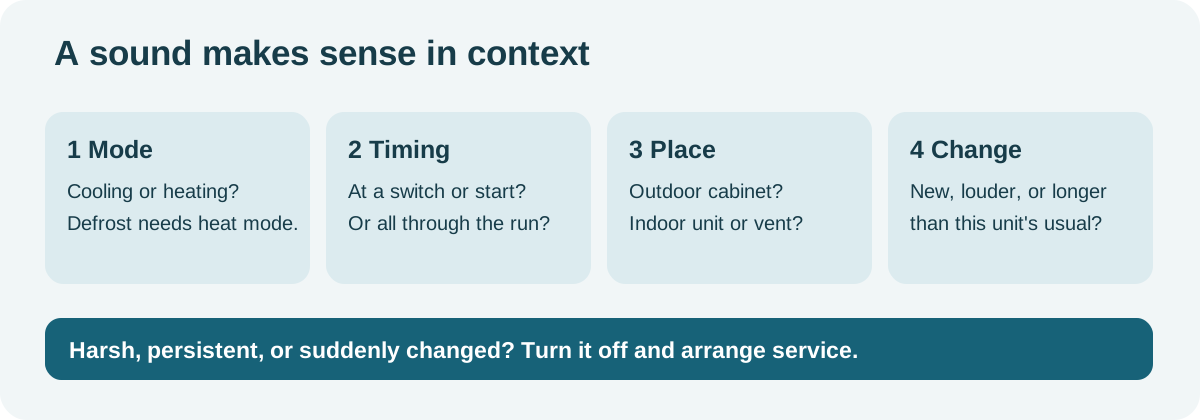
A quiet, even outdoor hum and air moving indoors are common when a heat pump runs. A brief click or whoosh at startup, shutdown, or a change between heating and cooling can also fit normal operation. The same words—“hum,” “rattle,” or “hiss”—mean much less without timing. A rattle that lasts the entire run, grows louder each day, or appears suddenly on a system that was quiet yesterday deserves a service call. If you hear hard scraping or banging, smell burning, or see violent shaking, switch the thermostat off and do not keep testing it.
Why your heat pump may sound different in heating mode
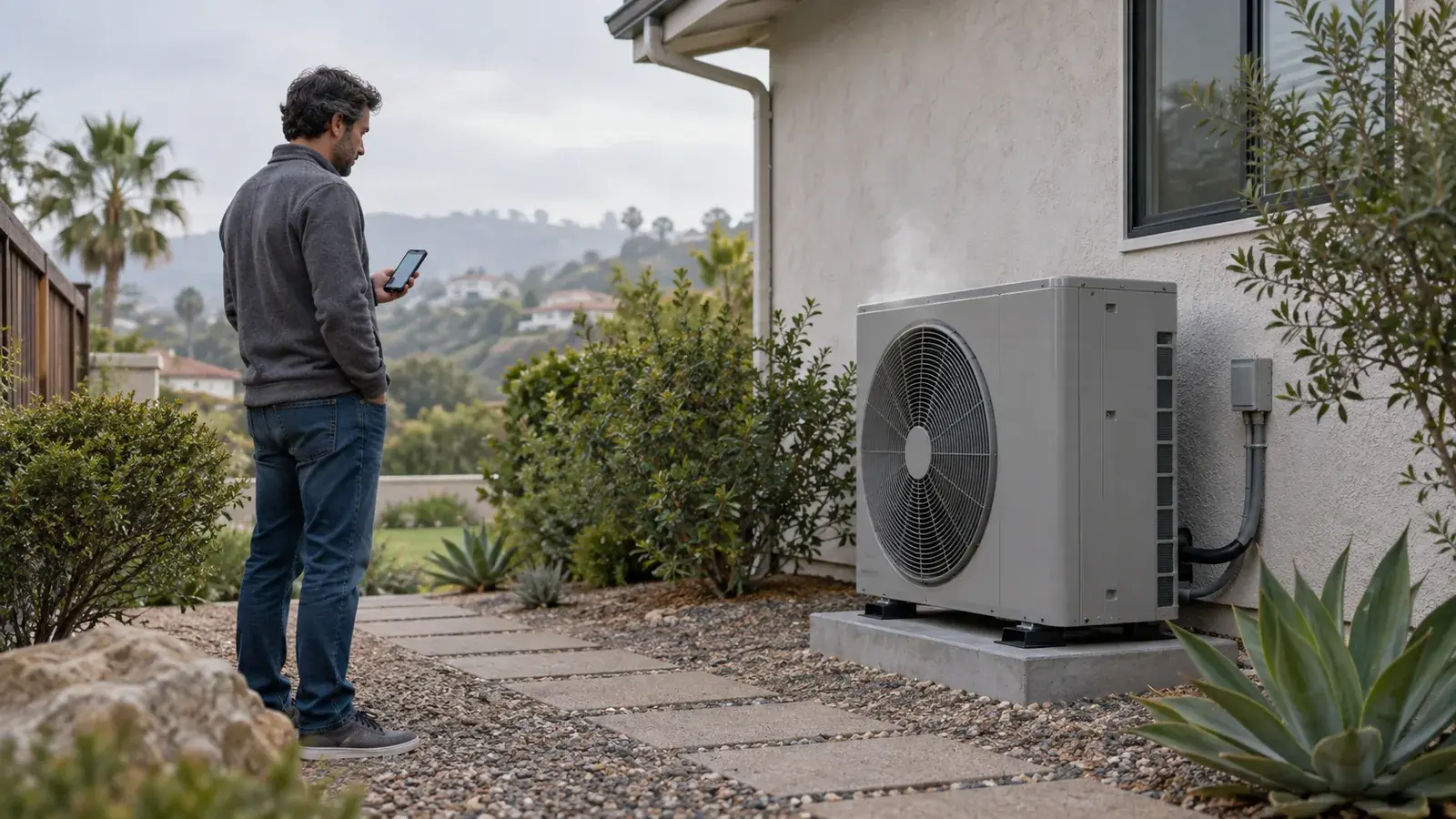
An air-source heat pump moves heat in opposite directions for cooling and heating. In cool, damp weather, its outdoor coil may frost while heating; a defrost cycle can briefly change the sound outside, pause the outdoor fan, and produce a whoosh or vapor as operation shifts. That can be a normal heating event if the unit resumes its usual pattern. It is not a catch-all explanation for a new summer noise in Cool mode. Repeated defrost-like changes that do not settle, or frost that keeps building, warrant a professional check.
Match the sound to its moment and location
| What you hear or see | Context that may explain it | What to do |
|---|---|---|
| Low, steady hum or airflow while running | Outdoor unit and indoor air movement in a familiar cycle | Compare with your unit’s usual volume; note any new change |
| Brief click or whoosh at a switch | Startup, shutdown, mode change or heating defrost | See whether it settles and normal comfort returns |
| Outdoor fan pauses, sound shifts, light vapor | Possible heating-mode defrost in cool, damp weather | Observe from indoors or a safe distance; note if normal heating resumes |
| Rattle, buzz or vibration through the run | Not explained merely by a mode switch; source could be several components or mounting points | Arrange service; do not remove panels or reach through the grille |
| Sudden scraping, banging or strong shaking | Possible moving-part or other mechanical problem; sound is not a part diagnosis | Turn thermostat off and request service without restarting to reproduce it |
| New sustained hiss with weaker comfort | Needs a professional assessment; sound alone does not prove refrigerant loss | Turn off and request service; do not touch tubing or fittings |
The sound’s place helps too. A whistle at one supply vent is not the same as a metallic scrape at the outdoor cabinet; a thump felt through a wall may reflect vibration transmission rather than a compressor diagnosis. Note whether it comes from the outdoor unit, the closed indoor unit, one register, or the wall near the equipment. Never put your hand near a fan or remove an access cover to pinpoint it.
The most useful comparison is yesterday’s heat pump
Two sound recordings on different days can be more useful than an online clip from a different model. Did the sound start after a weather shift, a mode change, or a long cooling call? Does it stop after a short transition, or continue for the full cycle? Is heating or cooling still reaching the normal thermostat setting? A system may vary its fan or compressor speed, so a different pitch by itself is not proof of failure. A distinct new harsh sound, increasing duration, or reduced comfort changes the decision.
From a safe location, take a short phone recording and note the thermostat mode, approximate outdoor conditions, start and end of the sound, and which side of the house you heard it. A photo of frost from a normal walkway can help if heating-mode frost fails to clear. Keep the cabinet closed; do not move debris through the grille, touch refrigerant tubing, work on electrical parts, or repeatedly turn the system on just to catch the noise.
When to watch, book service, or turn it off
- Watch for a return to normal if a brief start/stop or heating-defrost sound is familiar and comfort resumes. Record it if this is your first season with the unit.
- Book a heat-pump check if a rattle, buzz, hiss or vibration is new, persists beyond a transition, gets louder, or comes with weaker heating/cooling or frost that does not clear.
- Turn the thermostat off and seek prompt service for hard scraping, banging, severe vibration, smoke or burning odor. If an electrical hazard is apparent, stay clear and seek appropriate emergency help.
A description is enough to start a repair visit; you do not need to name the bad part. Tell the technician when the sound occurs and where you heard it. The heat-pump repair service is the next step for persistent or abruptly changed sounds in Ontario, Pomona, the Inland Empire and nearby eastern Los Angeles County service areas. To understand system selection rather than a noise symptom, read heat pump versus AC for cooling. For the heating-side equipment choice, see heat pump versus furnace.
Frequently asked questions
It can be. A reversing heat pump can make a brief whoosh as operation changes, especially around a heating-mode defrost. If it is new, unusually loud, repeated without settling, or paired with poor comfort, ask for service.
Outdoor-coil defrost is a heating-mode event in cold, damp conditions. Do not label a summertime cooling noise “defrost”; note the actual thermostat mode and arrange a check if the sound is unfamiliar or persistent.
During some heating-mode defrost cycles, the outdoor fan can pause while other parts continue. If the system does not return to its usual heating pattern, frost builds without clearing, or the noise is harsh, request service.
No. A brief transition sound and a sustained hiss are different observations, and sound alone cannot identify a leak. Do not touch lines or open the unit; stop operation and call for evaluation if a new hiss persists or cooling or heating has changed.
A short recording taken from a safe distance, whether the thermostat said Heat or Cool, the sound location, how long it lasted, what happened before and after, and whether comfort or airflow changed. Never remove a panel to get a better recording.
Local next step
Turn this guide into a site-specific answer.
Guides explain the decision. Equipment condition, access, and safe next steps still need to match the home or business. Review the relevant service scope or request an assessment for Ontario, the Inland Empire, or East Los Angeles County. Availability depends on the current schedule.