Heat Pump vs AC for Cooling in California: What Actually Changes?
In cooling mode, both move indoor heat outside. The meaningful choice is whether the outdoor system also heats—and what that means for your indoor equipment, ducts and controls.

Owner & Lead HVAC Technician, Alex Air & Heating · EPA 608 Universal Certified · Ontario, CA
TL;DR
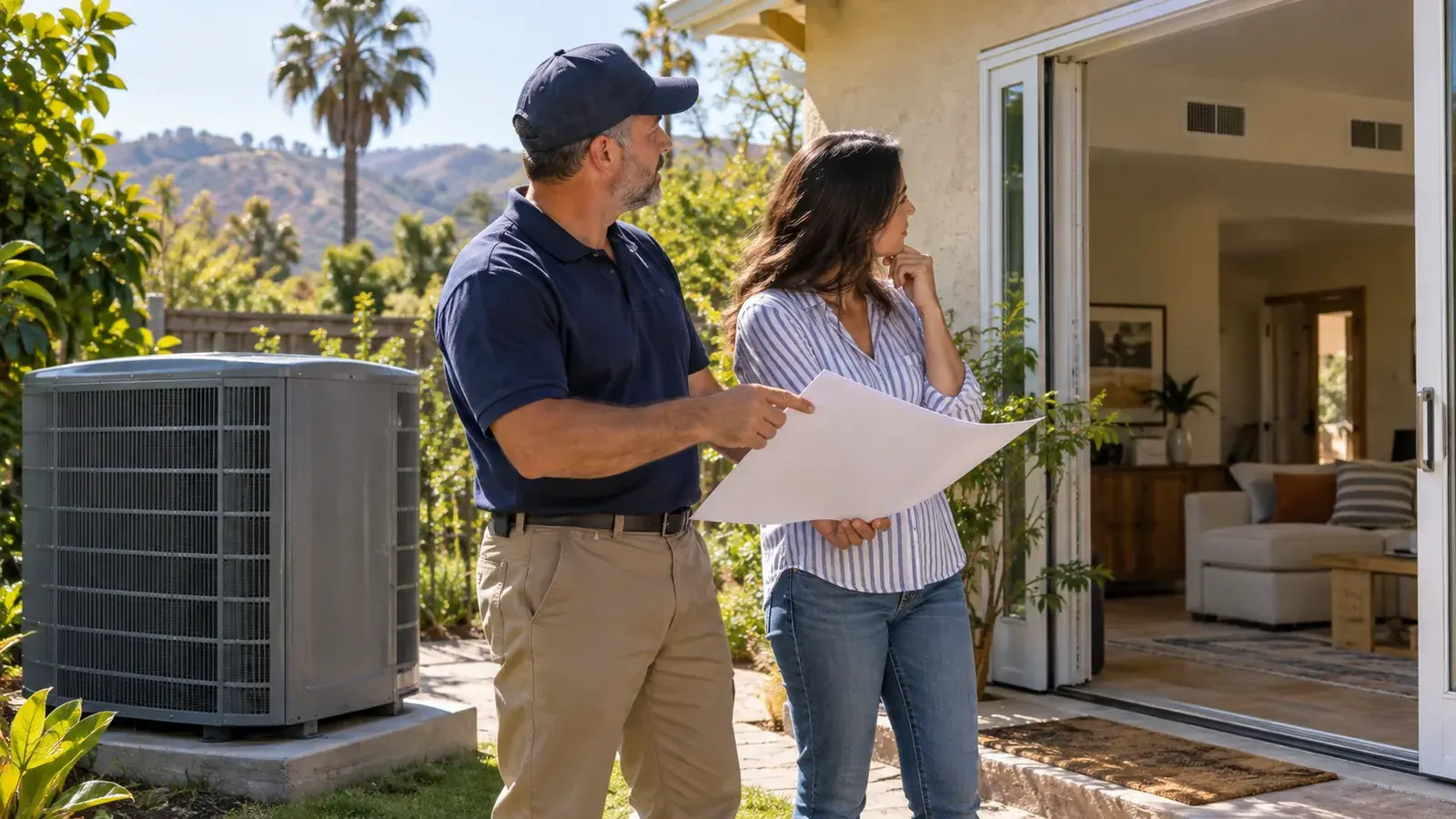
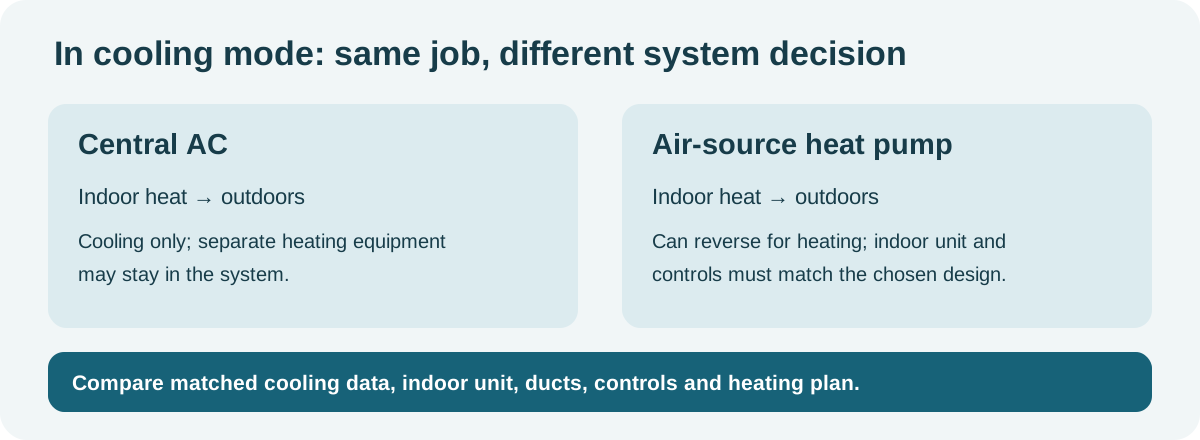
For cooling, an air-source heat pump and a conventional central AC do the same basic job: they move heat from inside your home to outdoors. The heat pump can also reverse to heat. That extra function does not automatically make its cooling stronger or cheaper. Compare complete matched-system cooling data, the indoor equipment and ducts you have, how you want to heat, and the controls each proposed configuration needs.
- In Cool mode, both systems remove heat from the house; model, sizing, installation and ducts determine results.
- A heat pump adds a heating option, but keeping a furnace, replacing it, or using ductless equipment changes the project scope.
- Compare matched equipment, airflow, controls and your heating plan—not just the outdoor cabinet.
On this page
- Quick answer: cooling stays familiar; the heating plan changes
- What is actually the same in Cool mode?
- The biggest practical difference: what happens to your heater
- How to compare summer comfort without a savings slogan
- Questions worth bringing to a California installation visit
- Which direction makes sense for your home?
Quick answer: cooling stays familiar; the heating plan changes
In summer, both a central AC and an air-source heat pump collect heat indoors and reject it outside. The supply air still comes through a compatible indoor coil, blower and ducts if you choose a ducted system. A heat pump’s distinctive ability is to reverse that process when the home needs heat. So the real California homeowner question is not “which name cools harder?” It is: what will provide heat afterward, which indoor components need to change, and will the complete proposed system serve this house well in both seasons?
What is actually the same in Cool mode?
Both options use a refrigerant circuit, an outdoor unit and an indoor heat-exchange surface to move heat out of the home. Neither name tells you the delivered cooling capacity in a hot Inland Empire afternoon. Ask for the cooling load calculation, the full outdoor-and-indoor model combination, rated cooling capacity and SEER2/EER2 information, and how airflow through the existing ducts will be checked. A poorly sized or poorly matched system can disappoint regardless of whether the outdoor box is called a heat pump or an AC.
| Decision point | Central AC | Air-source heat pump |
|---|---|---|
| Summer cooling | Moves indoor heat outdoors | Moves indoor heat outdoors |
| Space heating | Needs another heating source | Can reverse and provide heat |
| Indoor equipment | Typically coil and blower, often paired with a furnace | Compatible coil/furnace for dual fuel, or a heat-pump air handler; ductless is another design |
| Existing ducts | May use them if fit and airflow are adequate | Ducted design may use them if fit and airflow are adequate; ductless design differs |
| Controls | Cooling plus separate heat control | Heat/cool changeover and any backup or dual-fuel control need a compatible plan |
The biggest practical difference: what happens to your heater
If your AC is old but your furnace is relatively new, a compatible heat pump paired with the furnace may be an option. In that dual-fuel design, the heat pump cools in summer and may heat in milder weather; the furnace serves the agreed heating role when controls call for it. If the furnace is also being replaced, a ducted heat pump with an appropriate air handler is another route. If the home has no useful ducts or you are conditioning only certain rooms, a ductless design changes the indoor layout altogether. None of these is automatically right for every home.
Ask the installer to show the actual indoor unit, coil and thermostat/control arrangement on the proposal. A heat-pump outdoor unit is not interchangeable with every older indoor coil or furnace. Confirm whether the current furnace stays, whether the indoor blower and ducts can deliver the proposed airflow, and what will happen when the thermostat switches from Cool to Heat. That is far more useful than comparing outdoor-unit photos.
How to compare summer comfort without a savings slogan
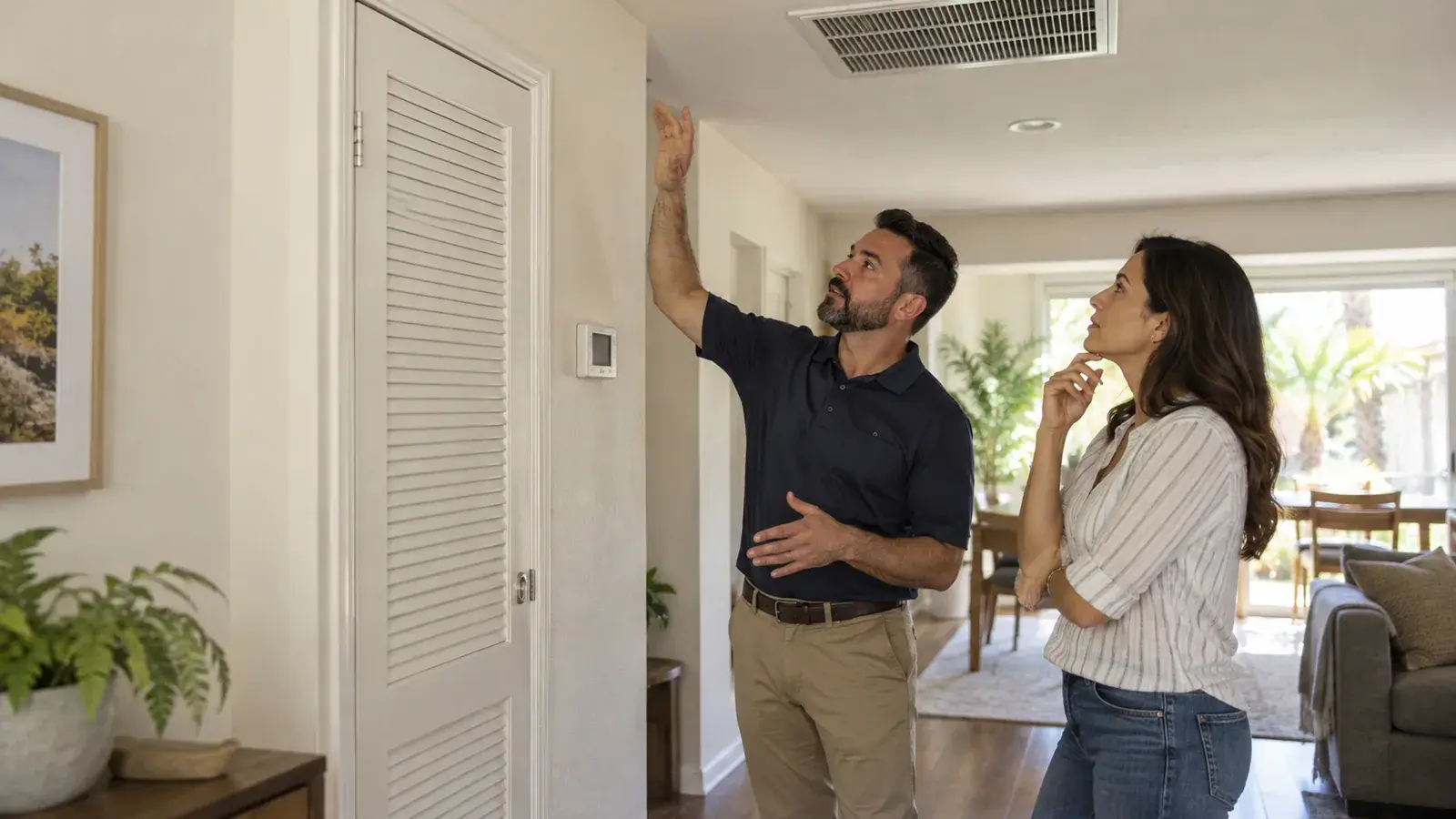
Compare the same house and the same cooling duty. The matched equipment’s rated cooling performance matters, but so do duct leakage, return-air path, supply airflow, insulation, sun exposure and thermostat use. Variable-capacity designs may run differently from single-stage designs; that characteristic belongs to specific equipment, not to every heat pump. Ask how the proposed system handles the hottest rooms and how the installer will verify delivered airflow and startup operation. Do not accept “heat pump” or “AC” as a substitute for this comparison.
Questions worth bringing to a California installation visit
- Which indoor and outdoor model numbers form the complete matched system, and what are their published cooling capacity and SEER2/EER2 ratings?
- What cooling and heating loads were used for this home, and how do the proposed ducts, returns and blower support the design?
- Will the furnace remain, serve as backup, or be replaced by an air handler—and which control decides the heating mode?
- If you propose ductless equipment, which rooms get indoor units and what happens to the existing central system?
- What electrical, placement, access and permit work is in the written scope for this exact property? Who confirms the applicable local and California requirements?
The California Energy Commission’s current HVAC guidance is organized by building and alteration scope; it does not turn every AC replacement into one universal heat-pump mandate. For a specific proposal, ask the contractor to identify the actual applicable requirements rather than accepting a blanket claim. That question is about the installation plan, not about which device makes cooler air.
Which direction makes sense for your home?
If you mainly need a cooling replacement and want to keep a sound existing heating arrangement, compare a matched AC proposal with any compatible heat-pump-and-furnace proposal. If the heating equipment also needs a decision, compare a full heat-pump design with the separate AC-and-heating design on the same cooling load and indoor scope. If ducts cannot serve the rooms you care about, ask whether a ductless option solves that specific problem. The right answer is the configuration that fits your existing equipment, home and heating preference—not a promise that one label always cools better or costs less to run.
Alex Air & Heating can discuss a heat-pump installation assessment for Ontario, Pomona, the Inland Empire and nearby eastern Los Angeles County service areas. Bring your current equipment model information and the rooms that do not cool evenly. For the heating-side choice, read heat pump versus furnace; if an existing heat pump is making an unfamiliar sound, use the heat-pump noise guide.
Frequently asked questions
Not simply because it is a heat pump. Both remove indoor heat in cooling mode. Compare the proposed matched systems’ cooling capacity and efficiency, the home’s cooling load, airflow and installation quality.
Sometimes. A compatible heat pump may work with a furnace in a dual-fuel arrangement, or a ducted heat-pump system may use suitable existing ducts with an appropriate indoor unit. The furnace, coil, controls and duct condition must match the proposed design; do not assume a drop-in outdoor-unit swap.
No. Some designs retain a compatible furnace for heating; others use a heat-pump air handler and remove or retire the furnace. Ask which heating source runs in each mode and what indoor components are included.
No. Compare the actual matched-system SEER2/EER2 ratings and cooling capacity, plus your use pattern and electricity rate. A well-selected heat pump can be efficient, but the label alone does not establish a bill result.
No universal rule is stated here. California Energy Code provisions depend on building type, project scope and permit timing, and local permit processes vary. Ask the installer to identify the provisions that apply to your specific job and who handles the documentation.
Local next step
Turn this guide into a site-specific answer.
Guides explain the decision. Equipment condition, access, and safe next steps still need to match the home or business. Review the relevant service scope or request an assessment for Ontario, the Inland Empire, or East Los Angeles County. Availability depends on the current schedule.