How Long Do Air Ducts Last in Southern California?
Air duct lifespan is not a fixed number. Learn how material, attic heat, installation quality, damage, airflow, and inspection results determine whether Southern California ductwork can stay in service.

Owner & Lead HVAC Technician, Alex Air & Heating · EPA 608 Universal Certified · Ontario, CA
TL;DR
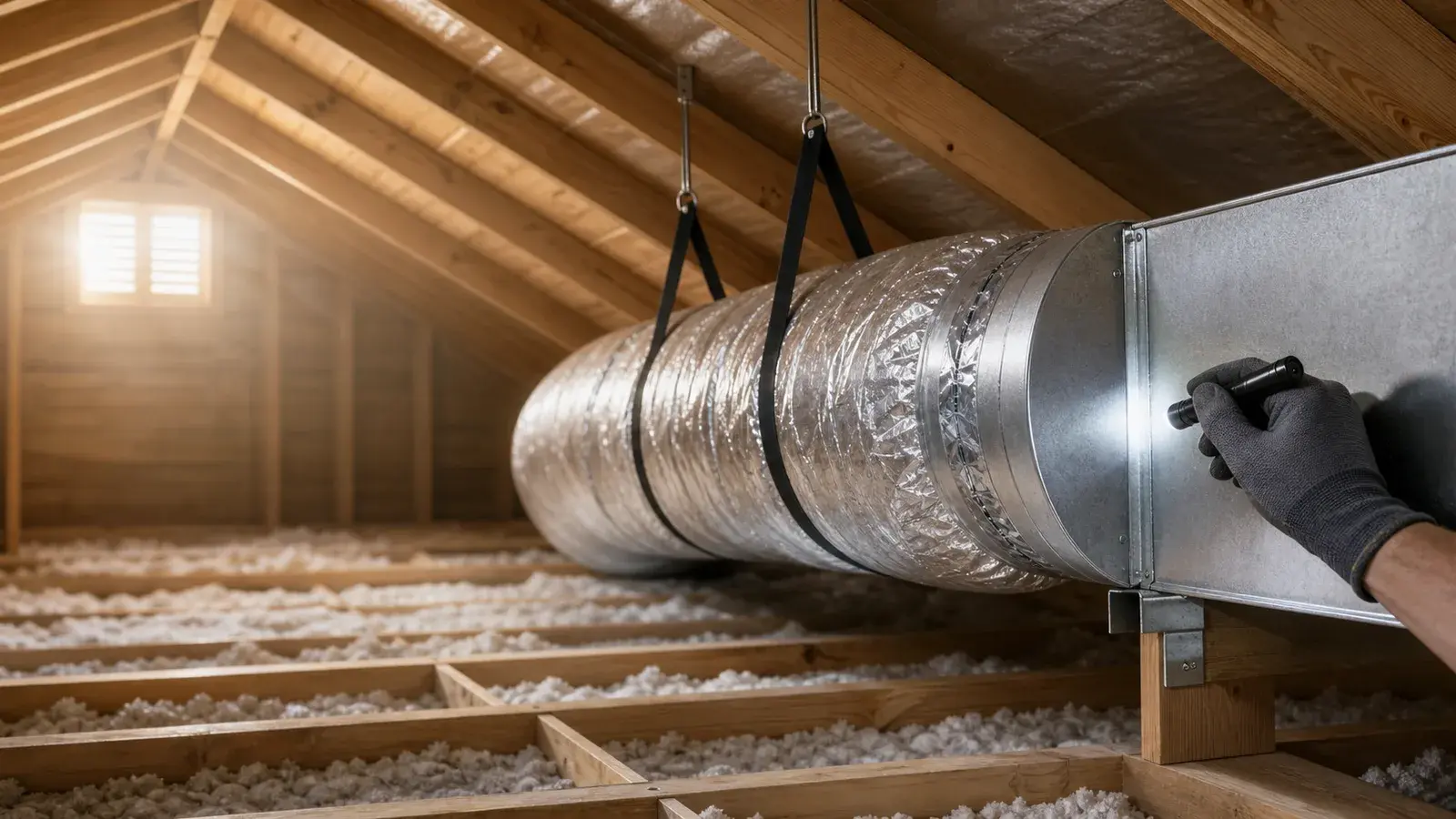
Air ducts do not have one universal lifespan. Properly installed ductwork can remain serviceable for decades, while flex duct may need earlier attention if it is crushed, poorly supported, torn, water-damaged, or disconnected in a hot attic. For a Southern California home, replace ducts based on documented condition, airflow, leakage, and design—not simply because a contractor cites an age range.
- A published lifespan range is a planning clue, not proof that a particular duct system has failed.
- Support, routing, liner integrity, insulation, moisture exposure, and connections are stronger indicators than age alone.
- Persistent comfort problems can come from duct design or airflow constraints even when material is not visibly old.
- When equipment work triggers permit requirements, document duct condition and any required testing before deciding on replacement.
On this page
- Quick answer: condition—not a countdown clock—determines ductwork lifespan
- Why online duct lifespan ranges are incomplete
- What should you inspect by duct material?
- How Southern California attic conditions affect ductwork
- When age becomes a useful replacement clue
- Why new HVAC equipment should trigger a duct review
- The right next step for an aging duct system
Quick answer: condition—not a countdown clock—determines ductwork lifespan
If you are asking how long air ducts last because your home has weak airflow, hot rooms, dust, or a planned AC replacement, start with a condition assessment. Duct materials do age, and hot attic exposure can be demanding, but no responsible inspection turns one generic lifespan number into a replacement order. The useful question is whether the ducts are structurally intact, properly supported and insulated, adequately sized, and still delivering air without excessive leakage or restriction.
Why online duct lifespan ranges are incomplete
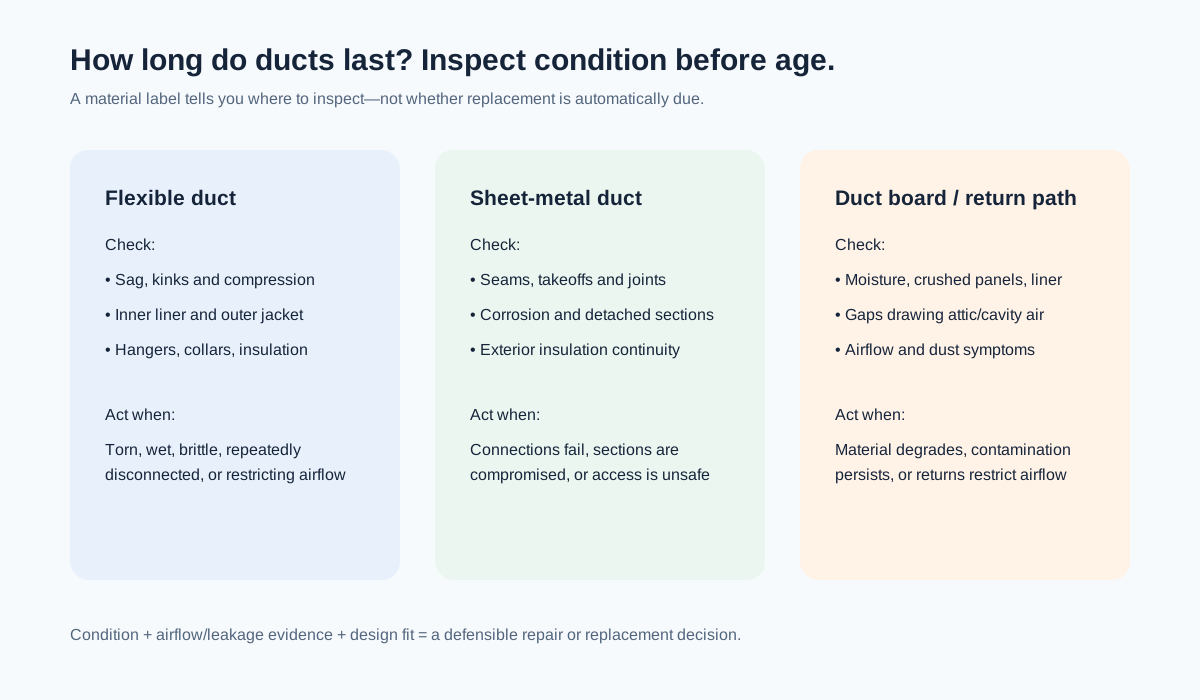
Many search results offer an easy range for “ductwork lifespan” or “flex duct life expectancy.” Those ranges can help a homeowner decide when to inspect, but they cannot tell you whether a specific run has failed. Installation quality changes everything: excess flex length, tight bends, sagging, compression, failed supports, damaged collars, and moisture exposure can shorten useful service life. Conversely, the Air Duct Council says properly installed flexible duct can last the life of the dwelling. Use that statement as a reason to inspect, not as a guarantee.
What should you inspect by duct material?
| Duct type | Inspect for | What may justify action |
|---|---|---|
| Flexible insulated duct | Kinks, sag, compression, torn liner, loose collar, damaged outer jacket, wet insulation | Repair one connection or replace a failed run; review widespread routing or support defects |
| Sheet-metal duct | Open seams, corrosion, detached sections, missing insulation, unsealed takeoffs | Reconnect and seal sound sections; replace compromised or inaccessible sections |
| Duct board / fiberboard duct | Moisture damage, crushed panels, liner damage, loose joints | Address the source of moisture; replace materially degraded sections after proper evaluation |
| Return duct paths | Gaps that can draw attic or wall-cavity air, restrictive paths, dirty insulation near openings | Seal or rebuild the return path when it affects air quality, comfort, or airflow |
Do not cut or disturb materials that may present an environmental or safety concern. A qualified assessment is appropriate if you encounter suspect asbestos-containing material, major moisture damage, or contamination. The goal is to document what is actually accessible and avoid converting a minor duct question into a hazardous DIY project.
How Southern California attic conditions affect ductwork
In a vented attic, duct insulation and connections experience large temperature swings. A supply leak can release cooled air into an extremely hot space, and a return leak can pull dusty attic air into the system. The U.S. Department of Energy notes that typical homes can lose about 20% to 30% of the air moving through their duct systems through leaks, holes, and poor connections. That is a national rule-of-thumb, not a diagnosis for one home; testing and accessible inspection establish whether your ducts are the cause.
When age becomes a useful replacement clue
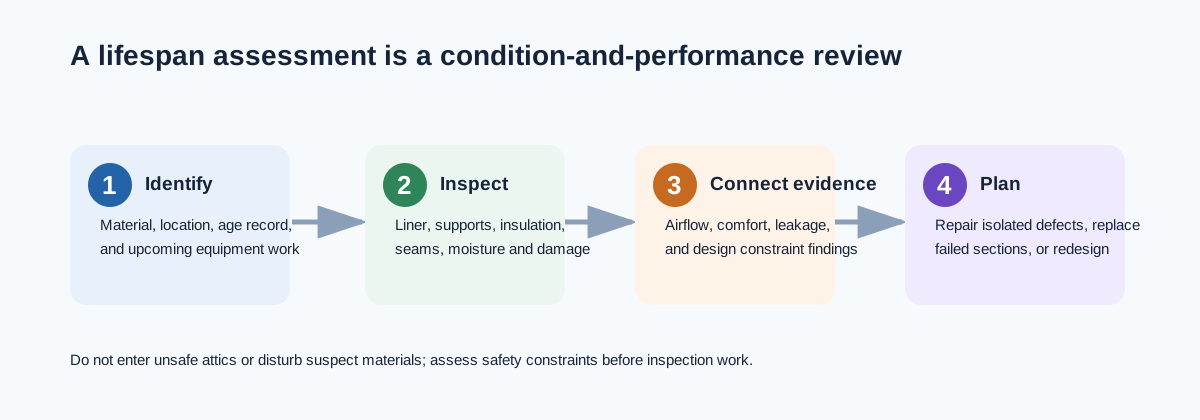
Age becomes meaningful when it aligns with visible degradation or performance evidence. An older flex system with repeated disconnected collars, brittle jackets, crushed runs, and persistent under-supplied rooms is different from an older but clean, supported, tight system that performs well. The first may warrant a broader replacement plan; the second may only need an accessible repair, sealing, insulation restoration, or monitoring. If the main symptom is obvious leakage, use our duct-leak signs and testing guide. If you are weighing scopes, see air duct repair vs replacement.
Why new HVAC equipment should trigger a duct review
A new air conditioner or heat pump cannot overcome severe leakage, a restrictive return, or a poorly sized distribution layout. ACCA Manual D exists because duct geometry and pressure affect the air the equipment can deliver. California’s 2025 standards also make duct sealing and verification relevant to many HVAC alteration scopes. Before an installation, ask whether the proposal includes an assessment of the existing ducts, whether any duct testing applies, and what evidence would change the recommendation from repair to replacement.
The right next step for an aging duct system
For homes in Ontario, Pomona, Diamond Bar, Walnut, Claremont, Rowland Heights, and nearby communities, request a condition-based evaluation rather than an automatic replacement quote. The evaluation should identify material and access, record visible defects, distinguish leakage from sizing and equipment issues, and explain why a limited repair, partial replacement, or full duct replacement plan is the most durable next step. That gives you a scope you can compare instead of an unsupported lifespan claim.
Alex Air & Heating can review accessible duct condition and the airflow question before you commit to replacing ducts with an HVAC upgrade. For service in the Inland Empire or East Los Angeles County, explore duct replacement.
Sources & references
- 1.ENERGY STAR — Duct Sealing
- 2.California Energy Commission — 2025 Single-Family HVAC Requirements
- 3.California Energy Commission — 2025 Building Energy Efficiency Standards
- 4.ACCA — Manual D residential duct design standard
- 5.Air Duct Council — Flexible duct technical FAQs
- 6.U.S. Department of Energy — Home Upgrades / duct-loss guidance
Frequently asked questions
There is no single expiration date. Properly installed and protected ductwork can remain serviceable for decades. Replacement timing depends on material condition, support, routing, insulation, leakage, contamination, moisture exposure, and whether the system can still deliver the airflow the home needs.
Flex duct life varies widely. A correctly installed, supported, undamaged run may remain serviceable for a long time, while a run that sags, kinks, tears, gets wet, or repeatedly disconnects can need earlier replacement. Inspect the inner liner, outer jacket, supports, collars, and airflow rather than relying on a generic number.
Strong signs include brittle or torn liners, crushed runs, recurring disconnections, major water or pest damage, contamination that cannot be safely corrected, widespread insulation failure, and rooms that remain under-supplied after other airflow causes are ruled out. A visual inspection plus appropriate testing helps distinguish replacement from a focused repair.
Yes, but age itself is not the mechanism. Leaks, poor connections, restricted runs, poor insulation, and flawed sizing can reduce delivered airflow or add heat gain. A healthy-looking older duct system can work better than a newer but poorly routed or damaged one.
Evaluate them, but do not automatically replace them. New equipment should not be expected to overcome severe leakage, poor returns, or undersized duct runs. If the existing ducts are sound and appropriately designed, targeted repairs may be enough; if they are degraded or mismatched, replacement planning is worth doing before the equipment is installed.
Local next step
Turn this guide into a site-specific answer.
Guides explain the decision. Equipment condition, access, and safe next steps still need to match the home or business. Review the relevant service scope or request an assessment for Ontario, the Inland Empire, or East Los Angeles County. Availability depends on the current schedule.