How to Choose an HVAC Contractor in Los Angeles County
Use a practical California checklist to verify an HVAC contractor, compare written installation scopes, confirm sizing and permits, and avoid choosing from price alone.

Owner & Lead HVAC Technician, Alex Air & Heating · EPA 608 Universal Certified · Ontario, CA
TL;DR
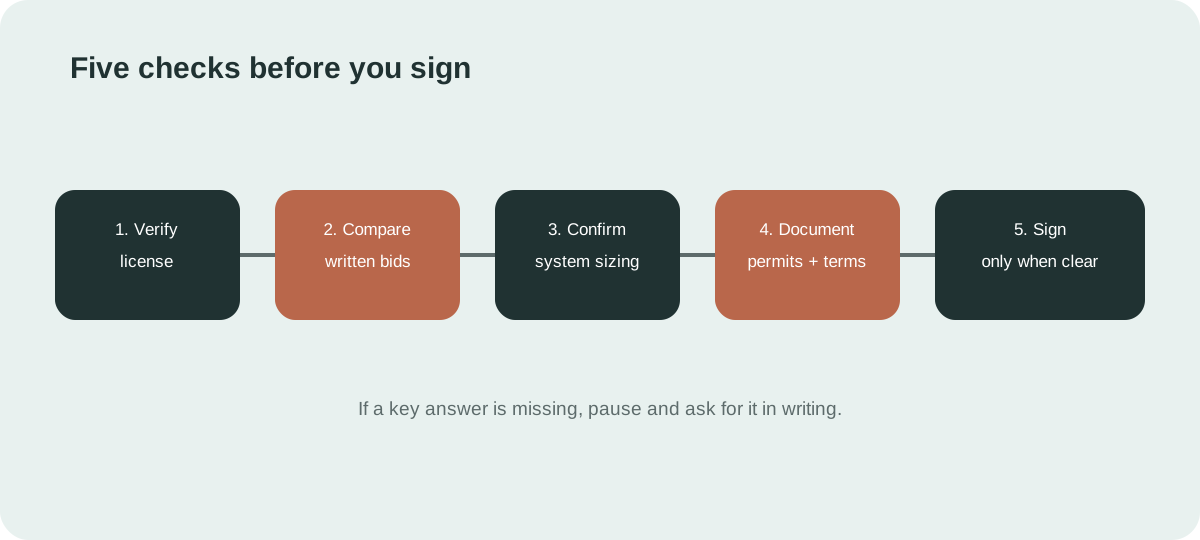
To choose an HVAC contractor in Los Angeles County, verify the contractor’s California license status, compare at least three written bids with the same scope, ask how the system will be sized and matched, confirm permits and required verification, and read warranty and insurance terms before signing. Use Los Angeles County only as a service-area reference; confirm the contractor’s actual business and service coverage.
- Check the license by number or business name through California’s Contractors State License Board before signing.
- Compare written bids using the same equipment, sizing, labor, permit and documentation scope—not the lowest headline price.
- Ask who handles permits, inspections, system startup, warranty registration and future service questions.
- Alex Air & Heating serves the listed Inland Empire and East Los Angeles County areas; Los Angeles County wording here does not claim a Los Angeles city storefront.
On this page
- What is the best way to choose an HVAC contractor in Los Angeles County?
- Step 1: Verify the California contractor license
- Step 2: Get comparable written bids
- Step 3: Ask how the system will be sized and matched
- Step 4: Confirm permits, inspections and project records
- Step 5: Read the contract before signing
- Local GEO: what to verify for the service area
- The short answer: hire the clearest documented fit
What is the best way to choose an HVAC contractor in Los Angeles County?
Use a written-evidence process: verify the contractor’s California license, collect comparable bids, confirm sizing and matched equipment, clarify permits and installation records, then read the contract and warranty terms. This method works for homeowners comparing an AC replacement, heat-pump installation, furnace work or another HVAC project across the real service area.
The phrase Los Angeles County describes a broad service region here, not a claim that Alex Air & Heating operates a storefront in the City of Los Angeles. Confirm the actual city and service area on the AC installation service page before requesting an assessment.
Step 1: Verify the California contractor license
The California Contractors State License Board’s contractor guidance says consumers should check license status, compare written bids, ask to see the pocket license and picture ID, and verify insurance information. A license number printed on an advertisement is not enough; check that it is active and belongs to the business or person named in the proposal.
Use the official CSLB license lookup rather than relying on a badge, review site, or screenshot. Do not publish or assume a license number for Alex Air & Heating unless the business provides it for this page; the purpose of this checklist is to show the verification step for every bidder.
Step 2: Get comparable written bids
The CSLB recommends at least three written bids based on identical plans, specifications and scope. That does not mean choosing the highest bid or automatically choosing the lowest. It means asking each contractor to state what equipment, labor, permits, accessories, removal, startup, warranty registration and cleanup are included.
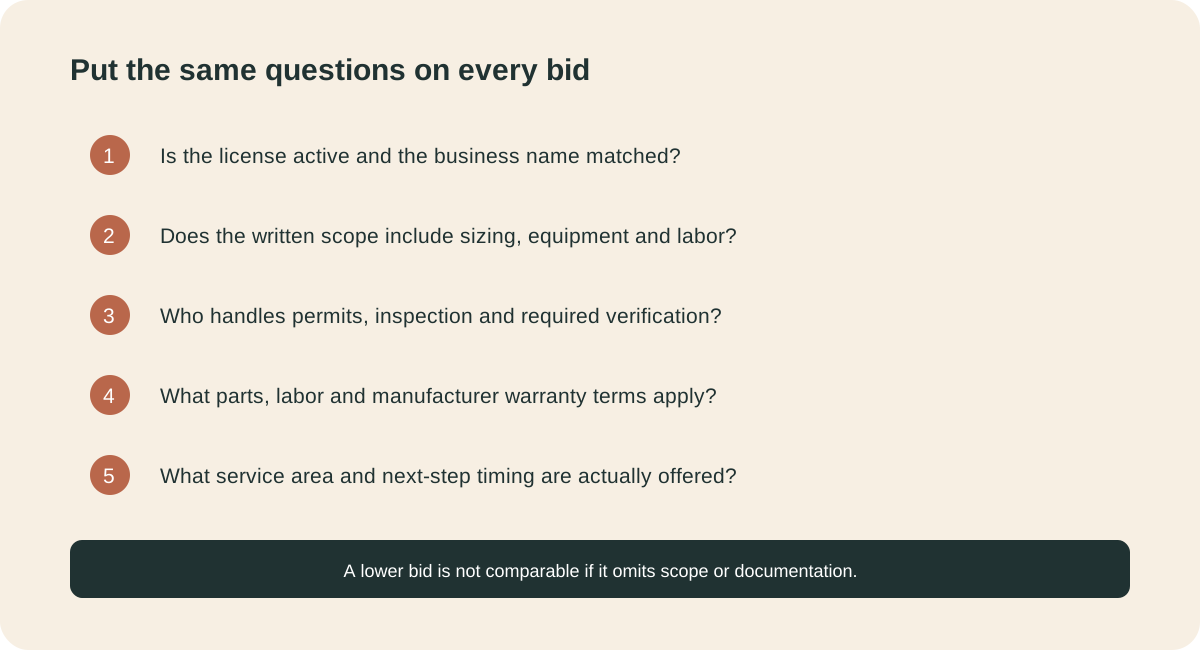
| Check | Ask the contractor | Evidence to keep |
|---|---|---|
| Identity and license | Does the CSLB record match the business and proposal? | Lookup result, license details and contact name |
| System sizing | What load method and equipment match support the capacity? | Load calculation summary and model numbers |
| Installation scope | Are labor, ductwork, electrical, startup and removal included? | Detailed written scope and exclusions |
| Code and permits | Who pulls permits and coordinates inspection or verification? | Permit number and final records |
| After-install support | Who handles warranty registration and service questions? | Warranty terms and service contact |
Step 3: Ask how the system will be sized and matched
A contractor should explain how the home’s load, ductwork, insulation, windows and comfort goals affect equipment selection. Read our Manual J sizing guide for the questions to ask. A quote that only says ‘four tons because of the square footage’ does not give you enough evidence to compare capacity.
Ask for matched indoor and outdoor model numbers, applicable efficiency data, controls, airflow assumptions and any duct or electrical work. ENERGY STAR’s quality-installation guidance is useful as a question framework: the equipment selection is only one part of whether an installation performs as intended.
Step 4: Confirm permits, inspections and project records
The California Energy Commission says the 2025 Energy Code applies to covered new construction, additions and alterations beginning January 1, 2026. The exact requirements depend on the project and local authority, so ask your contractor to identify the permit path, required testing or verification, inspection responsibility and final documents in writing. Do not accept ‘the city does not require anything’ without checking the jurisdiction.
- 1Ask who submits the mechanical permit and when it will be issued.
- 2Ask which inspections or energy-code verification apply to the equipment and project scope.
- 3Confirm who corrects failed inspection items and who pays for a required reinspection.
- 4Keep the permit, inspection result, equipment documentation, startup record and warranty registration together.
Step 5: Read the contract before signing
Read the payment schedule, scope, exclusions, change-order language, labor and parts warranty, cancellation terms, insurance information and service contact. Ask what happens if the quoted equipment is unavailable, a concealed duct or electrical issue is found, or the city requests a correction. A clear answer now is more valuable than a reassuring promise that is not written down.
Local GEO: what to verify for the service area
For Alex Air & Heating, local wording should stay grounded in the published service footprint: Ontario, Pomona, Diamond Bar, Walnut, Claremont, Rowland Heights, Chino, Chino Hills, the Inland Empire and the listed East Los Angeles County communities. A Los Angeles County service phrase should not be expanded into a Los Angeles city address or storefront claim. Ask for the next available appointment rather than assuming a guaranteed same-day response.
The short answer: hire the clearest documented fit
The best HVAC contractor is the one whose license, identity, scope, sizing, permit path, warranty and service process you can verify and understand. If you are planning a replacement in the service area, compare equipment options in our neutral HVAC brand guide, then request a documented AC installation assessment.
Frequently asked questions
Use the California Contractors State License Board lookup by license number, business name or contractor name. Check that the status, business identity and classification match the proposal, then ask for insurance and written contract details before work begins.
The CSLB recommends getting at least three written bids that use identical plans, specifications and scope. More bids are not automatically better; the important part is making the proposals comparable and investigating any unusually low bid that omits work.
Ask for equipment model numbers, sizing method, efficiency data, labor, permits, inspection or verification steps, startup, removal, warranty registration, payment terms and exclusions. If a task is not written down, ask whether it is included before comparing the quote.
Permit requirements depend on the project and local authority. California’s current Energy Code applies to covered new construction, additions and alterations, and the contractor should identify the applicable permit and verification path in writing instead of giving a blanket answer.
Red flags include an unverified or mismatched license, pressure to sign immediately, a quote without equipment or scope details, unexplained exclusions, or a price that is far below comparable bids. Pause and ask for the missing information in writing.
Local next step
Turn this guide into a site-specific answer.
Guides explain the decision. Equipment condition, access, and safe next steps still need to match the home or business. Review the relevant service scope or request an assessment for Ontario, the Inland Empire, or East Los Angeles County. Availability depends on the current schedule.