HVAC Warranties Explained: Coverage, Exclusions, Registration
Learn how HVAC parts, labor, exclusions, registration and service contracts differ, and what documents to read before signing an AC installation proposal.

Owner & Lead HVAC Technician, Alex Air & Heating · EPA 608 Universal Certified · Ontario, CA

TL;DR
An HVAC warranty may cover specified parts, while labor, diagnostics, refrigerant, shipping, installation defects and maintenance can be treated differently. Coverage depends on the brand, model, installation date, purchaser, written terms and any registration or transfer rules. Before signing, ask to read the actual warranty, identify who handles a claim, and save the invoice, serial numbers and registration record.
- Parts coverage and labor coverage are often separate questions; never treat a parts warranty as a promise of free labor.
- Exclusions and claim procedures matter as much as the headline duration.
- Registration deadlines and benefits vary by manufacturer, model and jurisdiction; confirm the exact written terms.
- Alex Air & Heating does not publish a universal warranty promise here; any installation or service terms must be stated in the project documents.
On this page
- What does an HVAC warranty cover?
- Parts warranty versus labor warranty
- Registration, transfer and installation records
- What can limit an HVAC warranty claim?
- How should warranty language affect an AC installation decision?
- Local GEO: keep the promise tied to the project
- The short answer: read the exact warranty before signing
What does an HVAC warranty cover?
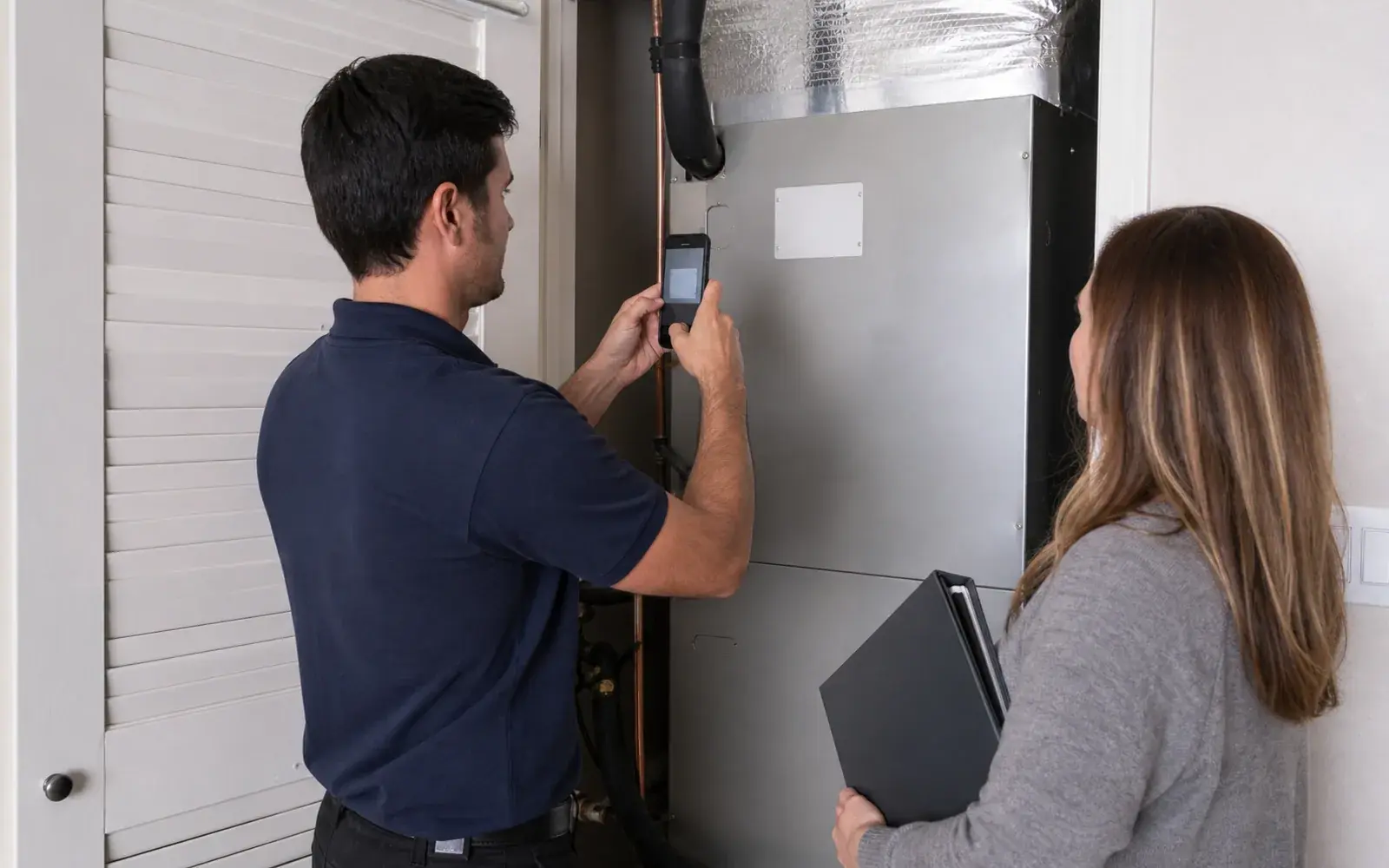
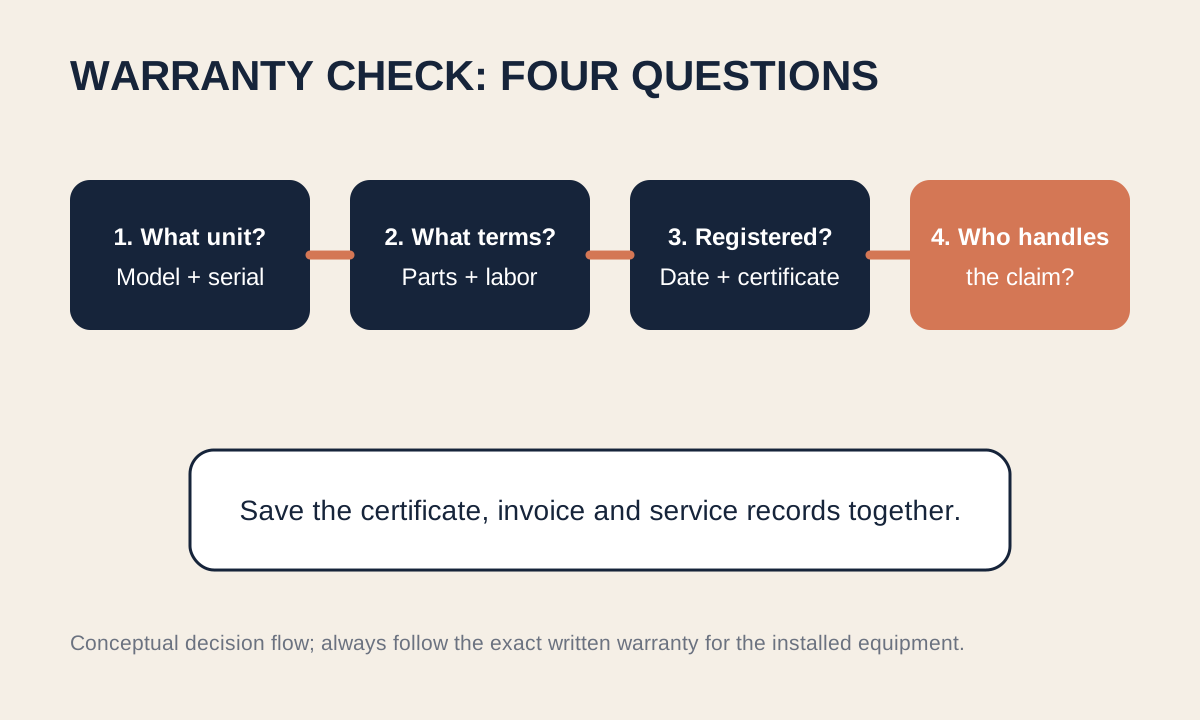
An HVAC warranty is a written promise with boundaries, not a blanket guarantee that every repair will be free. Start by identifying the equipment, model, serial number and installation date. Then separate parts coverage, labor coverage, exclusions, registration and the claim process. When comparing an installation proposal, ask to see the terms that apply to the exact system and read them before signing.
Parts warranty versus labor warranty
A manufacturer may agree to provide a replacement part for a covered defect while the homeowner remains responsible for diagnosis, labor, refrigerant, shipping or access. Some installers offer separate workmanship terms, but that is not the same as the manufacturer’s equipment warranty. Put both documents beside the proposal so the responsibilities are visible.
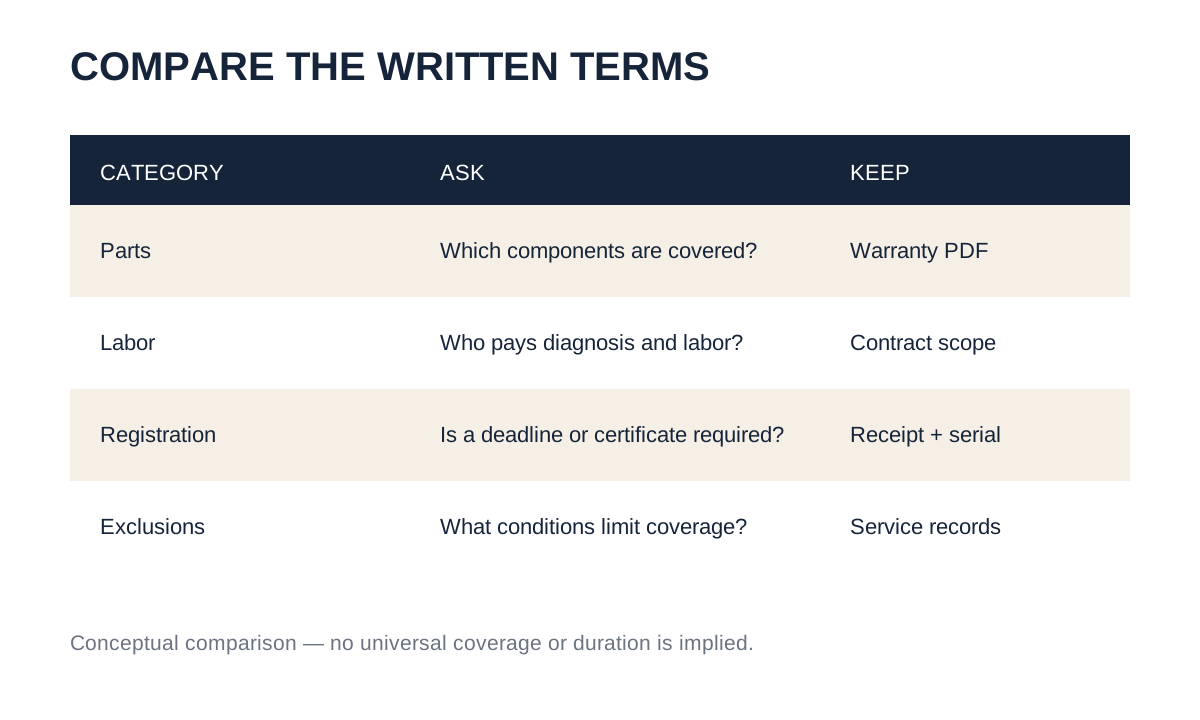
| Category | Question | Record to keep |
|---|---|---|
| Parts | Which components and failures are covered? | Manufacturer warranty |
| Labor | Who pays diagnosis, labor and refrigerant? | Installer scope or labor terms |
| Registration | Is there a deadline, certificate or transfer rule? | Registration confirmation |
| Exclusions | What conditions or uses are excluded? | Terms and exclusions page |
| Claim | Who receives the claim and what proof is required? | Phone, portal and invoice |
Registration, transfer and installation records
Registration rules are not interchangeable across manufacturers. For example, current Trane guidance describes base and registered limited warranty paths with a registration window, while Lennox publishes product-specific coverage and registration details. Those examples show why a generic “ten-year warranty” statement is not enough. Confirm the brand, model, installation date, purchaser, serial number and any transfer requirement in the actual document.
What can limit an HVAC warranty claim?
The FTC advises consumers to read coverage, limitations and claim procedures and to keep the warranty and proof of purchase. HVAC terms may also address installation quality, maintenance, modifications, location, excluded components or use outside the manufacturer’s instructions. This article does not decide whether a particular claim is valid; the manufacturer’s certificate and the project contract control.
- Save the signed proposal, invoice and installation date.
- Record every indoor and outdoor model and serial number.
- Download the exact warranty certificate and registration confirmation.
- Keep service records and ask who handles a parts or workmanship claim.
How should warranty language affect an AC installation decision?
Use warranty clarity as one part of a broader fit decision. Compare the matched equipment, installation scope, controls, permit path, future service contact and written warranty together. Our AC installation service page can be used to request a project-specific assessment, while the AC installation day guide explains which records to request at handoff.
Local GEO: keep the promise tied to the project
For homeowners in Ontario, Pomona, Diamond Bar, Walnut, Claremont, Rowland Heights, Chino, Chino Hills, the Inland Empire and listed East Los Angeles County communities, ask the servicing contractor which documents they provide and which claims go directly to the manufacturer. Do not assume a Los Angeles County service phrase means a Los Angeles city storefront or a universal local warranty.
The short answer: read the exact warranty before signing
The useful HVAC warranty question is not only “how many years?” It is “which part, under which condition, who pays the labor, what registration is required, and who handles the claim?” Put those answers in writing before approving an installation, and keep the records after the system is commissioned.
Frequently asked questions
A manufacturer’s limited warranty may cover specified parts that fail because of a covered defect, but the exact components, duration, labor responsibility and exclusions vary by brand and model. Read the actual certificate rather than relying on a general number.
Not necessarily. Parts coverage and labor or diagnostic charges can be separate. Ask whether the written terms cover labor, refrigerant handling, service calls, removal and reinstallation, and who must be contacted for a claim.
Some manufacturers offer different registered and base terms, while others do not require registration for basic coverage. Registration deadlines also differ. Use the model-specific manufacturer instructions and keep the confirmation with your invoice.
The written terms may address improper installation, operation outside instructions, unauthorized modifications, excluded parts, location changes, missed documentation or other conditions. Do not assume a claim is void; read the certificate and ask the manufacturer or installer what evidence is required.
No. A warranty is generally tied to the product promise, while a service contract is a separate agreement for specified services. Compare scope, cost, exclusions and claim contacts instead of treating the two as interchangeable.
Local next step
Turn this guide into a site-specific answer.
Guides explain the decision. Equipment condition, access, and safe next steps still need to match the home or business. Review the relevant service scope or request an assessment for Ontario, the Inland Empire, or East Los Angeles County. Availability depends on the current schedule.