What Happens on AC Installation Day? Step by Step
See the typical AC installation sequence, the questions to ask before work starts, and the documents to keep after startup without assuming a fixed appointment length.

Owner & Lead HVAC Technician, Alex Air & Heating · EPA 608 Universal Certified · Ontario, CA
TL;DR
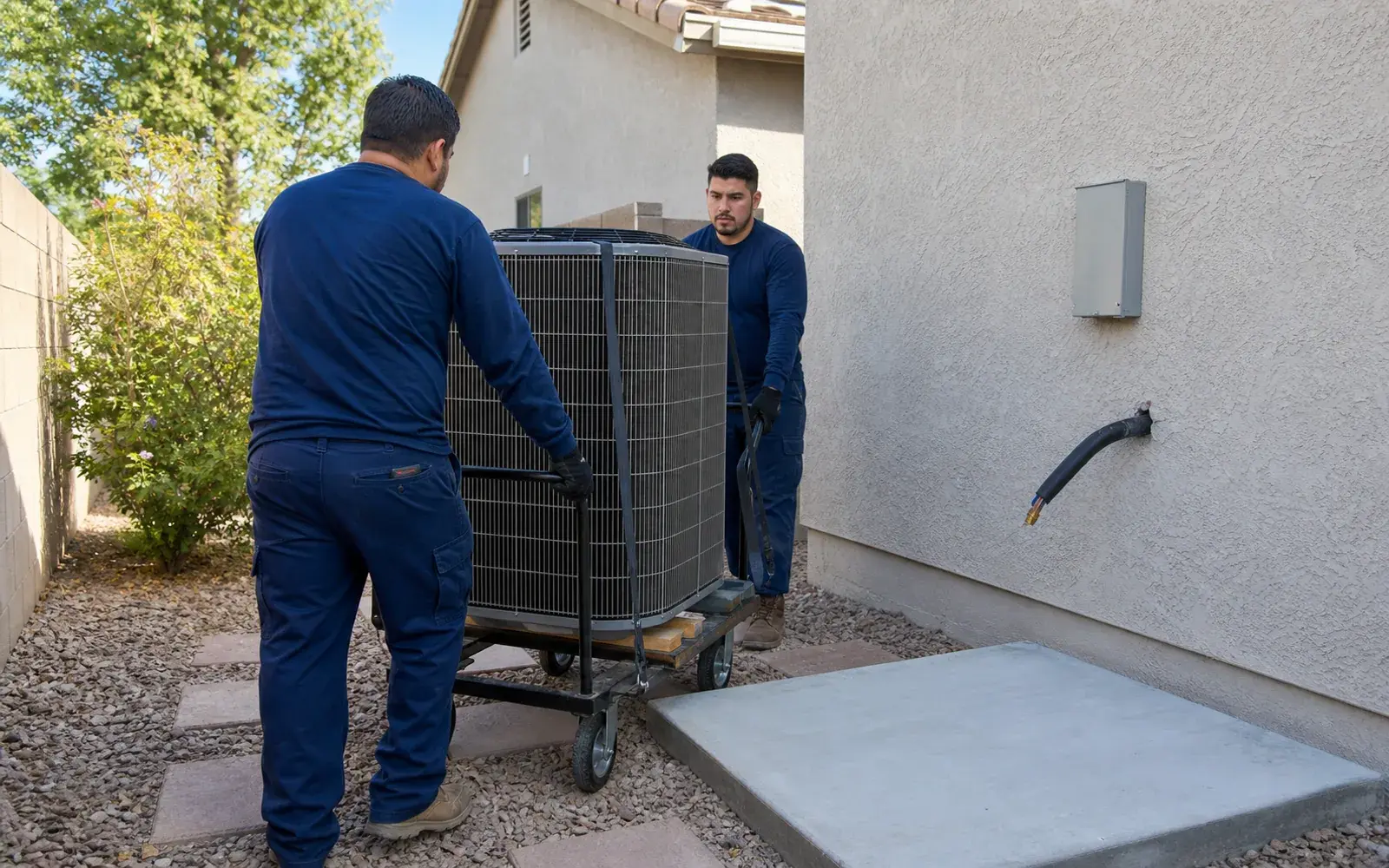
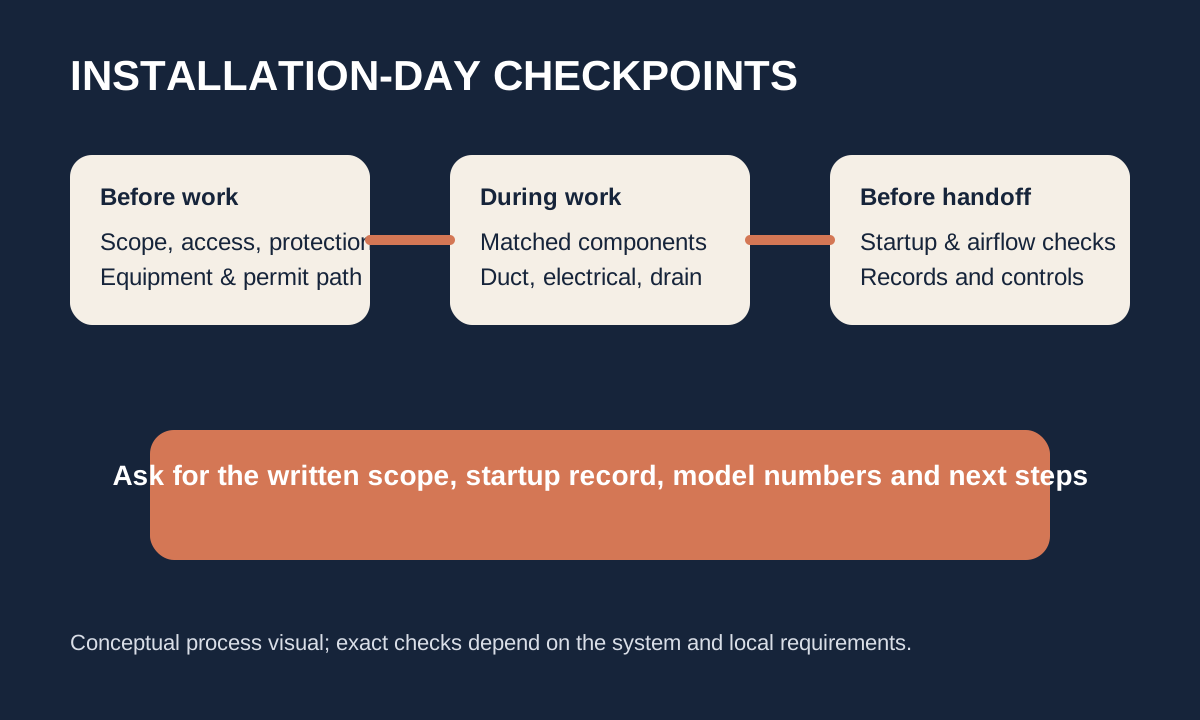
AC installation day usually moves through four phases: confirm the written scope and protect the home, remove and install matched equipment, complete startup and system checks, then explain controls and hand over records. The exact sequence and timing depend on the equipment, existing ducts or electrical work, permits and the local jurisdiction, so ask for the project steps in writing.
- Confirm equipment, access, protection, permits and exclusions before work begins.
- A complete installation includes matched components and attention to airflow, refrigerant, ducts, drainage and electrical connections.
- Ask for model numbers, startup notes, applicable inspection records and warranty-registration instructions at handoff.
- Alex Air & Heating serves the published Inland Empire and East Los Angeles County footprint; an appointment is subject to schedule and project scope.
On this page
- What is the AC installation process on installation day?
- Before work starts: confirm the scope and the home
- During the installation: what the crew is actually changing
- Startup and handoff: the evidence to request
- What can change the installation-day sequence?
- Local GEO: what to expect in the service area
- The short answer: ask for a documented handoff
What is the AC installation process on installation day?
A well-run AC installation is a documented handoff, not simply an outdoor unit arriving at the house. The usual sequence is to confirm the scope, protect the work area, remove or isolate old equipment, install the matched system, complete startup checks, and explain the controls and records. The AC installation service page is the right place to request a project-specific assessment.
Before work starts: confirm the scope and the home
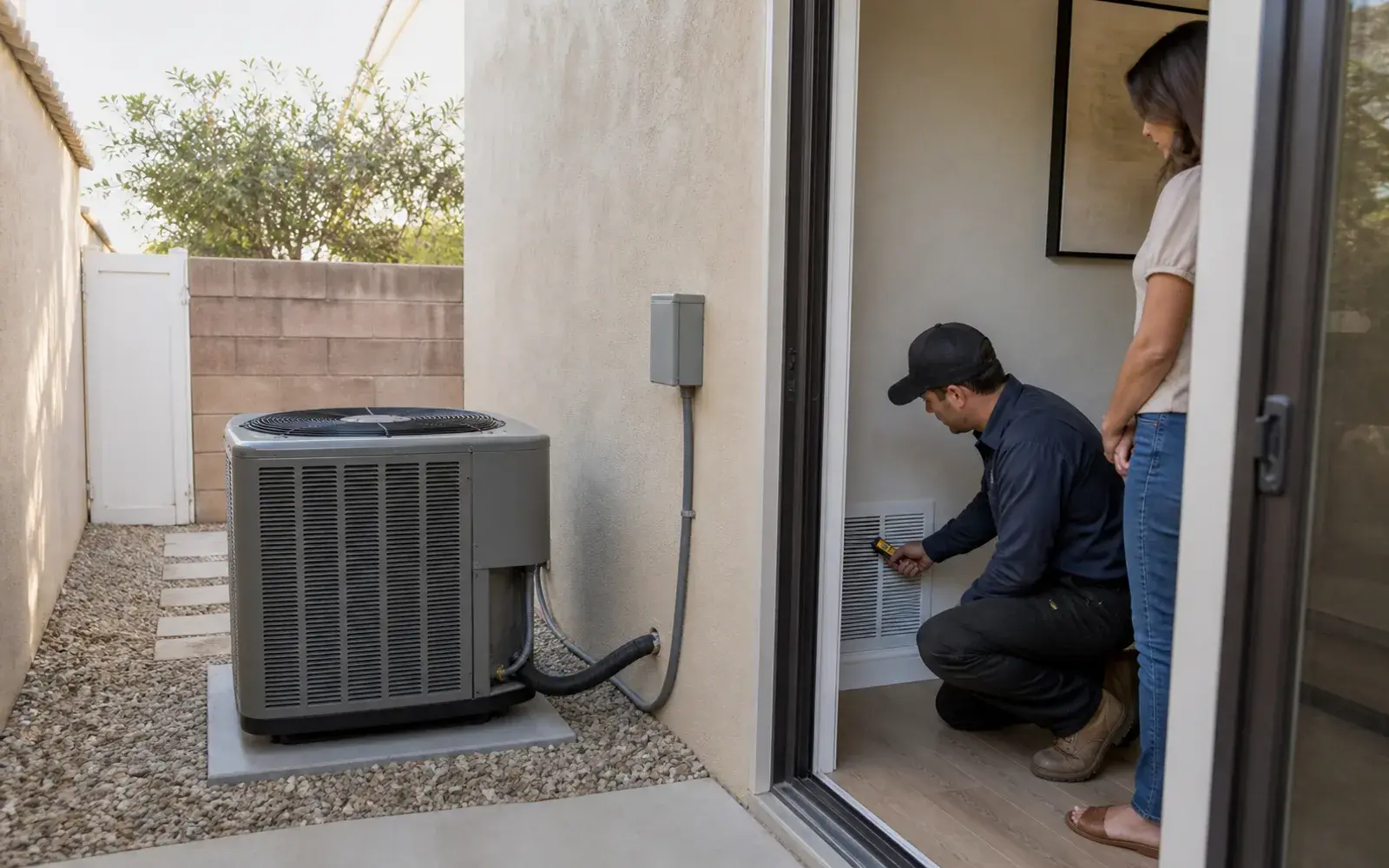
Before removal begins, confirm the equipment model or model family, indoor and outdoor component match, access route, work-area protection, payment milestones, exclusions and who handles permits or inspections. If the proposal includes duct, electrical, drain or platform work, make sure those items are stated clearly rather than assumed.
- Review the written scope and any change-order process.
- Confirm where equipment, controls and accessories will be placed.
- Ask which permit, inspection or energy-code records apply.
- Identify what the homeowner must move, unlock or make accessible.
During the installation: what the crew is actually changing
The work can include removing old equipment, setting the outdoor unit, installing the indoor coil or air handler, connecting refrigerant lines, duct transitions, condensate drainage, electrical components and thermostat controls. Not every project needs every task. The important point is that the installed components and scope match the proposal and the home’s conditions.
- 1Protect floors, walls and the work area before moving equipment.
- 2Remove or isolate old equipment and document any concealed condition that changes the scope.
- 3Install the matched indoor and outdoor components, connections, controls and drainage included in the proposal.
- 4Check that the system is ready for startup and that required documentation can be completed.
Startup and handoff: the evidence to request
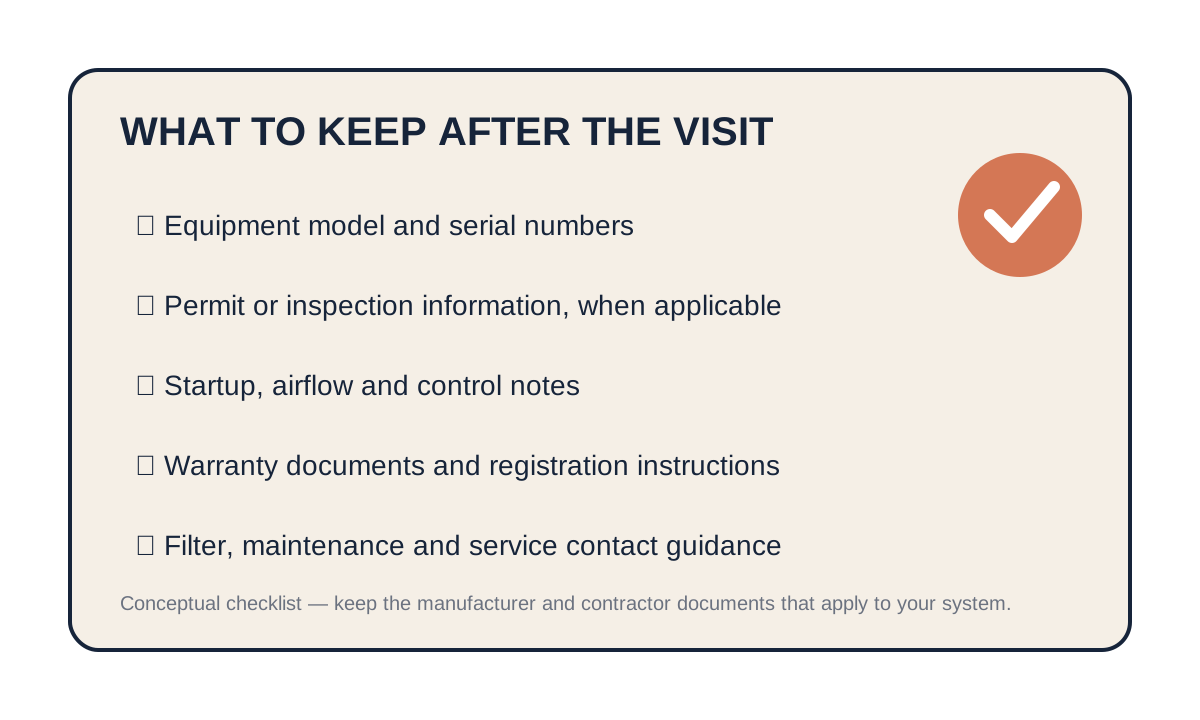
ENERGY STAR quality-installation guidance highlights sizing, airflow, refrigerant charge and duct evaluation as important questions. Ask the installer what checks were completed and which results or notes are provided for your system. The Department of Energy also explains why matched equipment and efficiency information such as SEER2 belong in an apples-to-apples comparison.
| Area | Ask before the crew leaves | Keep |
|---|---|---|
| Equipment | What are the indoor and outdoor model and serial numbers? | Invoice or equipment record |
| Startup | What airflow, refrigerant, drainage and control checks were completed? | Startup or commissioning notes |
| Code | Who handles the applicable permit or inspection record? | Permit or inspection information |
| Ownership | How do I register and service the system? | Warranty terms and service contact |
What can change the installation-day sequence?
Existing duct restrictions, electrical capacity, access, concealed damage, equipment availability and local inspection requirements can change the work. California’s current Energy Code applies to covered new construction, additions and alterations, but the exact path depends on the project and jurisdiction. Treat a revised scope as a document to review, not a detail to settle only by phone.
Local GEO: what to expect in the service area
Alex Air & Heating’s published footprint includes Ontario, Pomona, Diamond Bar, Walnut, Claremont, Rowland Heights, Chino, Chino Hills, the Inland Empire and listed East Los Angeles County communities. That regional wording does not claim a Los Angeles city storefront. Ask for the next available appointment and the project sequence that fits your address and equipment.
The short answer: ask for a documented handoff
The best installation day is not defined by a promised number of hours. It is defined by a clear scope, matched equipment, careful startup, understandable controls and records you can use later. For a replacement or new system, request a written AC installation assessment and compare the scope with our neutral HVAC brand guide.
Sources & references
Frequently asked questions
The contractor should review the written scope, equipment and access plan, protect the work area, and confirm any permit or inspection responsibilities before removing equipment. This opening check prevents a quote assumption from becoming a surprise change order.
There is no honest universal time promise. The schedule depends on equipment, duct or electrical changes, access, removal, inspections and unexpected site conditions. Ask the contractor for a project-specific sequence and what could change it.
Ask what startup, airflow, refrigerant, drainage, controls and electrical checks were completed, and request the model numbers and records that apply to your system. The contractor should also explain filters, controls and the next maintenance step.
Permit and Energy Code requirements depend on the project, equipment and local authority. California Energy Commission guidance identifies covered HVAC installations and alterations that may require compliance; ask who handles the permit and inspection path for your project.
Keep the written scope, invoice, model and serial numbers, permit or inspection records when applicable, startup notes, warranty terms, registration confirmation and service contact information in one file.
Local next step
Turn this guide into a site-specific answer.
Guides explain the decision. Equipment condition, access, and safe next steps still need to match the home or business. Review the relevant service scope or request an assessment for Ontario, the Inland Empire, or East Los Angeles County. Availability depends on the current schedule.