How to Lower Your AC Bill in Summer: 12 Proven Tactics
Want to lower your AC bill in summer without sweating through Inland Empire heat? Here are 12 ranked tactics, from free thermostat tweaks to pro upgrades.

Owner & Lead HVAC Technician, Alex Air & Heating · EPA 608 Universal Certified · Ontario, CA
TL;DR
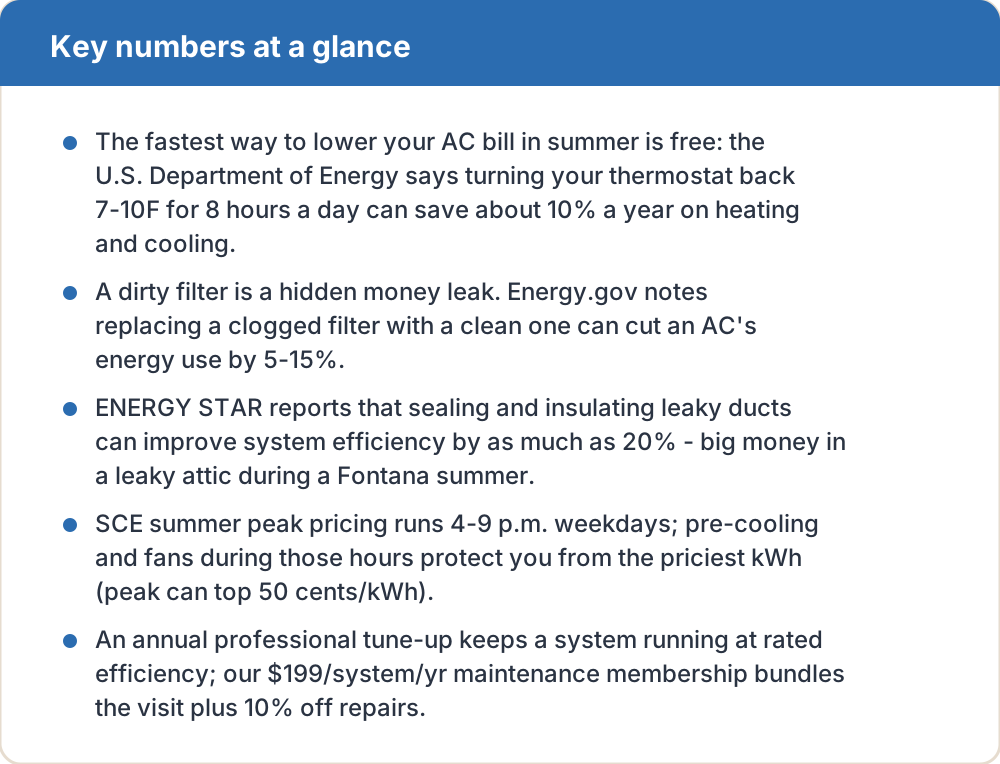
To lower your AC bill in summer, stack free habits with smart upgrades: raise the thermostat 7-10F while away (DOE says up to ~10% savings), change filters every 1-2 months, run ceiling fans, seal ducts, and get an annual tune-up before Inland Empire heat hits 100F+.
- The fastest way to lower your AC bill in summer is free: the U.S. Department of Energy says turning your thermostat back 7-10F for 8 hours a day can save about 10% a year on heating and cooling.
- A dirty filter is a hidden money leak. Energy.gov notes replacing a clogged filter with a clean one can cut an AC's energy use by 5-15%.
- ENERGY STAR reports that sealing and insulating leaky ducts can improve system efficiency by as much as 20% - big money in a leaky attic during a Fontana summer.
- SCE summer peak pricing runs 4-9 p.m. weekdays; pre-cooling and fans during those hours protect you from the priciest kWh (peak can top 50 cents/kWh).
- An annual professional tune-up keeps a system running at rated efficiency; our $199/system/yr maintenance membership bundles the visit plus 10% off repairs.
On this page
- What is the fastest way to lower my AC bill in summer?
- Which free and DIY habits cut cooling costs the most?
- How much does a dirty air filter really cost me?
- Do sealing and insulation upgrades pay off in the Inland Empire?
- Is a smart thermostat worth it to lower my AC bill in summer?
- Why does an annual AC tune-up lower my bill?
- When is it time to upgrade to a higher-SEER2 system?
- How do SCE summer rates change the math?
What is the fastest way to lower my AC bill in summer?
If you want to lower your AC bill in summer, start with the changes that cost nothing and take five minutes. The single highest-value move is thermostat discipline. The U.S. Department of Energy states you can save as much as 10% a year on heating and cooling by turning your thermostat back 7-10F for 8 hours a day from its normal setting - for example, while you are at work or asleep. In Ontario and across the Inland Empire, where afternoon highs regularly clear 100F, that setback adds up fast because your system is fighting a much bigger temperature gap than a coastal home.
The trick is to setback when nobody is home and let the house drift warmer, then cool back down before you return. You do not need to be uncomfortable - you need to stop paying to cool empty rooms. If you find yourself constantly overriding the schedule, that is a sign a programmable or smart thermostat would pay for itself (more on that below). For the exact numbers that work in our climate, see our guide to the best summer thermostat temperature.
Which free and DIY habits cut cooling costs the most?
Before spending a dollar, work through the free tier. These habits reduce the load on your air conditioner so it cycles less, especially during SCE's expensive late-afternoon peak.
- Raise the thermostat 7-10F while away (DOE: up to ~10% annual savings on heating and cooling).
- Run ceiling fans counter-clockwise - a fan lets you feel comfortable a few degrees warmer, so you can nudge the thermostat up. Fans cool people, not rooms, so turn them off in empty rooms.
- Close blinds and drapes on south- and west-facing windows during the day. Blocking direct Inland Empire sun keeps radiant heat out of the house.
- Cook, run the dryer, and use the dishwasher after 9 p.m. when SCE rates drop off-peak - and to avoid dumping heat into the house at peak.
- Check that supply vents are not blocked by furniture or rugs so conditioned air actually reaches the room.
- Pre-cool the house before 4 p.m., then ease off during the 4-9 p.m. peak window.
None of these require a technician, and together they can shave a meaningful chunk off a July bill in Rancho Cucamonga or Chino Hills - all before you touch the equipment itself.
| Tactic | Cost / effort | Est. summer savings | DIY or pro |
|---|---|---|---|
| Raise thermostat 7-10F while away | Free, 5 min | Up to ~10%/yr on heating & cooling (DOE) | DIY |
| Run ceiling fans, close blinds on sunny windows | Free / low | Lets you set thermostat a few degrees higher | DIY |
| Replace dirty air filter (every 1-2 months) | $5-$20 | 5-15% of AC energy use (Energy.gov) | DIY |
| Weatherstrip doors, caulk window & attic gaps | $20-$60 | Cuts cooling load; varies by home | DIY |
| Install a smart thermostat | $150-$300 + install | Automates DOE setback & avoids SCE peak | DIY or pro |
| Professional duct sealing + insulation | Pro quote | Up to ~20% system efficiency (ENERGY STAR) | Pro |
| Annual tune-up / maintenance membership | $199/system/yr | Restores rated efficiency; prevents breakdowns | Pro |
| Upgrade to high-SEER2 system | Investment | Largest long-term efficiency gain | Pro |
How much does a dirty air filter really cost me?
More than most homeowners think. A clogged filter chokes airflow, forcing the blower and compressor to work harder and run longer to hit the setpoint. According to Energy.gov, replacing a dirty, clogged filter with a clean one can lower your air conditioner's energy consumption by 5% to 15%. That is a two-dollar filter protecting a several-hundred-dollar summer of cooling.
In the dusty, high-pollen Inland Empire, filters load up faster than the packaging suggests. Check yours monthly during summer and replace a standard 1-inch filter every 1-2 months when the AC is running daily. If the filter looks gray and matted, it is overdue. This is the easiest recurring win on the list and the one people most often forget.
Do sealing and insulation upgrades pay off in the Inland Empire?
Yes - and often more here than almost anywhere, because so much of our ductwork runs through blazing-hot attics and crawlspaces. ENERGY STAR reports that in a typical house, about 20-30% of the air moving through the duct system is lost to leaks, holes, and poorly connected ducts, and that sealing and insulating ducts can improve the efficiency of your heating and cooling system by as much as 20%.
Sealing gaps around windows, doors, and attic penetrations with weatherstripping and caulk is a cheap DIY job. Duct sealing inside walls and attics, though, is best left to a pro who can pressure-test the system and reach the hidden leaks. When a technician seals ducts and tops up attic insulation, less of the cold air you paid for escapes before it ever reaches your Corona or Riverside living room.
Is a smart thermostat worth it to lower my AC bill in summer?
For most Inland Empire households, yes. A smart thermostat automates the exact DOE-recommended setback that saves energy - it senses when you are away, pre-cools before you get home, and can shift cooling out of SCE's costly 4-9 p.m. peak automatically, so you capture the savings without babysitting a schedule. Many models also give you monthly energy reports so you can see what is working.
If you are weighing the upgrade, we break down the real-world payback in is a smart thermostat worth it, and our team handles professional smart thermostat installation with upfront pricing so there are no surprises. The device only saves money if it is wired and configured correctly for your system - a common trip-up on older two-stage and heat-pump setups.
Why does an annual AC tune-up lower my bill?
Air conditioners quietly lose efficiency every season - refrigerant charge drifts, coils cake with dust, capacitors weaken, and airflow degrades. A system running even slightly low on charge or with a dirty condenser coil uses more electricity to deliver less cooling, which shows up directly on your SCE bill and shortens the equipment's life.
A professional tune-up restores the system toward its rated efficiency: the technician cleans the coils, checks refrigerant and electrical components, verifies airflow, and catches small problems before they become 105F breakdowns. As an EPA 608 certified company based in Ontario, we offer a maintenance membership at $199/system/yr that includes the annual tune-up plus 10% off any repairs. You can book a standalone visit through our AC maintenance service, or if you are local, our Ontario AC maintenance page has area-specific details.
When is it time to upgrade to a higher-SEER2 system?
If your AC is 12-15 years old, needs a major repair, or struggles to keep up on 100F+ afternoons, upgrading to a modern high-SEER2 system is the biggest single efficiency jump available. SEER2 is the current federal efficiency rating; a new unit with a higher SEER2 can cool the same house using substantially less electricity than a builder-grade unit from a decade ago, which matters when every kWh in summer is expensive.
A new system is a real investment, so it is the last resort on this list, not the first. Work through the free and low-cost tactics first - they often buy you another season or two and make the eventual upgrade smaller. When you are ready, ask for a load calculation and upfront pricing so the equipment is sized correctly for your home in Fontana, Chino Hills, or wherever you are; an oversized unit wastes money and short-cycles.
How do SCE summer rates change the math?
In much of Southern California Edison territory, when you use electricity matters as much as how much. SCE's residential time-of-use plans place the highest summer prices during the 4-9 p.m. weekday peak, when demand is high and solar production fades. On common summer TOU plans, peak rates can climb past 50 cents per kWh, while off-peak hours cost far less.
That pricing structure rewards a simple strategy: pre-cool your home in the early afternoon while power is cheaper, then let the thermostat drift up a few degrees during the 4-9 p.m. peak while ceiling fans keep you comfortable. A smart thermostat can run this automatically. Combined with the efficiency tactics above, timing your cooling around SCE peak hours is one of the most effective ways to lower your AC bill in summer without feeling deprived.
Sources & references
- 1.U.S. Department of Energy - Programmable Thermostats (setback savings)
- 2.ENERGY STAR - Benefits of Duct Sealing
- 3.ENERGY STAR - Heat & Cool Efficiently (air filters & maintenance)
- 4.U.S. Department of Energy - Maintaining Your Air Conditioner
- 5.Southern California Edison - Time-of-Use Residential Rate Plans
Frequently asked questions
The U.S. Department of Energy recommends setting your thermostat as high as is comfortable when you are home, and turning it back 7-10F while you are away or asleep - a setback that can save about 10% a year on heating and cooling. In the Inland Empire, many homeowners find a comfortable balance around the high 70s when home and low-to-mid 80s when away. Ceiling fans let you tolerate a slightly higher setting.
During peak cooling season, check a standard 1-inch filter monthly and replace it every 1-2 months. Our region's dust and pollen clog filters faster than the packaging estimates. Energy.gov says a clean filter can lower your AC's energy use by 5-15% versus a clogged one, so this is one of the cheapest ways to keep your bill down.
Usually not, and it can hurt. Closing too many vents raises pressure in the duct system, which can force air out through leaks and make the blower work harder. Instead, keep vents open and unobstructed, and use zoning or a smart thermostat if you want room-by-room control. Sealing duct leaks is the far more effective move.
For most Inland Empire homes with attic or crawlspace ductwork, yes. ENERGY STAR reports that 20-30% of the air moving through a typical duct system is lost to leaks, and that sealing can improve system efficiency by as much as 20%. Because so much of our ductwork bakes in hot attics, sealed ducts deliver more of the cold air you already paid for.
SCE's residential time-of-use plans charge the most during the 4-9 p.m. weekday summer peak, when rates can exceed 50 cents per kWh. Running your AC hard during that window is expensive. Pre-cooling before 4 p.m. and easing back during peak - ideally automated by a smart thermostat - can noticeably lower your bill without sacrificing comfort.
A professional tune-up cleans the coils, checks refrigerant charge and electrical components, and verifies airflow so the system runs at its rated efficiency instead of quietly wasting power. Our EPA 608 certified team offers it through a $199/system/yr maintenance membership that also includes 10% off repairs, with upfront pricing. It prevents efficiency loss and the mid-summer breakdowns common on neglected systems.
Local next step
Turn this guide into a site-specific answer.
Guides explain the decision. Equipment condition, access, and safe next steps still need to match the home or business. Review the relevant service scope or request an assessment for Ontario, the Inland Empire, or East Los Angeles County. Availability depends on the current schedule.