Why Does My AC Smell Bad? A Smell-by-Smell Danger Guide
Wondering why does my AC smell bad? Musty means mold, rotten eggs means a gas leak, burning means shut it off. Here is what each odor really means.

Owner & Lead HVAC Technician, Alex Air & Heating · EPA 608 Universal Certified · Ontario, CA
TL;DR
Why does my AC smell bad usually comes down to a specific odor: musty means mold on a wet coil or clogged drain, rotten eggs means a possible gas leak (leave the home and call 911), and burning means overheating electrical parts (shut the system off now).
- A musty or moldy AC smell is the most common answer to why does my AC smell bad: moisture, a dirty evaporator coil, or a clogged condensate drain grows mold and mildew.
- Rotten eggs or sulfur is a red-flag emergency, not a nuisance. Natural gas is scented with mercaptan to smell like rotten eggs. Leave the house immediately and call 911 and your gas utility from outside.
- A burning, electrical, or hot-plastic smell means overheating motors, wiring, or capacitors. Shut the AC off at the thermostat and breaker and call a technician before running it again.
- A dirty-sock odor points to bacteria and mold on the evaporator coil; a sweet or chemical smell can signal a refrigerant leak that needs an EPA-608 certified tech.
- Most odors trace back to skipped maintenance. Regular coil and drain cleaning in the dusty, humid Inland Empire prevents the majority of AC smells.
On this page
- Why does my AC smell bad in the first place?
- Why does my AC smell musty or moldy?
- Why does my AC smell like rotten eggs or sulfur?
- Why does my AC smell like burning or hot plastic?
- Why does my AC smell like dirty socks or a sweet chemical?
- Why does my AC smell like cigarettes, pets, or something rotten?
- How do I stop AC smells from coming back?
Why does my AC smell bad in the first place?
If you are asking why does my AC smell bad, the honest answer is that the smell itself is the diagnosis. Your air conditioner does not create odors out of nowhere. It either pulls an existing smell through the ductwork, grows something on its own damp components, or is telling you a part is failing. The trick is matching the specific odor to its cause so you know whether to grab a screwdriver, call a pro, or walk out the front door.
Here in Ontario and across the Inland Empire, two local factors make AC smells especially common: heat that keeps systems running for months, and fine desert dust that coats coils and filters. Add the humidity that builds inside a cooling system and you have the exact conditions mold and bacteria love. Below we walk through each smell, what causes it, how it gets fixed, and most importantly, how dangerous it is.
Why does my AC smell musty or moldy?
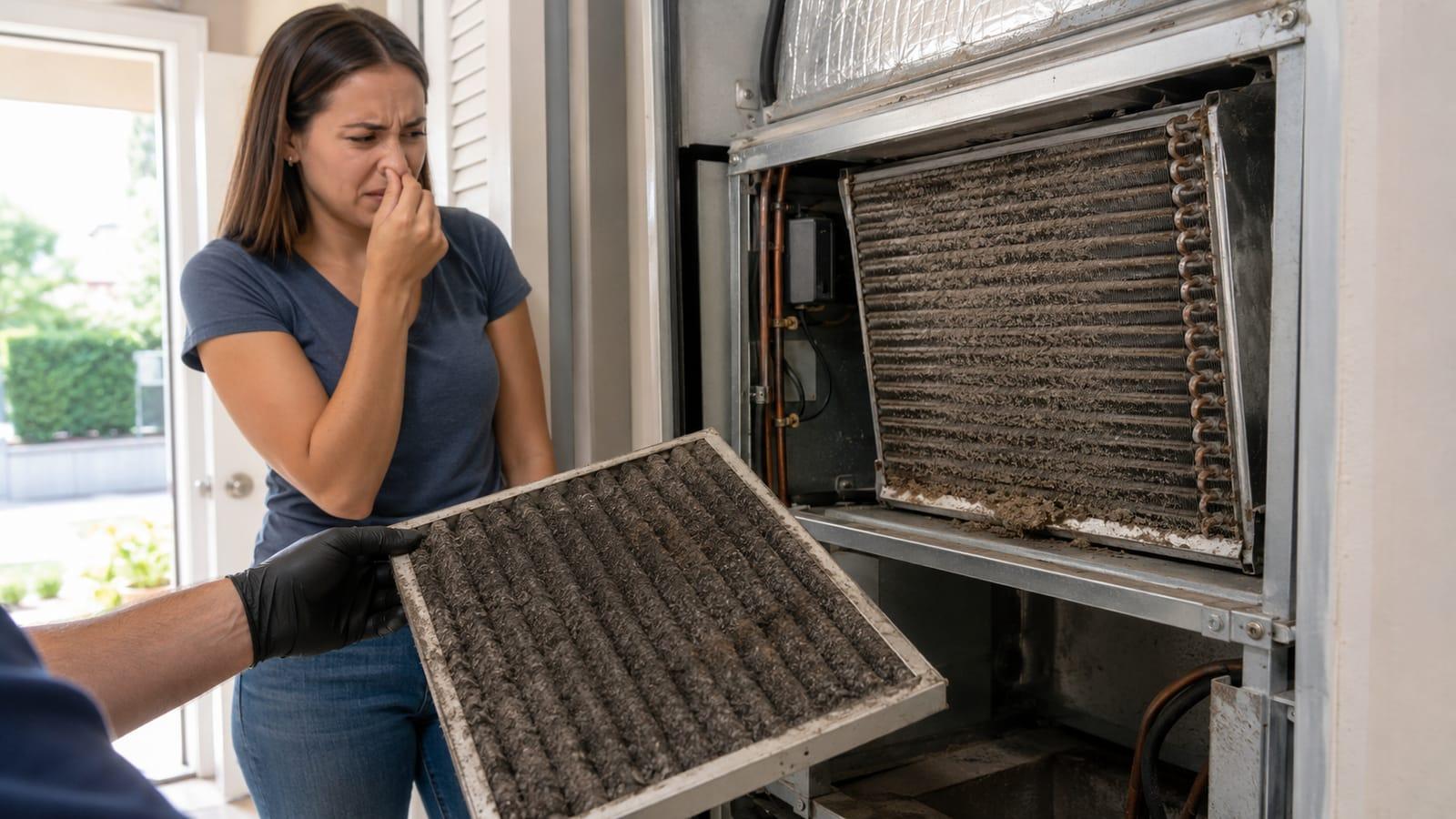
A musty, damp-basement, or moldy smell is the single most common reason homeowners ask why does my AC smell bad. Your AC dehumidifies as it cools, and that water is supposed to drain away. When a condensate drain line clogs or a dirty filter traps moisture, water sits inside the unit and mold and mildew take hold on the coil, in the drain pan, or in the ducts.
- Check and replace a dirty air filter first. A clogged filter traps humidity against the coil.
- Look for standing water in the drain pan or a slow, backed-up condensate line.
- Have the evaporator coil and drain professionally cleaned and disinfected.
A clogged drain is also why many homeowners find puddles near the unit. If you are seeing moisture too, our guide on why an AC leaks water inside walks through the same drain issues. For the mold itself, a thorough coil and drain cleaning usually clears the smell for good. Danger level: low to moderate. It will not hurt the unit immediately, but circulating mold spores can bother anyone with allergies or asthma.
| Smell | Likely cause | Fix | Danger level |
|---|---|---|---|
| Musty / moldy | Mold or mildew on a wet coil, drain pan, or clogged condensate line | Replace filter, clear drain, professional coil and drain cleaning | Low to moderate (irritates allergies) |
| Rotten eggs / sulfur | Possible natural gas leak (mercaptan odorant) | Leave the home now, call 911 and SoCalGas from outside | Critical emergency |
| Burning / hot plastic | Overheating motor, capacitor, wiring, or control board | Shut off at thermostat and breaker, call a technician | High (fire risk) |
| Dirty socks / sour | Bacteria and mold on the evaporator coil | Deep coil cleaning, coil treatment if it persists | Low to moderate |
| Sweet / chemical | Refrigerant leak | EPA-608 certified tech finds the leak and recharges | Moderate (needs a pro) |
| Cigarette / pet / cooking | Odors absorbed into filter, coil, and ducts | New filter, coil and duct cleaning | Low |
| Rotten / decaying | Dead rodent in ductwork or near the outdoor unit | Locate and remove the source, sanitize the duct | Low |
Why does my AC smell like rotten eggs or sulfur?
Stop and read this one carefully. A rotten-egg or sulfur smell is treated as a natural gas leak until proven otherwise. Utilities add a harmless odorant called mercaptan to natural gas precisely so it smells like rotten eggs and warns you. This is not a smell to investigate, sniff-test, or wait out.
If you smell rotten eggs, leave the home immediately with everyone inside, including pets. Do not flip any light switch, unplug anything, use your phone indoors, or restart the AC, because a spark can ignite gas. Once you are safely outside and away from the building, call 911 and your gas utility's emergency line. In our service area that is SoCalGas. Let the professionals locate and shut off the leak.
- Get everyone out of the house first. Do not stop to find the source.
- Do not touch switches, appliances, phones, or the thermostat indoors.
- Call 911 and SoCalGas from outside, then wait for the all-clear.
One note so you are not caught off guard: an overheating electrical component can also give off a sulfur-like odor. But you do not diagnose the difference yourself. Treat rotten eggs as gas, get out, and call. Danger level: critical emergency.
Why does my AC smell like burning or hot plastic?
A burning, hot-plastic, or electrical smell is the other odor that demands immediate action. It usually means a motor, capacitor, wiring, or control board is overheating, and that is a fire hazard. The one exception is the faint dusty smell during the very first run of the cooling season, as dust burns off the components. That fades within an hour. Anything sharper, plastic-like, or lasting longer is not normal.
If the smell is burning or electrical, shut the system off at the thermostat and then at the breaker. Do not keep running it to see if it clears. Once it is off and cool, call a technician. Overheating parts do not fix themselves and can escalate. Our team offers same-day AC repair across Ontario, Fontana, and Chino Hills for exactly this kind of urgent electrical fault. Danger level: high. Shut it off now.
Why does my AC smell like dirty socks or a sweet chemical?
Two more distinct smells round out the common list. A sour, dirty-sock odor, sometimes called dirty sock syndrome, comes from bacteria and mold building up on a damp evaporator coil, especially when the system cycles on and off during milder weather and dust has time to settle. It is closely related to the musty smell but sharper and more sour. The fix is a deep coil cleaning and, in stubborn cases, a coil treatment.
A sweet, chloroform-like, or chemical odor can signal a refrigerant leak. Refrigerant is not something to breathe or handle yourself, and topping it off without finding the leak just wastes money and harms efficiency. It takes an EPA-608 certified technician to legally locate the leak, repair it, and recharge the system. Danger level: moderate. It will not explode, but it needs a certified pro. If you also notice weak cooling or ice on the lines, our guide on a frozen AC coil covers a related symptom worth ruling out.
Why does my AC smell like cigarettes, pets, or something rotten?
Not every odor is the AC's fault. Sometimes the system is simply broadcasting a smell it pulled in. Cigarette smoke, pet dander, and cooking odors get absorbed into the filter, coil, and ducts, then blow back out every time the fan runs. Replacing the filter and cleaning the coil usually clears these.
A genuinely rotten, decaying smell, on the other hand, often means a small animal such as a rodent has died inside the ductwork or near the outdoor unit. It is unpleasant but not dangerous to the equipment. It calls for locating and removing the source and then sanitizing the affected duct section. If the smell lingers after cleaning, a technician can inspect the ducts more thoroughly.
How do I stop AC smells from coming back?
Most AC odors trace back to the same root cause: moisture and dust sitting on parts that never get cleaned. In the Inland Empire, where systems run hard through long, dusty summers, that buildup happens faster than the national average. The prevention checklist is short and effective.
- Change your air filter every 1 to 3 months during cooling season.
- Keep the condensate drain line clear so water actually leaves the system.
- Schedule a professional coil and drain cleaning at least once a year.
- Address weak cooling or moisture early, before mold has time to establish.
A yearly tune-up catches the coil grime, drain clogs, and worn electrical parts behind nearly every smell on this page. Our maintenance membership covers homes in Ontario, Pomona, Corona, and Riverside with upfront pricing and no surprise fees. If a smell has already turned into a breakdown, AC repair in Ontario is available same-day. When in doubt about a rotten-egg or burning smell, skip the DIY and make the call.
Frequently asked questions
It depends entirely on the smell. Musty, sock, or pet odors are unpleasant but safe to run while you arrange cleaning. A rotten-egg or burning smell is different. Turn the system off, and for rotten eggs leave the home and call 911 and your gas utility. Do not keep running a unit that smells like it is burning.
A brief dusty smell during the first cooling cycle of the season is usually harmless dust burning off the components, and it fades within an hour. A musty smell on startup points to mold in the system. A burning or rotten-egg smell on startup is never normal and should be treated as urgent.
Yes, very often. A clogged filter traps dust, moisture, and odors against the coil, which feeds mold growth and pushes stale smells back into your home. Changing the filter every one to three months is the cheapest and most effective first step against musty and sour AC odors.
You do not try to tell the difference yourself, and that is the safe answer. Natural gas is scented to smell like rotten eggs so you evacuate immediately. Leave the house, avoid switches and phones indoors, and call 911 and SoCalGas from outside. Let the utility confirm whether it is gas.
It varies with the cause. A coil and drain cleaning is a modest maintenance service, while an electrical repair or refrigerant leak costs more. Alex Air & Heating provides upfront pricing before any work begins, so you approve the cost before we start. A yearly tune-up prevents most odor problems in the first place.
Local next step
Turn this guide into a site-specific answer.
Guides explain the decision. Equipment condition, access, and safe next steps still need to match the home or business. Review the relevant service scope or request an assessment for Ontario, the Inland Empire, or East Los Angeles County. Availability depends on the current schedule.