Should You Close Vents in Unused Rooms During Winter?
Closing several supply vents is not a substitute for zoning. Keep return grilles clear and use comfort changes as useful clues.

Owner & Lead HVAC Technician, Alex Air & Heating · EPA 608 Universal Certified · Ontario, CA
TL;DR
In most central forced-air homes, fully closing several supply vents in unused rooms is not a practical do-it-yourself zoning plan. Keep every return grille clear. A small supply-register adjustment can be an observation, not a whole-home fix: if rooms become noisy, uncomfortable, or uneven, return the register to its usual position and arrange an airflow or duct check rather than changing ductwork yourself.
- A supply register sends conditioned air out; a return grille brings household air back to the equipment.
- Never cover or close a return grille to change comfort in one room.
- Repeated uneven rooms, new noise, or weak airflow is useful information for an airflow and duct-service conversation.
On this page
Quick answer: keep returns open; do not use closed vents as zoning
For a typical central forced-air system, leave returns open and avoid fully closing multiple supply registers to force room-by-room control. A register lever is not a replacement for a zoning design. Notice comfort and airflow from normal living spaces, then put a changed register back to its usual setting if the home becomes less even or sounds different.
Supply register versus return grille: the distinction matters
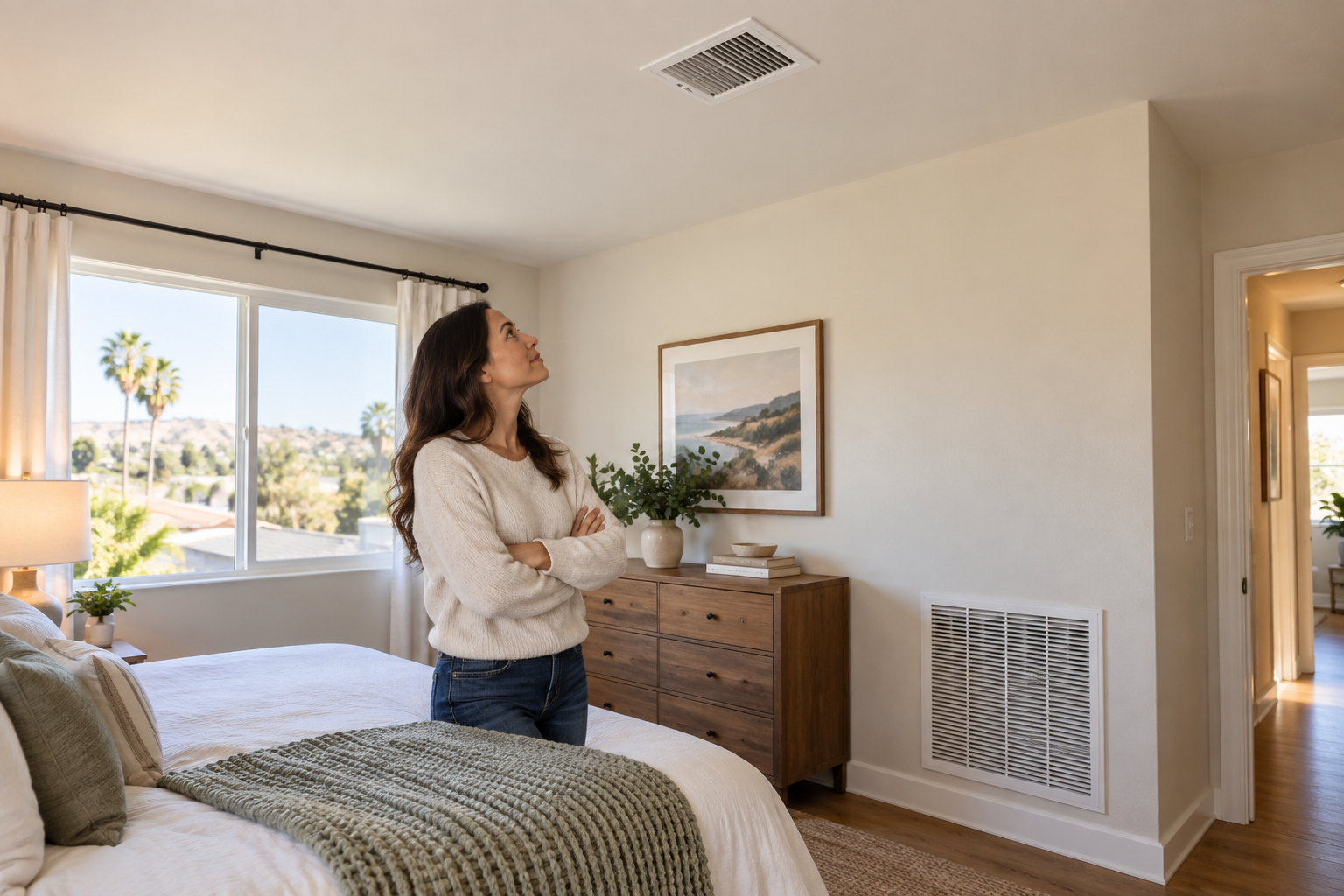
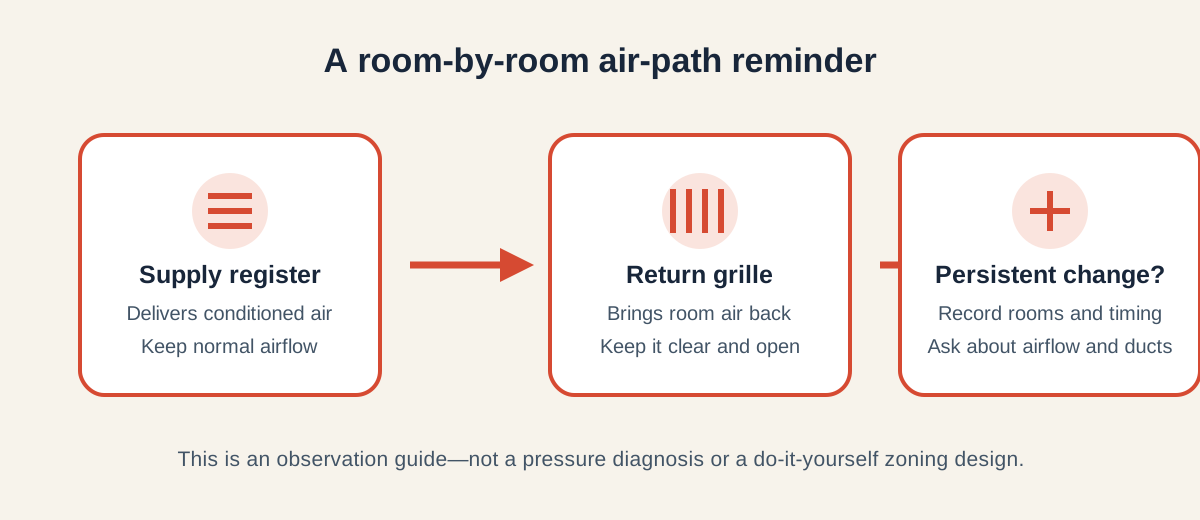
A supply register delivers heated air to a room. A return grille draws household air back toward the equipment. They can look similar, but they do different jobs. Furniture, boxes, curtains, or a closed grille can interfere with a return path, so the return should stay clear. This is why “close vents” is too broad a rule for a home with a central system.
| Part | What it does | Safe homeowner context |
|---|---|---|
| Supply register | Delivers conditioned air to a room | Keep normal airflow; a small one-register adjustment is only an observation |
| Return grille | Carries room air back toward the system | Keep it open and unobstructed |
| Purpose-built zoning | Uses equipment and controls designed for separate areas | Ask what parts of this home were designed to work together |
What a safe comfort observation can tell you
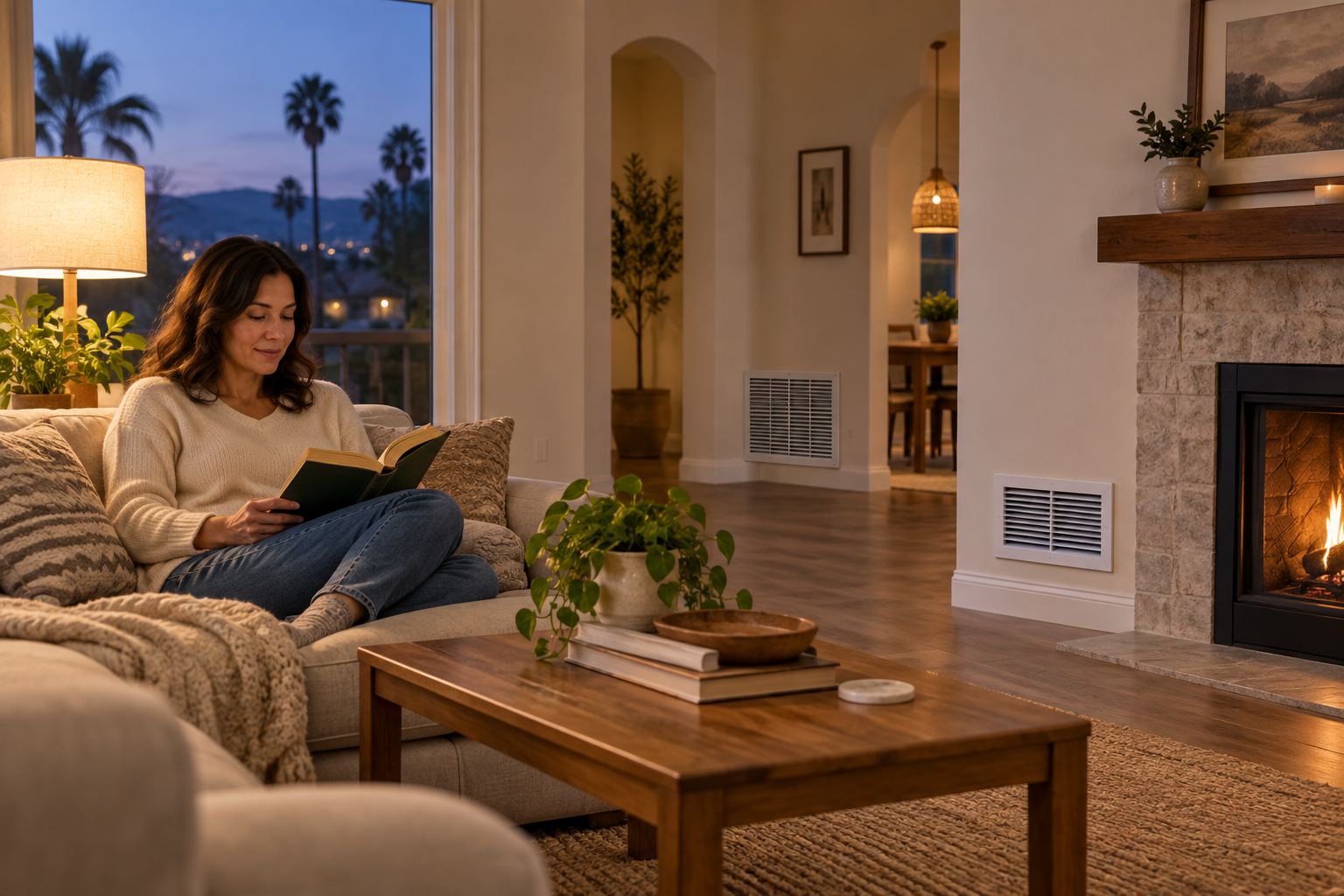
If an unused room is comfortable enough, it is reasonable to notice whether its normal supply is open and whether the room door and return path are clear. Avoid changing several registers at once. If you make a small adjustment to one supply register, note the room, the time, whether nearby rooms change, and whether you hear a new whistle or notice weaker airflow. That record is more useful than trying to diagnose pressure or alter ducts.
When to stop adjusting and arrange an airflow check
Put the register back to its usual setting and arrange an airflow or duct check when a change creates persistent uneven comfort, unusual sound, rooms that feel stuffy, or a pattern that keeps returning. Do not cover a return, open ducts, or alter dampers. Alex Air & Heating can discuss a duct repair visit for homes in Ontario, Pomona, the Inland Empire and nearby eastern Los Angeles County. For related clues, read Return Air Vent Blocked Signs and Signs of Leaky Air Ducts.
Frequently asked questions
One small adjustment is different from closing multiple registers, but it is still not a substitute for zoning. Keep all returns clear and return the register to normal if comfort or sound changes elsewhere.
No. A return grille supports the air path back to the equipment. Do not cover or close it.
Room comfort depends on the whole air path, including supplies, returns, doors, ducts and equipment operation. Record the change rather than assigning it to one hidden part.
Note which room you changed, whether the register was supply or return, when comfort changed, any new noise, and which rooms were affected.
Local next step
Turn this guide into a site-specific answer.
Guides explain the decision. Equipment condition, access, and safe next steps still need to match the home or business. Review the relevant service scope or request an assessment for Ontario, the Inland Empire, or East Los Angeles County. Availability depends on the current schedule.