Can a Blocked Return Air Vent Make a Room Uncomfortable?
Blocked return air vent signs can be worth noting, but a room-comfort concern needs an evidence-based HVAC assessment rather than a remote diagnosis.

Owner & Lead HVAC Technician, Alex Air & Heating · EPA 608 Universal Certified · Ontario, CA
TL;DR
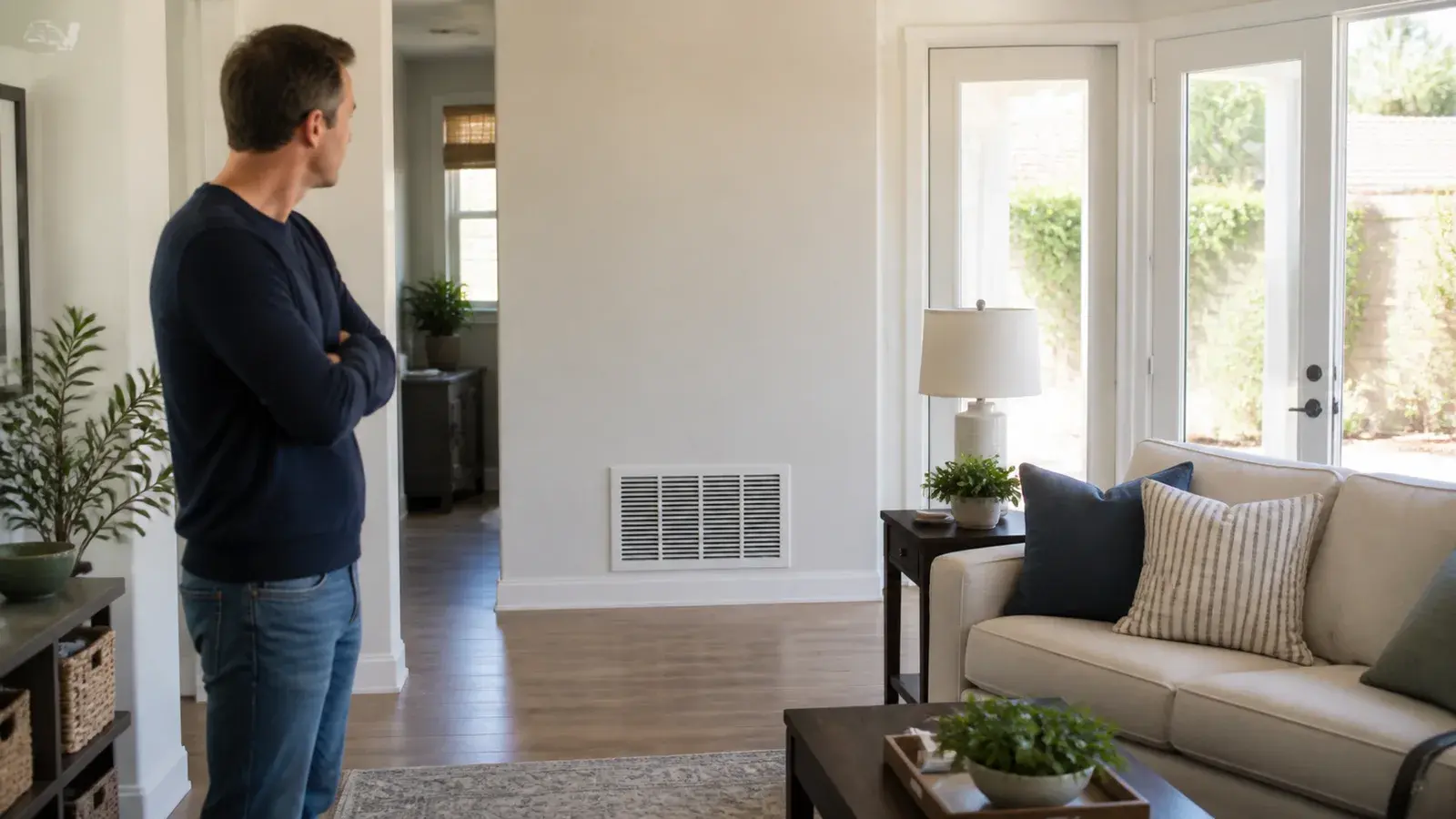
Blocked return air vent signs can include a return opening covered by furniture, a room that feels different when a door closes, or persistent comfort concerns despite ordinary settings. These observations do not prove a return-air fault, because ducts, supply air, controls, insulation, and equipment can also matter. Move only ordinary movable items clear of the grille; do not modify ducts or equipment. Request an HVAC assessment if the concern continues.
- A covered accessible grille is an observable condition, not a complete diagnosis.
- Only move ordinary movable objects; do not alter grilles, ducts, or equipment.
- Persistent room-comfort concerns need a qualified airflow assessment.
On this page
Can a blocked return air vent make a room uncomfortable?
It may contribute, but it is not a remote diagnosis. A return opening is part of the air path that brings room air back to the system. If an accessible grille is covered by ordinary furniture or a rug, clearing that movable item is a reasonable observation step; other comfort causes can still be present.
Look for observable blocked return air vent signs
Note what you can see and when the room feels different. Do not remove grilles, reach into ducts, change wiring, or treat one observation as proof that the return system is undersized or damaged.
| Observation | What it may suggest | What it does not prove |
|---|---|---|
| A return grille is covered by furniture or a rug | Accessible return-air path may be restricted | A specific duct or equipment fault |
| The room differs when a door is closed | The room air path may change with door position | That the return design is the only cause |
| Comfort concern continues after movable objects are clear | More system evidence may be needed | A guaranteed repair or outcome |
| Noise, dust, or comfort changes persist | Document the context for an assessment | A diagnosis without measurement |
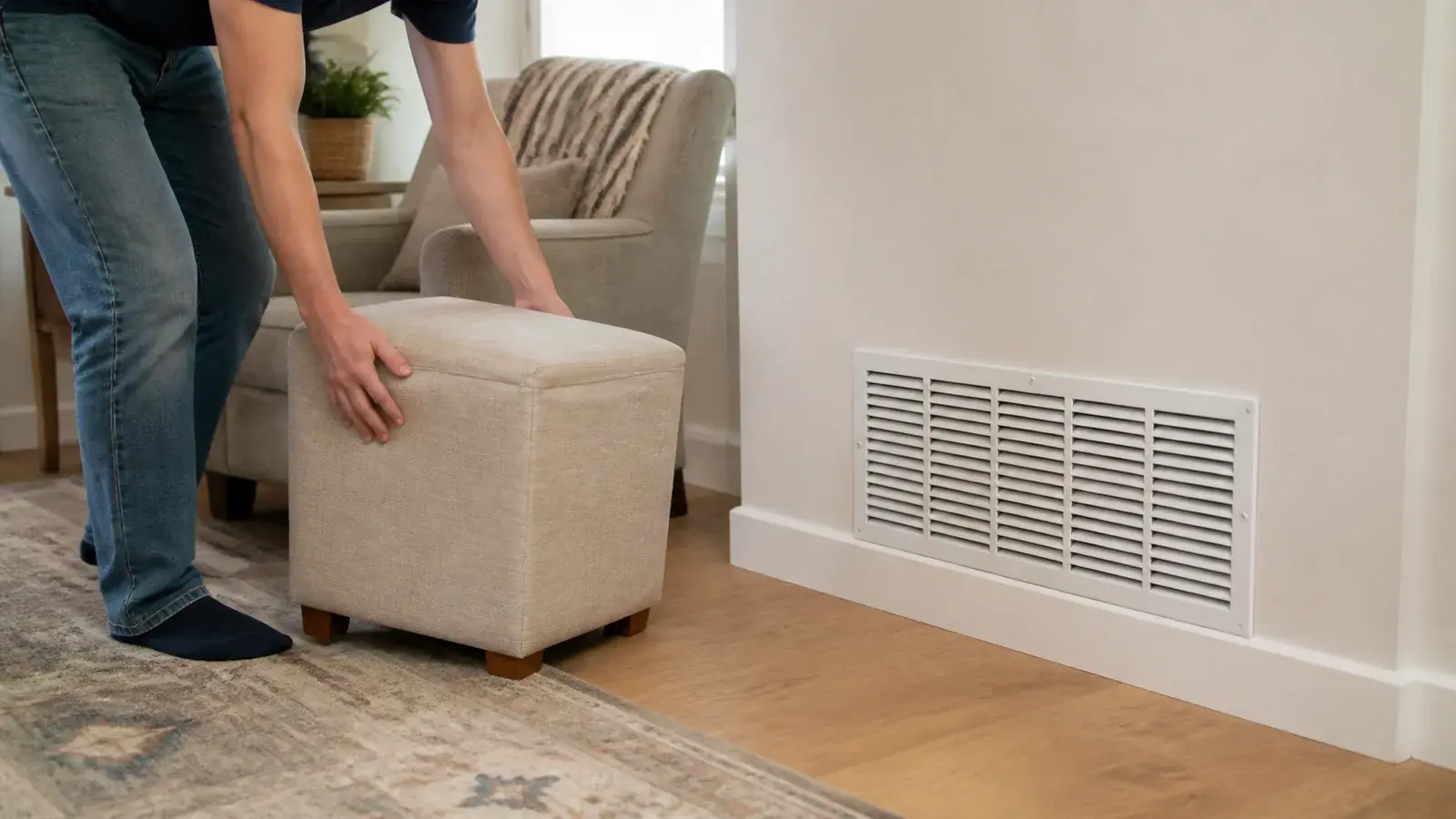
Use a simple, non-invasive observation sequence
Keep the check limited to ordinary movable objects and visible room conditions. Carrier’s consumer explanation notes that return restrictions, duct conditions, and sizing can all affect circulation; the useful local-content gap is separating safe observation from a claim of diagnosis.
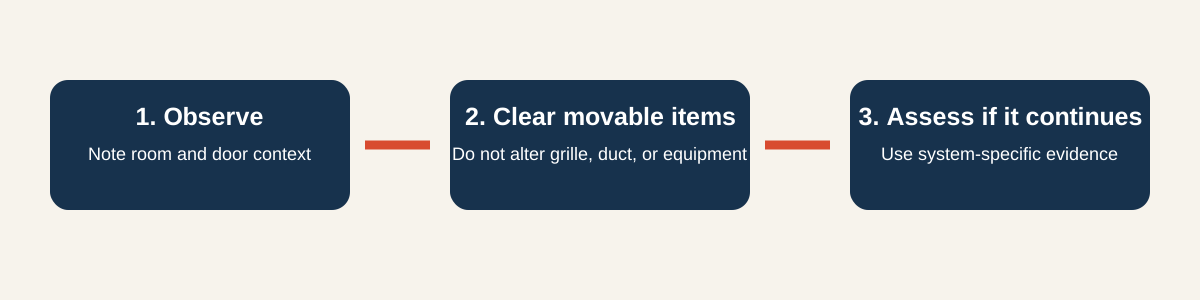
When to request professional help
Request an assessment when the concern persists, changes are widespread, or you are unsure whether an opening is a return or supply path. A professional can review the actual system and home context rather than relying on a generic checklist.
A local next step
For Ontario, Pomona, the Inland Empire, and nearby East LA County service areas, request AC maintenance for an evidence-based comfort discussion. Related reading: indoor air quality after a remodel and our indoor air quality guide. Availability depends on the schedule.
Frequently asked questions
Furniture, drapes, rugs, or other ordinary objects can cover an accessible grille. Clear only movable objects and avoid changing the grille or system.
No. Supply delivery, duct condition, controls, insulation, equipment, and room use can also contribute.
Door position can change the room’s air path. It is an observation to document, not proof of one system fault.
The appropriate scope depends on the home and concern. A professional can evaluate accessible air paths and decide what additional system evidence is relevant.
Local next step
Turn this guide into a site-specific answer.
Guides explain the decision. Equipment condition, access, and safe next steps still need to match the home or business. Review the relevant service scope or request an assessment for Ontario, the Inland Empire, or East Los Angeles County. Availability depends on the current schedule.