Best Smart Thermostat 2026: Nest vs ecobee vs Honeywell
Our HVAC pros compare the best smart thermostat 2026 picks - Nest, ecobee and Honeywell - on price, sensors, geofencing, C-wire needs and who each is best for.

Owner & Lead HVAC Technician, Alex Air & Heating · EPA 608 Universal Certified · Ontario, CA
TL;DR
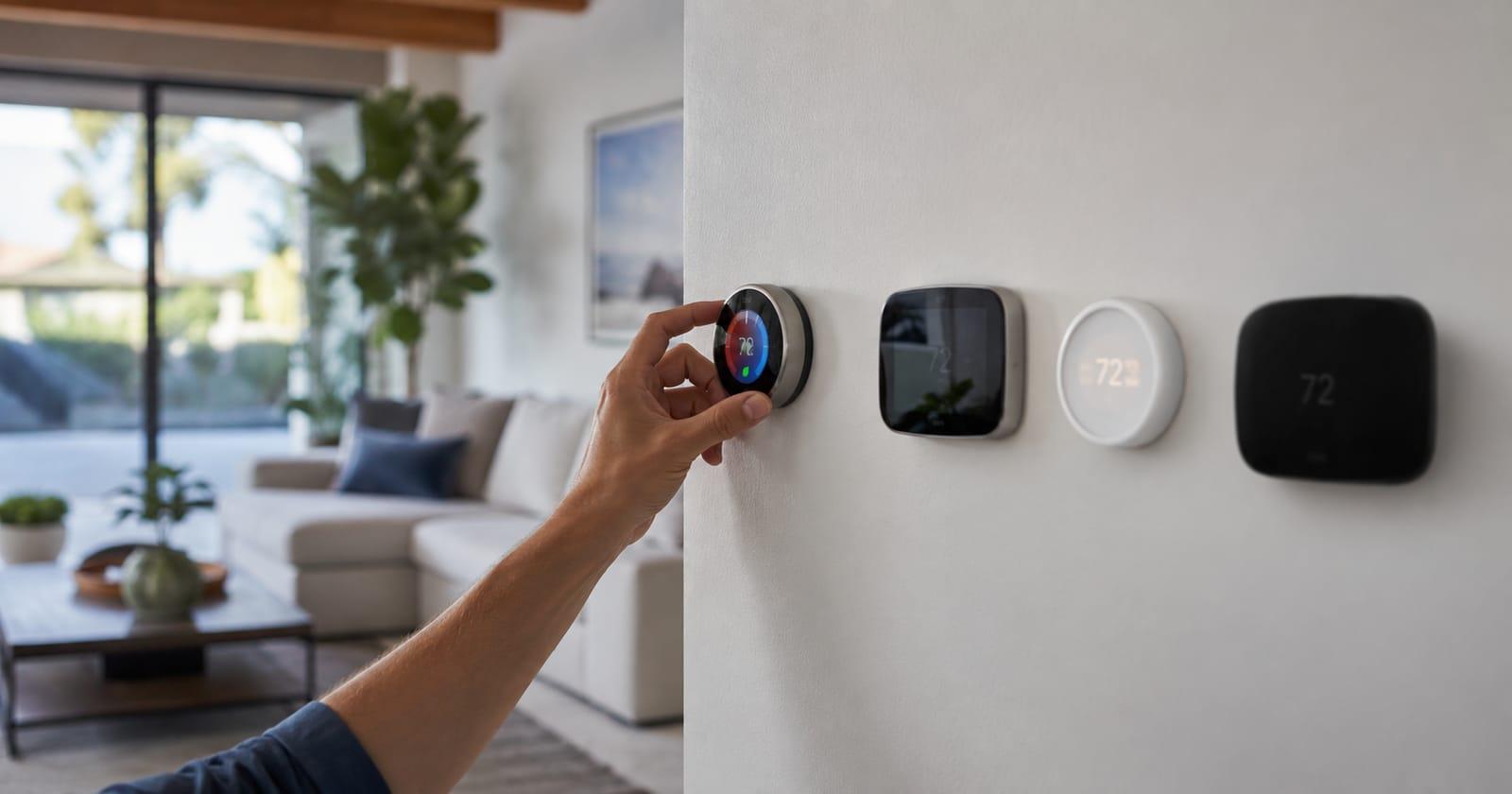
The best smart thermostat 2026 for most homes is the ecobee Smart Thermostat Premium (~$249.99) for multi-room comfort, while the Google Nest Learning Thermostat (~$279.99) wins for hands-off auto-scheduling - choose based on your C-wire, sensor needs, and smart-home platform.
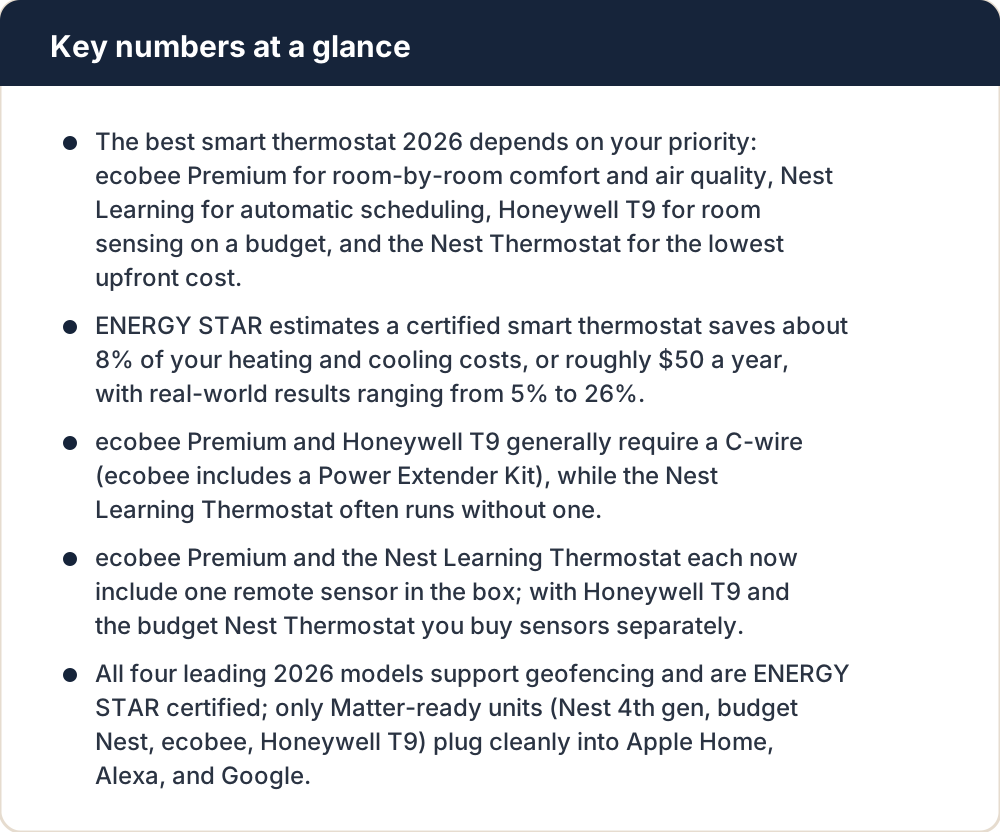
- The best smart thermostat 2026 depends on your priority: ecobee Premium for room-by-room comfort and air quality, Nest Learning for automatic scheduling, Honeywell T9 for room sensing on a budget, and the Nest Thermostat for the lowest upfront cost.
- ENERGY STAR estimates a certified smart thermostat saves about 8% of your heating and cooling costs, or roughly $50 a year, with real-world results ranging from 5% to 26%.
- ecobee Premium and Honeywell T9 generally require a C-wire (ecobee includes a Power Extender Kit), while the Nest Learning Thermostat often runs without one.
- ecobee Premium and the Nest Learning Thermostat each now include one remote sensor in the box; with Honeywell T9 and the budget Nest Thermostat you buy sensors separately.
- All four leading 2026 models support geofencing and are ENERGY STAR certified; only Matter-ready units (Nest 4th gen, budget Nest, ecobee, Honeywell T9) plug cleanly into Apple Home, Alexa, and Google.
On this page
- What is the best smart thermostat 2026 for a California home?
- How much can a smart thermostat actually save you?
- Google Nest Learning Thermostat (4th gen): best for hands-off scheduling
- ecobee Smart Thermostat Premium: best for multi-room comfort
- Honeywell Home T9 and the budget Nest Thermostat: value picks
- Do you need a C-wire for a smart thermostat?
- Which smart-home platform should guide your choice?
What is the best smart thermostat 2026 for a California home?
There is no single best smart thermostat 2026 winner for every house - the right pick depends on whether you want automatic learning, room-by-room comfort, or the lowest price. For most Inland Empire homes we service from our Ontario base, the ecobee Smart Thermostat Premium (~$249.99) is the strongest all-around choice because it ships with an occupancy-sensing remote sensor and a built-in air-quality monitor. If you would rather set it and forget it, the Google Nest Learning Thermostat (4th gen, ~$279.99) builds your schedule automatically in about a week.
The good news: every major 2026 model is ENERGY STAR certified, supports geofencing, and connects to Alexa and Google. The differences that actually matter during installation are the C-wire requirement, how remote sensors are handled, and which smart-home platform you already use. As an EPA-608 certified HVAC contractor, we install all of these, and below we break down each one so you can match the thermostat to your home instead of the marketing. If you are still deciding whether the upgrade pays off at all, our guide on whether a smart thermostat is worth it covers the payback math.
How much can a smart thermostat actually save you?
ENERGY STAR estimates that a certified smart thermostat saves the average household about 8% of its annual heating and cooling costs - roughly $50 a year. Independent field data shows a wider spread, from about 5% to 26%, depending on your old thermostat habits, climate zone, and HVAC efficiency. Manufacturer marketing figures of 12% to 23% come from the brands themselves and are not independently verified, so treat them with caution.
- Homes that previously left the AC running on a fixed temperature see the biggest gains.
- Geofencing and occupancy sensing prevent cooling an empty house - valuable during long Inland Empire summer heat waves.
- Savings shrink if your ductwork leaks or your system is oversized, which is why we pair thermostat upgrades with an Ontario AC tune-up.
In Ontario, Rancho Cucamonga, and Chino Hills, where summer highs routinely push past 100 degrees, the AC does most of the annual work. Dialing in a smart schedule - and picking a sensible setpoint like the one in our summer thermostat temperature guide - is where the real money shows up on your bill.
| Thermostat | Price | Remote sensors | Geofencing | Needs C-wire? | Best for |
|---|---|---|---|---|---|
| Google Nest Learning (4th gen) | ~$279.99 | 1 included (extras ~$39.99) | Yes (phone + Soli sensing) | Often no | Hands-off auto-scheduling |
| ecobee Smart Thermostat Premium | ~$249.99 | 1 SmartSensor included | Yes | Yes (PEK included) | Multi-room comfort + air quality |
| Honeywell Home T9 | ~$199.99 | Optional Smart Room Sensors | Yes (app radius) | Usually yes | Room-by-room control on a budget |
| ecobee Smart Thermostat Enhanced | ~$189.99 | Sold separately | Yes | Yes (PEK included) | ecobee features, tighter budget |
| Nest Thermostat (budget) | ~$129.99 | Sold separately (~$39.99) | Yes (app routines) | Sometimes | Lowest upfront cost + Matter |
Google Nest Learning Thermostat (4th gen): best for hands-off scheduling
The Nest Learning Thermostat (4th gen, ~$279.99) is the pick for people who never want to touch a schedule. Its learning algorithm watches how you adjust the temperature for about a week and then builds an automatic program around your routine. The 4th gen adds a larger borderless display, Soli radar presence detection, one included temperature sensor, and full Matter and Thread support, which brings Apple Home compatibility alongside Alexa and Google.
- Price: ~$279.99, one remote temperature sensor included (extras ~$39.99).
- Often installs without a C-wire on many systems - the most plug-and-play option for older Claremont and Pomona homes.
- Geofencing uses your phone plus on-device presence sensing to switch to Eco mode when everyone leaves.
- ENERGY STAR certified; works with Apple Home, Alexa, and Google Home.
The trade-off: Nest's automatic learning gives you less manual control than ecobee, and if you want tight room-by-room balancing you will lean on add-on sensors. But for a set-it-and-forget-it experience, nothing beats it.
ecobee Smart Thermostat Premium: best for multi-room comfort
The ecobee Smart Thermostat Premium (~$249.99) is our overall favorite for two-story and multi-zone homes. It ships with one SmartSensor that reads both temperature and occupancy, so the system heats or cools based on the rooms people are actually in - ideal for a Corona home where the upstairs bedrooms bake while the living room stays cool. It also builds in an air-quality monitor and a smart-home hub with Alexa on board.
- Price: ~$249.99, one SmartSensor included (occupancy plus temperature).
- Requires a C-wire; ecobee includes a Power Extender Kit (PEK) for homes without one.
- Supports Apple Home, Alexa, Google Home, SmartThings, and Matter.
- ENERGY STAR certified; add sensors for larger homes.
ecobee's self-learning is lighter than Nest's, so plan to spend 15 to 20 minutes setting up a schedule the first day. In exchange you get more direct control and the best room-balancing hardware in the category. If budget is tight, the ecobee Smart Thermostat Enhanced (~$189.99) keeps most features but drops the included sensor and air-quality monitor.
Honeywell Home T9 and the budget Nest Thermostat: value picks
The Honeywell Home T9 (~$199.99) is the value choice for room-level control. It supports Honeywell's Smart Room Sensors, which track temperature and occupancy up to a claimed long range, and its app-based geofencing shifts the system to Away mode when your phone leaves a set radius. It works with Alexa, Google Home, Apple HomeKit, and Matter, and typically needs a C-wire.
If you just want a reliable, low-cost smart thermostat, the budget Nest Thermostat (~$129.99) is the lowest-priced name-brand option. It skips Nest's full learning algorithm in favor of a suggested schedule, supports Matter, and works with Alexa and Google, though remote sensors are sold separately (~$39.99). It is a smart pick for a rental, a guest unit, or a simple single-zone home in Pomona or Claremont.
- Honeywell T9: ~$199.99, optional Smart Room Sensors, geofencing, usually needs a C-wire, ENERGY STAR certified.
- Nest Thermostat (budget): ~$129.99, sensors sold separately, Matter support, no full learning, ENERGY STAR certified.
Do you need a C-wire for a smart thermostat?
The C-wire (common wire) delivers continuous power to a smart thermostat. Whether you need one is the single biggest install variable. ecobee Premium and Honeywell T9 generally require a C-wire; ecobee includes a Power Extender Kit so the thermostat can work even without one at the wall. The Nest Learning Thermostat is the most forgiving and often runs on many systems without a dedicated C-wire.
Many older Inland Empire homes were wired before smart thermostats existed, so the C-wire may be missing behind the faceplate. Guessing wrong can leave a thermostat that reboots, loses Wi-Fi, or short-cycles your HVAC. This is where a professional matters - our smart thermostat installation service verifies your wiring, adds a C-wire or adapter when needed, and confirms compatibility with your specific furnace and AC before we ever mount the unit.
Which smart-home platform should guide your choice?
If you are already committed to an ecosystem, let it steer the decision. All four leading 2026 models now support Matter, which improves cross-platform compatibility, but the native experiences still differ. Apple households get the cleanest integration from the Nest Learning 4th gen, ecobee Premium, or Honeywell T9. Deep Alexa users may prefer ecobee, since Amazon owns the brand and Alexa is built into the Premium. Google Home homes are naturally at ease with either Nest model.
For most California homeowners the platform is a tie-breaker, not the deciding factor - comfort features, sensor handling, and C-wire needs matter more. And no matter which you buy, you can stack the savings with utility and state incentives; see our roundup of 2026 California HVAC rebates and tax credits before you purchase.
Frequently asked questions
For most homes the ecobee Smart Thermostat Premium (~$249.99) is the best all-around pick because it includes an occupancy-sensing remote sensor and an air-quality monitor. If you prefer automatic scheduling with no setup, the Google Nest Learning Thermostat (~$279.99) is the better fit. Budget shoppers should look at the Honeywell T9 or the ~$129.99 Nest Thermostat.
Yes, though the amount varies. ENERGY STAR estimates about 8% savings on heating and cooling, or roughly $50 a year, for a certified model. Real-world results range from about 5% to 26% depending on your habits, climate, and HVAC condition. Homes that previously never set a schedule tend to save the most.
Turn off power, remove your existing thermostat faceplate, and look for a wire in the terminal labeled C. If it is empty, you may still be able to install a Nest Learning Thermostat, or use an adapter or the ecobee Power Extender Kit. When in doubt, have a licensed HVAC technician check before you buy to avoid short-cycling or Wi-Fi dropouts.
In 2026 the Nest Learning Thermostat (4th gen), ecobee Smart Thermostat Premium, and Honeywell Home T9 all support Apple Home, and Matter support across the lineup broadens compatibility further. The older third-gen Nest did not support HomeKit natively, so confirm the generation if Apple integration matters to you.
Yes. We are an EPA-608 certified HVAC company based in Ontario, CA, serving the Inland Empire and East LA County. We offer same-day service and upfront pricing, verify your wiring and C-wire needs, add adapters when required, and confirm the thermostat works correctly with your specific furnace and AC system.
Local next step
Turn this guide into a site-specific answer.
Guides explain the decision. Equipment condition, access, and safe next steps still need to match the home or business. Review the relevant service scope or request an assessment for Ontario, the Inland Empire, or East Los Angeles County. Availability depends on the current schedule.