How to Compare AC Replacement Estimates in Pomona
Compare AC replacement estimates in Pomona by scope, sizing evidence, responsibilities, and the questions that make proposals genuinely comparable.

Owner & Lead HVAC Technician, Alex Air & Heating · EPA 608 Universal Certified · Ontario, CA
TL;DR
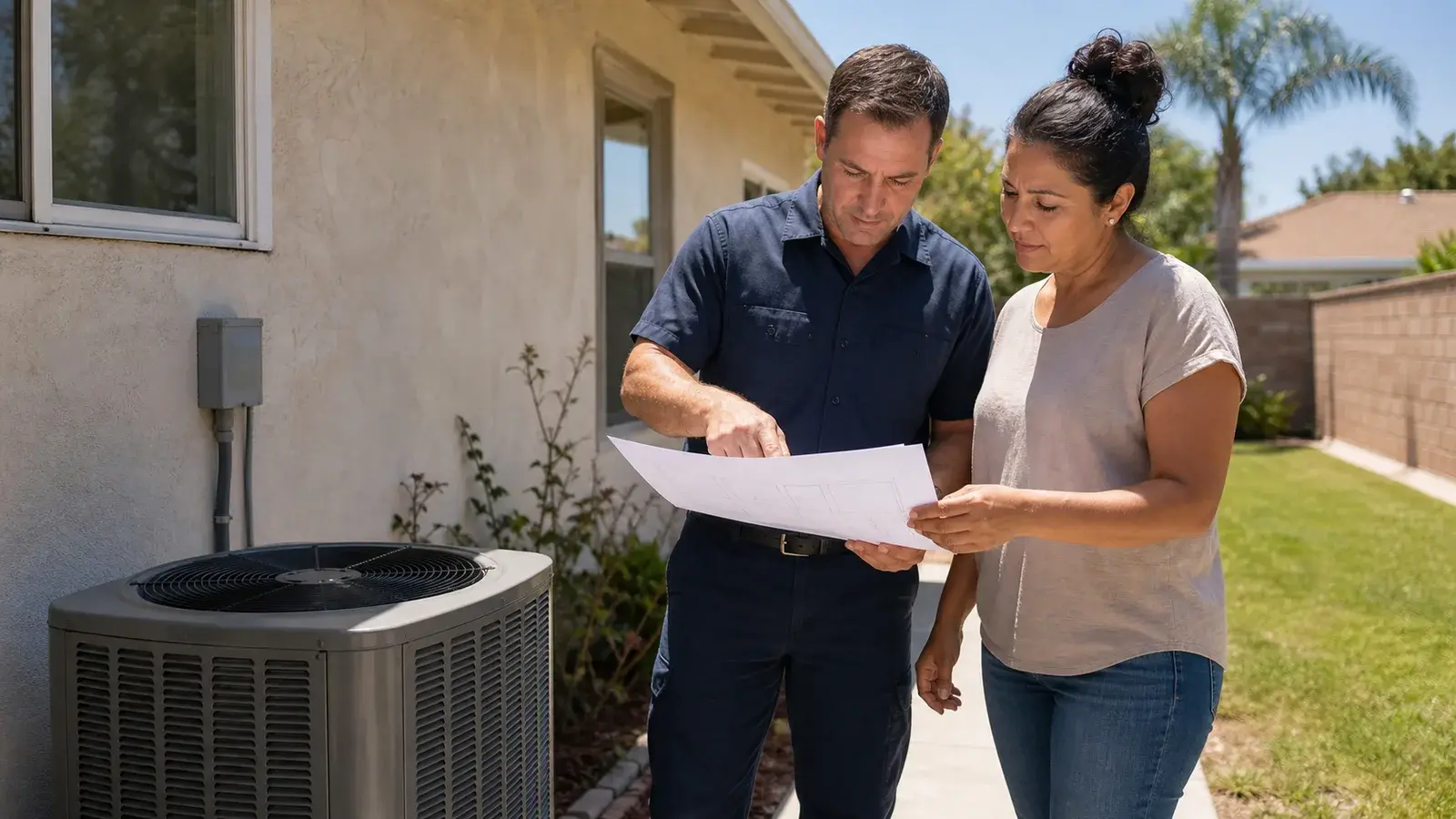
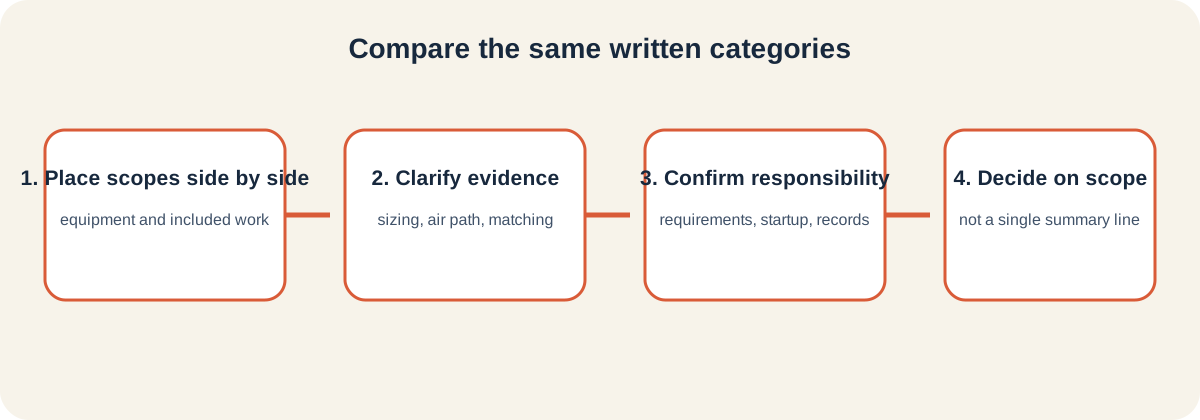
To compare an AC replacement estimate in Pomona, put each proposal beside the same set of questions: what equipment and work are included, what sizing evidence supports the recommendation, what existing components are evaluated, and who is responsible for permits, startup, and records. A lower-looking scope is not automatically equivalent. Compare documented responsibilities before deciding, not just a single summary line.
- Compare written scope and responsibilities before treating proposals as equivalent.
- Ask what sizing, airflow, duct, electrical, and equipment-match evidence supports each recommendation.
- Pomona is within the stated service footprint; appointment availability depends on the schedule.
- A written proposal can clarify scope, but it does not guarantee a particular outcome.
On this page
How do you compare AC replacement estimates in Pomona?
For an AC replacement estimate in Pomona, compare the written scope before comparing a single summary line. Put each proposal beside the same questions: what is included, what evidence supports the equipment recommendation, what existing conditions were evaluated, and who owns the remaining project responsibilities. This gives a homeowner a more useful basis for a local decision.
The goal is not to declare one proposal automatically better. It is to make scope differences visible. When you are ready to discuss a project, start with AC replacement; Pomona is within our stated service area and availability depends on the schedule.
This guide compares proposals for a local AC replacement. It does not promise a particular project result or determine whether the furnace should also change. For that equipment-compatibility decision, read Should You Replace an AC and Furnace Together?.
Use one comparison sheet for every proposal
| Question | Why it belongs on the sheet | What to ask |
|---|---|---|
| Equipment scope | Shows whether the same system components are described. | Which outdoor, indoor, and control components are included? |
| Sizing basis | Connects the recommendation to the home. | What home and system information informed the recommendation? |
| Air path and ducts | Comfort concerns can involve more than equipment. | What was observed about return, supply, and ducts? |
| Electrical and permit scope | Separates included work from items requiring confirmation. | Who will confirm applicable requirements and document the scope? |
| Startup and records | Makes close-out responsibilities visible. | What model, commissioning, and homeowner records are provided? |
Look for sizing and matching evidence
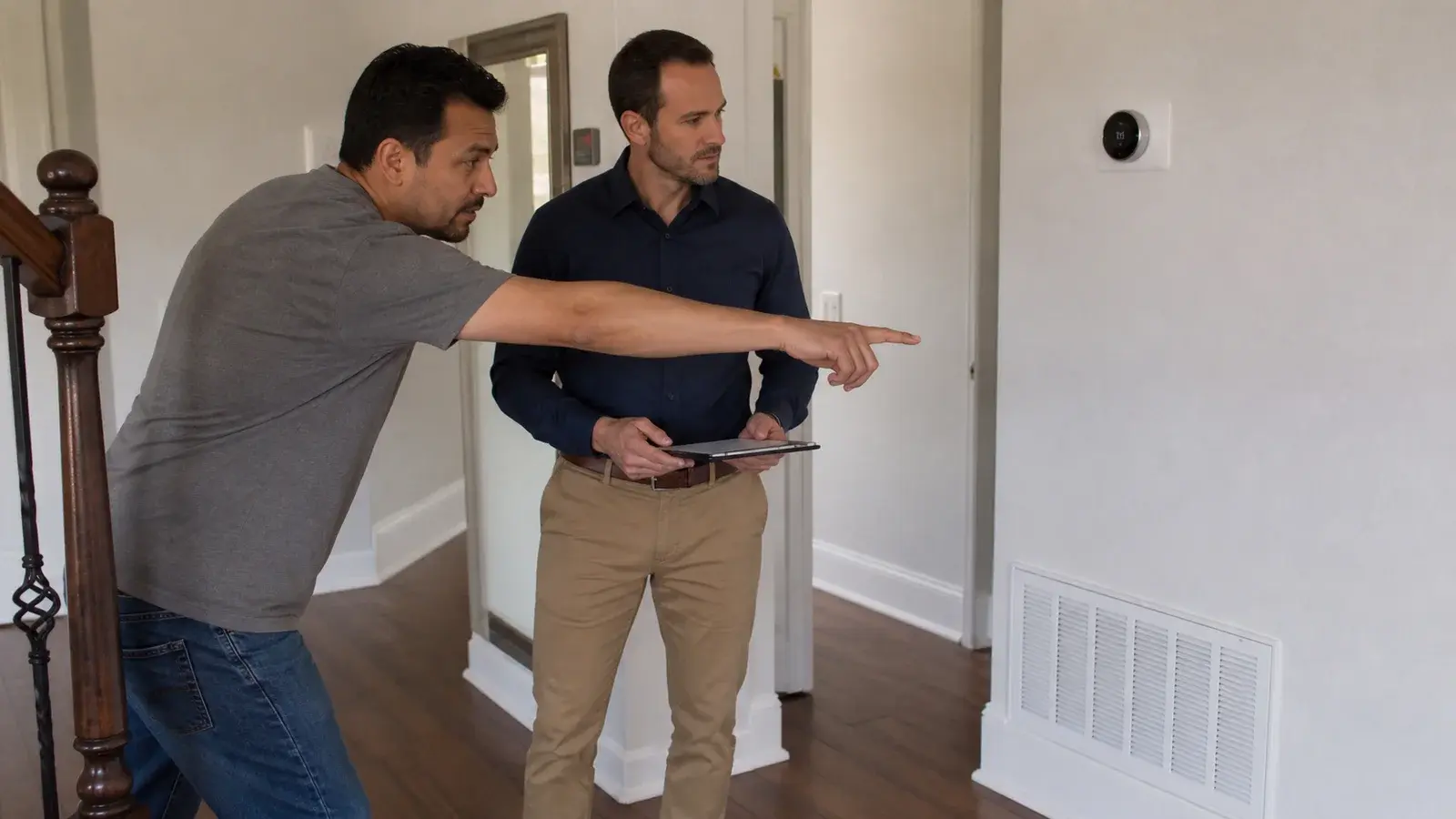
U.S. Department of Energy quality-installation guidance describes sizing, component matching, airflow, refrigerant charge, and duct sealing as connected installation factors. A proposal does not need to make technical promises to show its basis: it can state what was reviewed, what needs verification, and how the selected components are intended to work together.
Ask the provider to explain what home information and existing-system conditions informed the recommendation. If a room is uncomfortable or an air path is restricted, record that concern rather than assuming a larger unit is the answer.
Clarify project responsibilities before choosing
A helpful proposal makes responsibilities visible: site access, existing equipment removal, electrical or duct items identified in scope, confirmation of applicable local requirements, and handoff records. If an item is not known yet, it should be labeled as a question to resolve rather than quietly assumed.
California’s Contractors State License Board advises consumers to obtain and compare written information when choosing a contractor. That principle is especially useful when two proposals use different descriptions for what may be different scopes.
A local next step
For Pomona, Inland Empire, and East Los Angeles County service areas, request an AC replacement assessment with your existing equipment information and comfort concerns. Availability depends on the schedule. You can also read How to Choose an HVAC Contractor in Los Angeles County for a separate contractor-vetting checklist.
Frequently asked questions
Compare the documented equipment scope, sizing basis, existing-system evaluation, electrical and duct work, permits where applicable, startup, and records. Ask each provider to explain anything that is excluded or still needs confirmation.
A recommendation should be tied to the home and existing system conditions, not to a generic rule of thumb. Quality-installation guidance identifies sizing, component matching, airflow, refrigerant charge, and ducts as connected parts of system performance.
No. Whether to replace the AC and furnace together depends on the existing equipment, proposed matched system, airflow path, condition, and project scope. See [Should You Replace an AC and Furnace Together?](/blog/replace-ac-and-furnace-together).
Permit and inspection requirements depend on the exact work and local authority. Ask who will confirm the applicable requirement and how it will be documented.
Pomona is within the company’s stated service footprint. Appointment availability depends on the schedule.
Local next step
Turn this guide into a site-specific answer.
Guides explain the decision. Equipment condition, access, and safe next steps still need to match the home or business. Review the relevant service scope or request an assessment for Ontario, the Inland Empire, or East Los Angeles County. Availability depends on the current schedule.