Should You Replace an AC and Furnace Together?
A practical decision guide for whether an existing split-system AC and furnace should be replaced together, centered on component matching and documented project scope.

Owner & Lead HVAC Technician, Alex Air & Heating · EPA 608 Universal Certified · Ontario, CA
TL;DR
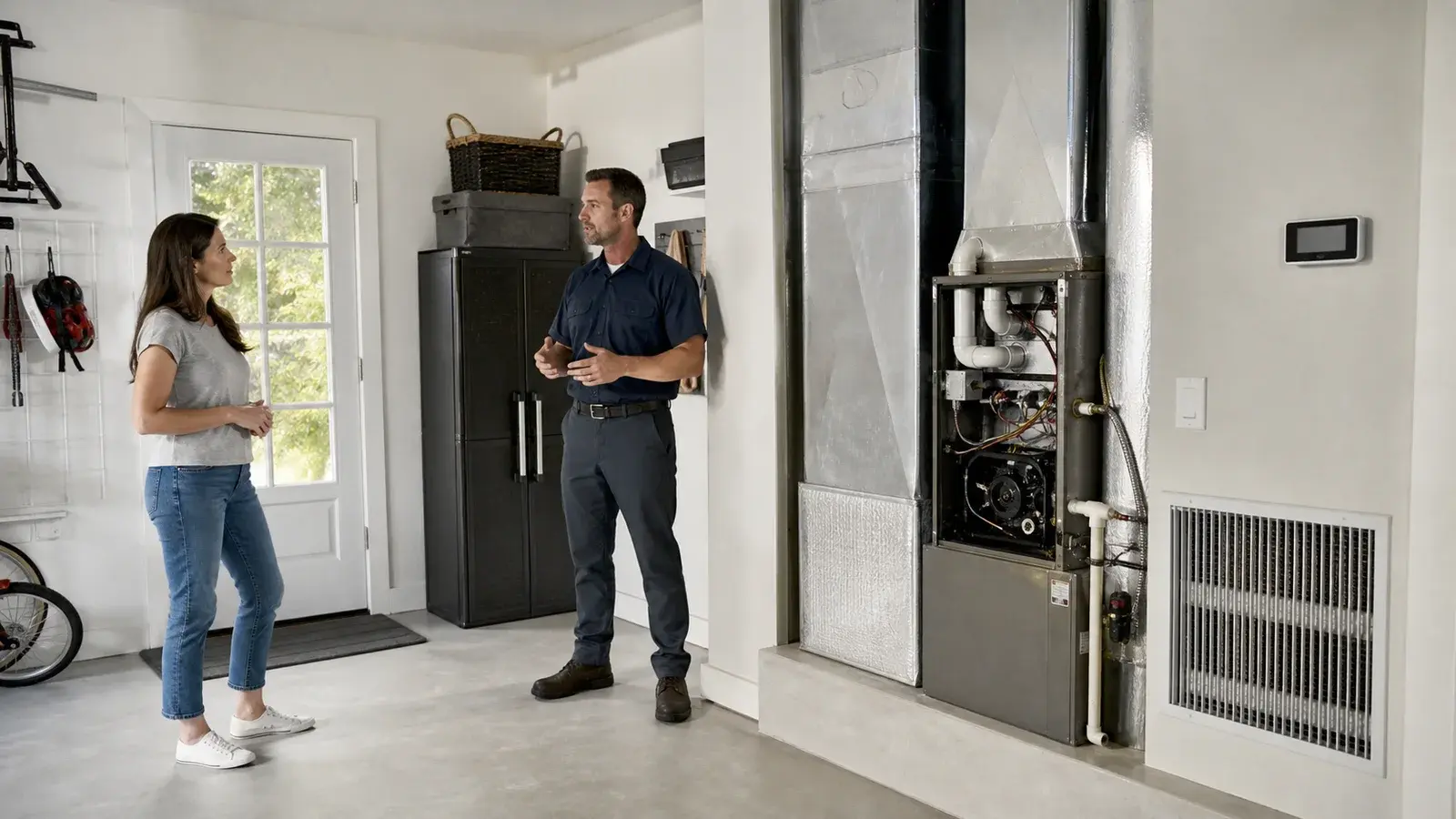
You do not automatically need to replace an AC and furnace together. The right question is whether the existing furnace, blower, indoor coil, controls, air path, and proposed outdoor equipment can form an appropriate documented system for the project. Ask for the compatibility basis, the condition of retained components, and what remains to be confirmed. Coordinated replacement is a scope decision, not a blanket rule.
- Replacing both pieces together is not an automatic requirement.
- The existing furnace and blower may matter to the proposed cooling system’s documented match and airflow path.
- Ask what is retained, why it is retained, and what compatibility evidence supports the plan.
- For local service areas, appointment availability depends on the schedule.
On this page
Should you replace an AC and furnace together?
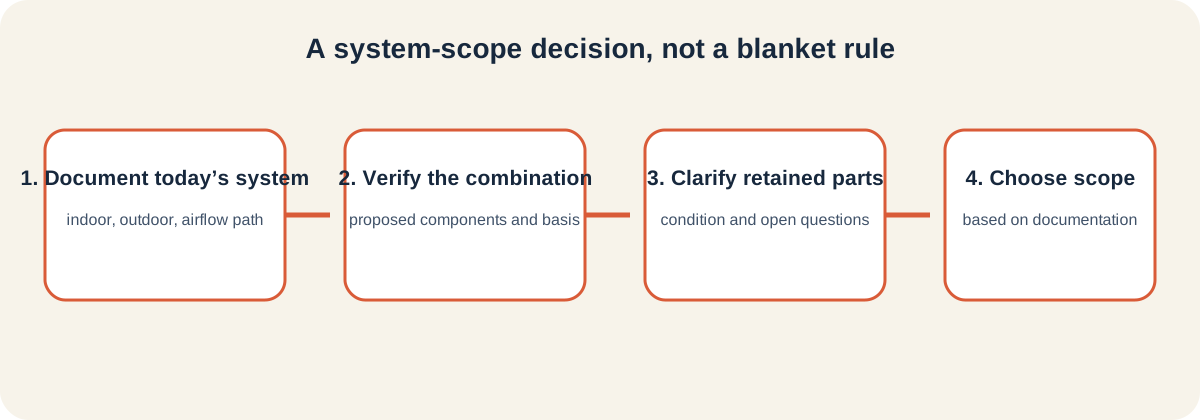
You do not automatically need to replace an AC and furnace together. For an existing split system, the practical question is whether the furnace, blower, indoor coil, controls, air path, and proposed outdoor equipment can form an appropriate documented system for this project. The answer should be tied to the specific equipment and conditions, not to a blanket rule.
If you are comparing options, request AC replacement and ask the provider to show what is retained, what is replaced, and what compatibility information supports the recommendation. Availability for Ontario, Pomona, and nearby communities depends on the schedule.
This is a system-scope guide, not a remote equipment verdict. It does not make a condition finding for your furnace or AC. For comparing local written scopes first, read How to Compare AC Replacement Estimates in Pomona.
Start with the system that exists today
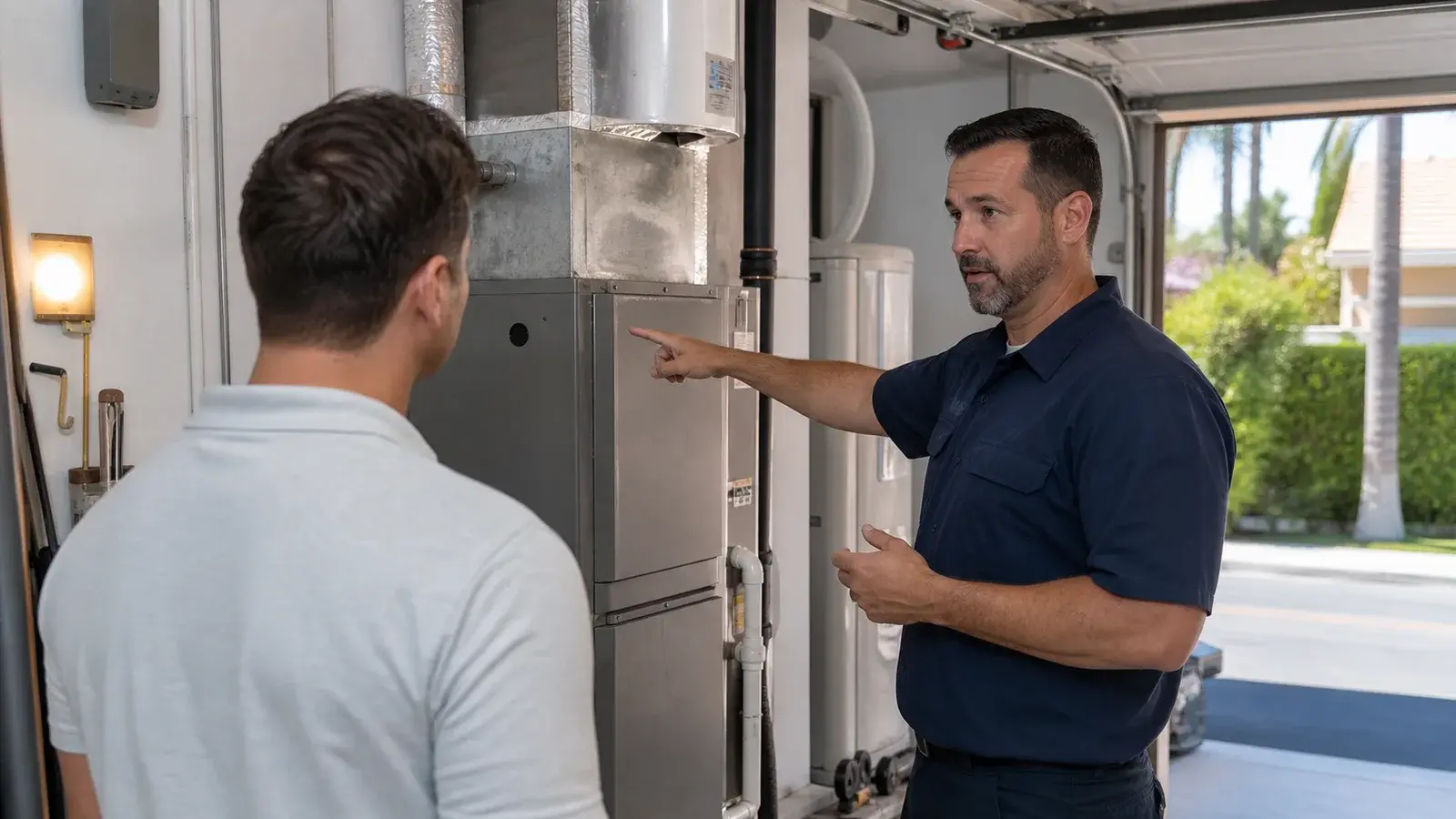
A central split system has more than the outdoor unit. The indoor coil, furnace or air handler, blower, controls, ducts, return path, and electrical details can all matter to the project discussion. Before deciding on a coordinated replacement, ask for the make-up of the current system and the proposed configuration in writing.
- Which components would remain and which would change?
- What condition or compatibility question applies to each retained component?
- What source identifies the proposed equipment combination?
- What air-path, duct, control, or electrical observations need separate attention?
When coordinated replacement may be worth evaluating
| Project question | Why it matters | What a written scope should clarify |
|---|---|---|
| Indoor blower and coil | They are part of the cooling air path. | What is retained and how it relates to the proposed system. |
| Equipment combination | Published combinations may have specific requirements. | How the proposed combination is verified. |
| Existing condition | A component may be retained only after project-specific review. | Observed condition and any unresolved question. |
| Comfort and ducts | Equipment alone may not explain every room concern. | Whether duct and return observations are in scope. |
| Controls and electrical | Changes can involve more than physical equipment. | What is included and what requires confirmation. |
ENERGY STAR and Department of Energy material describe component matching and installation quality as part of an effective heating-and-cooling system. Those sources do not create a rule that every home must replace both pieces at once; they support asking for the equipment and installation basis in the actual proposal.
When keeping the furnace can still be a question
A furnace may be a candidate to remain when the proposal shows an appropriate configuration and the project-specific condition review supports that path. But “it still runs” is not by itself a complete compatibility analysis. Ask for a clear distinction between what has been observed, what is proposed, and what requires further confirmation.
If the project is considering a heat pump rather than a like-for-like air conditioner, that is a different system-selection conversation. Gas Furnace vs Heat Pump: California Operating Costs compares utility inputs without prescribing a configuration.
Use a documented scope for the next decision
For any local project, compare the written system scope rather than assuming a coordinated replacement is always required or always unnecessary. Alex Air & Heating serves Ontario, Pomona, the Inland Empire, and East Los Angeles County communities; request an AC replacement assessment when you want a project-specific discussion. Availability depends on the schedule.
Frequently asked questions
No. The decision depends on the equipment that will remain, the proposed system match, airflow path, condition, controls, and project requirements. A written scope should explain the basis for retaining or replacing the furnace.
For a split system, the outdoor equipment, indoor coil, blower or air handler, and controls may need to work together as an appropriate documented combination. Ask the provider to identify the proposed combination and the source used to verify it.
It may be technically appropriate in some projects, but the answer depends on the specific equipment and site conditions. Do not treat age alone as a conclusion; request a documented compatibility and condition discussion.
No. Rooms that are too hot or cold can also involve ducts, returns, insulation, controls, or other home conditions. A scope should distinguish equipment selection from other observations.
The company states service coverage for Ontario, Pomona, the Inland Empire, and East Los Angeles County communities. Appointment availability depends on the schedule.
Local next step
Turn this guide into a site-specific answer.
Guides explain the decision. Equipment condition, access, and safe next steps still need to match the home or business. Review the relevant service scope or request an assessment for Ontario, the Inland Empire, or East Los Angeles County. Availability depends on the current schedule.