AC Can't Keep Up in Extreme Heat? Why It Happens and When to Call a Pro
On a 110°F Inland Empire afternoon, a 75-78°F indoor reading is normal, not a breakdown. Here's how to tell when your AC is just working hard versus actually failing.

Owner & Lead HVAC Technician, Alex Air & Heating · EPA 608 Universal Certified · Ontario, CA
TL;DR
If your AC can't keep up in a heat wave, that alone usually isn't a breakdown: a central system is designed to cool your home only about 15-20°F below the outdoor temperature, so on a 110°F Ontario or Riverside afternoon a 75-78°F indoor reading is normal and the system will run near-continuously. Real trouble looks different: the indoor-outdoor gap keeps growing, vents blow warm air, the house never recovers overnight, or ice forms on the lines. Those signs mean it's worth a professional look.
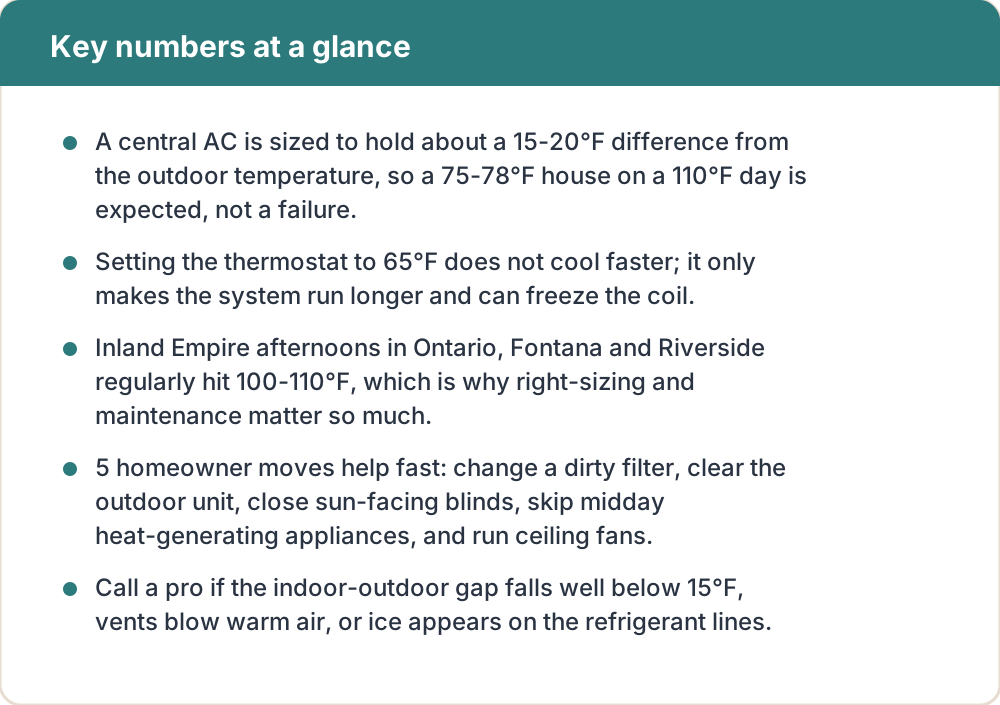
- A central AC is sized to hold about a 15-20°F difference from the outdoor temperature, so a 75-78°F house on a 110°F day is expected, not a failure.
- Setting the thermostat to 65°F does not cool faster; it only makes the system run longer and can freeze the coil.
- Inland Empire afternoons in Ontario, Fontana and Riverside regularly hit 100-110°F, which is why right-sizing and maintenance matter so much.
- 5 homeowner moves help fast: change a dirty filter, clear the outdoor unit, close sun-facing blinds, skip midday heat-generating appliances, and run ceiling fans.
- Call a pro if the indoor-outdoor gap falls well below 15°F, vents blow warm air, or ice appears on the refrigerant lines.
On this page
Why can't my AC keep up in extreme heat?
A central AC is generally designed to cool your home only about 15-20°F below the outdoor temperature, so on a 110°F Inland Empire afternoon a 75-78°F indoor reading is normal, not a breakdown. If the gap is widening, the house never recovers overnight, or air from the vents is warm, something is wrong and worth a look.
The 15-20°F rule: what your system is actually built to do
Central air conditioners are sized around a 'design temperature' — the assumption that the system needs to hold roughly a 15-20°F difference from a typical hot-day outdoor temperature. That design basis is why a house near Ontario or Riverside feels great at 95°F outside but climbs into the high 70s when the thermometer hits 110°F. The equipment isn't broken; it's running near-continuously and holding the gap it was built to hold.
This is also why cranking the thermostat down does nothing helpful. Your AC removes heat at a fixed rate, so setting it to 65°F doesn't cool faster than 76°F — it just runs longer, spikes your bill, and in a heat wave can freeze the indoor coil. If you want lower running costs, our guide to lowering your summer AC electric bill breaks down the smarter moves.
Symptom-by-symptom: normal strain vs. real problem
The fastest way to know whether to relax or call for help is to read the gap between indoor and outdoor temperature, plus the air at your vents. This table covers the five situations we see most during an Inland Empire heat wave.
| Symptom | Likely cause | DIY check | Call a pro? |
|---|---|---|---|
| Indoor 15-20°F below outdoor | System working as designed | Confirm gap with a thermometer at the vent and thermostat | No — this is normal |
| Gap keeps growing all afternoon | Dirty filter/coil, low refrigerant, weak airflow | Replace filter; check outdoor unit is clear | Yes if new filter doesn't help |
| Warm air at the vents | Low refrigerant, compressor or outdoor-unit fault | Confirm system is set to cool and outdoor fan spins | Yes — book service |
| Ice on refrigerant lines or coil | Airflow restriction or low refrigerant | Turn AC off, fan on to thaw; replace filter | Yes — needs diagnosis |
| One room hot, rest fine | Duct issue, closed register, sun/insulation load | Open registers; close that room's blinds | Sometimes — if it persists |
If your air is blowing warm, start with why your AC is blowing warm air. Seeing frost? Read what a frozen AC coil means before the ice damages your compressor. And when one bedroom bakes while the rest of the house is fine, our uneven cooling and hot-room fixes walk through the causes.
What actually causes poor cooling in a heat wave
When performance really does slip, it's almost always one of a short list of causes. Airflow and refrigerant top it — and both get exposed by extreme heat because the system is already running at its limit.
- Dirty air filter or dirty coils restricting airflow — the single most common and most preventable cause.
- Low refrigerant from a leak, which shows up as warm vents or ice on the lines.
- A blocked or dirty outdoor condenser that can't dump heat, common when landscaping crowds the unit.
- Leaky or undersized ducts bleeding cooled air into the attic before it reaches your rooms.
- Direct sun and poor insulation adding heat load faster than the system can remove it.
- An undersized or aging system that simply can't cover a 100-110°F day.
Homeowner moves that help right now
Before you call anyone, a handful of steps genuinely relieve strain during a heat wave. They cost little and often recover several degrees.
- Replace a dirty air filter — a clogged filter chokes airflow and is the top DIY fix.
- Keep the outdoor unit clear and shaded but unobstructed; pull weeds and trim shrubs 2 feet back.
- Close blinds and curtains on sun-facing windows to cut solar heat gain.
- Avoid running the oven, dryer, or other heat-generating appliances midday.
- Run ceiling fans to make rooms feel cooler so you don't crank the thermostat down.
- Set a realistic target (76-78°F) and let the system hold it — don't dial it to 65°F.
For a full heat-wave playbook tailored to our climate, see how to keep your AC running through a heat wave in the Inland Empire. If the unit runs but the house won't cool, AC running but not cooling covers the next checks, and rapid on-off cycling is explained in AC short-cycling causes and fixes.
If you've changed the filter and cleared the outdoor unit but vents blow warm, ice forms on the lines, or the indoor-outdoor gap stays well under 15°F, it's time for a diagnosis. Same-day help is available across the Inland Empire — book AC repair.
Why this matters more in the Inland Empire
Desert-adjacent heat in Ontario, Riverside and Fontana regularly hits 100-110°F, which pushes every AC to the edge of its design range. That's exactly why right-sizing at installation and consistent maintenance matter here more than in milder coastal areas — a system that coasts in June can fall behind in a late-August heat wave. If your cooling suddenly got much worse or the outdoor unit won't keep up, our emergency AC repair covers Ontario, Pomona, Rancho Cucamonga, Fontana, Riverside and Chino.
One more thing that outranks any thermostat setting: extreme heat is a genuine health risk. Check on elderly neighbors and relatives, keep pets indoors with water, and never leave people or pets in a hot car, even for a minute. Cooling equipment can be repaired; heat illness moves fast.
Frequently asked questions
Because a central AC is engineered to cool your home only about 15-20°F below the outdoor temperature. On a 110°F Inland Empire day, that math puts your house around 90°F at the extreme edge and 75-78°F for a healthy, well-maintained system running near-continuously. That is the system working as designed, not failing. Trouble is when the gap keeps widening or vents blow warm air.
Aim to judge performance by the gap, not a fixed number. A healthy central AC should hold roughly 15-20°F below the outdoor temperature. So at 100°F outside, an indoor reading in the low 80s is normal; at 110°F, mid-to-high 70s is realistic for a strong system. If your home stays much closer than 15°F below outdoors, or the gap keeps shrinking, something is restricting airflow or refrigerant.
No. Your AC removes heat at a fixed rate regardless of the number on the thermostat, so setting it to 65°F does not cool faster than 75°F. It just makes the system run longer, raises your bill, and in extreme heat can cause the indoor coil to freeze over. Pick a realistic target like 76-78°F and let the system hold it steadily through the afternoon.
Several things restrict cooling: a dirty air filter or coils, low refrigerant from a leak, a blocked or dirty outdoor condenser, leaky or undersized ducts, strong sun through windows, poor insulation, or an aging, undersized system. In extreme heat, direct sun and duct losses add up fast. Start by replacing the filter and clearing the outdoor unit; if vents still blow warm, book a professional inspection.
No. Running near-continuously in extreme heat is normal and expected, since the system needs long cycles to hold a 15-20°F gap against 100-110°F outdoor air. Continuous running is far healthier for the equipment than short-cycling on and off. What matters is airflow: keep a clean filter, an unobstructed outdoor unit, and closed blinds so the system isn't fighting extra heat load.
Call a professional if vents blow warm air, there is ice on the refrigerant lines or coil, the system short-cycles rapidly, cooling suddenly got much worse, or the indoor-outdoor gap falls well below 15°F. These point to low refrigerant, airflow, or component failures that DIY steps won't fix. In an Inland Empire heat wave, our team offers same-day and emergency AC repair across Ontario, Riverside and Fontana.