Is R-410A Still Available? What the Phase-Out Means for Repairs on Your Current AC
Yes, R-410A is still legal and available to service your existing AC in 2026. The phase-out limits new equipment, not repairs. Here is what recharging and repairing costs, and when a leak means replace instead.

Owner & Lead HVAC Technician, Alex Air & Heating · EPA 608 Universal Certified · Ontario, CA
TL;DR
Is R-410A still available in 2026? Yes. R-410A remains legal and available to service, recharge, and repair the AC you already own. The AIM Act phase-out bans manufacturing NEW R-410A residential systems as of January 1, 2025, but it does not touch existing equipment. Technicians in Ontario and the Inland Empire can still buy virgin and reclaimed R-410A to top off your system. Prices are rising gradually as production quotas fall, so budget for eventual replacement if your unit is 10+ years old and leaking.
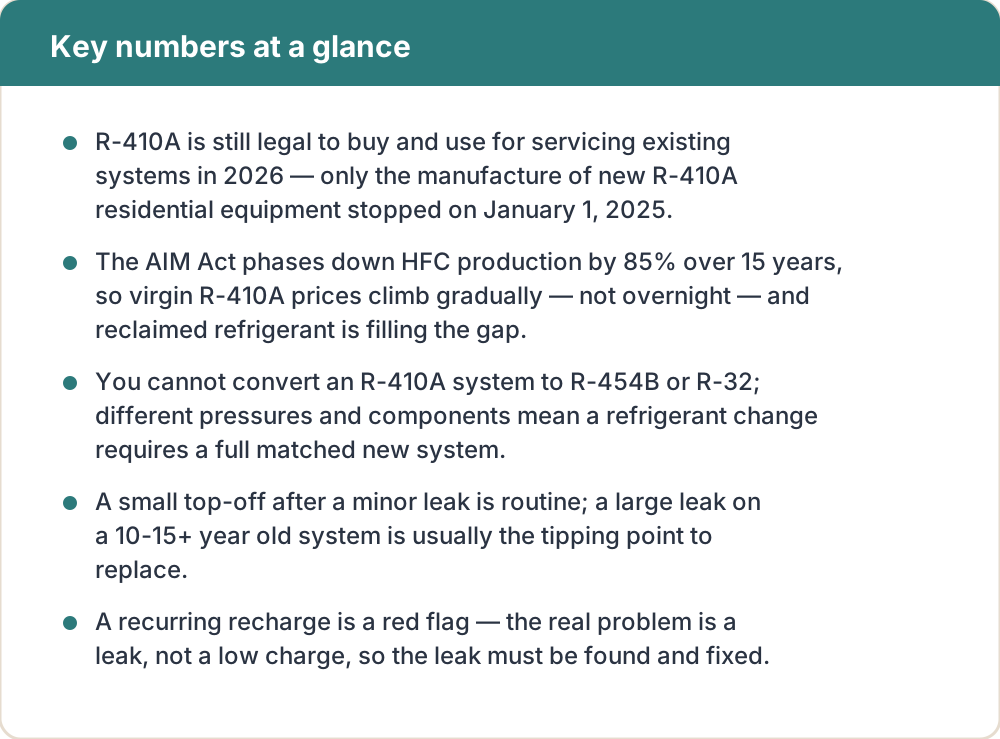
- R-410A is still legal to buy and use for servicing existing systems in 2026 — only the manufacture of new R-410A residential equipment stopped on January 1, 2025.
- The AIM Act phases down HFC production by 85% over 15 years, so virgin R-410A prices climb gradually — not overnight — and reclaimed refrigerant is filling the gap.
- You cannot convert an R-410A system to R-454B or R-32; different pressures and components mean a refrigerant change requires a full matched new system.
- A small top-off after a minor leak is routine; a large leak on a 10-15+ year old system is usually the tipping point to replace.
- A recurring recharge is a red flag — the real problem is a leak, not a low charge, so the leak must be found and fixed.
On this page
Is R-410A still available in 2026?
Yes. R-410A is still legal and available to service existing systems in 2026. The phase-out under the AIM Act limits NEW equipment, not repairs to what you already own. You can recharge and repair an R-410A system, though the refrigerant will get pricier over time as production is capped.
If you own an R-410A air conditioner in Ontario, Pomona, Rancho Cucamonga, or anywhere across the Inland Empire, you may have heard the refrigerant is being 'banned' and worried you must replace your whole system this summer. That is a misunderstanding worth clearing up before you spend thousands you do not need to spend. R-410A has been the standard residential refrigerant since the mid-2000s, which means the overwhelming majority of central AC systems humming away in Chino, Fontana, and Riverside garages today run on it. A rule change aimed at factory production does not reach into your backyard condenser.
What the phase-out actually bans
The EPA's rule under the American Innovation and Manufacturing (AIM) Act phases down the production and consumption of HFC refrigerants like R-410A because of their high global-warming potential. As of January 1, 2025, manufacturers can no longer BUILD new residential air conditioners and heat pumps charged with R-410A. New systems now ship with lower-global-warming refrigerants such as R-454B or R-32. The point of the policy is to shrink the volume of high-GWP refrigerant entering the market year over year, so it acts on factories and importers — the top of the supply chain — rather than on the homeowner at the end of it.
Crucially, the rule targets manufacturing, not maintenance. Servicing equipment already installed in your home remains legal. Technicians can still buy and use R-410A — both virgin (newly produced) and reclaimed (recovered and cleaned) — to top off and repair existing systems while supply lasts. Your working AC did not become illegal or unserviceable on January 1, 2025, and no inspector is going to require you to tear it out. The distinction matters because it separates a policy about what factories may ship from your day-to-day reality of keeping a home cool. Nothing about owning, running, or fixing an R-410A system changed the moment the calendar flipped.
Will R-410A get more expensive?
Yes, but gradually. The AIM Act mandates an 85% phasedown of HFC production and consumption over roughly 15 years. As the EPA tightens production quotas each step, virgin R-410A becomes scarcer and its price climbs. Reclaimed R-410A — refrigerant recovered from decommissioned systems, cleaned, and re-certified to purity standards — grows in importance to keep the millions of existing systems running. This is the same path the industry walked when R-22 (the old Freon) was phased out before it; supply tightened and prices drifted upward over years, but service never became impossible.
Expect steady increases, not an overnight spike. There is no single 'R-410A price' — it varies by supplier, by region, and by whether it is virgin or reclaimed. For a homeowner, the practical takeaway is simple: a small top-off today is affordable, but the cost math shifts over time. That matters most when an older system develops a large leak and needs a lot of refrigerant repeatedly. A residential AC typically holds several pounds of refrigerant, so a system that empties itself each cooling season turns a rising per-pound price into a recurring bill that only grows. The refrigerant in a healthy, sealed unit, by contrast, should last the equipment's entire life without ever being touched.
You cannot 'switch' your system to a new refrigerant
A common question is whether an R-410A unit can simply be refilled with R-454B or R-32 to dodge rising costs. The answer is no, and it is important to be firm about it. These refrigerants operate at different pressures and require different components, compressor oils, and safety designs (R-454B and R-32 are mildly flammable A2L refrigerants, which is why new equipment is built with leak detection and specific clearances in mind). Charging your existing condenser with the wrong refrigerant can damage the compressor, create a genuine safety hazard, and instantly void the manufacturer warranty. It is not a money-saving hack — it is a way to destroy a working system.
Changing refrigerants means installing a complete, factory-matched new system — condenser, coil, and often the line set — engineered as a set for whichever refrigerant it uses. There is no adapter, retrofit charge, or shortcut that lets an R-410A condenser safely run R-454B. If you are shopping for new equipment and want to understand the newer options, see our guides on R-454B vs R-410A, the questions to ask when buying a new AC, and whether R-454B is safe. For now, your R-410A system stays on R-410A for the rest of its life.
Should I repair my R-410A system or replace it?
This is the real decision most homeowners face, and it is worth slowing down for. A recharge is not a fix — if refrigerant is low, there is a leak, and the leak must be found and sealed. Any contractor who wants to just 'add a couple pounds and see how it goes' is treating a symptom while the refrigerant literally vents into the atmosphere. A small top-off after a minor, repaired leak is routine and inexpensive. A large leak on aging equipment is often the tipping point, because you would be paying rising R-410A prices to prop up a system near the end of its life. The table below breaks the choice down by scenario, using age, repair cost, and leak size as the deciding factors.
| Your situation | System age | Refrigerant issue | Recommended action |
|---|---|---|---|
| Healthy system, routine tune-up | Under 10 years | No leak, no top-off needed | Keep and maintain it normally |
| Minor leak found and sealed | Under 10 years | Small top-off after repair | Repair the leak, recharge, keep running |
| Component failure (fan, capacitor) | 8-12 years | No refrigerant loss | Repair — refrigerant is not the issue |
| Large leak, needs lots of refrigerant | 10-15+ years | Repeated or major recharges | Strongly consider replacement |
| Compressor or evaporator coil failure | 12+ years | System must be opened and recharged | Replace with a matched new system |
The pattern to watch for is repeated recharges. If a technician has topped off your system two summers in a row, refrigerant is escaping faster than it should and the underlying leak has not been fixed. On a unit under 10 years old, that usually justifies a proper leak search and repair. On a unit past 12 years that also needs a compressor or evaporator coil, the combined bill — plus the rising cost of the R-410A to refill it — often exceeds what a matched new system is worth. For a deeper framework, read AC repair vs replace in 2026, the signs you need a new AC system, and our breakdown of AC repair costs in 2026. If your unit is blowing warm air, our guide on an AC running but not cooling covers the common non-refrigerant causes too.
If your R-410A system cools well and holds its charge, keep it and service it on schedule — the phase-out gives you no reason to replace it this summer. If it is leaking or short on refrigerant, get the leak diagnosed before summer heat in the Inland Empire pushes it harder. Book a professional AC repair with Alex Air & Heating and we will tell you honestly whether to fix it or plan a replacement.
The bottom line for Inland Empire homeowners
R-410A is still available and legal to service your current AC in 2026. Nothing about the phase-out forces you to replace working equipment. Keep a healthy system, fix leaks properly rather than just refilling, and budget for an eventual upgrade if your unit is 10+ years old and starts needing a compressor, a coil, or repeated recharges. The honest goal is not to squeeze one more year out of a dying unit, nor to replace a good one out of fear — it is to make the swap on your timeline, when the numbers actually call for it. Routine AC maintenance helps a healthy R-410A system last its full service life and catches small leaks before they become expensive ones, which is the single best way to keep control over that timeline through an Inland Empire summer.
Frequently asked questions
No, R-410A is not banned for servicing in 2026. The AIM Act only banned manufacturing new R-410A residential air conditioners and heat pumps as of January 1, 2025. Existing systems can still be legally recharged and repaired with R-410A. Technicians can buy both virgin and reclaimed R-410A while supply lasts, so your current AC is not suddenly illegal or unserviceable.
Yes, you can still recharge an R-410A system in 2026. Licensed technicians continue to buy and use R-410A to top off existing equipment. But remember that a healthy sealed system does not lose refrigerant — if yours needs a recharge, it has a leak. The correct fix is to locate and repair the leak, then recharge, not just add refrigerant repeatedly.
R-410A prices are rising gradually in 2026 as EPA production quotas decline under the 85% HFC phasedown. There is no single fixed price — it varies by supplier, region, and virgin versus reclaimed. Expect steady, not overnight, increases over the next several years. This is why a large leak on an older system often tips the math toward replacement rather than repeated expensive recharges.
No, you cannot convert an existing R-410A system to R-454B or R-32. These newer refrigerants run at different pressures and require different components, oils, and safety designs. Attempting a swap is unsafe and voids warranties. Switching refrigerants means installing a complete, factory-matched new system. Your R-410A unit stays on R-410A for its remaining service life.
No, you should not panic-replace a working R-410A system in 2026. The phase-out does not force you to replace anything you already own. Keep a healthy unit and service it normally. Consider replacement only when the equipment is 10+ years old and faces a major repair like a compressor or coil, or repeated recharges, where rising R-410A costs no longer make repairs worthwhile.
R-410A will remain available for years, though supply tightens gradually as production quotas fall. Virgin refrigerant becomes scarcer and pricier over time, while reclaimed R-410A grows in importance to keep existing systems running. There is no hard cutoff date that makes servicing illegal. Plan for eventual replacement of aging equipment, but there is no need to rush while your system is healthy.
Local next step
Turn this guide into a site-specific answer.
Guides explain the decision. Equipment condition, access, and safe next steps still need to match the home or business. Review the relevant service scope or request an assessment for Ontario, the Inland Empire, or East Los Angeles County. Availability depends on the current schedule.